





























Pacific Coast Militia Rangers

BUSHMAN79

Regular
EE Expired
Rating - 95.6%
87   4   0
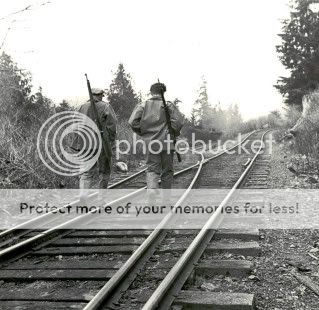
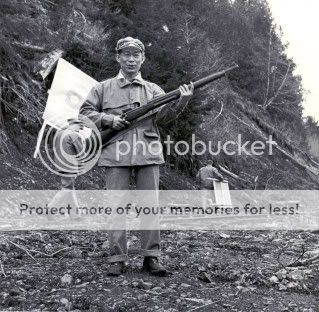
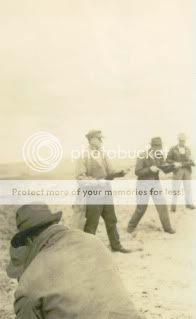
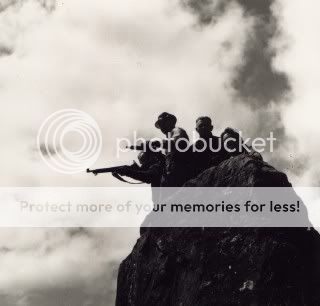
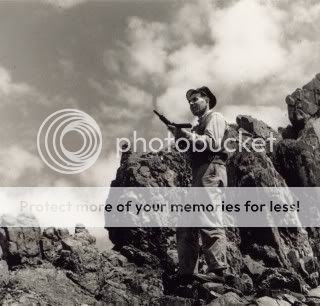
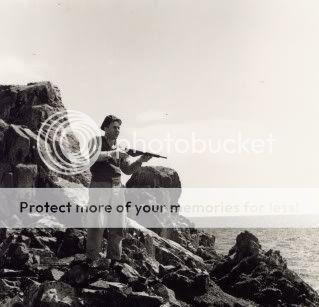
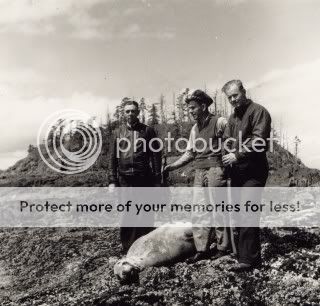
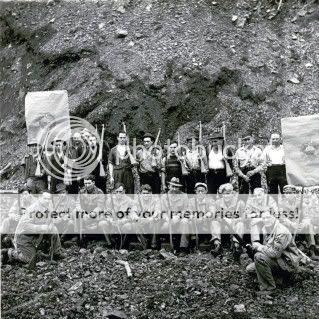
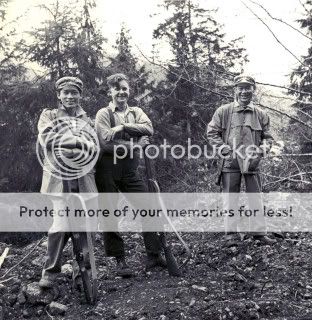
Hello, all! Been off CGN for months, no time for internet during the Summer! Anyway, here are some pictures of the PCMR taken at Cumshewa Inlet, on the Queen Charlotte Islands, during WW2. No. 109 and 114 Companies operated out of the big Cumshewa Camp, of Aero Timber Products. (The Crown corporation set up to log Aeroplane Spruce.) There were six companies of PCMR's on the QC Islands.

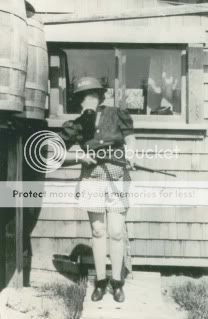
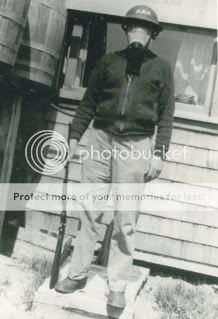
Also a couple of ARP pictures taken at Masset, BC. I wonder if their armament had a "C Broad Arrow" stamp! :
2814-PacificCoastMilitiaRangers.jpg


2816-PacificCoastMilitiaRangers.jpg


2817-PacificCoastMilitiaRangers.jpg


2818-PacificCoastMilitiaRanger.jpg


728-RangersRiflePractice.jpg


987-20-397-SeaLionHunters.jpg


987-20-399-SeaLionHunter.jpg


987-20-3100-SeaLionHunter.jpg


987-20-3101-SeaLionHunters.jpg


732-WomaninGasMask.jpg


731-ManinGasMask.jpg
 
Pcmr

Looks like a series of later pictures, but not early WW2. The Sten Guns are interesting. I once knew a lighthouse keeper who had several Stens and Brens given to him in 1944. Where he was supposed to get the manpower to arm was not explained. Some powers decided that this particular area was to get so many of weapons.

Looks like lots of P-14 or M-1917 rifles though. Very early defence forces has some Ross rifles too. Ammunition was a problem, though. If the Japanese had landed, the early instructions to the defenders were "Fire your five rounds, then run!" One charger of ammo, each. Looks like the ARPs are armed with a .22 pump gun.

Of the four people on the rock, the guy with the Sten is inviting a jam by holding it by the magazine, but it is a pretty good war when you can bring your wife or girl friend along.

CIL (Dominion) made some full metal jacket 30-30, 250-3000, and other "civilian" calibres. There are Winchester 94s and Savage 99s showing up at gun shows every so ofter with a PCMR brand on them.
 
There used to be many winchester94 PCMR rifles offered for sale in the vancouver area in the 80's. At the same time a number of City of Vancouver 1940's winchester 94's came on the market.
 
Looks like a series of later pictures, but not early WW2. The Sten Guns are interesting. I once knew a lighthouse keeper who had several Stens and Brens given to him in 1944. Where he was supposed to get the manpower to arm was not explained. Some powers decided that this particular area was to get so many of weapons.

Looks like lots of P-14 or M-1917 rifles though. Very early defence forces has some Ross rifles too. Ammunition was a problem, though. If the Japanese had landed, the early instructions to the defenders were "Fire your five rounds, then run!" One charger of ammo, each. Looks like the ARPs are armed with a .22 pump gun.

Of the four people on the rock, the guy with the Sten is inviting a jam by holding it by the magazine, but it is a pretty good war when you can bring your wife or girl friend along.

CIL (Dominion) made some full metal jacket 30-30, 250-3000, and other "civilian" calibres. There are Winchester 94s and Savage 99s showing up at gun shows every so ofter with a PCMR brand on them.

Those are all M-1917 rifles, and the pictures date between 1942 and 43. Almost all of the QCI rangers seem to have got the M-1917's, but I know of a couple that got M1905 Ross rifles. One of them was so disgusted, he "lost" it over the side of his boat, and got a M-17 to replace it.

The only .30-30's that turn up here, seem to have arrived with their owners after the war. Maybe because we are so close to the Aleutian Islands, they sent better equipment over here. The old guys tell me that the M-17's looked brand new, and I've seen a couple of them that were really nice. Not many of the guys purchased their rifles, even though they were only $5! :confused:

Most of the stuff on the West Coast was top of the line, since the government was waging a political war, and wanted to show the public how strong our military was.

Actually, the Japanese sub I-26 did shell the lighthouse at Estevan Point, and they torpedoed and sank a US sub running on the surface between QC and Vancouver Island. They also torpedoed the freighter Fort Camosun, and one of the bigger subs launched a plane that flew over Prince Rupert. A Jap sub was actually bombed and severely damaged by a Bolingbroke off Prince of Wales Island, and it was later finished off by US ships.

A sub surfaced off Langara Island, and sent the lighthouse and radar station staff into a panic.:runaway: The sub never did anything, though, and eventually went on its way.
 
Actually, the Japanese sub I-26 did shell the lighthouse at Estevan Point, and they torpedoed and sank a US sub running on the surface between QC and Vancouver Island. They also torpedoed the freighter Fort Camosun, and one of the bigger subs launched a plane that flew over Prince Rupert. A Jap sub was actually bombed and severely damaged by a Bolingbroke off Prince of Wales Island, and it was later finished off by US ships.

A sub surfaced off Langara Island, and sent the lighthouse and radar station staff into a panic.:runaway: The sub never did anything, though, and eventually went on its way.

The sub that was torpedoed was Soviet I read.

Is there a source for the POW Island incident?

Hard to say now what they did since the Japanese destroyed all their operational records at the end of the war.
 
The sub that was torpedoed was Soviet I read.

Is there a source for the POW Island incident?

Hard to say now what they did since the Japanese destroyed all their operational records at the end of the war.

Read the book "Jericho Beach and the West Coast Flying Boat Stations", it's packed with interesting info.

A friend of mine, retired RCAF, was stationed at Comox in the 70's. In the archives there were some Japanese items, and a report with them. Some old trapper was out doing his thing, when he saw a submarine off shore. The sub unloaded a rubber boat, along with two men in business suits, then went under.

The old trapper watched them come ashore, saw that they were Japanese, and promptly shot both of them! :sniper: He retrieved everything he could find on their bodies, buried them, and reported the incident when he came to town a few weeks later. The report said that the trapper couldn't understand what the Japs were thinking, since they were dropped off in the middle of nowhere, with no survival gear, and dressed for town! :confused:

The little Japanese plane that flew over Prince Rupert, it was reported by the BC Police, military guys, etc. By the time they got a Shark in the air to shoot it down, the sub had already retrieved the plane and left the area. If I remember the book right, the plane flew over Coal Harbour, as well. I think there was an incident in Washington where one of those tiny planes attempted to start a forest fire with incendiary bombs, but I'll have to double check that.

Then, of course, there were the balloon bombs, but that's another story.
 
Very interesting post Bushman!

Don't mess with ornery old trappers!;)


Read the book "Jericho Beach and the West Coast Flying Boat Stations", it's packed with interesting info.

A friend of mine, retired RCAF, was stationed at Comox in the 70's. In the archives there were some Japanese items, and a report with them. Some old trapper was out doing his thing, when he saw a submarine off shore. The sub unloaded a rubber boat, along with two men in business suits, then went under.

The old trapper watched them come ashore, saw that they were Japanese, and promptly shot both of them! :sniper: He retrieved everything he could find on their bodies, buried them, and reported the incident when he came to town a few weeks later. The report said that the trapper couldn't understand what the Japs were thinking, since they were dropped off in the middle of nowhere, with no survival gear, and dressed for town! :confused:

The little Japanese plane that flew over Prince Rupert, it was reported by the BC Police, military guys, etc. By the time they got a Shark in the air to shoot it down, the sub had already retrieved the plane and left the area. If I remember the book right, the plane flew over Coal Harbour, as well. I think there was an incident in Washington where one of those tiny planes attempted to start a forest fire with incendiary bombs, but I'll have to double check that.

Then, of course, there were the balloon bombs, but that's another story.
 
Incendiary bombs were sent over by balloon with timers to drop at certain intervals. The idea was to start forest fires and general chaos on the continent.
 
Those are all M-1917 rifles, and the pictures date between 1942 and 43. Almost all of the QCI rangers seem to have got the M-1917's, but I know of a couple that got M1905 Ross rifles. One of them was so disgusted, he "lost" it over the side of his boat, and got a M-17 to replace it.

The only .30-30's that turn up here, seem to have arrived with their owners after the war. Maybe because we are so close to the Aleutian Islands, they sent better equipment over here. The old guys tell me that the M-17's looked brand new, and I've seen a couple of them that were really nice. Not many of the guys purchased their rifles, even though they were only $5! :confused:

Most of the stuff on the West Coast was top of the line, since the government was waging a political war, and wanted to show the public how strong our military was.

Actually, the Japanese sub I-26 did shell the lighthouse at Estevan Point, and they torpedoed and sank a US sub running on the surface between QC and Vancouver Island. They also torpedoed the freighter Fort Camosun, and one of the bigger subs launched a plane that flew over Prince Rupert. A Jap sub was actually bombed and severely damaged by a Bolingbroke off Prince of Wales Island, and it was later finished off by US ships.

A sub surfaced off Langara Island, and sent the lighthouse and radar station staff into a panic.:runaway: The sub never did anything, though, and eventually went on its way
.

My dad was stationed at Kechikan Alaska (Annette Island?) for part of the war. He told me that one of the supply ships was sunk by the Japanese off the BC coast on its way to re-supply the base. Never reported due to censorship.
 
To go with the flow of this thread here is an interesting excerpt from a Legion magazine article. Having just come back from Pearl Harbor I find this history very interesting. Good thread.
Cheers,
Alan
PS. 762shooter, this article even talks a bit about the supply ships that where sunk.

http://www.legionmagazine.com/en/index.php/2009/02/the-japanese-attack-air-force-part-31/

Those RCAF Kittyhawk pilots who reached Umnak were still some 500 miles from Kiska, but a detachment was sent on to Adak, now 200 miles from Kiska. On Sept. 25, four RCAF Kittyhawk pilots joined a larger American attack on the island. Having strafed gun positions and a Japanese encampment, the Canadians encountered two A6M2 aircraft—floatplane versions of the famous Zero fighter. Squadron Leader Ken Boomer shot down one in flames—the sole enemy airplane destroyed by a Canadian Home Defence unit. This foray was the only one conducted that autumn by No. 111 Sqdn. against Kiska. On Oct. 9, the RCAF detachment was transferred to Kodiak Island where it spent the winter.
 
Check out "War on Our Doorstep: The Unknown Campaign on North America's West Coast" , by Brendan Coyle.

This is a reasonably well researched book covering the Pacific war on the west coast. Still in print.
 
Back
Top Bottom