Not exactly a milsurp but thought I’d try here anyway. I have a Parker Hale supreme model 303 that appeared unfired when I bought it. Bore is shiny. Keyholes everything except Hornady 174 gr RN, which it shoots well. I tried cast bullets from the Saeco 305 and Lyman 314299 molds that I used in other Lee Enfields successfully, both sized at .314. Both keyholed. Is it common for these rifles to keyhole? Could it be something I’m doing wrong in reloading?














































You are using an out of date browser. It may not display this or other websites correctly.
You should upgrade or use an alternative browser.
You should upgrade or use an alternative browser.
Parker Hale keyholing
- Thread starter Groverino
- Start date

saskgunowner101
CGN Ultra frequent flyer
- Location
- middle of Sask
Too slow for the twist perhaps? Undersized for the bore?
What's your load/powder charge/velocity, and have you slugged the bore?
What's your load/powder charge/velocity, and have you slugged the bore?
I didn’t slug the bore I assumed the .314 cast would should since I have a ton of them and they shot so well in other rifles. I tried 16 gr of 2400 and 19 gr of 4198 with the cast.
I tried some old dominion rounds they also keyholed. Boat tail 174 gr Hornady did the same.
I should slug it I suppose but I have no intention of buying more cast for it.
I tried some old dominion rounds they also keyholed. Boat tail 174 gr Hornady did the same.
I should slug it I suppose but I have no intention of buying more cast for it.
- Location
- Western Manitoba
I think that you will find that Parker Hale probably did not make 303 British rifles - that is more than likely a former military gun with a stock made by SILE in Italy - was a very common thing to modify mil-surp rifles and sell as sporters - by several entities - Parker Hale, Sako, BSA, etc. I think the "Supreme" might have been the second highest of four grades that Parker Hale did - Highest grade was apparently the "Custom" - they were done in both No. 1 SMLE and No. 4 - so there is 8 versions by Parker Hale shown in various catalogues - two each (No. 1 and No. 4) with four grades, each. I think all the "sporter" stocks were made by SILE in Italy for Parker Hale. Some of the lowest grades used the original military stock, with modifications. Parker Hale went defunct in circa 1980's, when bought out by USA company named "Gibbs". Gibbs went bankrupt circa 10 years later. Numerich Gun Parts picked up a lot of Parker Hale parts at the Gibbs bankruptcy auction - why you could or maybe still can get some original Parker Hale parts, in original Parker Hale packaging - circa 40 years after they went out of business.
Yes I know that Parker Hale didn’t actually make it. They just sold the former military rifles in sporter form. It’s an interesting history for sure.I think that you will find that Parker Hale probably did not make 303 British rifles - that is more than likely a former military gun with a stock made by SILE in Italy - was a very common thing to modify mil-surp rifles and sell as sporters - by several entities - Parker Hale, Sako, BSA, etc. I think the "Supreme" might have been the second highest of four grades that Parker Hale did - Highest grade was apparently the "Custom" - they were done in both No. 1 SMLE and No. 4 - so there is 8 versions by Parker Hale shown in various catalogues - two each (No. 1 and No. 4) with four grades, each. I think all the "sporter" stocks were made by SILE in Italy for Parker Hale. Some of the lowest grades used the original military stock, with modifications. Parker Hale went defunct in circa 1980's, when bought out by USA company named "Gibbs". Gibbs went bankrupt circa 10 years later. Numerich Gun Parts picked up a lot of Parker Hale parts at the Gibbs bankruptcy auction - why you could or maybe still can get some original Parker Hale parts, in original Parker Hale packaging - circa 40 years after they went out of business.
The breech of the barrel - is there a flat in front of the receiver ring or is it completely round? Most of the PH sported rifles used issue barrels with the flat, some used new barrels without. I had one of the rebarreled ones in the shop that had the worst headspace I've ever seen on any .303. Really, really excess headspace.
Have a really good look at the muzzle. Bulge or ring just inside the bore? Does a bullet drop into the muzzle?
Have a really good look at the muzzle. Bulge or ring just inside the bore? Does a bullet drop into the muzzle?
I’ll take a look re: flat vs round. I tried the bullet drop test and it passed that no problems there. Thanks for your input. It’s a nice rifle and I have all sorts of components but it’s being difficultThe breech of the barrel - is there a flat in front of the receiver ring or is it completely round? Most of the PH sported rifles used issue barrels with the flat, some used new barrels without. I had one of the rebarreled ones in the shop that had the worst headspace I've ever seen on any .303. Really, really excess headspace.
Have a really good look at the muzzle. Bulge or ring just inside the bore? Does a bullet drop into the muzzle?
Last edited:
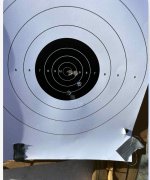
The bullets are skipping over the rifling, likely due to an oversize bore - if the rifling is not worn. Hornady bullets are 0.312 with a flat base. Other brands are often 0.310/0.311 and have boat tails, which are much less likely to grip the rifling.
That makes sense to me but what about the .314 cast? Could the bore be that huge?The bullets are skipping over the rifling, likely due to an oversize bore - if the rifling is not worn. Hornady bullets are 0.312 with a flat base. Other brands are often 0.310/0.311 and have boat tails, which are much less likely to grip the rifling.
Is what it is I guess. At least it’ll shoot something. Guess I have about 700 cast bullets to use in my sks lolWell - the cast lead is relatively soft compared to the copper jackets. Yes, the bore could easily be over 0.314.
saskgunowner101
CGN Ultra frequent flyer
- Location
- middle of Sask
You could try powder coating, might bump the diameter up enough if this was indeed the problem.Is what it is I guess. At least it’ll shoot something. Guess I have about 700 cast bullets to use in my sks lol
I had an old no.4 lee enfield that had been through the mill. Bore was toast. Found a decent barrel on gun post off an EAL rifle, 21 inch barrel, excellent bore for $100. Spun right on, perfect headspace. Shoots really well.
- Location
- Western Manitoba
Some of below might be incorrect, but is how I think of things:
Stability of a bullet in flight is about how much RPM does it have - how fast (or slow) is it spinning. A LONGER (not necessarily HEAVIER) bullet will need to spin faster to stay pointy end first. OP, you probably want to "slug your bore" to find out what your groove to groove dimensions are - that is normally done with soft lead and then measured.
The business of rotating - that is the purpose of the rifling - it is supposed to engrave into the bullet jacket / bullet "skin" and cause that bullet to "spin". when it is in the barrel. It will have that "spin" as it emerges from the muzzle. Not much to act on the bullet to slow down that spin rate during the bullet "time of flight". The business of the bullet's VELOCITY - that is a function of the powder load - for some combinations, the lack of stability can be remedied by increasing muzzle velocity - that makes the bullet spin faster - but one can run into high pressure signs doing that. The flat based bullets will probably "obturate" and swell up to be tight in the grooves - that ensures rotation and velocity - typically that works well. Boat tail bullets typically will not "obturate" as well as flat base bullets. It is common enough that a boat tail bullet of same weight, is "longer" than a flat based Round Nosed Bullet, so, to be fussy, a Boat Tail bullet will need faster twist (more RPM) to stay stable in flight.
Hence, if you have slugged your bore and found "groove-to-groove" size to be oversized from "normal", then probably flat based bullets work best. Look up Hornady reference information - those 174 grain Round Nose are probably 0.312" diameter - their 174 grain FMJ Boat Tail are probably 0.3105" diameter.
Your cast loads - what sort of velocity do you get? - I see Lyman manual lists several loads for 314299 bullet, but they used a SMLE with 0.313" groove-to-groove (page 276/277 of Lyman 50th). They show various velocities with 200 grain 314299 cast bullets from 1549 fps to 1946 fps - a "best load" is identified by Lyman - it is showing 1561 fps. With 1-10" twist in their test barrel, that bullet will have about 78,050 RPM as it emerges from their muzzle.
Stability of a bullet in flight is about how much RPM does it have - how fast (or slow) is it spinning. A LONGER (not necessarily HEAVIER) bullet will need to spin faster to stay pointy end first. OP, you probably want to "slug your bore" to find out what your groove to groove dimensions are - that is normally done with soft lead and then measured.
The business of rotating - that is the purpose of the rifling - it is supposed to engrave into the bullet jacket / bullet "skin" and cause that bullet to "spin". when it is in the barrel. It will have that "spin" as it emerges from the muzzle. Not much to act on the bullet to slow down that spin rate during the bullet "time of flight". The business of the bullet's VELOCITY - that is a function of the powder load - for some combinations, the lack of stability can be remedied by increasing muzzle velocity - that makes the bullet spin faster - but one can run into high pressure signs doing that. The flat based bullets will probably "obturate" and swell up to be tight in the grooves - that ensures rotation and velocity - typically that works well. Boat tail bullets typically will not "obturate" as well as flat base bullets. It is common enough that a boat tail bullet of same weight, is "longer" than a flat based Round Nosed Bullet, so, to be fussy, a Boat Tail bullet will need faster twist (more RPM) to stay stable in flight.
Hence, if you have slugged your bore and found "groove-to-groove" size to be oversized from "normal", then probably flat based bullets work best. Look up Hornady reference information - those 174 grain Round Nose are probably 0.312" diameter - their 174 grain FMJ Boat Tail are probably 0.3105" diameter.
Your cast loads - what sort of velocity do you get? - I see Lyman manual lists several loads for 314299 bullet, but they used a SMLE with 0.313" groove-to-groove (page 276/277 of Lyman 50th). They show various velocities with 200 grain 314299 cast bullets from 1549 fps to 1946 fps - a "best load" is identified by Lyman - it is showing 1561 fps. With 1-10" twist in their test barrel, that bullet will have about 78,050 RPM as it emerges from their muzzle.
Yes the Hornady RN are .312. I don’t have a chronograph but when I get back to my reloading manuals I can get a rough idea re: the velocity. The cast are quite hard so I should be able to run them a little faster than I have up to this point. I ran into some trouble once slugging a bore where my dowel broke off and created a wedge with the piece of buckshot and it wasn’t a great time. I was hoping to avoid it since I just wanted to make the bullets I have work vs ordering more.Some of below might be incorrect, but is how I think of things:
Stability of a bullet in flight is about how much RPM does it have - how fast (or slow) is it spinning. A LONGER (not necessarily HEAVIER) bullet will need to spin faster to stay pointy end first. OP, you probably want to "slug your bore" to find out what your groove to groove dimensions are - that is normally done with soft lead and then measured.
The business of rotating - that is the purpose of the rifling - it is supposed to engrave into the bullet jacket / bullet "skin" and cause that bullet to "spin". when it is in the barrel. It will have that "spin" as it emerges from the muzzle. Not much to act on the bullet to slow down that spin rate during the bullet "time of flight". The business of the bullet's VELOCITY - that is a function of the powder load - for some combinations, the lack of stability can be remedied by increasing muzzle velocity - that makes the bullet spin faster - but one can run into high pressure signs doing that. The flat based bullets will probably "obturate" and swell up to be tight in the grooves - that ensures rotation and velocity - typically that works well. Boat tail bullets typically will not "obturate" as well as flat base bullets.
Hence, if you have slugged your bore and found "groove-to-groove" size to be oversized from "normal", then probably flat based bullets work best. Look up Hornady reference information - those 174 grain Round Nose are probably 0.312" diameter - their 174 grain FMJ Boat Tail are probably 0.3105" diameter.
Your cast loads - what sort of velocity do you get? - I see Lyman manual lists several loads for 314299 bullet, but they used a SMLE with 0.313" groove-to-groove (page 276/277 of Lyman 50th). They show various velocities with 200 grain 314299 cast bullets from 1549 fps to 1946 fps - a "best load" is identified by Lyman - it is showing 1561 fps. With 1-10" twist in their test barrel, that bullet will have about 78,050 RPM as it emerges from their muzzle.
- Location
- Western Manitoba
An FYI - the alloy "hardness" might allow you to "run faster", but I do not think most models of a bullet in flight are concerned with hardness / softness for stability - usually just RPM's, which is probably a function of velocity and twist rate.
- Location
- Western Manitoba
There is much written - including several posts on CGN, to NOT use a wooden dowel to do a "slug" or try to push out an obstruction - is common enough for the wood dowel to break off and jam in there - a real mess to clear out without wrecking the bore rifling - use a metal rod - often wrapped with electrician's tape or carefully polished - snug fitting to minimize "wow" within the bore, and therefore to minimize rifling damage.
But can you not push a hardcast over a more substantial powder charge vs a softer bullet thereby increasing velocity and potentially RPMs? Is my thinking off here? I’m sure once in flight softness vs hardness makes no difference at all.An FYI - the alloy "hardness" might allow you to "run faster", but I do not think most models of a bullet in flight are concerned with hardness / softness for stability - usually just RPM's, which is probably a function of velocity and twist rate.
Yeah would have been cool if I’d read those posts because I learned the hard way about wooden dowels haha. This was very long time ago and I’ve had no reason to slug a bore since but it sucked very badly.There is much written - including several posts on CGN, to NOT use a wooden dowel to do a "slug" or try to push out an obstruction - is common enough for the wood dowel to break off and jam in there - a real mess to clear out without wrecking the bore rifling - use a metal rod - often wrapped with electrician's tape or carefully polished - snug fitting to minimize "wow" within the bore, and therefore to minimize rifling damage.






















