









































Pedersoli Frontier Flintlock problem

flashburn

Member
Rating - 100%
4   0   0
Looking for some advise/help. I am new to flintlock rifle but not black powder. I shoot percussion pistols in 44.
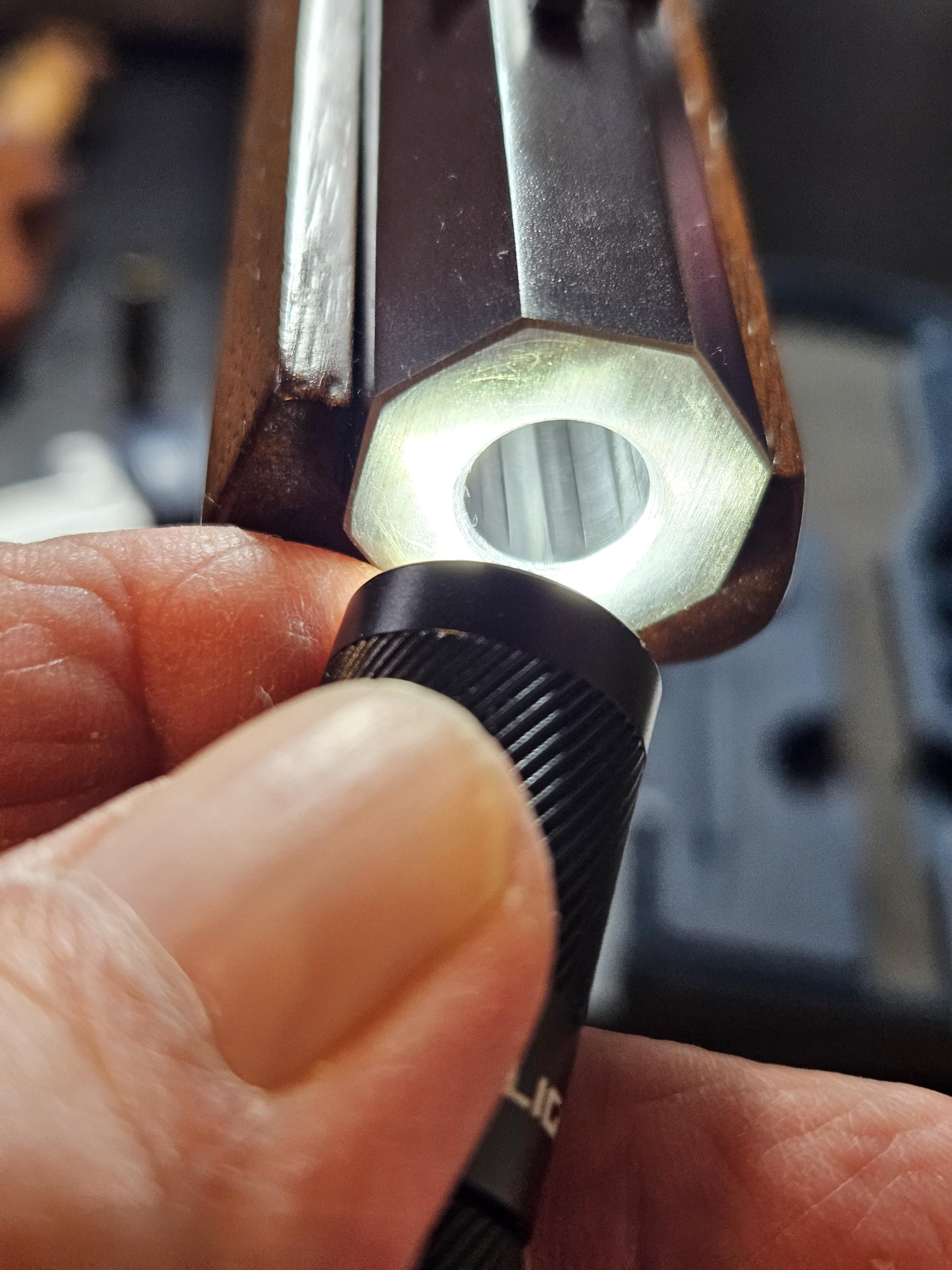
My problem is I have a new Pedersoli in 45 shooting .440 ball with .015 wonder wads, over 40 grains 3F, shoots great BUT I can only load and fire twice before it is nearly impossible to ram another ball down the bore. I have to patch the bore after every shot and the first and second patches are nearly impossible to remove. I have to grip the rifle between my legs and pull with both hands. The patches come out cut through in several places and my jags now have scored edges. Today I resorted to running a bore brush then patches, better but still very hard to remove. The entire bore is not tight just about the first 11 inches at muzzle and the last bit at chamber. Even pulling a brush you can feel the tight spots. Then the perhaps bigger question, when I remove the flash hole liner and look in while dropping a bare cleaning rod down the bore should it not bottom out on the breech plug? On mine it comes to a hard stop just above the touch hole threads, there is a through hole of some mystery diameter so the thing goes bang and even in my hands shoots very well. Todays range session was cut short at 6 shots as I sheared off my range rod thread adapter with the adapter, jag, and patch right at the muzzle. That is how much force it takes. Right now have removed the broken threads from my range rod and am going to attempt to blow the jag out of the barrel with compressed air. Failing that there might be just enough to grab with a vicegrip. Failing that drilling a pilot hole and driving a screw into it to grab will be the last option. So looking for some help. Should I polish the bore? Or is hard loading cleaning part of the break in process.
 
I think I would measure the diameter of the bore, and see where that leads. Also consider sanding down in a drill the outside surface of the jag where the cleaning patch contacts it.
 
The wonder wads are not effective in cleaning the fouling from your barrel for shot after shot shooting. The lube in the patch will not soften the fouling enough to get it to come out.

Get some .015 plain patches or cotton material that is .015 thick. Acquire some Ballistol oil which is water soluble and mix it 7 parts Ballistol to 1 part water. Wet your patches with this solution and patch your balls. The patches should be wet but not be dripping wet.

If you buy cotton material to use foe patch material wash it first to get the sizing out of it.

Seek out a local BP club or group. They will steer you in the right direction.
 
Flashburn: Your Pedersoli Frontier features a 'Patent Breech'. Essentially, a smaller than bore diameter chamber that extends into the breech plug. Which holds part of the main charge, upon loading. The vent plug opens directly into this chamber. Ostensibly, the chamber was designed to channel a more concentrated and intense jet of fire into the rest of the main charge, upon ignition. For greater reliability under field conditions. Whether it really does or not, is a long-standing debate. That is why your rod bottoms out before it reaches the vent hole.

As for bore cleaning....muzzle loading rifles require a slightly different regimen for cleaning between shots. Though lubed wonder wads work reasonably well to keep fouling soft in c & b revolvers... they are practically useless, in rifles.

Though commercially-made patch lube is readily available, an effective home-made lube can be made from a 50/50 mix of beeswax(not paraffin) and tallow(Unsalted lard works as a substitute). There are any number of equally good recipes, but this basic one generally delivers good results. For a good and highly detailed tutorial on how to make your own lube, go to duelist1954.

As already mentioned, a mix of Ballistol and water works well to soften fouling and clean the barrel. Also as a patch lubricant.

A patch dampened with a little water also helps clean out stubborn fouling. Run a dry patch or two after, to clean out any remaining water and fouling.

Another excellent bore cleaner, is ordinary isopropyl alcohol(rubbing alcohol). One wet patch, followed by one or two dry ones, and the bore comes out dry and squeaky clean. Have been using alcohol exclusively as a bore cleaner between shots, for at least 40-plus years. It works.

It sounds as though the majority of your problems stem from heavy bore fouling. Which can and will cause a lot of problems during reloads. Running dry patches down bore only adds to the problem. Swabbing out the bore between shots, will reduce this likelihood. Also, using a good lubed patch.

Hope this helps

Al
 
Last edited:
Thanks Alex for the step by step. Having a mentor would have really helped as I did expect the rifle to run like my pistols and approached it that way with less than stellar results. The irony is I had a can of Ballistol in my range bag with me. I have watched almost all of duelist1954s content. I run home made felt wads soaked in 50/50 beeswax and lard for my pistols and have some early ones that are very soaked before the process got a little more refined so will load powder, wad, then patched ball next time. I get my pure beeswax from a art supply store in Guelph. Just finished making up a bunch of patches soaked in it then warmed up my barrel with a heat gun as I had it out and melted a glob down it followed by several dry patches. Will try the alcohol patches on the next range trip. I like the gun and am surprised at how well it shoots offhand. I shoot pistol and shotgun (trap) most range trips as bench rifle shooting gets stale fast so am a mediocre rifle shot at best. Thanks again.
 
40 grains is pretty light for a .45 - I shoot 70 grains in my .45. My guess is 40 grains is not enough to fill the patent breech and your ball is stopping short of the charge and not able to compress the load. That will cause excessive fouling (short starting a ball and forgetting to seat it on the charge taught me that!)
So, try heavier loads, measure/mark you rod so you know that you are getting some compression on the charge. If you find 40 grains is the only charge it behaves on - try a drop tube and top off the breech with some corn meal/cream of wheat ... whatever.

As for tightness at the muzzle and breech - is that only after a few shots or is it tight like that with a clean bore? That could be the excessive fouling. Solve the fouling problem before tinkering with patch/ball combos
 
flashburn: Being a c&b shooter, I reckoned you already knew about most of the stuff I offered. Plus, were already a duelist1954 fan, as I am, too. But, as you were new to muzzleloading rifle shooting, thought it might be worthwhile to offer a few tips, anyway. A person can always learn something new.

Making the transition from one discipline to the other does have its set of pitfalls...as you've discovered. All part of the learning curve. I suspect that will all be behind you, now. I think you'll
like using alcohol as a bore cleaner. Also cleans up c&b soot in a jiffy, too. Great for cleaning the cylinder face between shot strings.

I enjoy shooting flinters, too. Though somewhat persnickety at times, they are capable of astonishing accuracy.....as long as we do our part.

Enjoy.

Al
ps sean69 may be right. 40 grains is a light charge for the .45. Since you are likely looking for a good target load, try upping the charge to 50 grains, then up in 5-grain increments, until your rifle picks the load it likes.
 
Last edited:
you mention using wonderwads, which I take to mean a flat disc of a felt like material but you don't mention using a patch nor its thickness. I would expect to use a .015" cloth patch around the ball, with or without a wonderwad, and if target shooting I would use a water based patch lube. The common one around here being "moose milk" and is about 20% water soluable cutting oil and the rest water. I make my own and add about 4 oz of isopropyl alcohol because the oil is probably a vegetable oil and mold forms on the surface of the liquid if left for a few weeks. I also add a few drops of liquid soap just for good measure. My experience has been that thick greasy patch lubes quickly foul the bore although many on here will swear by balistol

cheers mooncoon
 
All good advice above and I concur that your problem is insufficient lube in the wonder wad along with possibly less than ideal powder combustion. Use a denim patch saturated with moosemilk or equivalent and test a variety of charges from 45 grains to 60 grains in 5 shot groups and at 5 grain intervals. Your best accuracy and clean burn will likely be with 50 or 55 grains but only a test will tell. Round balls function best with patches, wads might work with flat based bullets but not unpatched round balls, in my experience.
 
Use a denim patch saturated with moosemilk or equivalent and test a variety of charges ftest will tell. Round balls function best with patches, wads might work with flat based bullets but not unpatched round balls, in my experience.

To expand on the denim patching; select your patching with a micrometer. If you don't have one, buy one and learn how to use it. I would not recommend a digital caliper, in part because the ones that I have used tend to drift their zeroing. Personally I would start with about 35 grains of 3F and work up based on 5 shot groups, shot from a bench at about 25 yards so that you can see the bullseye. I would also use a square bullseye so that you have a sharp definition of the sides and bottom of the black area. For the same reason use a square topped front post and a square notch with a flat top at the back and keep the top of the post level with the top of the rear sight so that you are sure of a constant sight picture

cheers Mooncoon
 
Thanks all for the advise, yesterdays range trip went much better.
Started at 55 grains and stepped up in 5 grain steps
Ended up at 70 grains without much vertical change in point if impact.
At 50meters the gun shoots very low. 12 inches, so next step is to start filing down the front sight.
Managed 38 shots before ignition became inconsistent.
Swabbing with rubbing alcohol after every shot made a huge difference, loading was easy and effort stayed the same shot after shot.
Started shooting a used flint with 6 shots and multiple dry sparks on it and finished up with last three shots on the third flint.
Had a 40 cal jag in my cleaning kit so used that for loading and swabbing.
Final load ended up as .440 Ball with .015 cloth patch soaked in my 50/50 home made beeswax lard pistol wad lube, then a very soaked felt pistol wad then powder charge. After dropping charge rifle was tapped at breech to settle charge and ensure it made it fully down into the patent breech.
Sight picture is well understood. I have a custom ground set of shooting glasses with the focal point at at front sight of my Remington's. They work great for this rifle. Yes target is blurry so simple and high contrast works best for my old eyes.
On Monday the 15 yard range was booked for a security company to do ATC training so had to shoot at the 50. Planning to go back on Friday if the weather is clear. The 15 yard range is not covered so weather needs to be nice. All other ranges are covered.
 
flashburn: Good to hear that your latest range trip went smoothly. It appears that you have your load. Now, just a matter of dialing in the front sight. A tedious process, at times. But, the end result is always worth the time. The last time I regulated sights on a flintlock rifle, it was the rear sight that needed the adjustment . That was an entertaining project! Way better, when they start low and can work up.

One small tip to add: If not already doing so, it is a good practice to swab out the flash pan and wipe clean the flint's cutting edge between shots, with alcohol. I like to take an alcohol soaked q-tip(or small corner of a patch) to around the flash hole, too. Something I wouldn't regularly do while hunting, but at the range is no problem. To promote even more consistency, shot to shot. Sometimes those little details can make a difference.

It also never hurts to take a peek into the flash hole, after loading the main charge. If you can see a few granules of powder inside, just beyond the hole... the flash channel is clear, and your powder charge is well down into the patent breech. Should be no problem with ignition.

As an experienced cap and ball guy, you may already be onto this easy way to obtain cleaning patches: Old flannel shirts, etc. Simply cut to size.

Now....if the weather holds...............

Al
 
Last edited:
It also never hurts to take a peek into the flash hole, after loading the main charge. If you can see a few granules of powder inside, just beyond the hole... the flash channel is clear, and your powder charge is well down into the patent breech. l

I use pipe cleaners from the dollar store cut into about 2" lengths ... stick it in the flash hole before loading, yank it out after ...guarantees the hole is clear and cleans it out a bit. Some people will use a twig or feather as well....


38 shots ... wow . long day!! ;)
 
sean69: I do too, on occasion. Dunno why, but have a fondness for purple ones. Have also used small feathers, toothpicks, brass wire (specially made for the purpose, with finger loop at one end) and other assorted bits and pieces. Usually in the field, where more careful cleaning isn't possible. Regardless, I make a habit of checking the flash hole, after loading. Saves a lot of grief.

38 shots sure is a lot of lead downrange. A full day's shooting, and then some.

ps: Had my daughter's boyfriend out to the range last week, where he had the chance to shoot a couple of my flinters, for the first time. Had a blast.....in more ways than one!
 
Swab out the barrel after each shot by spitting on a dry cleaning patch and running it up and down with a jag - you might need to do this several times. that will bring out a lot of the black residue. Twist it round when it hits the breech. Dry it with dry patches. Use a brass pick to make sure the touchhole is open and not sealed up with wet powder residue after you clean the barrel this way. Repeat after each shot. When I started shooting BP it was suggested that another reason for doing this was safety - in case there was any uncombusted powder (embers) still in the barrel after firing.

I found with my Pedersoli Kentucky that I could shoot no more than usually twelve or fifteen shots in a session before having to call it a day and then spend several enjoyable hours completely cleaning out the barrel and the lock. Remove the barrel from the stock, stick the breech end in a bucket of warm water and then pump up and down with a patched jag, drawing water in through the touchhole and then forcing it out again so it jets out of the touchhole. The jet starts off black but once it clears you can then remove the barrel from the bucket and start drying it with patches - it takes quite a few. Once that's done use a patch with Wonderlube (or Best Dam Gun Oil or similar) and draw it up and down making sure to lube all the grooves otherwise it will flash rust. Then when you come to shoot next before doing so run a couple of patches down the bore to take out excess oil, and also make sure the touchhole is clear using a brass prick.

I would always take the lock off the stock to clean it - you don't need to take apart the whole lock but remove the top jaw and flint. Wipe it all over with wet patches to remove powder residue and then dry it, and then wipe every surface with lubed patches. Clean the flint and the leather holder. Take care to do this on the back (inside) of the lock too as that can rust. When you come to shoot again, make sure to wipe the face of the steel (frizzen) to get rid of any oil.

Incidentally while shooting you will most probably need to knap your flint after maybe ten to twelve shots - do this with the little brass hammer you can get from Pedersoli or similar suppliers, leaving the flint in the jaws and gently tapping the sharp end. Keep your shooting glasses on as bits of flint can fly anywhere (when shooting BP I use safety goggles with the full face seal - if you see a photo of the moment of ignition in the pan with a flintlock and how close it is to your eyes you will appreciate why!). If you still get poor sparking look at the steel (frizzen) - wipe it as it can get covered with BP residue.

It took me a lot of trial and error as you have experienced but once you master it they are wonderful guns to shoot.
 
Last edited:
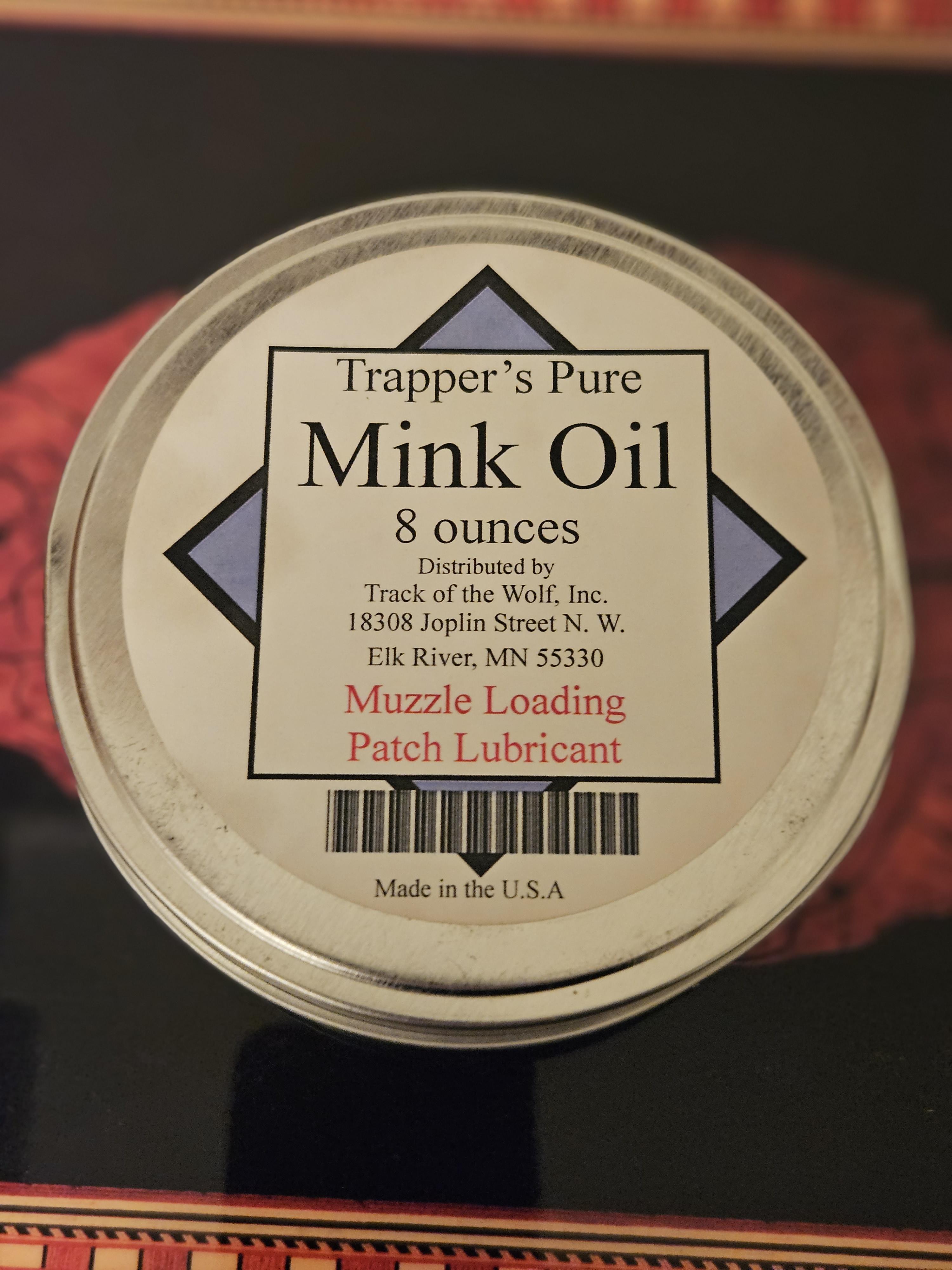
Just read this thread. I also have a Pedersoli Frontier but in .36 and I use Trapper's Pure Mink Oil grease availaible at TOTW since many many years and IMHO this grease is the key to success. This grease also does not freeze in cold weather.
Before the first shot I first ram a greased patch in the barrel. I use a .350 ball and a .016" patch. My powder loads could vary between 20 to 50 grains of FFFg. If I try a .010" the ball will be more difficult nor almost impossible to ram down the bore. The only mod I made to this rifle was to ream the muzzle crown to facilitate loading whitout a bullet starter. I started shooting flintlocks rifles 55 years ago.

gQQUNFM.jpg


undiUYs.jpg
 
Last edited:
Thanks all for the advise, yesterdays range trip went much better.
Started at 55 grains and stepped up in 5 grain steps
Ended up at 70 grains without much vertical change in point if impact.
At 50meters the gun shoots very low. 12 inches, so next step is to start filing down the front sight.
Managed 38 shots before ignition became inconsistent.
Swabbing with rubbing alcohol after every shot made a huge difference, loading was easy and effort stayed the same shot after shot.
Started shooting a used flint with 6 shots and multiple dry sparks on it and finished up with last three shots on the third flint.
Had a 40 cal jag in my cleaning kit so used that for loading and swabbing.
Final load ended up as .440 Ball with .015 cloth patch soaked in my 50/50 home made beeswax lard pistol wad lube, then a very soaked felt pistol wad then powder charge. After dropping charge rifle was tapped at breech to settle charge and ensure it made it fully down into the patent breech.
Sight picture is well understood. I have a custom ground set of shooting glasses with the focal point at at front sight of my Remington's. They work great for this rifle. Yes target is blurry so simple and high contrast works best for my old eyes.
On Monday the 15 yard range was booked for a security company to do ATC training so had to shoot at the 50. Planning to go back on Friday if the weather is clear. The 15 yard range is not covered so weather needs to be nice. All other ranges are covered.


Hmmmm... How you guys pick up your full buckhorn sights? Before filing the front sight someone should try to aim trought the full buckhorn like a big peep sight to shoot higher from aiming than the small u-notch (25m) when shooting at distance (50m) and to place the front blade between the two horns for greater distance (75m). Those full buckhorn sights are not made like this for decoration purpose and it works with my frontier in .36.
 
8ball: A good and workable suggestion. This idea isn't a new one, having been around for some years. But, still just as useful today as it was then. Thanks for sharing.

One method involves either etching or painting a reference line on the rear surface of the sight, to use as an elevation guide when shooting at various ranges. A bit of trial and error involved, but does work.
None of my flinters currently feature buckhorn sights. So sight filing is my preferred way to regulate sights. But, I would likely pursue this method, with one that does.

Al
 
Another usefull feature about full buckhorn sights is that they are more visible for sighting game at dawn and and at sunset, they contrast. Easier to aim with in low light. Many years ago using my Lyman GPR in .54 I harvested a deer with five minutes left in legal time after the sunset.
 
Last edited:
Back
Top Bottom