









































Picked up another Gewehr 1888 Commission Rifle.

Claven2

CGN Ultra frequent flyer
Rating - 100%
409   0   2
Location
Onterrible
A cross-post from something I wrote for milsurps.com:

I think I was quite lucky to find this one on the Collector's Source website for a very fair price. It's an 1890 Steyr Gewehr 1888/05 Commision rifle in original trim with a Turkish property mark on the receiver. For those that don't know, the 1805 modification involved adding Mauser-type charger guides to the receiver (silver soldered and riveted on), and a conversion of the magazine from mannlicher-type en-blocs to a standard single-column internal magazine for use with the Gewehr 98 charger clip. A shallow thumb-cut was also added to the receiver side-wall as shown here:
DSCN3494-1.jpg


This one does not appear to have been reworked since the 1905 upgrade in Germany and retains all matching serial numbers except the bolt and the serrated button on the sight slide. The stock is unsanded with few dings and all cartouches still crisp. Blueing appears original and most of it is still there. Bore is about perfect and slugs to .311" land and .321" groove. barrelled receiver and all the other parts that should be are still in the white.

It looks like Turkish changes are limited to arabic script being added to the original sight leaf, a replacement Czech-made bolt that matches itself, and the property mark on the receiver. It's thought that a good many of the Gew88 rifles in turkey got there after WW1 with the bolts missing, presumably due to the disarmament terms of the Versailles Treaty and the Paris Peace Conference. Turkey evidently have BRNO make a bunch of bolts up to bring those rifles back into action.

Here are the pics of the serial numbers.
Bolt (in turkish script the serial of the bolt is 76451):
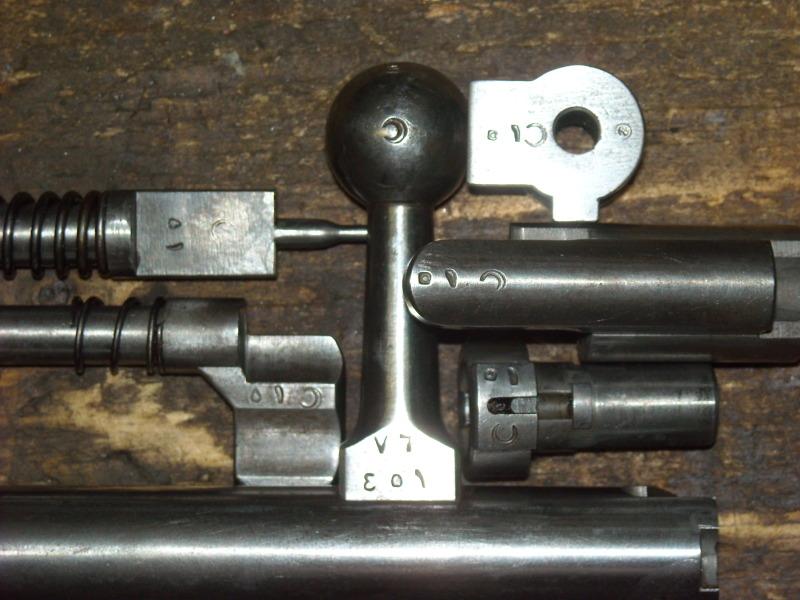
DSCN3500-1.jpg

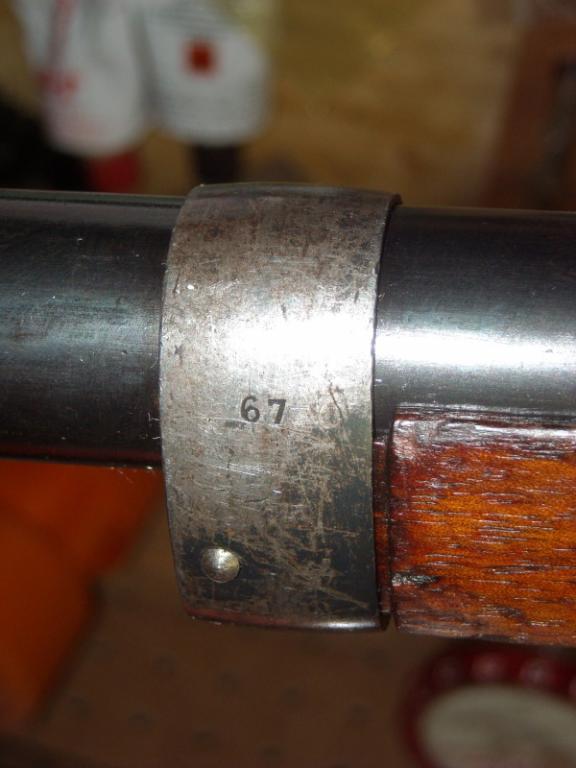
Bands:
DSCN3498-1.jpg

DSCN3496-1.jpg

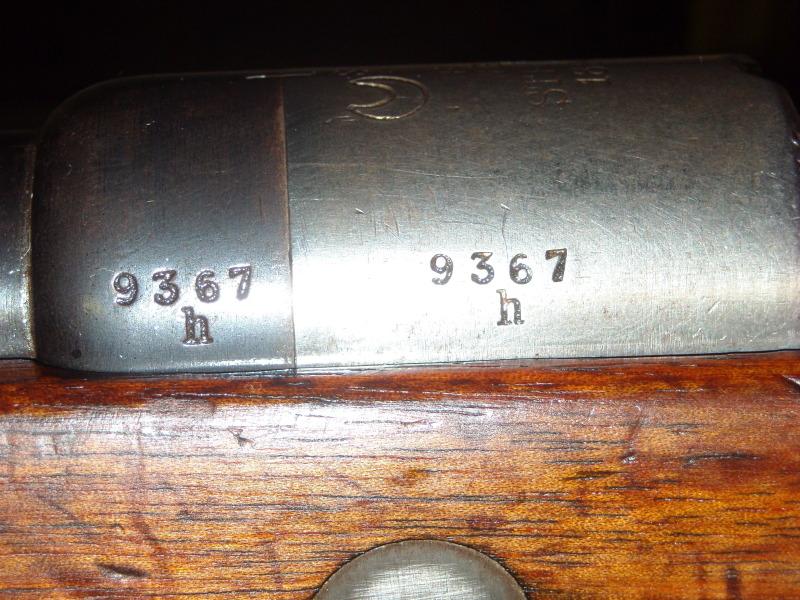
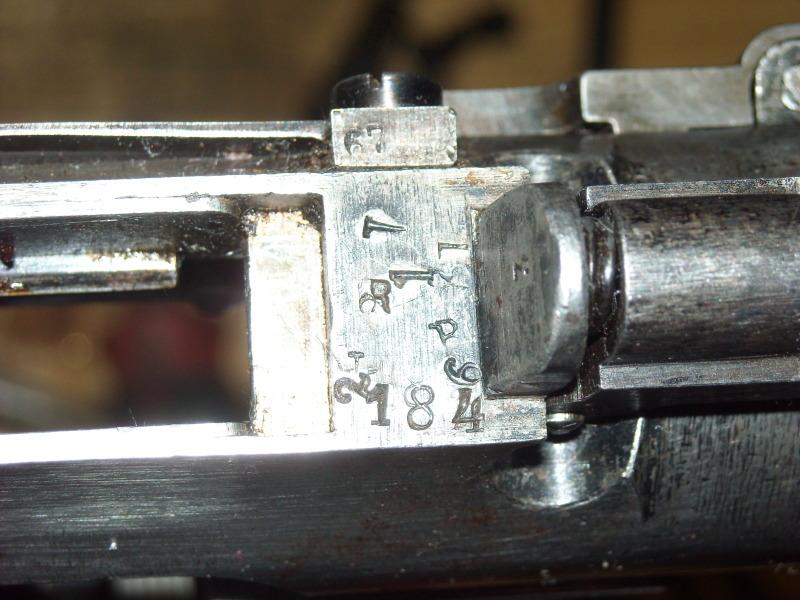
Receiver and barrel jacket:
DSCN3492-1.jpg

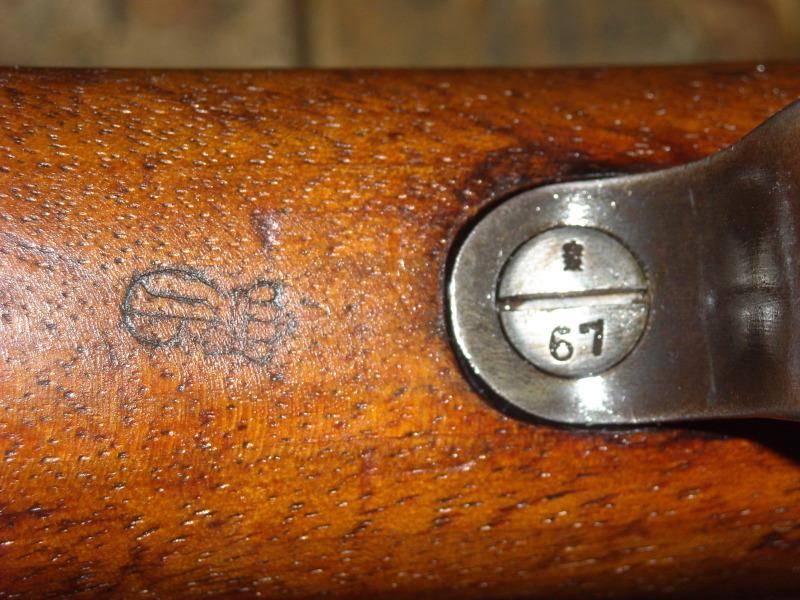
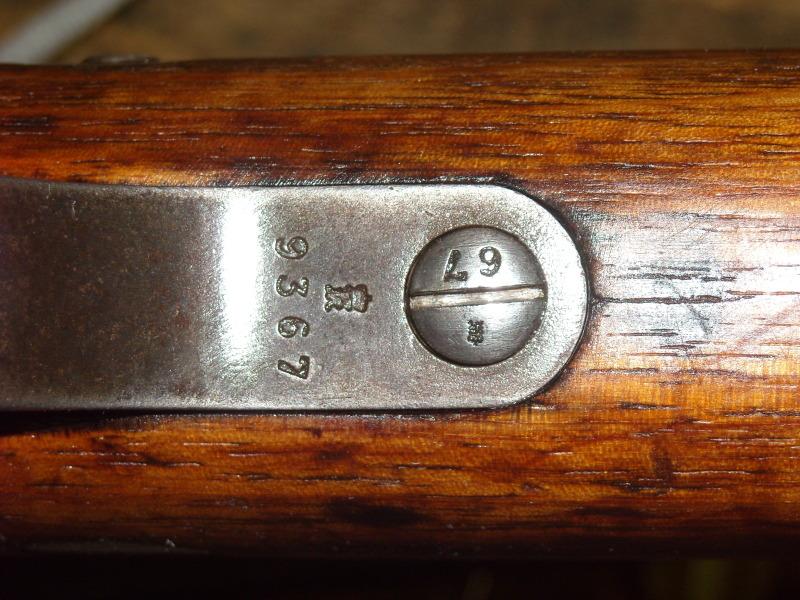
Action screws and the bottom metal:
DSCN3484-1.jpg

DSCN3483-1.jpg

Trigger assembly:
DSCN3479-1.jpg

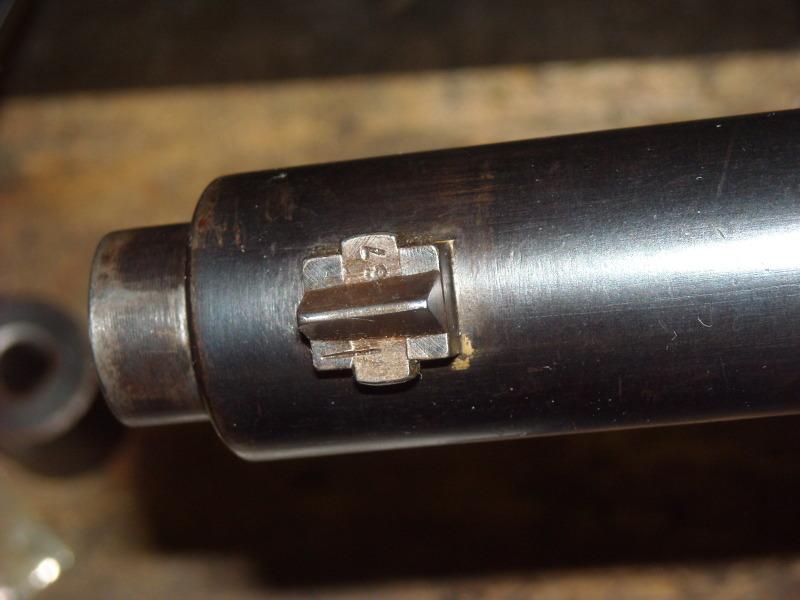
Barrel (the other number is the assembly number, more on that later):
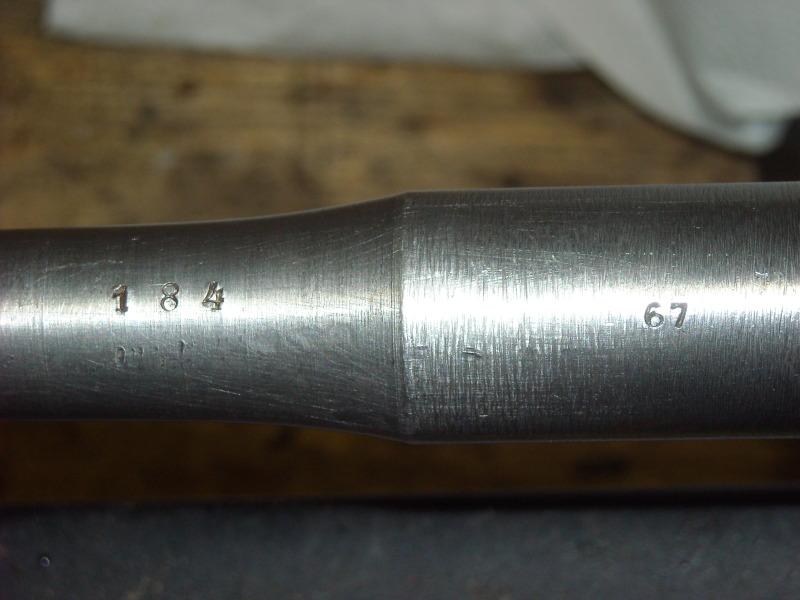
DSCN3475-1.jpg

Front sight:
DSCN3474-1.jpg

Rear sight slide and mismatched button:
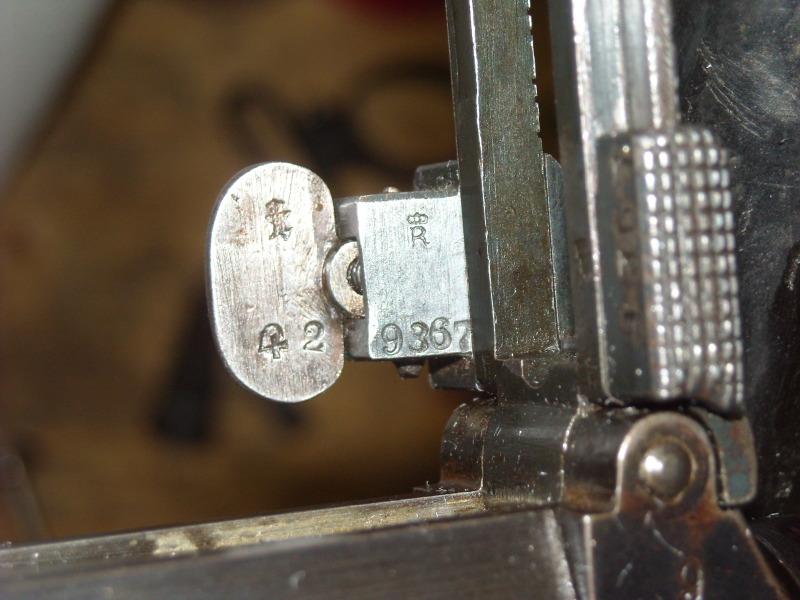
DSCN3472-1.jpg

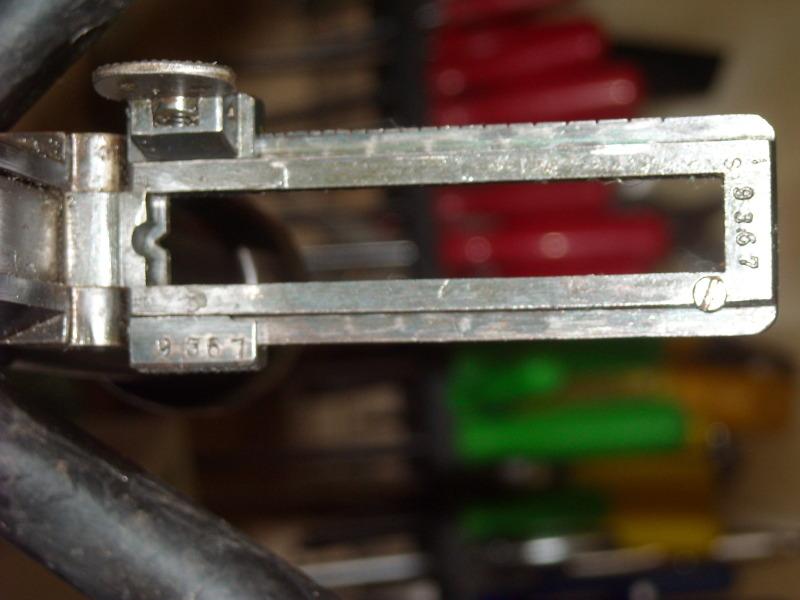
Sight ladder:
DSCN3471-1.jpg

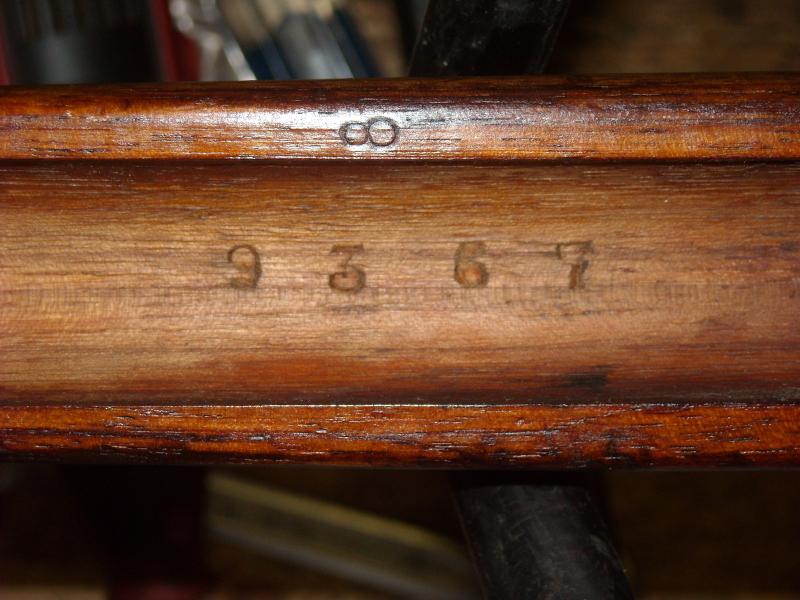
Stock:
DSCN3465-1.jpg


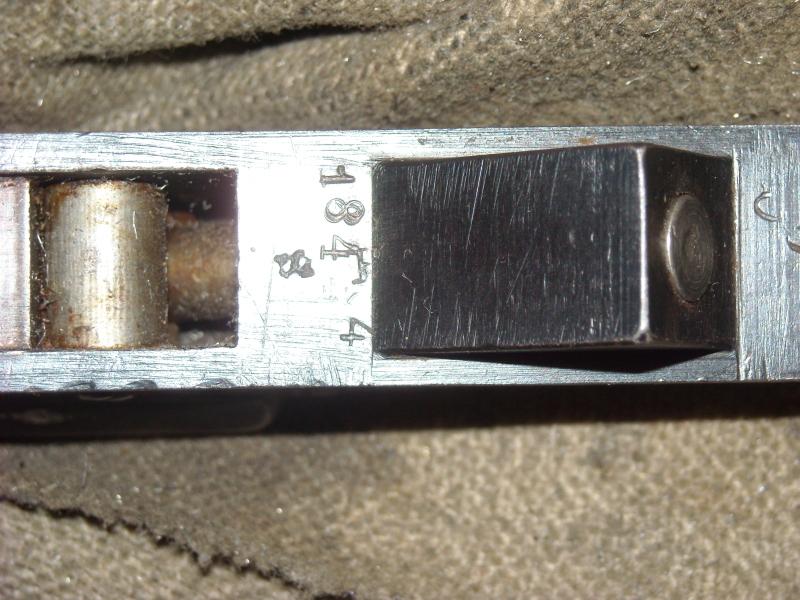
Gew88's have assembly numbers stamped on the major components and serial numbers were added later to the assembled rifles as they came off the line. Here are the matching assembly numbers, in this case No. 184.

Bbl jacket below woodline:
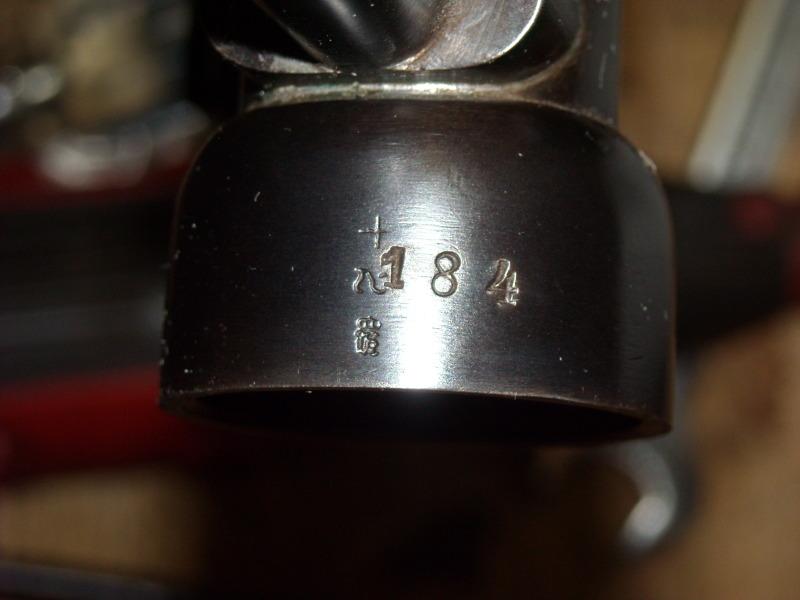
DSCN3466-1.jpg

Barrel:
DSCN3475-1.jpg

Receiver:
DSCN3477-1.jpg

Bottom metal:
DSCN3482-1.jpg

Follower:
DSCN3481-1.jpg


Next we have the original unit marking. This rifle has no struck unit markings and only one marking is present on the rifle, meaning it spent its whole life in the 10th Bavarian Infantry Regiment Prinz Ludwig at Ingolstadt. In 1914, the 10th was the oldest regiment in the Bavarian Army having been formed in 1682. Incidentally, This is the first Regiment Ernst Rohm joined in 1906 as an officer-cadet (he later went on to become Hitler's No.2 and leader of the SA before being murdered during the night of the long knives).
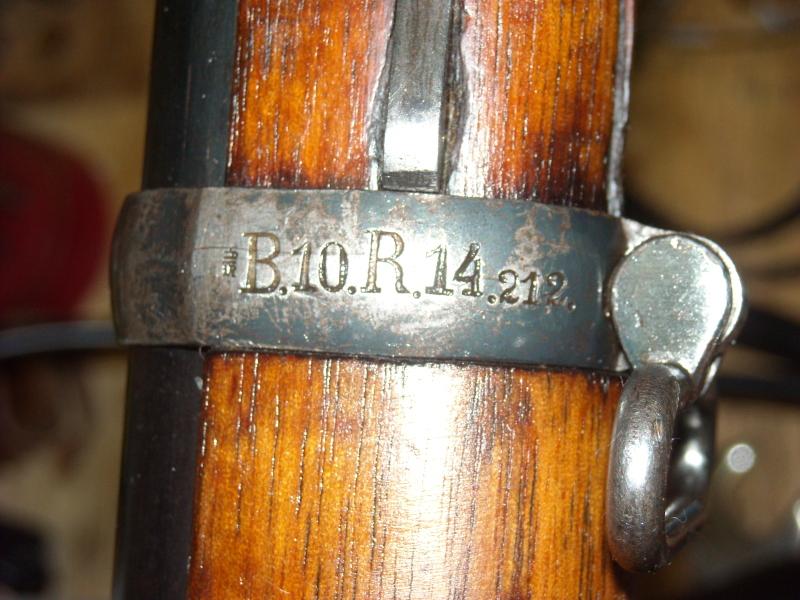
DSCN3489-1.jpg


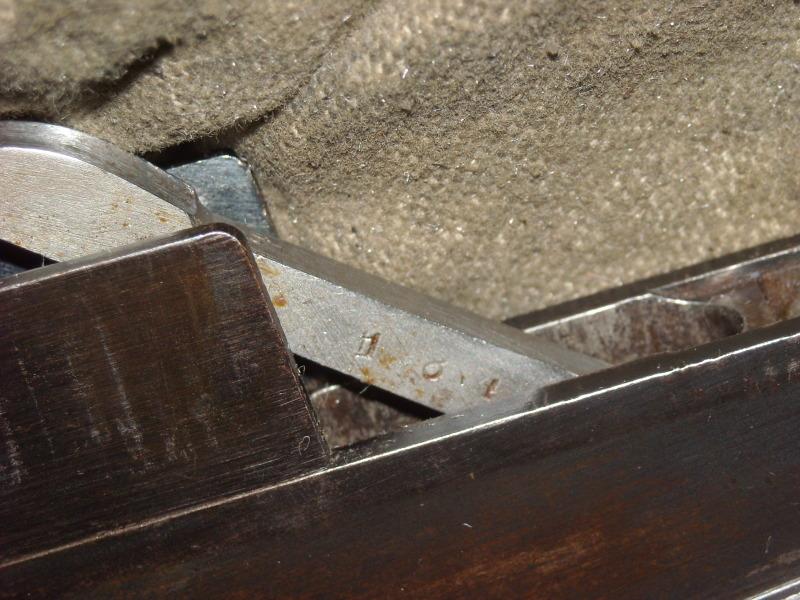
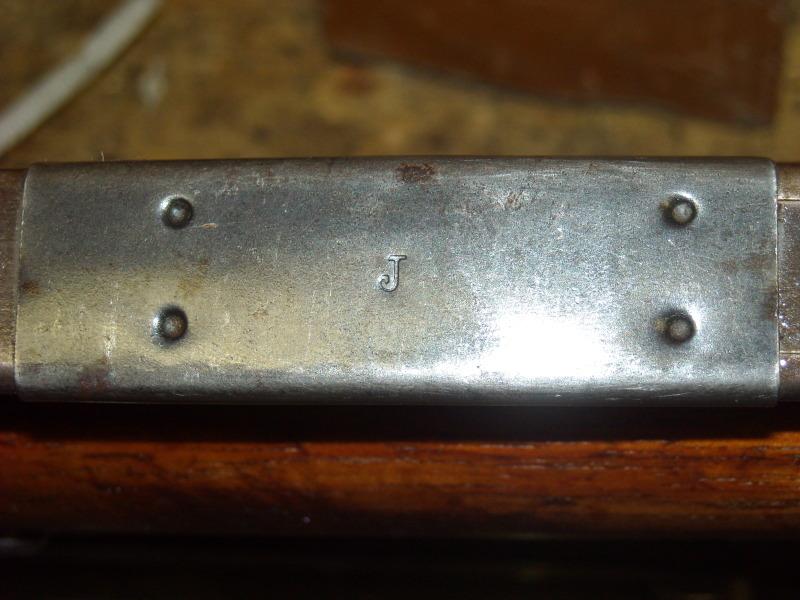
The buttplate has another number on it, "J 11". I'm not sure what that refers to as it's not a typical issue marking.
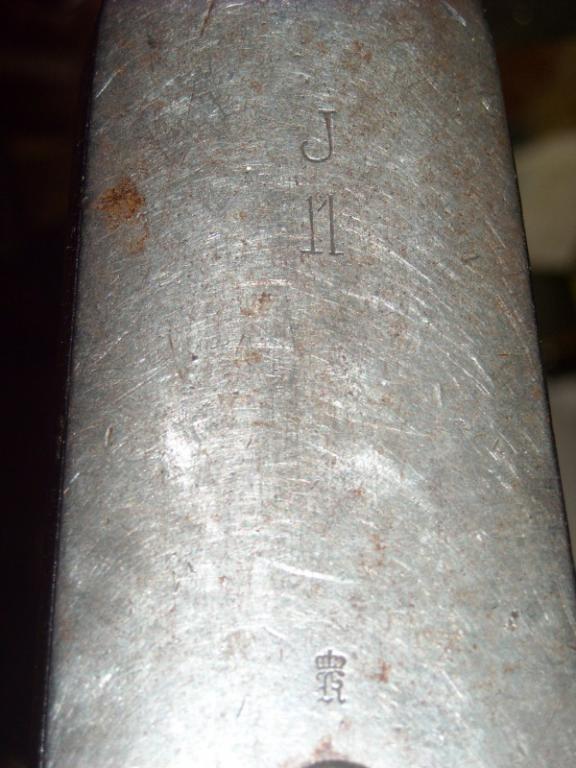
DSCN3488-1.jpg


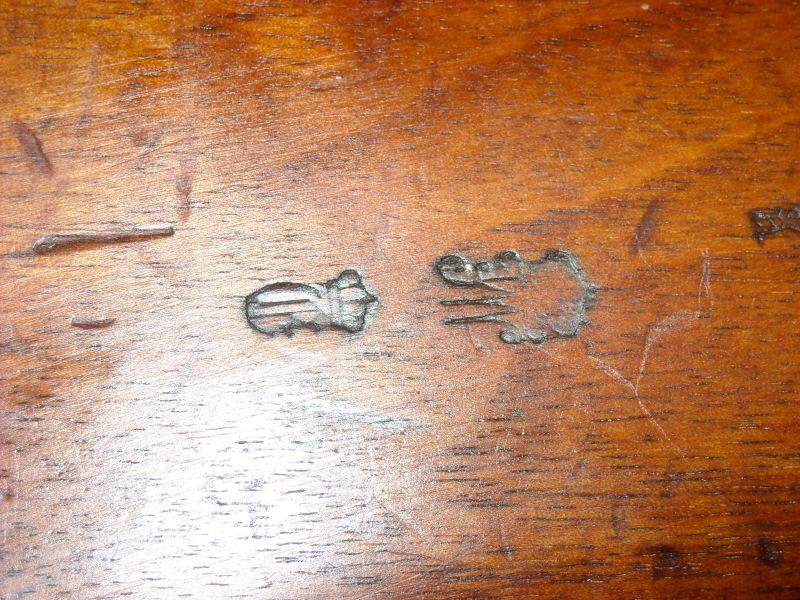
All the stock cartouches are beautifully preserved including the Kaiser's property mark:
DSCN3486-1.jpg

DSCN3484-1.jpg

DSCN3485-1.jpg


The bore groove diameter is stamped into the rear sight base. This is often seen on rifles that served in turkey, though I'm not sure if the turks did that, or if the Germans did. 7.91mm = .311" which is the actual land diameter of this rifle's bore.
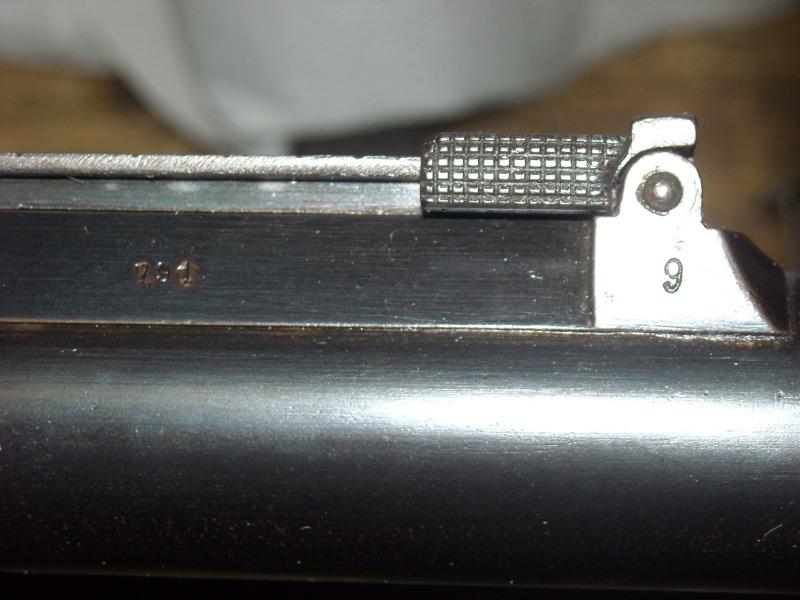
DSCN3468-1.jpg


Here we see the original rear sight ladder has had the original markings mostly milled off and turkish-arabic script numbers added. Turkey used this script until 1928 and pre-1928 arms will usually have these graduations. After 1928 they adopt the modern latin alphabet and numerals.
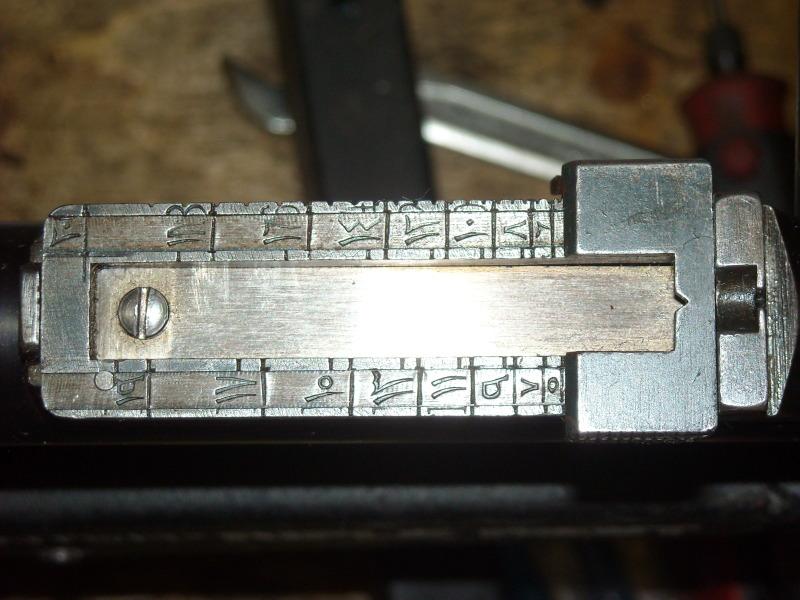
DSCN3469-1.jpg


For deciphering purposes, these are the pre-1928 Turkish script letters:

ScreenShot2012-03-31at80202PM.png


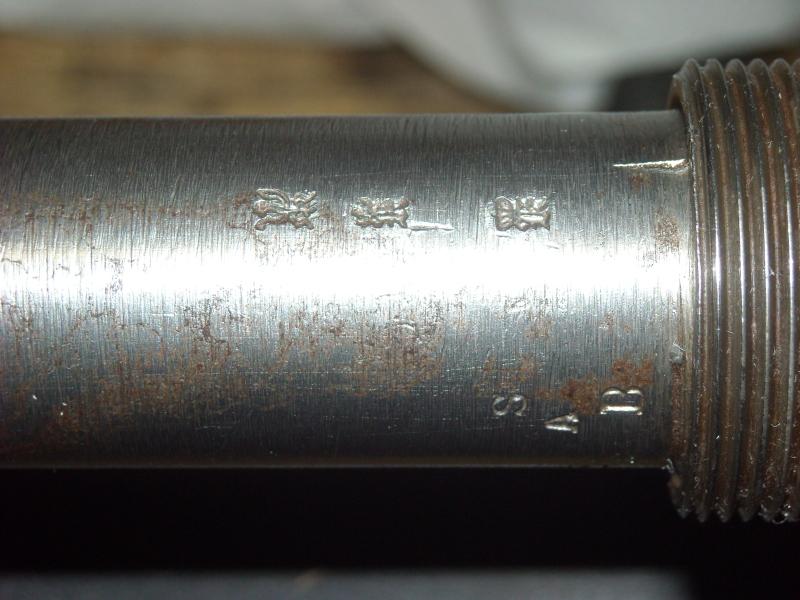
As you can see, originally Gew88's have barrels in the white as well as the receivers, only the thin-walled barrel jacket was blued.
DSCN3476-1.jpg


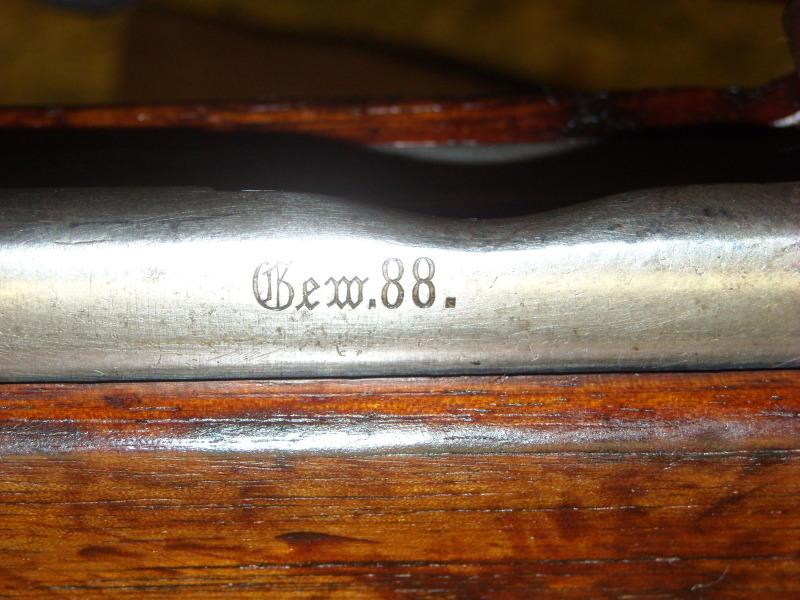
Most Gew88S and Gew88/05 rifles you see will have one of these sheet-metal covers added over the original en-bloc ejection port. These were hastily ordered and added to the stock of Gew88's in Germany in 1914 after the first bit of trench warfare pointed out the issues with having points of mud and dirt ingress on a rifle.
DSCN3495-1.jpg


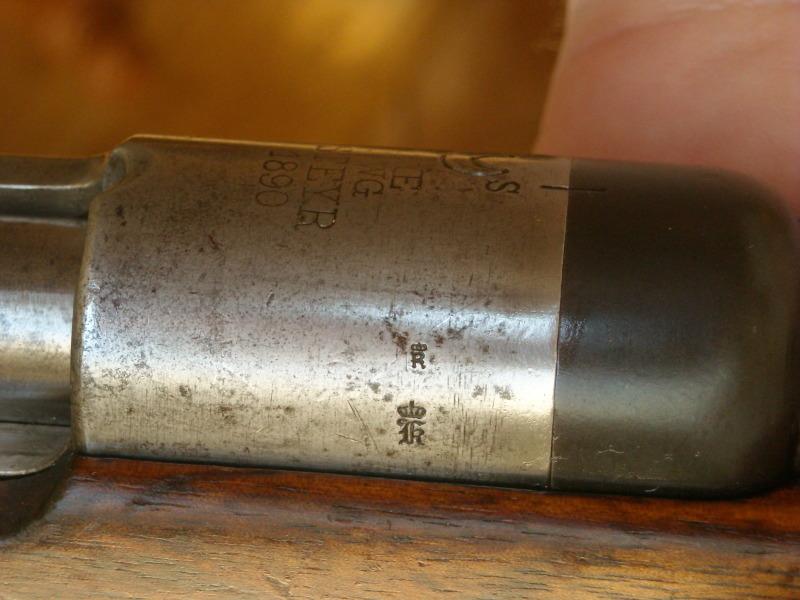
Of course, all over the rifle you will find little proof marks of a crown over a gothis script letter. These are called "frakturs" and are an inspection mark from manufacture. They are commonly found on most imperial-era military arms.

DSCN3499-1.jpg

DSCN3508-1.jpg


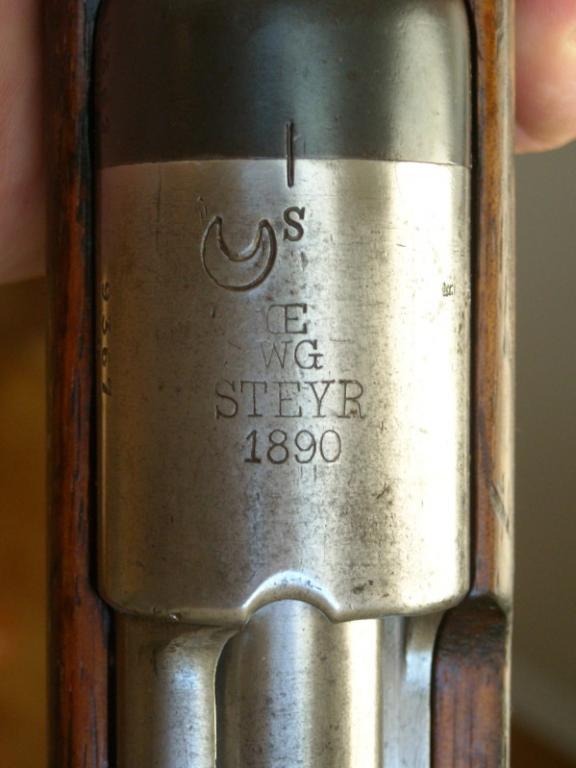
And here is the manufacturer's roll stamp and an overall shot of the rifle:
DSCN3507-1.jpg


DSCN3501-1.jpg


Finally, a shot of the Gew88 next to the rifle it was built to counter, the 1886 Lebel which is also an 8mm rifle:
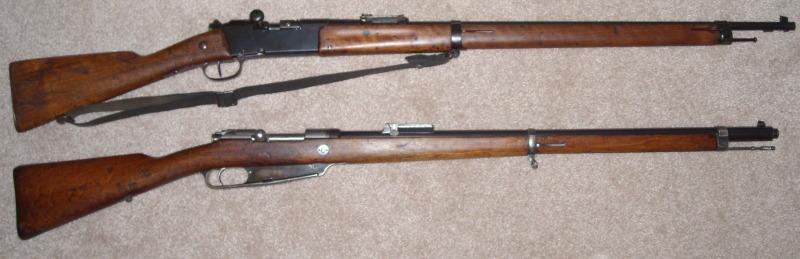
DSCN3502-1.jpg


Edit:

A LOT of pals get confused over classification of a Gew88 with charger guides as there were two patterns, the 88/05 and the 88/14. Over on the Parallax boards, they have been looking for confirmed Gew88/14 examples and have thus far located a total of THREE (3) examples compared to hundreds of 88/05's. In all likelihood you will find a Gew88 (original trim), Gew88S (still an en-bloc loader but the clip now ejects out the top, not the bottom) or an 88/05 (like the above pictured rifle). A Gew88/14, on the other hand, will have a rear sight ladder with a new scale silver-soldered over the original sight leaf and the charge guides are crudely made from metal built up by welding and don't look clean and precise like the machined and brazed-on charger guides of a proper 88/05 conversion.
 
Very, very nice specimen of an original Steyr-built early Gew 88 rifle.

I am sure you are aware that this rifle has the original lightweight chamber section to the barrel. The later Gew 88nm had a heavier chamber reinforce. I don't think Steyr built the later model but I could be wrong. (In fact, I WAS wrong once, but that was back in......);) I had better add my own H:S:

I have been having decent luck with mine, using standard 8mm casings and reloading with Hornady RN slugs for a .32 Special, which are .321" diameter. Seat them out, keep the loads light and they can be a lot of fun on the range, and accurate to boot.

A FINE Toy!

Can I turn green now?
.
 
Thanks Smellie :) This is actually not the first 88 I've had, but it is the nicest. I still have a good many pulled Turk 154gn 1905 patronen projectiles left that I use to reload for the 88's. I use regular 8mm brass and just dial the loads down a little.

They are amazing little guns to shoot, and honestly, even if you load .321" projectiles to the full 1905 spec load, the receivers are stron enough to take it (and they did over and over in WW1). Reason I dial them down is because of the lack of modern gas handling and my desire to not get facial burns if I ever rupture a casing!
 
Yes, we can get along much better than the old-timers could because we have Hudson Maxim's MR powders, now IMR.

All the poor Germans had back then was that fast-burning Flake powder: get an overexuberant primer and pressures could go up 'way too fast and the poor "Jew-rifle" might lift out her chamber. Didn't happen much, but it did happen.

Those were the VERY early days of smokeless powders. The 1904 load generated a mean working pressure of only 17.5 Imperial Long Tons of pressure, versus 21 tons for the 1888 load. THAT made a difference! Figures are from TBSA - 1909.

Still..... a beautiful piece of 19th-Century work.
.
 
A LOT of pals get confused over classification of a Gew88 with charger guides as there were two patterns, the 88/05 and the 88/14. Over on the Parallax boards, they have been looking for confirmed Gew88/14 examples and have thus far located a total of THREE (3) examples compared to hundreds of 88/05's....... A Gew88/14, on the other hand, will have a rear sight ladder with a new scale silver-soldered over the original sight leaf and the charge guides are crudely made from metal built up by welding and don't look clean and precise like the machined and brazed-on charger guides of a proper 88/05 conversion.

Nice rifle, the 88s are under appreciated.

Since I am rummaging through milsurps tonight, here is my 88/05 and 88/14 (bottom one, Amberg 1893). I knew the 88/14 was harder to find but never considered it rare. Do you think it is worth posting it over at Parallax for positive identification ?

dscf0967s.jpg
 
Wow - nice 14! I think posting it there certainly could not hurt. I have personally examined maybe 12 88's converted for stripper feeding and I've never seen a 14 in person.

Any evidence of Turkish service on yours?

IMHO they are more than uncommon - they are rare. In the states, among Gew88 collectors, we are talking "Holy grail" rare. In Canada, it's possible they could be more available than in the US though. I think most owners would not realize the difference.
 
Wow - nice 14! I think posting it there certainly could not hurt. I have personally examined maybe 12 88's converted for stripper feeding and I've never seen a 14 in person.

Any evidence of Turkish service on yours?

IMHO they are more than uncommon - they are rare. In the states, among Gew88 collectors, we are talking "Holy grail" rare. In Canada, it's possible they could be more available than in the US though. I think most owners would not realize the difference.

Thanks, I put the pic up at Parallax, see what the experts think.
 
Gew 88s are great. I have an unconverted rifle that appears to bear Canadian capture marks from WW1.


Click the picture for more.

Nabs is on an eternal mission to get this rifle from me.
 
Nabs is on an eternal mission to get this rifle from me.

Brace yourself, for one day, it will happen :D.

@4bt1

Gewehr 88.14s are not common on the collector market today. There is one documented example in the U.S. and it is featured in the book "Commission Rifles" by Paul Scarlatta. Why are they so rare ? The theory goes that not as many were converted than the 88.05s in the 1906-1907 period. The 88.14s were converted in late 1914 with the primary reason being that Germany was at war and not enough Gewehr 98s were around to equip line and reserve regiments. You see alot of pictures from the 1914 to 1916 period with troops armed with Gewehr 88 rifles and a quite a mix of equipment so you can understand the pressure they were under to make new formations and re-equip old ones.

As for why 88.14s are seldom encountered today, the generally accepted theory is that many were destroyed during the 1920s as per the Treaty of Versailles and the disarmament of Germany. Many Gewehr 98s were put into hiding as these were a superior rifle to the Gewehr 88 so why destroy them ?

Many of the 88s encountered on the market today are 88.05s that went to Turkey as these would have been spared the destruction of the 1920s in Germany.

The workmanship on the 88.14s is much more crude and you can easily pick them off as they lack the groove at the bottom of the receiver (done with the 88.05s for backwards compatibility with the Patrone 88) and the thumb grove on the left receiver wall for ease of loading. The charger guides were also welded on and you can see that rather clearly in your picture. It shows how desperate the Germans were to get working arms out to their troops in 1914-1915.

@Claven

So you are the bugger who bought that Steyr :D ? I was looking at getting that rifle but I did not have the funds with school going on. You torture me with pictures and I will honestly admit I am quite jealous and most envious.

Here is what information I can offer from my experience collecting 88s and comparing her to the 88s I have.

Your rifle was made by Steyr in 1890 for the German military as part of a contract agreement to re-equip the German army in response to the 1886 Lebel of the French. For the 88, the Germans felt that immediate re-equip was necessary and that is why the sheer bulk of 88s were produced, night and day, from 1889 to 1891. The most common range is 1890 and 1891. Steyr only produced German contract 88s from 1890 to 1891. After that, they turned their attention to the South American market and produced contract 88s for them.

This fast re-armament was not without it's problems which is why the Germans built the Gewehr 98s in small numbers up to 1914 so as to address any issues quickly. This slow re-armament would also be a critical factor when war was declared in 1914 and the call for 71s, 71.84s, and 88s would go out.

Your bolt is a Czech replacement, made to order for the Turks during the 1920s as the original German bolts were removed by the British to disarm the Turks. Czechkoslavakia apparently inherited the Gewehr 88 production machinery and produced not only bolts but replacement barrels too (in the .318" diameter for ones that have been documented). These barrels mainly went to the South American market from what I have found.

The Czech export mark, a Z in a circle, is what is stamped on all bolt parts. The Turks would have marked the bolt pieces in their Fashi text and property stamps. This indicates the work was done before 1928 and most likely before the Turkish revolution in the 1920s.

Your bands both match which is nice to see as she would have served Germany for 25 years before WW1, another two with Germany before being given to Turkey and another 60 years with Turkey so you can imagine the part swapping during this time frame to keep these rifles servicable. The bluing is quite nice to see as it is worn off of my 88s.

Your rifle would have been the 99,367th rifle off the line in 1890 from Steyr.

You have the German fire proof acceptance mark on the grip, this means the rifle was test fired, passed, and marked. Both of your trigger guard screws match too!

Magazine matches as well and is marked. I believe Germany sent some of it's own inspectors down to Steyr to mark the accepted parts as well but I am unsure at this time.

Your barrel matches the rifle and is the early, first pattern "hump" barrel as I call it. Steyr apparently did not adopt the heavy tapered barrel that some of the German state and private firms did in the 1891 period.

It looks like the only piece that is mis-matched is the depress button for the rear sight.

You do have a matching stock which I am quite envious as all my 88s have had their stocks swapped over their service life.

The "184" I am uncertain what this means but perhaps it was inventory control for the parts as the rifle was being built at Steyr ?

Matching unit marking to a Bavarian unit too which you already have done your research ;).

The " J / 11" on the butt plate is a repair depot marking that is common on 88s. This was a WW1 era marking that seems to have been applied in the 1914-1915 period. It makes sense as all 88s generally would have served for 25 years. Inspection of arms and rebuilding as required would have been done and the rifles re-issued to equip units requiring arms.

The "11" is the artillery and repair depot in Posen I believe and the "J" is the armourer's initial who did the inspection and cleared the firearm for service. Given the matching stock and unit marking, this may indicate the Bavarian unit was sent to the Eastern front against the Russians during 1914-1915 ?

The butt stock cartouches are most interesting as that is the mark for Kaiser Wilhelm II but the rifle went to a Bavarian unit (the unit marking on the lower band was done between 1890 and 1894). Usually rifles that went to a particular state had their monarch's initials on the rifle. You see this with Saxony issued rifles. Perhaps the rifle was made for "Germany" per say but ended up with a Bavarian unit ? Impossible to tell today though but most interesting in any event.

You nailed the caliber marking, "7.91mm" as measured by Steyr in 1890.

The magazine cover is also right. Ordered by the Germans in October 1914 to address mud and dirt issues while operating in the trenches. Many were made in 1914, some in 1915 but these are not as common. Yours was made by a company (can't remember the name off the top of my head) that made tin toys in the pre-war years. They were quite famous and their toys today are highly sought after by collectors.

You are also right about the rear sight. These changes would have likely been done during WW1 when the rifles were given to the Turks. The range graduations are from 400m to 2000m as per the German spitizer round of 1903.

The bottom of your rifle has the German fireproof and acceptance marks after being test fired and accepted.

Interesting to see only one inspector mark on the receiver. German made examples usually have three that cover: receiver hardness, parts fitting, and final fit of parts and test firing.

Beautiful receiver marking, the crescent moon was likely added during the 1920s.

You have what I call a "first variation" 88.05 that went to Turkey as she is basically in her German trim of the period. Second variations are ones that were re-worked in the 1930s and are rebuilt and re-blued but still in German trim, and the third variations are the 88s that are completely re-built to closely resemble the 1903 Mauser.

Bavarian units are noted for having take care of their rifles and equipment extremely well (more so than Prussian units). This would explain the overall condition. The lack of wear suggests she probably did not see any real action but that is only a guess. She is certainly the cleanest 88 I have ever seen. She likely would have been carried around by Turkish troops during the 1920 revolution with Mustafa Kemal. Who knows, maybe she was at Smyrna in 1922 ?
 
Thanks Nabs, most of that I knew also as I have Scarlatta's excellent book. I was tickled pink to have gotten the rifle, particularly for the low asking price, there is a Loewe at CS still that is probably a second pattern 88/05 that is listed for more money and is less rare and not as nice.

I can only assume the vendor didn't realize the worth of a Steyr made example or perhaps they thought the turkish property mark was a detractor?
 
@4bt1

Gewehr 88.14s are not common on the collector market today. There is one documented example in the U.S. and it is featured in the book "Commission Rifles" by Paul Scarlatta. Why are they so rare ? The theory goes that not as many were converted than the 88.05s in the 1906-1907 period. The 88.14s were converted in late 1914 with the primary reason being that Germany was at war and not enough Gewehr 98s were around to equip line and reserve regiments. You see alot of pictures from the 1914 to 1916 period with troops armed with Gewehr 88 rifles and a quite a mix of equipment so you can understand the pressure they were under to make new formations and re-equip old ones.

As for why 88.14s are seldom encountered today, the generally accepted theory is that many were destroyed during the 1920s as per the Treaty of Versailles and the disarmament of Germany. Many Gewehr 98s were put into hiding as these were a superior rifle to the Gewehr 88 so why destroy them ?

Many of the 88s encountered on the market today are 88.05s that went to Turkey as these would have been spared the destruction of the 1920s in Germany.

The workmanship on the 88.14s is much more crude and you can easily pick them off as they lack the groove at the bottom of the receiver (done with the 88.05s for backwards compatibility with the Patrone 88) and the thumb grove on the left receiver wall for ease of loading. The charger guides were also welded on and you can see that rather clearly in your picture. It shows how desperate the Germans were to get working arms out to their troops in 1914-1915.

Mr. Nabs,

Thanks for the info on my 88/14, hard to believe there are that few around. Since I had it out for the pic yesterday, I stripped it to take a closer look. It has matching numbers on receiver, barrel shroud, barrel, both bands, triggerguard, one guard screw and interior of stock.

In addition to the differing stripper clip guides, the interior of the triggerguard is different from my 88/05 in the mods made (88/05 top and 88/14 bottom in pic).

8814p.jpg


Here it is back together.

88142.jpg
 
Last edited:
@ Claven

Dr. Dieter Storz is soon to release a book focusing on the Gewehr 88 and it will be similar in appearance and layout to his Gewehr 98 book. Rumour has it he will release it this year so I am very excited to see what information he was able to dig out of the Bavarian archives. You can imagine much of the information on Gewehr 88s today is taken from comparing surviving examples and relating what it found to the timeline of the German empire at during the late 19th and early 20th century.

Uusally the crescent moon is seen as a visual detractor for some collectors but I see it as a mark of passage just like a passport. You can piece together her history for the last 120 years.

She started out being built by Steyr in 1890, issued and served with a Bavarian line infantry formation, being called to active wartime service in 1914 with the Germans, being given to the Turkish as part of the war aid program in 1916, serving with the Turks against the British in Eastern Mediterranean, being apart of Mustafa Kemal's push to re-establish Turkey in the 1920s and free it from Triple Entente take over, serving with the Turks as a reserve arm up to the 1970s, being imported into Canada at that time, surviving the collector market for nearly 40 years and ending up in your hands not too long ago in her remarkable condition. If that isn't a story to be told, what is ?

@ 4bt1

Thank you for sharing a picture of the magazine of the 88/14. You can clearly see where they attached a rather crude back piece that rounds could be stacked on top of eachother. Without the side walls, I imagine the rounds would move around a bit and possible get stuck in the magazine.

Since there are so very few of these documented, you may wish to share your pictures on CGN, Gew88.com, and Gunboards under the "Mannlicher, Steyr, & Blackpowder Cartridge Rifles" sub board as it helps build the research and findings about these late conversions.
 
By chance, does the 88/14 bear any Turkish markings (i.e. bolt, rear sight, stock..etc ?). I can imagine a few 88/14s may have found their way to the Turks alongside 88.05s but this has so far been undocumented with no supporting examples.
 
There also does NOT seem to be many, if any, original Gew88 or Gew88S rifles here in Canada. In the US there are more from the Gibbs Equadorian import back in the late 1990's.
 
I have Turk Gew88 that has been upgraded in the 1930s with a new barrel and pistol grip stock. My rifle has a 1939 date. I couldn't find much info on the 88 until I saw something about a book on the gun. I asked Joe Salter about it and he had some in stock.
I picked up this book: A Collector's Guide to the German Gew. 88 "Commission" Rifle by Paul S. Scarlata.
Before the Internet, I used to get all my books from a gentleman by the name of Gaston Comeau. He brought tons of books to the gun shows and if he didn't have it there he would send it to you.
I will be watching for the new book by Dr. Dieter Storz. I will be looking for a review on the book before buying.
 
The Scarlatta book only came out in, I think, 2007. It's fairly recent and is still "the bible" for these. Hopefully though, the new book by Dr. Storz will add even more new info.
 
Back
Top Bottom