









































Please help a noob with this Tower of London Percussion Rifle!!!

AcerOne

Regular
EE Expired
Rating - 100%
2   0   0
Location
Calgary, AB
Hey guys,

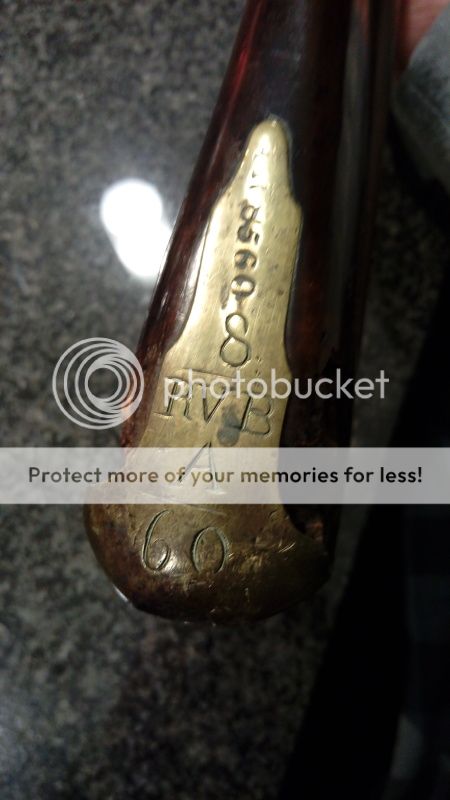
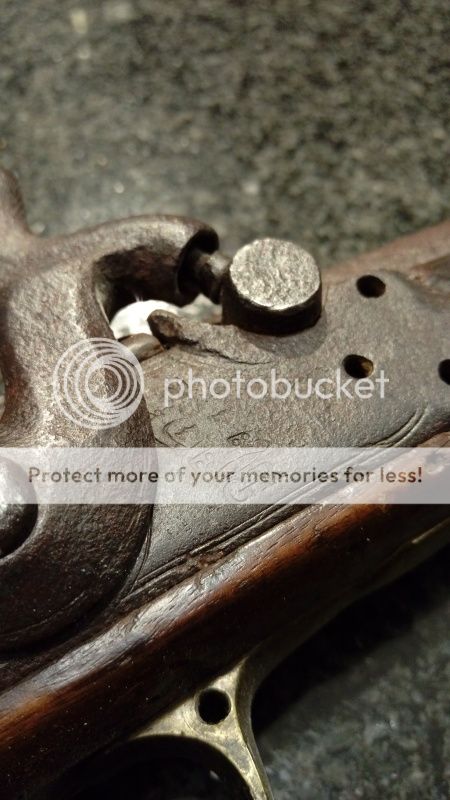
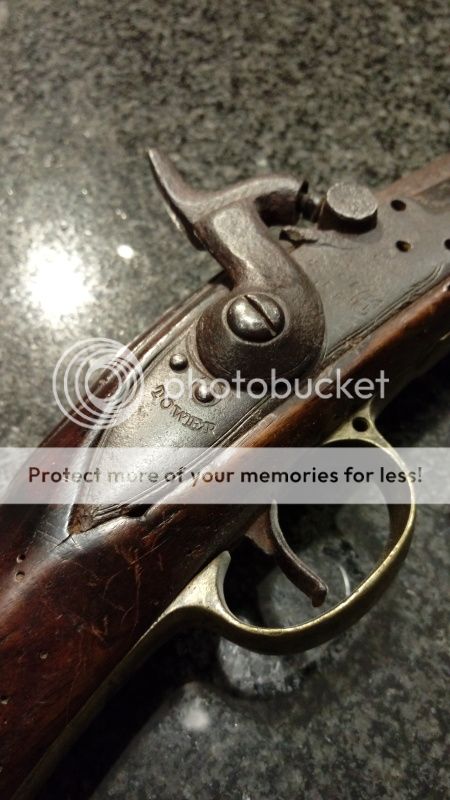
First off, my knowledge with these old guns is pathetic at best but I am taking a real interest in a very old firearm that has been in our family for a long time. All components of the gun work. The condition is not good but Im more interested in the gun itself and if it is a REAL tower issue gun as opposed to it being worth anything. Ive taken pics of numbers/markings of relevance in hopes that some of you gun guru's can provide any info or links where I can learn more about this weapon. Hopefully the pics work!

Thanks a ton to those who look/reply.
IMAG0110_zpsvfcopj2f.jpg


GR - George Rex (King George)


Date apprears to be 1831
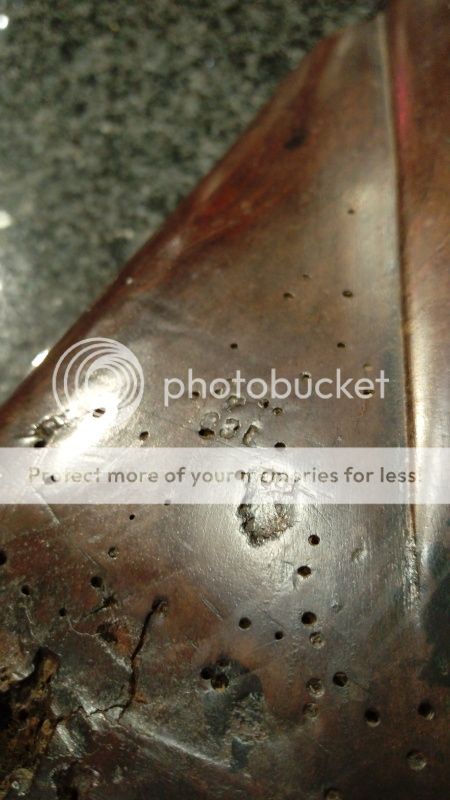


Any help is much appreciated!
 
From the bits you've photo'd it looks 100% authentic to me. (shame about the wood worm) I can't tell from the angle if it was a converted flinter or an original side lock. Either way it's nice. How long has it been in your family and where to you recon it came from (area, Upper/Lower Canada...Canada West?)

Find a sling (you'll need the swivels) and an old bayonet to set it off!:)
 
AcerOne,

We have two of these in the family. The various info. I've received over the years (reliable??) are that ours are Short Land Pattern (there was also a Long Land Pattern) East India military musket (Brown Bess). They were used in Canada in the 1812 War with the U.S. I believe the OAL of our muskets is 39 1/2". If yours is longer you may have the Long Land Pattern or one of a couple other versions in use at the time. Originally, they were all flintlock (percussion wasn't invented) but about 1838, the military started introducing percussion firearms and many of the Tower flintlocks were converted to percussion and later sold to the public. If you look at the area behind and below the drum that holds the percussion nipple, you can see where the original flintlock powder pan has been removed / broken off.

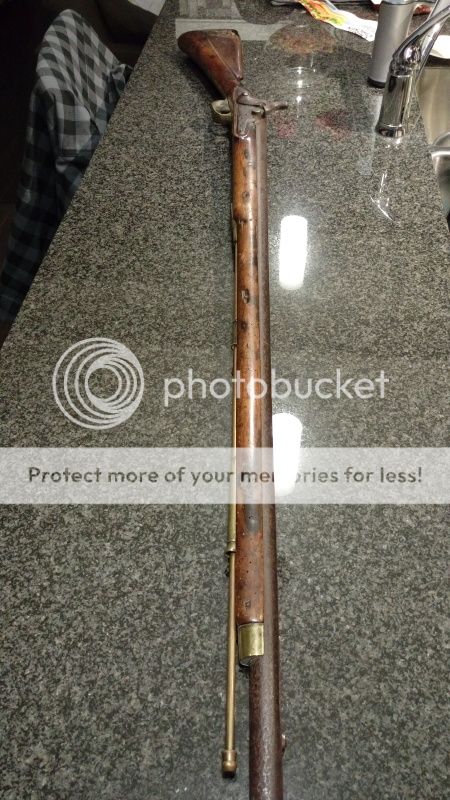
Not sure if that is the original ram rod. The original ramrods in the Short Land Pattern were steel, plain looking rod with a simple bell in the thickness of the rod at the muzzle end. Yours may be of an earlier version or may be a replacement. Hope this limited and questionable info. will give you a starting place to do a Google search.
 
Some info. to correct. I just measured my Short Land Pattern muzzle loader and the OAL is 55 1/2". The barrel is a little more than 39". I have an original bayonet for it (rough shape). The cylindrical barrel of the bayonet was slipped over the muzzle and the front sight was used as a lug to hold it in place.
 
You are probably correct. Sights or no sights these firearms weren't noted for any degree of accuracy. I noticed a uniform, slight groove along the top of the tang at the rear of the barrel (on my firearm). It seems a soldier would automatically line the two up when he shouldered the firearm. However, from what I have read, when the .75 calibre ball left the barrel, it could exit at a variety of angles. Didn't matter much because the redcoats lined up in front of the enemy who were also lined up and you fired at the enemy line. Somebody had to get hit but unlikely anyone you aimed? at.
 
Seems to me that the barrel lengths of the long land pattern, short land pattern and India pattern Brown Bess were 46, 42 and 39 inches respectively. The long land pattern was made from 1722 to 1768, the short land pattern from 1768 until the late 1790's(correct me if I'm mistaken) and the India pattern through the Napoleonic wars up until 1839. The Brown Bess had to be one of the longest serving long arms in military history. Many were converted to percussion and continued in use.
 
Wow, thanks so much guys. This input is excellent and I will definitely put it to use to learn more about this weapon. I have heard of these being converted from the flints to caps in past research and that was my hope to see if there are any tell tale signs to know if it had been converted.

My dad had more information on this gun but he has since passed away hence my interest to learn more about it. From what I was told, it was found in a swamp/bog in Ireland (hence the wood damage) some years ago which led me to believe that it had be de-commissioned to civilian use or I have also heard that many of these had been stolen/looted many years ago from the Tower itself.

Big thanks to all of you for the help! Much appreciated!!! 40-82, I will look into the rod to see if I can verify authenticity.
 
Wow, thanks so much guys. This input is excellent and I will definitely put it to use to learn more about this weapon. I have heard of these being converted from the flints to caps in past research and that was my hope to see if there are any tell tale signs to know if it had been converted.

My dad had more information on this gun but he has since passed away hence my interest to learn more about it. From what I was told, it was found in a swamp/bog in Ireland (hence the wood damage) some years ago which led me to believe that it had be de-commissioned to civilian use or I have also heard that many of these had been stolen/looted many years ago from the Tower itself.

Big thanks to all of you for the help! Much appreciated!!! 40-82, I will look into the rod to see if I can verify authenticity.

The next time that the Tower of London gets looted will be the very first time it has ever happened.

If you have ever been there, you'll know why.

tac
 
Wow, thanks so much guys. This input is excellent and I will definitely put it to use to learn more about this weapon. I have heard of these being converted from the flints to caps in past research and that was my hope to see if there are any tell tale signs to know if it had been converted.

My dad had more information on this gun but he has since passed away hence my interest to learn more about it. From what I was told, it was found in a swamp/bog in Ireland (hence the wood damage) some years ago which led me to believe that it had be de-commissioned to civilian use or I have also heard that many of these had been stolen/looted many years ago from the Tower itself.

Big thanks to all of you for the help! Much appreciated!!! 40-82, I will look into the rod to see if I can verify authenticity.

Look for a stamping on it that looks something like -><- or * The broadarrow is a military or government mark (->)another broadarrow stamp placed point to point
-><- is an indication of being de-commissioned. (for what it's worth I doubt its there, particularly because you say it came from Ireland)
Your best bet is to research the Unit markings found on the brass butt stock. If you are interested in doing this type of research it can be very rewarding. Bonne Chance!

Found some interweb examples...
is

...
is
(anything government issued) Sold out of Service, meaning just that, the rifle was at the end of its useful military life was sold into the commercial market. It would have then been proofed if exported and stamped along with the image with .303 2.222 etc.
...
thumbs_s-arrows-s.jpg
 
Last edited:
I just came into a similar rifle, and I thought it was the same but looking at your pics mines a little different. Damn. Nice looking rifle you have there though
 
The one photo showing the lock plate shows un-blanked holes for frizzen screw and frizzen spring so it is definitely a conversion-thus if you wished it could be re-converted back to flint using another original lock and a touch hole liner. Would enhance the value somewhat in my opinion and keep a piece of history alive. Just my thoughts. Cheers
 
The next time that the Tower of London gets looted will be the very first time it has ever happened.
If you have ever been there, you'll know why.

I believe the Tower had a major fire in 1840 ish and most of the guns inside were destroyed.

I have an original Bess that had fallen on very hard times in addition to being converted to percussion. I returned it to flint lock and it shoots moderately accurately out to about 75 yards as long as you use patched balls. As originally loaded however I doubt they were very accurate at all.

cheers mooncoon
 
^this. The front block was never intended to be a sight (its a lock lug for the socket of the bayonet). If we were to turn a clock back and speak to a contemporary British regular, the concept of aiming the flintlock (Bess) would be preposterous and most likely confusing to him. These were fired on mass as concentrated type of fire into a line of opposing troops at between 75-50 yards distance, and designed to be reloaded quickly. It was all about more lead down range than the opposition and relinquishing no ground. Either hold the position, or force the opposition to retreat from theirs via casualties from fire or at bayonet point.
 
Back
Top Bottom