NorthCoastBigBore
CGN frequent flyer
- Location
- Northwest BC (Rural) 103-I-##
I'm a sucker for these little Stevens Favorites, a lot of folks malign them (yes they have their clear design weaknesses) but I love the style these have. I've always been a fan of the 19th Century designs (especially single shots and levers) and to me, these singles just sort of sum it up.
This one is in .32 RF and I converted it to centerfire (32 Colt).
https://www.canadiangunnutz.com/for...2-RF-to-32-Colt-(Another-Project-Checked-Off)
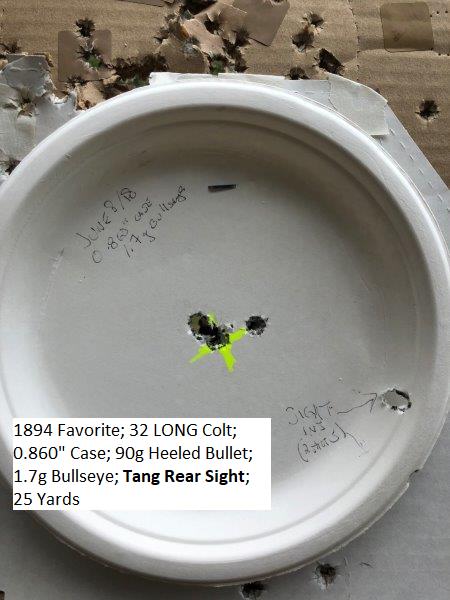
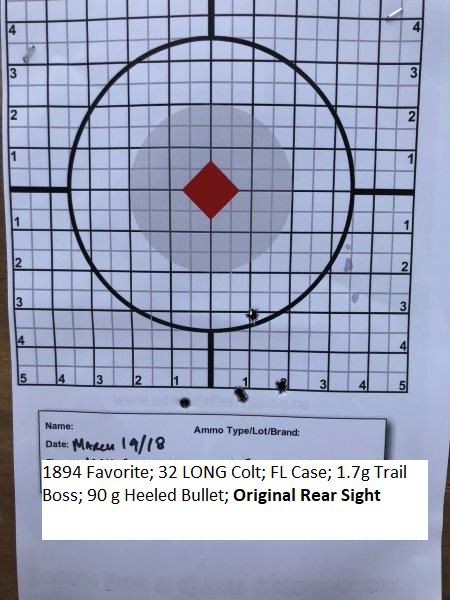
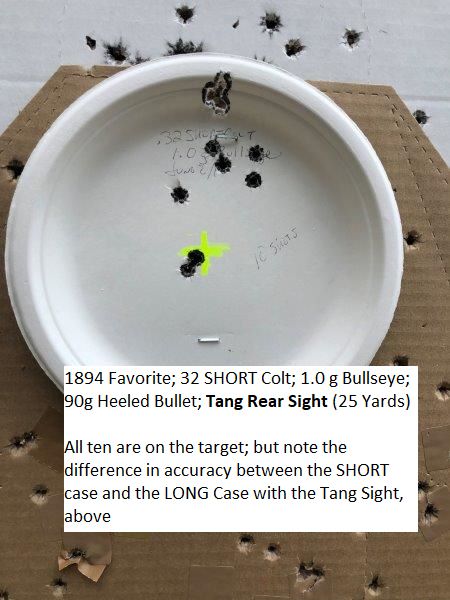
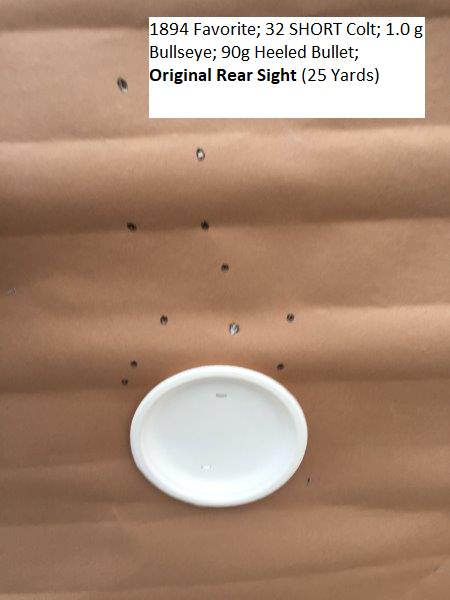
After figuring out how to make .32 Long Colt brass, I could tell it has some potential for accuracy (I believe the jump for the .32 SC brass in a Long chamber is too far and accuracy suffers, the difference is significant). https://www.canadiangunnutz.com/forum/showthread.php/1660641-32-Long-Colt-from-32-S-amp-W-Brass
Most Stevens Favorites tangs I've seen come drilled for a tang sight. Finding an original is tough and not worth the money. Yes you can certainly modify a current aftermarket one, but most I see just don't fit the looks to me. "Disproportionate" comes to mind. That's only my opinion. The other side of it is, to get a good one is fairly expensive and I've already spent too much on tooling so... I have to justify why I have these things in the shop. Well who am I kidding? I just wanted to make one. I don't need a better reason than that.
I made a very basic tang sight for a Crackshot 16 that I reblued and repaired: https://www.canadiangunnutz.com/forum/showthread.php/1611049-Stevens-Crackshot-16-Rebuild but that one was really basic. Good first run, but I wanted to make a fancier vernier style.
With all that said, I built my "Mark II" vernier sight:
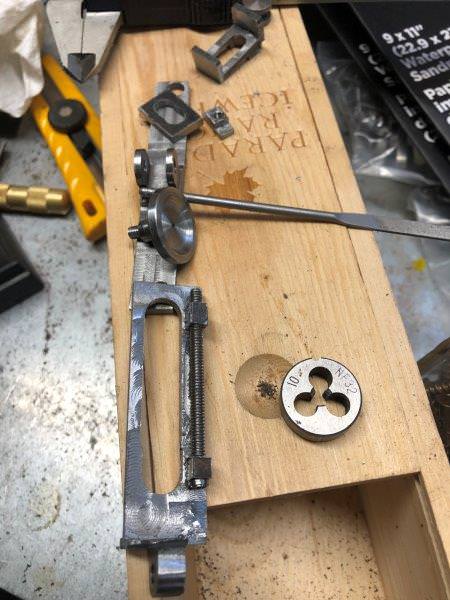
Here are all the basic parts roughed out after about a month of evenings here and there (my time is pretty limited); the base is drilled for the fixture I was using for milling here, not for the tang. I use a rotary table on my mill to shape the round for base and for the bottom of the staff:
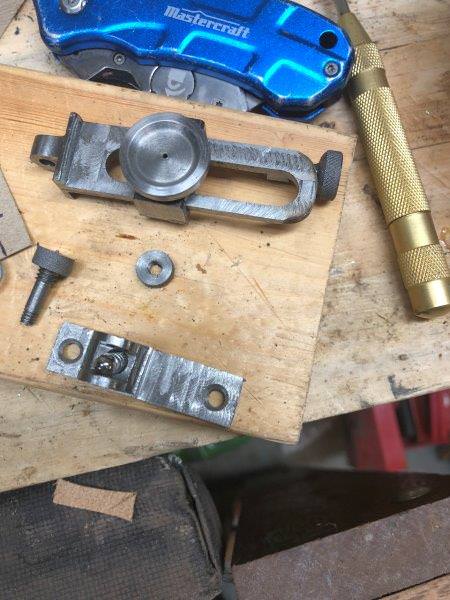
Here they are again with a little more refinement and you can see the spring and ball detent I'm using to lock the positions:
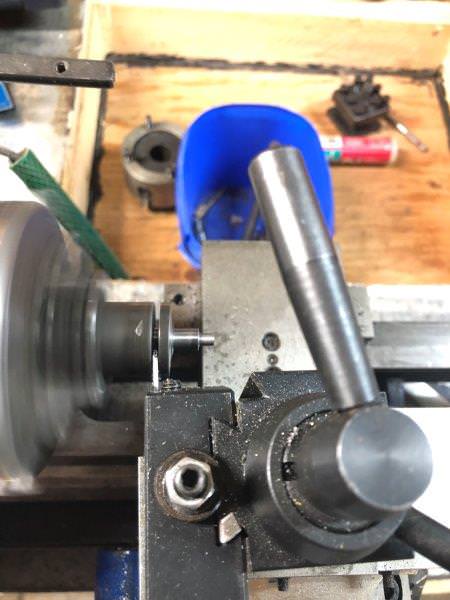
Just machining the eyepiece, a few steps earlier. I really enjoy making these things. I'm using a #55 drill (0.052") which seems to give a nice clear view. The forward is drilled to a larger size, I found that if I just had it 0.052" the entire length, the view was fuzzy. The diameter of the eyepiece is 1.25" I believe
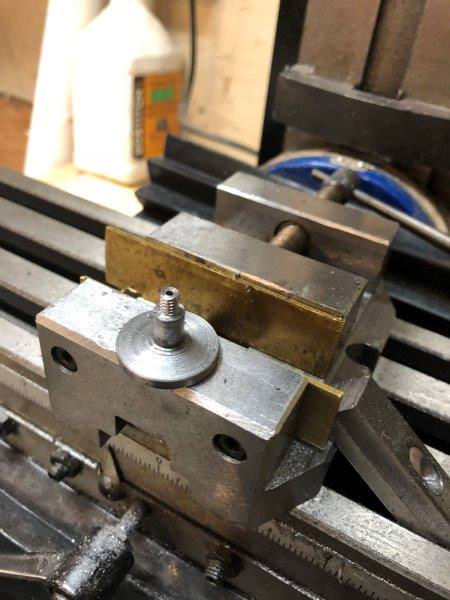
Finished eyepiece upside down:
An idea of the finished product, again with the base not cut/shaped/drilled for the tang yet.
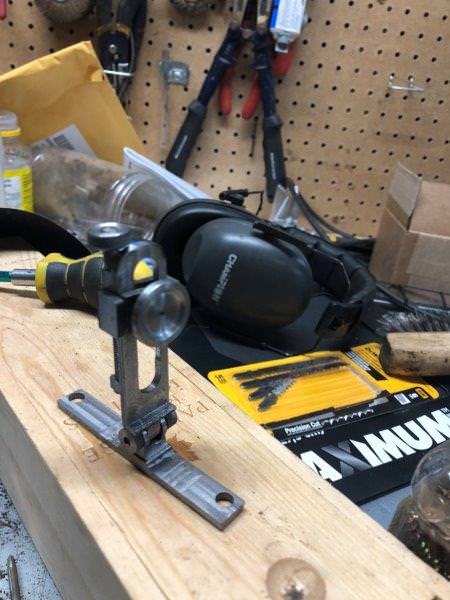
Starting to rust blue, and you can see the final shape of the base. Note that I did elect to "distrain" the finish a bit which turned out OK in the end, but I think I should have just browned it to match the patina (I just think a "new" looking finish would not look good on a "brown" rifle. My opinion only):
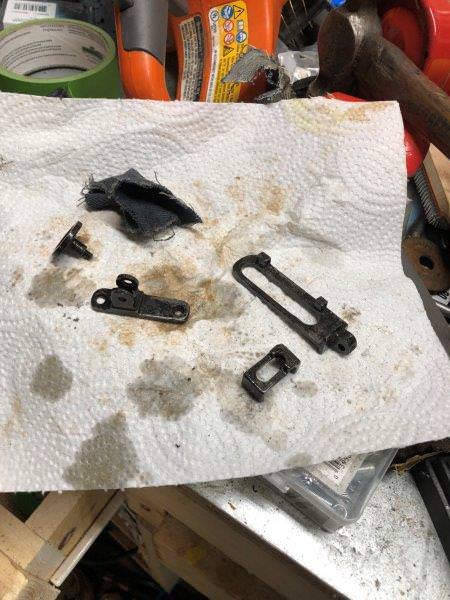
Aaaannndd here she is on the old girl:
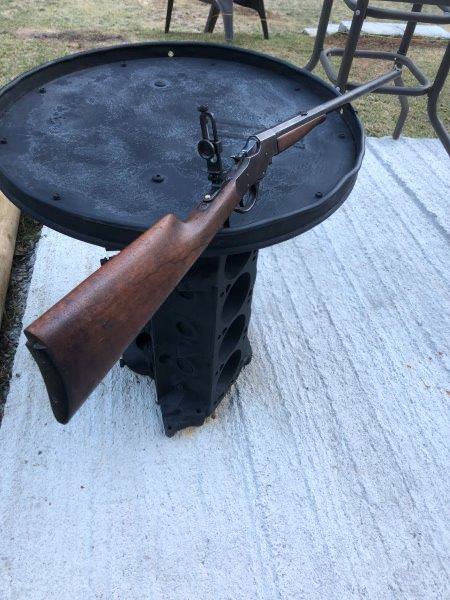
And with the sight in the "store" position:
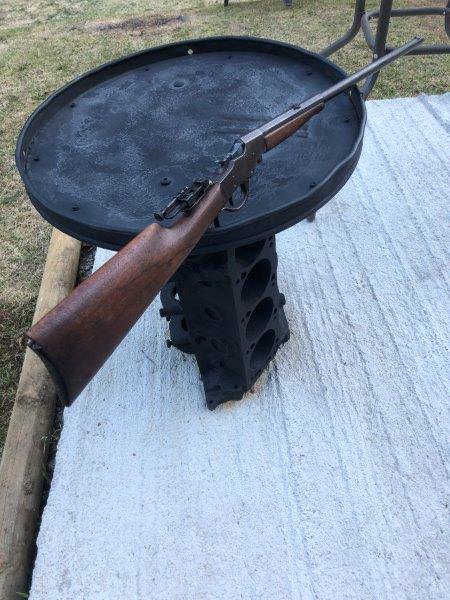
I designed the sight for this rifle, with the lowest adjustment being inline with the top of the receiver; and when it folds down the elevation knob clears the cheekpiece.
I was really hoping to go out and try out some loads this weekend, unfortunately I just don't have time. I "should" have a chance this week and I'll post some results. I've been keeping track of different loads with the stock rear sight (which doesn't like to stay up) and as I've said this rifle has a CLEAR preference for .32 LONG Colt over Short Colt, so... I can't wait to see what I can do and how this sight compares to the factory sight.
Hope someone finds this interesting, shows you what the hobbyist can do as well without CNC capability or super expensive machinery. A lot could CERTAINLY be done with a file and saw and some ingenuity, if you are so inclined. But the little lathe and mill really speed it up.
This one is in .32 RF and I converted it to centerfire (32 Colt).
https://www.canadiangunnutz.com/for...2-RF-to-32-Colt-(Another-Project-Checked-Off)
After figuring out how to make .32 Long Colt brass, I could tell it has some potential for accuracy (I believe the jump for the .32 SC brass in a Long chamber is too far and accuracy suffers, the difference is significant). https://www.canadiangunnutz.com/forum/showthread.php/1660641-32-Long-Colt-from-32-S-amp-W-Brass
Most Stevens Favorites tangs I've seen come drilled for a tang sight. Finding an original is tough and not worth the money. Yes you can certainly modify a current aftermarket one, but most I see just don't fit the looks to me. "Disproportionate" comes to mind. That's only my opinion. The other side of it is, to get a good one is fairly expensive and I've already spent too much on tooling so... I have to justify why I have these things in the shop. Well who am I kidding? I just wanted to make one. I don't need a better reason than that.
I made a very basic tang sight for a Crackshot 16 that I reblued and repaired: https://www.canadiangunnutz.com/forum/showthread.php/1611049-Stevens-Crackshot-16-Rebuild but that one was really basic. Good first run, but I wanted to make a fancier vernier style.
With all that said, I built my "Mark II" vernier sight:
Here are all the basic parts roughed out after about a month of evenings here and there (my time is pretty limited); the base is drilled for the fixture I was using for milling here, not for the tang. I use a rotary table on my mill to shape the round for base and for the bottom of the staff:
Here they are again with a little more refinement and you can see the spring and ball detent I'm using to lock the positions:
Just machining the eyepiece, a few steps earlier. I really enjoy making these things. I'm using a #55 drill (0.052") which seems to give a nice clear view. The forward is drilled to a larger size, I found that if I just had it 0.052" the entire length, the view was fuzzy. The diameter of the eyepiece is 1.25" I believe
Finished eyepiece upside down:
An idea of the finished product, again with the base not cut/shaped/drilled for the tang yet.
Starting to rust blue, and you can see the final shape of the base. Note that I did elect to "distrain" the finish a bit which turned out OK in the end, but I think I should have just browned it to match the patina (I just think a "new" looking finish would not look good on a "brown" rifle. My opinion only):
Aaaannndd here she is on the old girl:
And with the sight in the "store" position:
I designed the sight for this rifle, with the lowest adjustment being inline with the top of the receiver; and when it folds down the elevation knob clears the cheekpiece.
I was really hoping to go out and try out some loads this weekend, unfortunately I just don't have time. I "should" have a chance this week and I'll post some results. I've been keeping track of different loads with the stock rear sight (which doesn't like to stay up) and as I've said this rifle has a CLEAR preference for .32 LONG Colt over Short Colt, so... I can't wait to see what I can do and how this sight compares to the factory sight.
Hope someone finds this interesting, shows you what the hobbyist can do as well without CNC capability or super expensive machinery. A lot could CERTAINLY be done with a file and saw and some ingenuity, if you are so inclined. But the little lathe and mill really speed it up.
Last edited:


 That was another side project.... just seemed a shame to toss that block (it is cracked, for the record).