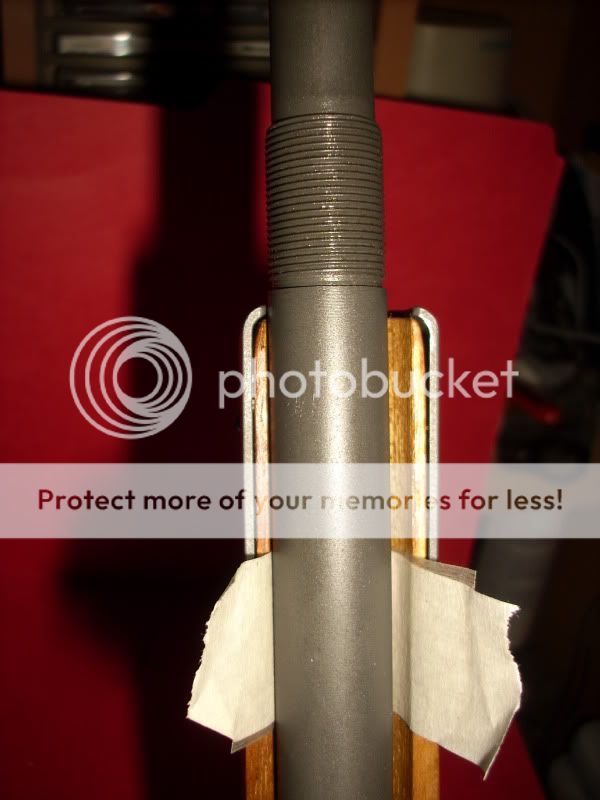
In an earlier post, I noted that a newly acquired AIA (Australian commercial #4) was shooting large groups. On investigation, with the top wood removed, I could see that the barrel channel was pushing on one side of the barrel. The barrel channel was opened and the action bedded in Devcon F.
Yesterday the rifle was tested at 300 yards. I loaded military 147 gr. surplus FMJ bullets, Sierra 155 match and Sierra 168gr match bullets, with 4 different powder charges of H335 for each, in 0.5 gr increments. I used H335 powder so I could throw the charges with a degree of accuracy. OAL was 2.825” my standard length if I want ammo to clear the magazine.
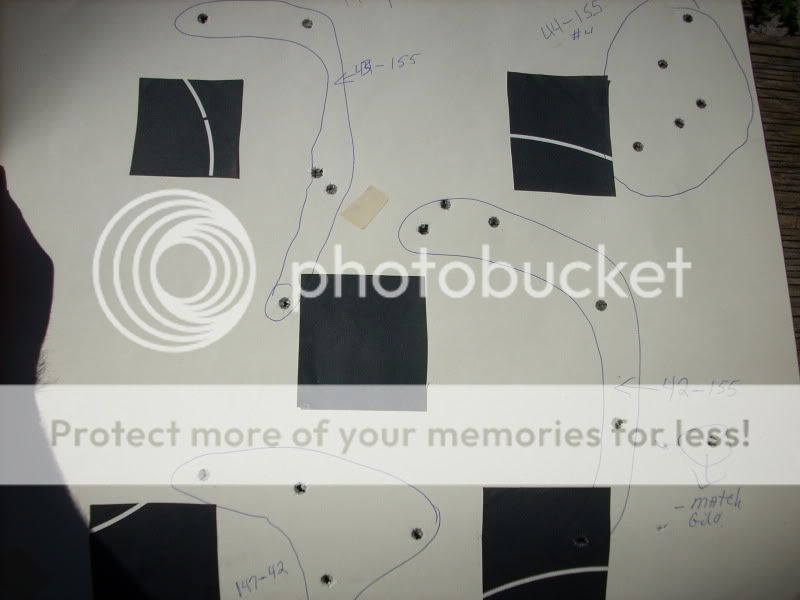
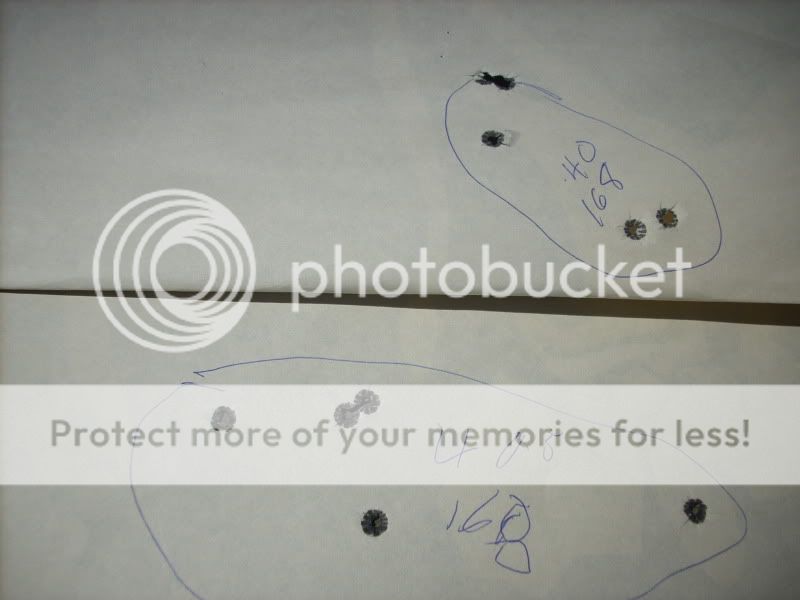
The results were quite clear. First, the rifle shot better. Groups were round, with a slight left-right bias reflecting the gusty light wind while we were shooting. We shot groups at black patches, stuck on the back of a large target. A buddy in the butts pulled the target after each group and labeled the groups with rifle and ammo. He also put a red spotting disk in the middle of each group so the shooter could shoot groups that did not over-lap. Walkie talkies are handy.
Second, and most interesting, was that the military surplus 147gr. FMJ shot much larger groups than the match bullets. They will be ok for shooting 100 yards from the standing position, but not for anything calling for any accuracy.
Third, was the rifle clearly shows the tendency to the #4 to “compensate” and shoot tall groups. At a longer distance these “tall” groups will come together. I won’t likely test at long range to see what loads works at, say 1,000 yards.
The ammo was loaded in half grain increments and for each bullet it was clear that some groups were “tall” and some were very flat. The “flat” loads will be noted as the best short range loads for this rifle.
GROUPS SHOT AT 300 YARDS
147gr FMJ
41.0 3.5”
41.5
42.0 5.25”
42.5 7.5”
43.0 11.75”
43.5
44 9.0”
Note to self: Try 39 to 41 for a good plinker with these cheap bullets. Milder seems to be better.
155 Sierra Match
40
41 3.8”
41.5 1.25"
42 4.3"
43 3.8”
44
Sierra 168 Match
39.0 3.2”
39.5 4.2”
40.0 2.6”
40.5 1.425”
41.0 1.4”
Note to self: Try hotter loads. Hotter seems to be better. These are sub MOA loads. Also try 190 gr match

Lesson for newbies:
• Some bullets work better than others in a given rifle.
• A little more or less powder can make a big difference.
• Bedding has a profound effect on accuracy and consistency.
Yesterday the rifle was tested at 300 yards. I loaded military 147 gr. surplus FMJ bullets, Sierra 155 match and Sierra 168gr match bullets, with 4 different powder charges of H335 for each, in 0.5 gr increments. I used H335 powder so I could throw the charges with a degree of accuracy. OAL was 2.825” my standard length if I want ammo to clear the magazine.
The results were quite clear. First, the rifle shot better. Groups were round, with a slight left-right bias reflecting the gusty light wind while we were shooting. We shot groups at black patches, stuck on the back of a large target. A buddy in the butts pulled the target after each group and labeled the groups with rifle and ammo. He also put a red spotting disk in the middle of each group so the shooter could shoot groups that did not over-lap. Walkie talkies are handy.
Second, and most interesting, was that the military surplus 147gr. FMJ shot much larger groups than the match bullets. They will be ok for shooting 100 yards from the standing position, but not for anything calling for any accuracy.
Third, was the rifle clearly shows the tendency to the #4 to “compensate” and shoot tall groups. At a longer distance these “tall” groups will come together. I won’t likely test at long range to see what loads works at, say 1,000 yards.
The ammo was loaded in half grain increments and for each bullet it was clear that some groups were “tall” and some were very flat. The “flat” loads will be noted as the best short range loads for this rifle.
GROUPS SHOT AT 300 YARDS
147gr FMJ
41.0 3.5”
41.5
42.0 5.25”
42.5 7.5”
43.0 11.75”
43.5
44 9.0”
Note to self: Try 39 to 41 for a good plinker with these cheap bullets. Milder seems to be better.
155 Sierra Match
40
41 3.8”
41.5 1.25"
42 4.3"
43 3.8”
44
Sierra 168 Match
39.0 3.2”
39.5 4.2”
40.0 2.6”
40.5 1.425”
41.0 1.4”
Note to self: Try hotter loads. Hotter seems to be better. These are sub MOA loads. Also try 190 gr match
Lesson for newbies:
• Some bullets work better than others in a given rifle.
• A little more or less powder can make a big difference.
• Bedding has a profound effect on accuracy and consistency.
Last edited:
 Those seem like pretty damned good groups for 300 yards!