













































Shotgun chokes explained

lupothebutcher

CGN frequent flyer
Rating - 100%
54   0   0
I have called this thread "shotgun chokes explained" in the hopes that it may become a sticky but, I'm not going to explain them; I'm hoping one of you guys will.....

I'm not a shotgun guy, I have one or two but I have never really understood the finer points of chokes and barrels; all I really know is that the tighter the choke, the tighter the grouping.

So I will ask a few largely unqualified questions and hope one of you shotgun guys can answer and add any questions and answers that I didn't know to ask and, if all goes well, we'll have a usefull sticky.

What are the different chokes and barrels?
What can you put through each?
If a barrel is cut down, what would that be called?
Can you put steel shot and lead shot through any barrel?
Can you put buck shot through any barrel?
Can you put slugs through any barrel?
What can you put through a rifled barrel?
Will using slugs only/mostly wear out a barrel or action faster? Steel shot? Different sizes?

Thanks to all who help.
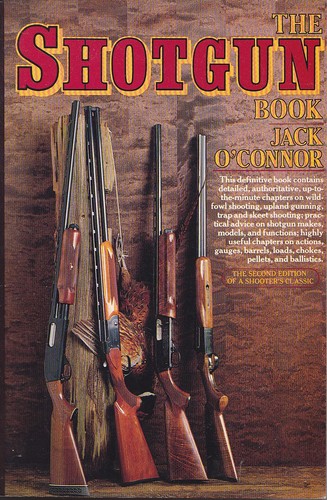
 
books


61xz9lj1v4L.jpg
 
Sorry boys, there is usually someone who wants to show his knowledge or be helpful; I didn't realize that it would be above you or beyond your scope of knowledge. I won't ask again.
Cheers
 
Nothing wrong with asking Lupo, I'm just being a smart azz.

IMHO you're asking for a shotgun course, hence the reply you received. If you are truly interested in the matter, I personally believe this type of education should obtained from reading proper reference books , just like Sk8r and Grouse Man kindly suggested.

Cheers
 
SHOTGUN BARREL ALTERATIONS FOR STEEL SHOT

Forcing Cone Alteration:

Factory shotgun barrels usually have a fairly short and abrupt forcing cone. The forcing cone is the tapered area just ahead of the chamber where the shell is contained. Altering the forcing cone, so it is one and one half or two inches in length, reduces recoil and improves the pattern density. Trap shooters and skeet shooters have been doing this for many years. It is a good benefit to the steel shot user as well.

Choke Alteration:
Choke designation from the tightest to the most open are:
Extra Full, Full, Improved Modified, Modified, Skeet II, Improved Cylinder, Skeet I, and Cylinder Bore.


Steel shot does not require the constriction that lead shot needs, to produce good patterns. In fact too much constriction, causes poor, erratic patterns, and in some cases, permanently damages the barrel. I have seen barrels bulged at the choke, I have seen barrels where the choke split right open, from using steel shot.

For steel shot, with thin barrels, chokes should be altered to at least Skeet II. Often, over & under, and side-by-side shotguns, are best altered to Skeet I and Skeet II chokes. Heavier barrels can be left at Modified choke but may see an improvement in the pattern if opened slightly.

Rifled barrels are for slugs - shot patterns would be very distorted out of a rifled barrel.

Lead buckshot and lead slugs can be fired through any barrel.

Shot gun barrels do not wear with modern ammunition due to the plastic shot capsules.
 
Last edited:
older quality fixed choke guns like wingmasters, a5s, 12s, etc have longer parallel sections after constriction and produce nice even patterns with most steel shot loads

From a fixed mod 71 wingmaster 1 1/8 #2 steel
 
shotgun barrel alterations for steel shot

forcing cone alteration:

Factory shotgun barrels usually have a fairly short and abrupt forcing cone. The forcing cone is the tapered area just ahead of the chamber where the shell is contained. Altering the forcing cone, so it is one and one half or two inches in length, reduces recoil and improves the pattern density. Trap shooters and skeet shooters have been doing this for many years. It is a good benefit to the steel shot user as well.

Choke alteration:
choke designation from the tightest to the most open are:
Extra full, full, improved modified, modified, skeet ii, improved cylinder, skeet i, and cylinder bore.


steel shot does not require the constriction that lead shot needs, to produce good patterns. In fact too much constriction, causes poor, erratic patterns, and in some cases, permanently damages the barrel. I have seen barrels bulged at the choke, i have seen barrels where the choke split right open, from using steel shot.

For steel shot, with thin barrels, chokes should be altered to at least skeet ii. Often, over & under, and side-by-side shotguns, are best altered to skeet i and skeet ii chokes. Heavier barrels can be left at modified choke but may see an improvement in the pattern if opened slightly.

Rifled barrels are for slugs - shot patterns would be very distorted out of a rifled barrel.

Lead buckshot and lead slugs can be fired through any barrel.

Shot gun barrels do not wear with modern ammunition due to the plastic shot capsules.

x 2
 
Lead buckshot and lead slugs can be fired through any barrel..


This is VERY helpful, thanks! I always assumed that you'd need to shoot a slug out of a cylinder bore barrel, since in my head a slug took up most of the room in the barrel (so constriction would make it hit the choke).

I've been looking for a shotgun, and this means that if I find a used one with a fixed choke, I can still use rifled slugs? Excellent. That expands my options considerably. =)
 
Back
Top Bottom






















