













































Size new brass?

yidava25

Regular
Super GunNutz
Rating - 100%
90   0   0
Location
La Crete, AB.
So apparently I'm a neanderthal because I've been loading new brass right out of the box for years without running it through a sizing die first, unless it was banged up.
Got a box of ADG brass for my 28 Nosler and had a new experience.
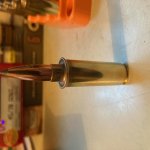
image0 (4).jpg

Ouch, $4 a piece... and worse, now my beautiful box of 50 is no longer a box of 50

Never heard of this happening before, am I the only one?

 

Attachments

  • image0 (4).jpg
    image0 (4).jpg
    41.9 KB · Views: 342
I do it every 4 months when theres a shred of time to reload. I say to myself "this is like riding a bike, its easy" and then end up making hollow brass barstock like you just did.
 
Found the ADG brass to have thicker necks.

Butt ADG has the hardest ass of any brass, neck thickness is easily corrected if need be.
 
My ADG brass had super tight necks out of the box. I used some graphite neck lube and a mandrel before loading

This! I do not often get to load brand new factory stuff, but from way back, had been taught to dip the neck in Forster neck clean brush unit - I think it is mica powder, then run in the expanding mandrel in the die set - so just to hit the inside of neck, confirm that it is round - not to resize the outside. Had read that squeaky clean brass - like stuff from a wet tumbler, can be "sticky" - do not get that so much with previously fired brass with coating of carbon inside neck.
 
I normally do but I tried Lapua (6.5 x 55) for the first time a few months ago. I was loading in relatively small batches (about 12-15 at a time) and decided to slow things down a bit and measure them up, test them in the chamber, etc. I found that resizing was pretty much unnecessary and there was very little I could do to improve on them out of the box. In the end all I did is run them up on a .263 mandrel.
 
I was taught to full length size all brass for the first time, as some companies QC isn't as good as it should be, other times the brass can be damaged in shipping, and to ensure consistency in your brass when loading to ensure that you have eliminated this variable from the equation when trying to find a load for your rifle. Always made good sense to me.
The next few loadings can be done with just neck sizing.
 
Given that it looks like you were seating bullets, this looks like a seating die issue rather than a sizing issue. i.e. overly long cases, really running the case mouth into the crimping portion of the die, case necks so thick that they catch in the die during seating and then the case neck portion gets shoved backwards, etc.

Cases were all the proper length prior to seating? I'd start by mic'ing the length of all those cases. Then gently running an empty case into the seating die to figure it out; see what your press handle tells you as you advance the case into the die.

BTW, how did you get to the reloading part - setting your bullet seating stem to get the right COAL - without a few trips into the seating die with that brass in order to make and check your adjustments?

New centerfire cases; I always first resize and trim before loading as well as doing the flash holes and primer pockets. It may or may not help, but I do know that every piece of brass is about as uniform as I can reasonably get it. Removing variables prior to working up loads with a new bullet, brass, primer is always a good thing, I think.
 
I FL sized and chamfered a few cases and that fixed it. Didn't make any adjustments to my seating die from before the issue so I don't think it was a seating problem.
 
Back
Top Bottom






















