






























You are using an out of date browser. It may not display this or other websites correctly.
You should upgrade or use an alternative browser.
You should upgrade or use an alternative browser.
Snubbie Mosin?
- Thread starter Josh Smith
- Start date


Ar180shooter
CGN Ultra frequent flyer
- Location
- Ottawa, ON
What would be the over all barrel length?
Would you just be cutting back a 91/30 to the end of the stock, or are we talking a 16" barrel here.
Would you just be cutting back a 91/30 to the end of the stock, or are we talking a 16" barrel here.
Hello,
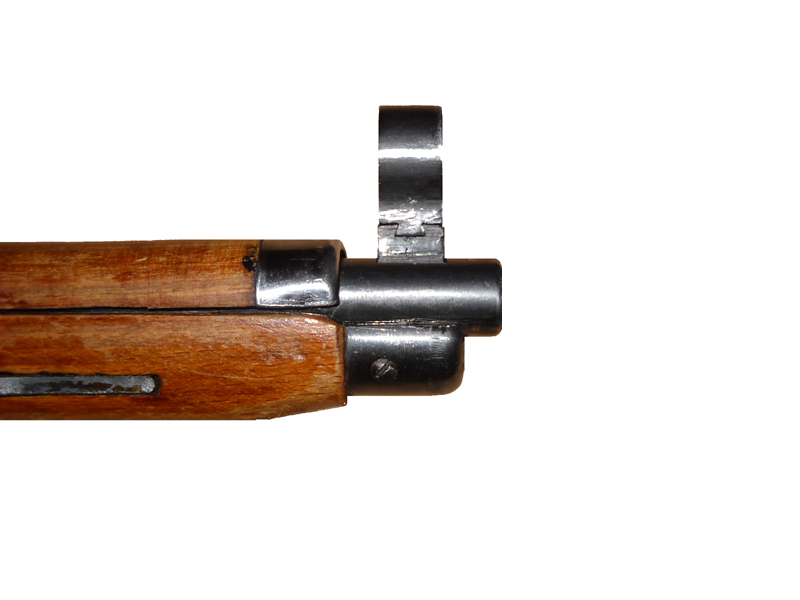
Just cutting it back to the end of the stock, for Gew88 carbine type look. Losing about 2" overall.
The Russian 91/30 has always looked, to me, like it should have the sight set back where the top handguard recesses.
This is a Photoshop concept. I've not done it yet, and won't to my current rifle. If I find one counterbored or with crown damage, I'll probably build this to see what it looks like and how it shoots.
Josh
Just cutting it back to the end of the stock, for Gew88 carbine type look. Losing about 2" overall.
The Russian 91/30 has always looked, to me, like it should have the sight set back where the top handguard recesses.
This is a Photoshop concept. I've not done it yet, and won't to my current rifle. If I find one counterbored or with crown damage, I'll probably build this to see what it looks like and how it shoots.
Josh
Ar180shooter
CGN Ultra frequent flyer
- Location
- Ottawa, ON
That could actually be pretty interesting.
Post pics when you're done.
Post pics when you're done.
- Location
- Where the sun shines
Would have to shorten the cleaning rod to go with it. 
I think it would be a pretty neat look, though I'd kindly ask you only do it to Mosins that have already been counterbored...
I think it would be a pretty neat look, though I'd kindly ask you only do it to Mosins that have already been counterbored...


And paint it black and stick genuine US M-1913 Picatinny rails all over it and a laser rangefinder and......
I'll shut up now and go play with my lightsaber.
Trying to be less grumpy now, I will simply observe that the Russians standardised on the stocking-up of the 91/30 rifle to duplicate the earlier Dragoon/Cossack Rifles for a reason. That reason had a lot to do with barrel harmonics, the way things vibrated when the cartridge fired. If the rifle had actually WORKED BETTER as a cool-looking snubby, I am quite certain that the Russians (being practical folk) would have BUILT them like that. But they didn't build them like that. They built them the way they WORKED best.
Coolness aside, I think it would be wrecking a pretty good rifle for absolutely zero gain and a net financial loss.
.
I'll shut up now and go play with my lightsaber.
Trying to be less grumpy now, I will simply observe that the Russians standardised on the stocking-up of the 91/30 rifle to duplicate the earlier Dragoon/Cossack Rifles for a reason. That reason had a lot to do with barrel harmonics, the way things vibrated when the cartridge fired. If the rifle had actually WORKED BETTER as a cool-looking snubby, I am quite certain that the Russians (being practical folk) would have BUILT them like that. But they didn't build them like that. They built them the way they WORKED best.
Coolness aside, I think it would be wrecking a pretty good rifle for absolutely zero gain and a net financial loss.
.
And paint it black and stick genuine US M-1913 Picatinny rails all over it and a laser rangefinder and......
I'll shut up now and go play with my lightsaber.
Trying to be less grumpy now, I will simply observe that the Russians standardised on the stocking-up of the 91/30 rifle to duplicate the earlier Dragoon/Cossack Rifles for a reason. That reason had a lot to do with barrel harmonics, the way things vibrated when the cartridge fired. If the rifle had actually WORKED BETTER as a cool-looking snubby, I am quite certain that the Russians (being practical folk) would have BUILT them like that. But they didn't build them like that. They built them the way they WORKED best.
Coolness aside, I think it would be wrecking a pretty good rifle for absolutely zero gain and a net financial loss.
.
Hey I have seen that mosin and it looked like crap^^^^. As far as vibration I don't know if in 1891 anyone even knew that rifle barrels move around like they do. some might have suspected it but without high speed photography there would be no way to know for sure. I also think that the barrel length on a 91-30 has way more to do with making it usefull as a bayonet holder than on any understanding of ballistics. JMO. That being said I wouldn't cut any of mine like that. However the ability to photoshop stuff to see ahead of time what it will look like is super cool.
There are some pretty good spark-gap photos of rifle recoil and barrel vibrations, using a Long Lee-Enfield, in the TEXT BOOK OF SMALL ARMS -1909.
Barrel movement during firing was being discussed seriously, and investigated, as far back as the late Brown Bess period.
Those old geeks weren't as dumb as we often would like to think.
Besides, they had to know their guns well: look at all those dinosaus they had to kill off.
.
Barrel movement during firing was being discussed seriously, and investigated, as far back as the late Brown Bess period.
Those old geeks weren't as dumb as we often would like to think.
Besides, they had to know their guns well: look at all those dinosaus they had to kill off.
.
There are some pretty good spark-gap photos of rifle recoil and barrel vibrations, using a Long Lee-Enfield, in the TEXT BOOK OF SMALL ARMS -1909.
Barrel movement during firing was being discussed seriously, and investigated, as far back as the late Brown Bess period.
Those old geeks weren't as dumb as we often would like to think.
Besides, they had to know their guns well: look at all those dinosaus they had to kill off.
.
Sorry I had never heard of spark gap photography before you wrote it. I don't think that people in the past were dumb i just think that they lacked the benefit of some technology that we take for granted. In some cases they lacked the means to verify theories.

Sorry I had never heard of spark gap photography before you wrote it. I don't think that people in the past were dumb i just think that they lacked the benefit of some technology that we take for granted. In some cases they lacked the means to verify theories.
Building the M91 and 91/30 wasnt verification?

And paint it black and stick genuine US M-1913 Picatinny rails all over it and a laser rangefinder and......
I'll shut up now and go play with my lightsaber.
Trying to be less grumpy now, I will simply observe that the Russians standardised on the stocking-up of the 91/30 rifle to duplicate the earlier Dragoon/Cossack Rifles for a reason. That reason had a lot to do with barrel harmonics, the way things vibrated when the cartridge fired. If the rifle had actually WORKED BETTER as a cool-looking snubby, I am quite certain that the Russians (being practical folk) would have BUILT them like that. But they didn't build them like that. They built them the way they WORKED best.
Coolness aside, I think it would be wrecking a pretty good rifle for absolutely zero gain and a net financial loss.
.
This. If you absolutely have to butcher a military antique, try to butcher one that's already been damaged by somebody else with a cool idea.
Building the M91 and 91/30 wasnt verification?
??????????????? huh????????????????
@mg4201:
A lot of folks haven't heard of spark-gap photography, nor a bunch of other techniques. The old-timers didn't have the technology we have today, but they had brains and they were curious, so they worked with the technology they had.... and very often they came up with good results. The first chronogaph was a heavy weight on a hinge, with a pointer which the weight pushed. It dated from the late flintlock period. When you got the 'reading' of the height to which the pointer was pushed, you calculated the energy it took to push the weight that high and then worked out, mathematically, your muzzle velocity from that. A LOT of work for one figure, but it got results.
As to TBSA - 1909, the book itself is rgarded as more than a bit of a rarity. I am extremly fortunate in that I have a copy which was given to me by a friend just before his demise. It came from the estate of another good friend. I am scanning the entire book in order that it may become available to a new generation. There is a lot o good information in it...... and the photos show (amongst oher neat things) exactly how the spark-gap measurements were taken. Of course, we now have "Doc" Edgerton's strobes, which seem to have many neat uses (cleaning the hulls of nuclear subs) apart from taking pictures. Harold Edgerton was a neat guy: kept a 1903 Springfield in his lab at MIT! Check him out: very interesting character, changed the way we see the world.
Have fun!
.
A lot of folks haven't heard of spark-gap photography, nor a bunch of other techniques. The old-timers didn't have the technology we have today, but they had brains and they were curious, so they worked with the technology they had.... and very often they came up with good results. The first chronogaph was a heavy weight on a hinge, with a pointer which the weight pushed. It dated from the late flintlock period. When you got the 'reading' of the height to which the pointer was pushed, you calculated the energy it took to push the weight that high and then worked out, mathematically, your muzzle velocity from that. A LOT of work for one figure, but it got results.
As to TBSA - 1909, the book itself is rgarded as more than a bit of a rarity. I am extremly fortunate in that I have a copy which was given to me by a friend just before his demise. It came from the estate of another good friend. I am scanning the entire book in order that it may become available to a new generation. There is a lot o good information in it...... and the photos show (amongst oher neat things) exactly how the spark-gap measurements were taken. Of course, we now have "Doc" Edgerton's strobes, which seem to have many neat uses (cleaning the hulls of nuclear subs) apart from taking pictures. Harold Edgerton was a neat guy: kept a 1903 Springfield in his lab at MIT! Check him out: very interesting character, changed the way we see the world.
Have fun!
.

Coolness aside, I think it would be wrecking a pretty good rifle for absolutely zero gain and a net financial loss.
Agreed.
If you want that Mannlicher Carbine look, try this.... http://www.sako.fi/sako85models.php?bavarian_carbine
??????????????? huh????????????????
do you not read your own posts?