Spring bear success!

ceriksson

Salty Knife Nut<br>Moderator
Moderator
Rating - 100%
68   0   0
I finally had some time to hunt this year. I haven't been able to get out the past 3 years because of deployments and sailing. I decided to get a license this year as I am in area and we got out yesterday and I managed to take a black bear out behind Ladysmith.

no photos right now as I didn't manage to take any but I didn't take any hero shots lol.

Not the biggest bear, turned out to be a cubless sow, but I'm happy to be back in the game after a 3 year draught. Good thing too because I am moving to Yellowknife in October so yesterday was pretty much one of my last chances for hunting in BC for the forseeable future.

Nice shoulder shot at about 50yds with 30-06. Snuck up on it over a knoll in a clear cut while it was grazing. Used a tree stump as a rest. bear ran about 20ft before hitting the deck. big hole through the lungs.
 
I have always quite enjoyed bear meat. Of all the game I have eaten in my life I would say that I have eaten bear the most.

I wouldn't quite consider it like pork, for me it comes out closer to beef. I have made some steaks that you really couldn't tell the difference cooked before or after. The thing about bear though is that its taste and consistency varies by region and diet. I have only eaten bear taken from Vancouver Island and all have been subsisting mainly on a diet of grasses and other vegetation.

We de-boned it today. Got 4 decent sized roasts, about a dozen small chops, and about 25lb left over for sausage and mince.

Overall, got roughly 40 something pounds of straight boneless meat.


It sure pays to have an uncle who happens to be a meat cutter!
 
Congratulations on your Bear, what are you doing with the meat? I have a tag but I was wondering if the meat is any good?


quite a few years ago I was on an Alberta wilderness hunt with some friends. I shot a bull elk on the first day hunting, as well another hunter shot a bear. there was 8 hunters in the group so it required a lat of meat per meal to feed everybody.
we removed the tenderloin from the elk and cut it up along with one hind from the bear and cooked it all over an open-fire bbq grill.

Damn, some of the finest eating I can remember and to answer your question "is bear meat good", there was still elk tenderloin left on the grill after everybody was done but the bear was all gone.

I don't think I would eat a garbage dump fed bear, but one that was foraging in the bush...absolutly.
 
I got a young bear given to me last night. No pictures.

He was coming into a ladies yard. Both her neighbours have kids. And another neighbours garbage bin had been broken into.

She shot it with a .410 but it came back a couple of hours later. So she upp'd her game and used a 12 gauge. Nice front shoulder shot.

He was just a yearling but we got about 15 lbs of meat for the grinder.

She told us there is a "huge" one hanging around. Maybe I won't have to hunt for bear this year.
 
Thawed out a couple chops today. First taste of the bear and it was delicious!

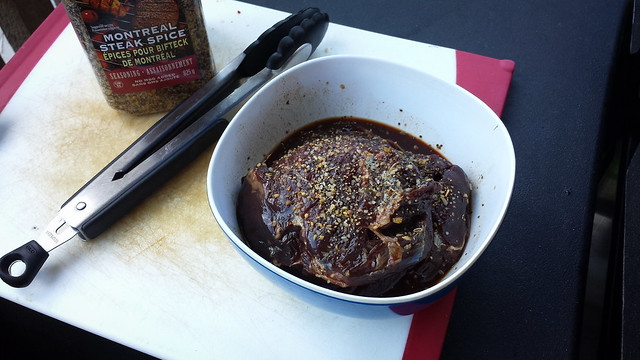
I love spring bear, especially from around central Vancouver Island. All they have eaten is grasses and other vegetation, makes them taste very beef-like. The steaks didn't have a touch of game to them. All I did was add a bit of soy sauce as they were thawing and sprinkled on a bit of Montreal Steak Spice.

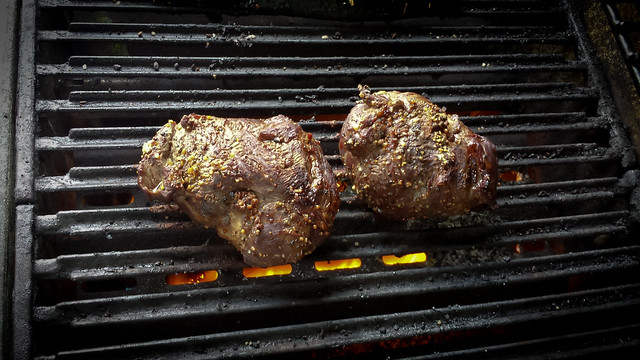
It really wasn't any different than a nice high end steak. Texture was nice, lean but tender (I cooked them rare)


20130712_185840.jpg by ceriksson, on Flickr


20130712_191556.jpg by ceriksson, on Flickr
 
This has been discussed several times on this forum, and should be a sticky here. Dealing with Trichinosis in bears is not the same as in other animals such as pigs.

While often published that it is an adequate safeguard, freezing does not give protection against Trichinosis in bears. The parasite in bears has developed substantial resistance to freezing. Here's one bulletin on that. Be sure to read the bold type under Recommendations.

http://www.epi.hss.state.ak.us/bulletins/docs/b2000_18.htm

ALWAYS be sure to cook bear meat to a minimum of 160F, 70C. It is very good meat, but not anything to be careless with.

One more for you to read from the CDC. It will take less than two minutes to read it carefully, especially the part about freezing the meat, but could save you enduring months of pain and suffering

http://www.cdc.gov/parasites/trichinellosis/prevent.html

If you don't want to read it all, here's a quick quote for your consideration: "Freezing wild game meats, unlike freezing pork products, may not effectively kill all worms because some worm species that infect wild game animals are freeze-resistant."

Trichinosis is not fun at all!

http://www.cdc.gov/parasites/trichinellosis/disease.html


Ted
 
Last edited:
Wouldn't this be acceptable if the meat was frozen for a month or so? Would think a long freeze would kill anything in the meat. Food for thought as well?

there is no freezing time it s cooking time only.

here s a translated story about what can happen if you take it lightly ....

http://www.pyrenees-pireneus.com/Fa...-Sanitaire-risque-de-la-chasse-trichinose.htm

google translation is my friend and will do better than my English ....

The health risks of bear hunting: trichinosis


Seventeen cases of trichinosis in France


In September, five cases of trichinosis are diagnosed at the Orleans hospital. A survey conducted by the reference center of trichinellosis has identified twelve other cases, all resulting from the ingestion of the same bear meat. The animal was killed during a hunt in Canada and a few pieces of meat were introduced in France. A description of the case is published in the latest issue of "Eurosurveillance."

In early September, five patients hospitalized in the hospital Orleans provide a picture of trichinellosis fever and myalgia associated with eosinophilia. All five are known and shared the same meal two weeks earlier: the bear meat, remember a hunt in northern Quebec. InVS (Institut de Veille Sanitaire) is alerted and warned the day after the National Reference Centre for trichinellosis (CNRT), which conducts the survey.

CNRT a limited number of 25 people, divided into three groups and may have been in contact with animals: a first group consisting of ten hunters who participated in the same hunting party, a second, 6 people three hunters who consumed during the same meal meat reported in Orleans and a third, finally, consisting of 9 persons invited by another hunter to enjoy the product of his hunt, this time in Narbonne.

October 4, 17 of these 25 individuals (13 men and 4 women, aged 31-67 years) had symptoms of trichinosis, or not confirmed by serology or muscle biopsy. The attack rate of the epidemic is high: 68% (87% for men and 40% for women).

Meat, legs, head and tongue.
Investigators were able to reconstruct the exact route of the unfortunate animal and its remnants. On August 26, a group of ten French came hunting in the beautiful tundra in northern Quebec, rich hunting ground for its prized caribou, bear and other game, shoot a black bear (Ursus americanus) of 4 or 5 years old weighing about 150 kg. The animal is skinned, gutted and butchered on site. Meat, legs, head and all the edible parts, including language, are reported to camp. The pieces of meat are hung and suspended for three to four days.
From 28 to 30 August, hunters consume several times as stew, juicy steaks and lightly cooked, and even for some raw. On the menu of a meal, the language they took care to cook.

On 2 September, the kitchen, with the exception of his guide, leaves Canada, the direction of France. Two of them relate them to pieces, despite the legal prohibition. The same day, a meal is organized Orleans. Four days later, Narbonne is that diners taste the remains of bears kept in a freezer (- 18 ° C). At the time of the survey, all parts of the animal were either consumed or discarded. No examination has been made.

Muscle biopsies from two people (a hunter and a guest) showed a larval growth of two larvae per gram of muscle.
The hunting party finally ended well: eight people were hospitalized for ten days, on average, but none were seriously ill (no complication). Patients and some exposed patients received albendazole at a dose between 400 and 800 mg / day for 20 to 28 days.

Consumption of bear meat is a common source outbreak of trichinosis in Canada, but also in Japan, the United States, Thailand and Russia. At the time of the hunt, Canadian authorities reported no epidemic. The CNRT and the European Commission (Directorate General for Health and Consumer Protection) will probably write one to hunters to notify them of the dangers of consuming uncooked meat, especially bears, and remember that the import is prohibited.

Author: Dr. Lydia Archimedes
Source: The Daily Doctor 2005

 
Back
Top Bottom