













































When Casimir Lefaucheux patented his hinge-action, breech-loading gun in January of 1833 and his pin-fire cartridge design in 1836, his was not the only breech-loading system that gunmakers had been tinkering with. Parisian makers also experimented with fixed barrels and lifting breeches. Think of the modern Darne shotgun, with its rear-sliding breech, as a variation on this. French gunmakers can certainly think outside the box.
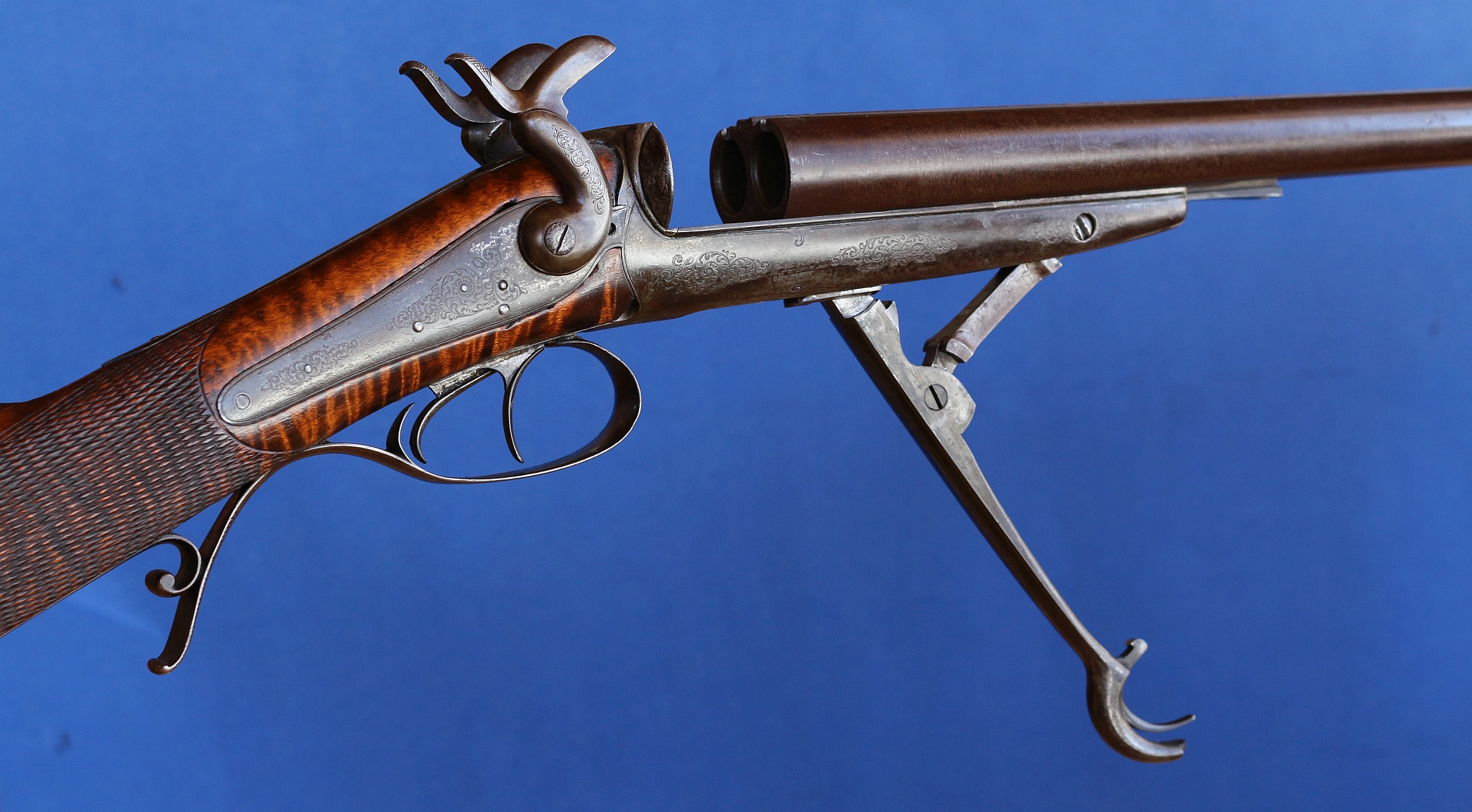
In 1855 the Bastin Brothers of Hermalle-sous-Argenteau, Liège, went by another route when they patented a pin-fire action whereby the breech remained stationary, and the barrels slid forward. The brothers further improved their patent in 1856. The Bastin action has a pivoted, pull-down underlever with a hinged catch on the distal end. While it looks ungainly, it is remarkably smooth and easy to use. While not as time-efficient and ergonomic as the later snap-actions, it has a certain elegance, allowing for a very slender construction. Doing away with the need for a barrel hinge altogether simplified the work involved. The Bastin Brothers were inventors, and they made actions for other gunmakers and not whole guns. While the Lang-type forward-underlever fell from favour in the face of better alternatives, the Bastin system remained popular in Britain well into the 1860s, appearing on guns built by James Purdey and others.
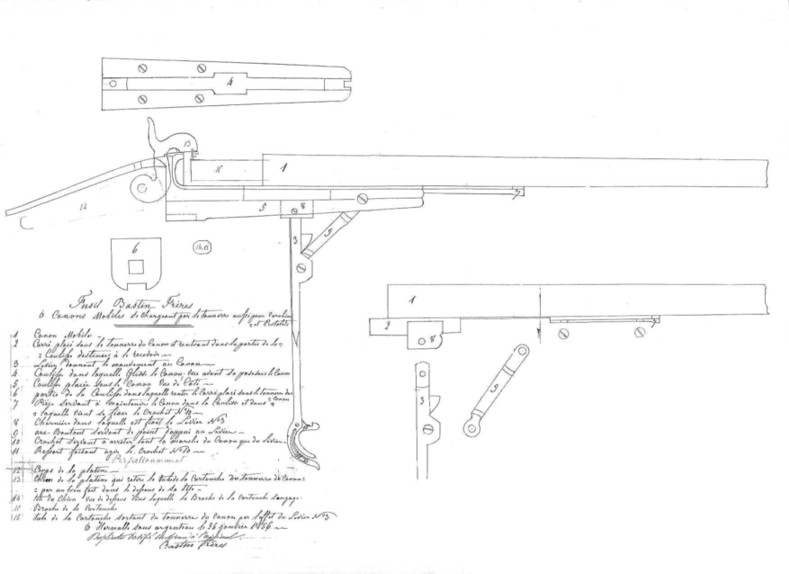
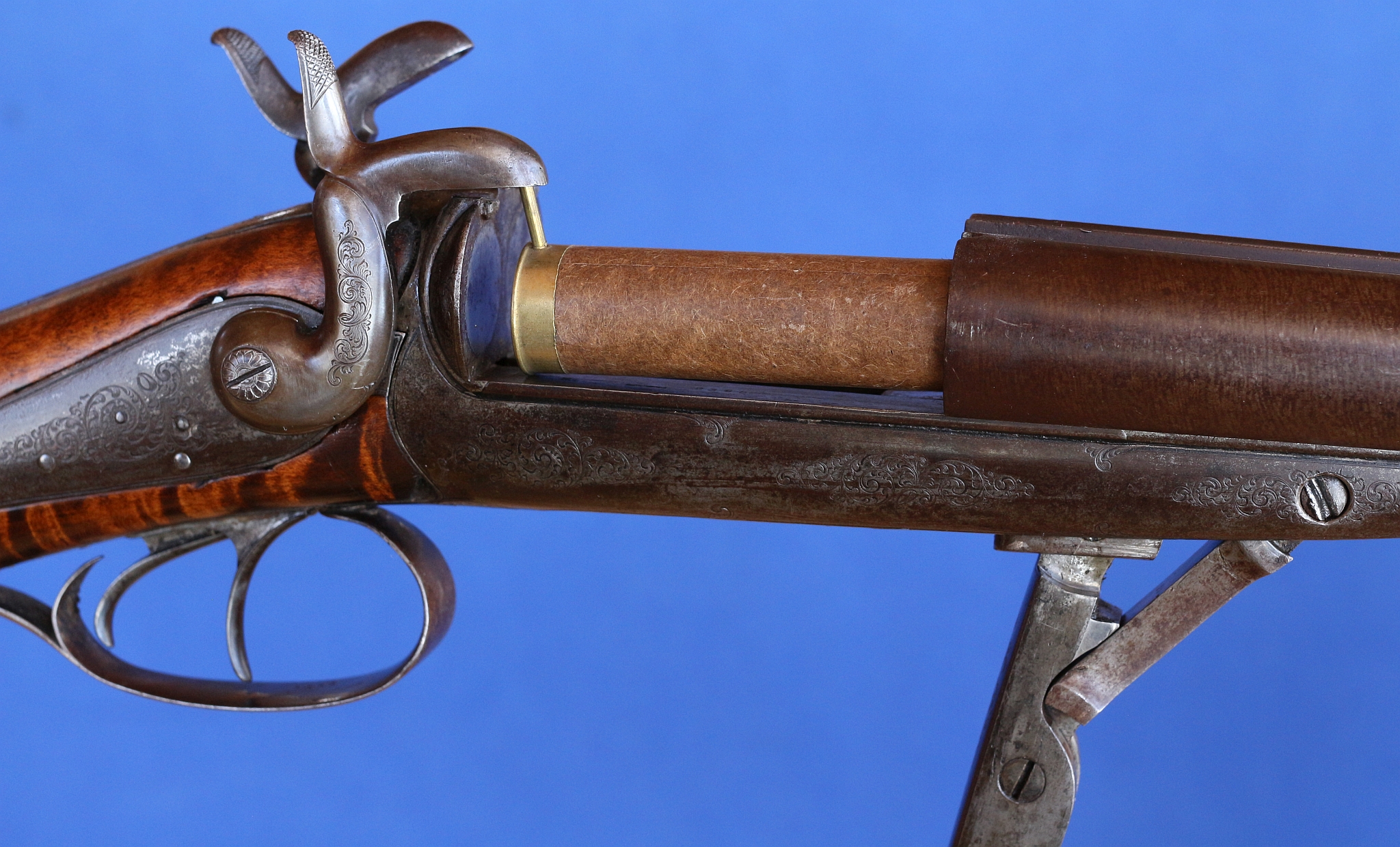
Another feature of the Bastin system is a recess under the hammer nose, which holds the pin after firing. When opening the action, the recess keeps the fired cartridge from moving with the barrels, thereby extracting it – a flick of the wrist then ejects the spent case. If one or both barrels are unfired, the cartridges stay in the chambers; the cleverness of this selective extraction is that it requires no additional mechanism or modification.
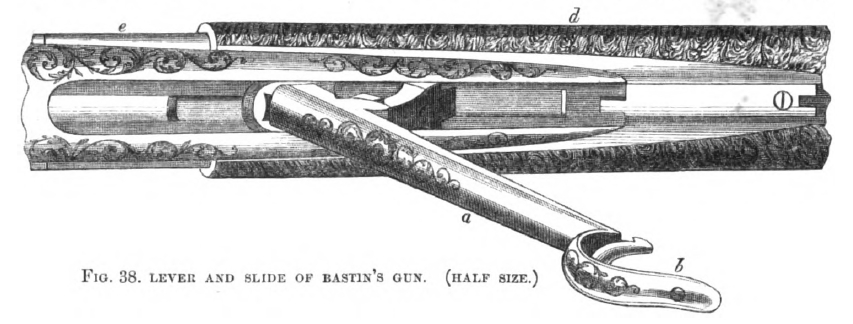
This design was one of the first to appear in Britain. One by Francotte of Liège was one of the guns entered in the Field trial of 1858, which pitted the new pin-fire breech-loaders against muzzle-loaders (spoiler alert: the muzzle-loaders beat the breech-loaders). The design was also featured by John Henry Walsh in his 1859 book "The Shot-Gun and Sporting Rifle," as shown by the following illustration from the book. Walsh was editor of the Field newspaper, and it was under his direction that the trials took place. His main criticism of the design was because of the quality of the cartridges of the day, where the cardboard tubes would swell up and make the cartridges difficult to remove, or the hammer holding the pin would cause the metal cartridge head to separate from the tube body as the barrels slid forward.
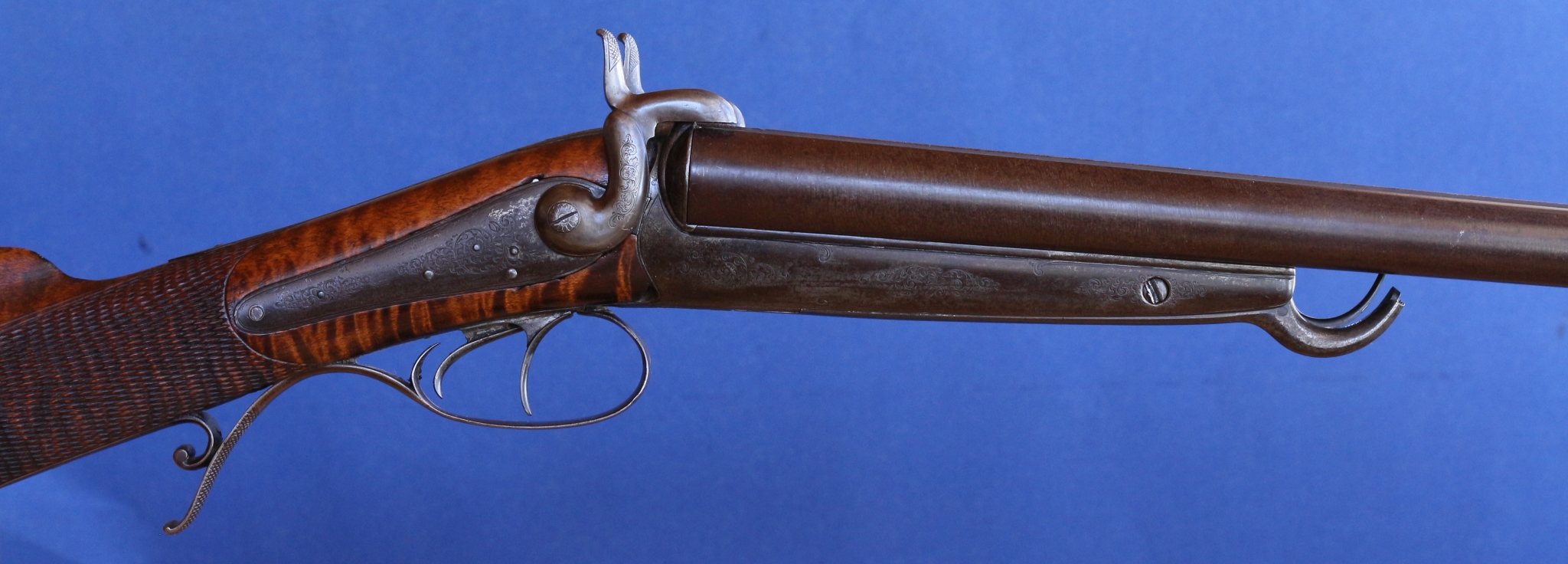
The gun pictured below is a plainly-decorated 14-bore pin-fire game gun, serial number 2309, by the Masu Brothers of London, made sometime around 1865-1866. The Belgian gunmaker Gustave Masu was established in London in 1864 at 3a Wigmore Street, and the firm became Masu Brothers in 1865. Wigmore Street is in London's fashionable West-End Marylebone district and a stone's throw from Cavendish Square, so his customers would have been well-to-do. Masu guns were built in Liège by the other brother and imported and retailed in London by Gustave Masu. The gun has 30 5/16" damascus barrels signed "Masu Brothers 3a Wigmore Street London & Liège" and, uncommon for a London-retailed gun, it has Liège proof marks only. In March 1866, Masu was convicted by the Marylebone Police Court of an offence under the Gun Barrel Proof Act of 1855 for selling a gun with Belgian proofs but lacking British marks; he was fined five pounds. Presumably, he would not have repeated the offence, which helps date the gun. The action is stamped "Bastin Frères Brevetée 598", so it is the 598th action of the Bastin Brothers, either made by them or licenced to be built by Masu. Notice the frighteningly thin fences, characteristic of 1850s breech-loading designs. The first cartridges were relatively weak by modern standards, and the pressures created in a cartridge gun were poorly understood. The gun weighs 6 lb 13 oz.
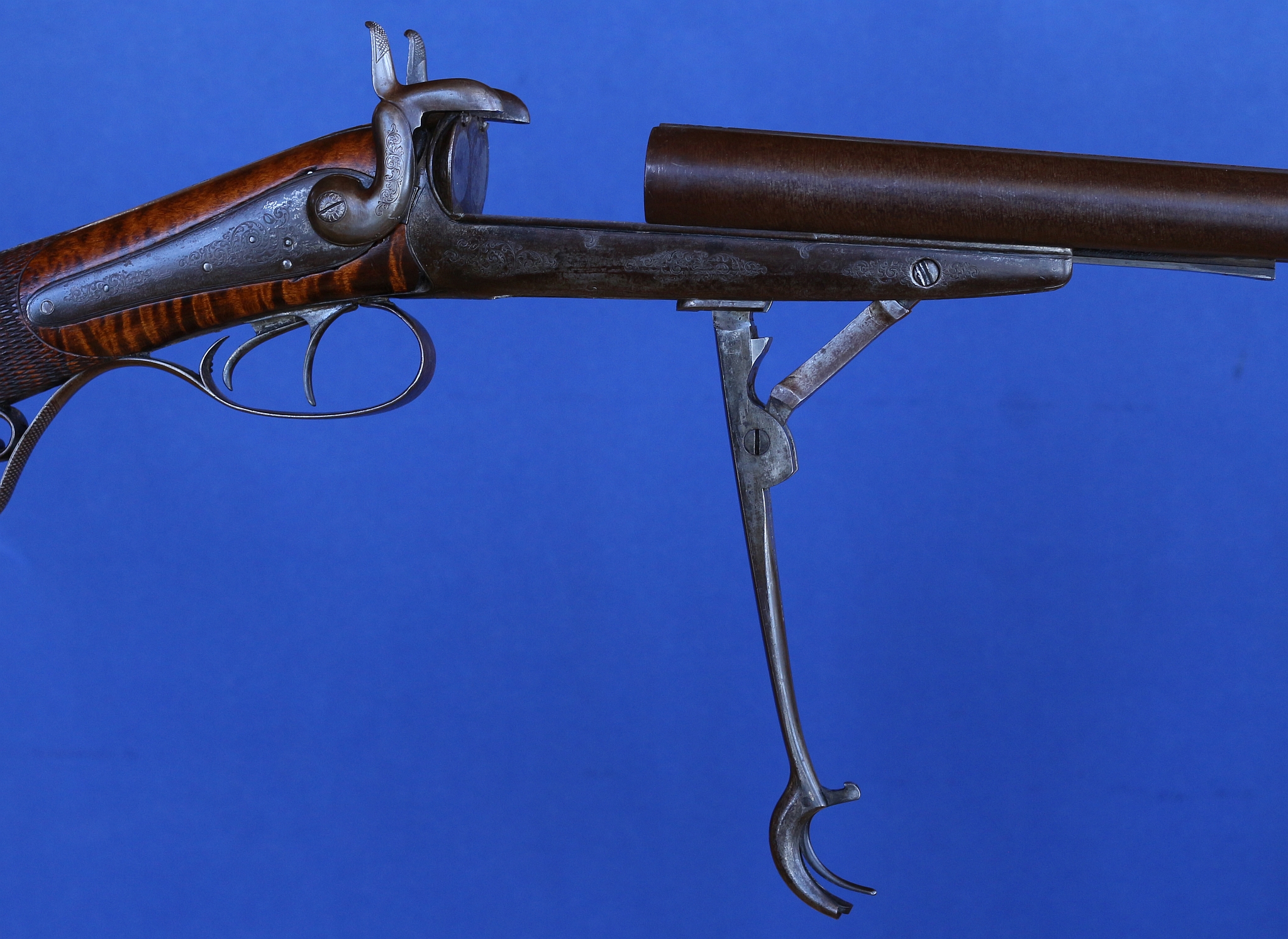
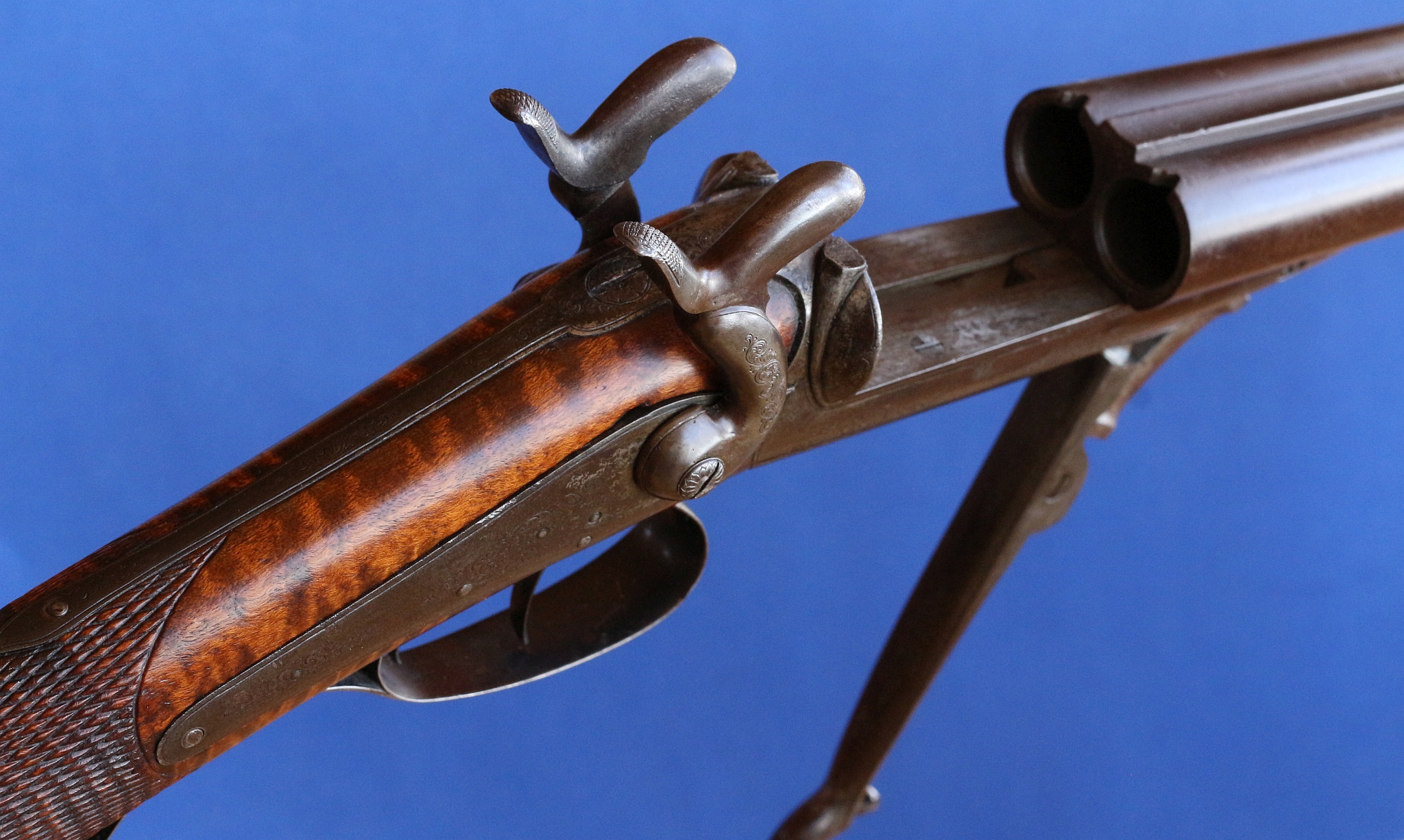
In 1855 the Bastin Brothers of Hermalle-sous-Argenteau, Liège, went by another route when they patented a pin-fire action whereby the breech remained stationary, and the barrels slid forward. The brothers further improved their patent in 1856. The Bastin action has a pivoted, pull-down underlever with a hinged catch on the distal end. While it looks ungainly, it is remarkably smooth and easy to use. While not as time-efficient and ergonomic as the later snap-actions, it has a certain elegance, allowing for a very slender construction. Doing away with the need for a barrel hinge altogether simplified the work involved. The Bastin Brothers were inventors, and they made actions for other gunmakers and not whole guns. While the Lang-type forward-underlever fell from favour in the face of better alternatives, the Bastin system remained popular in Britain well into the 1860s, appearing on guns built by James Purdey and others.
Another feature of the Bastin system is a recess under the hammer nose, which holds the pin after firing. When opening the action, the recess keeps the fired cartridge from moving with the barrels, thereby extracting it – a flick of the wrist then ejects the spent case. If one or both barrels are unfired, the cartridges stay in the chambers; the cleverness of this selective extraction is that it requires no additional mechanism or modification.
This design was one of the first to appear in Britain. One by Francotte of Liège was one of the guns entered in the Field trial of 1858, which pitted the new pin-fire breech-loaders against muzzle-loaders (spoiler alert: the muzzle-loaders beat the breech-loaders). The design was also featured by John Henry Walsh in his 1859 book "The Shot-Gun and Sporting Rifle," as shown by the following illustration from the book. Walsh was editor of the Field newspaper, and it was under his direction that the trials took place. His main criticism of the design was because of the quality of the cartridges of the day, where the cardboard tubes would swell up and make the cartridges difficult to remove, or the hammer holding the pin would cause the metal cartridge head to separate from the tube body as the barrels slid forward.
The gun pictured below is a plainly-decorated 14-bore pin-fire game gun, serial number 2309, by the Masu Brothers of London, made sometime around 1865-1866. The Belgian gunmaker Gustave Masu was established in London in 1864 at 3a Wigmore Street, and the firm became Masu Brothers in 1865. Wigmore Street is in London's fashionable West-End Marylebone district and a stone's throw from Cavendish Square, so his customers would have been well-to-do. Masu guns were built in Liège by the other brother and imported and retailed in London by Gustave Masu. The gun has 30 5/16" damascus barrels signed "Masu Brothers 3a Wigmore Street London & Liège" and, uncommon for a London-retailed gun, it has Liège proof marks only. In March 1866, Masu was convicted by the Marylebone Police Court of an offence under the Gun Barrel Proof Act of 1855 for selling a gun with Belgian proofs but lacking British marks; he was fined five pounds. Presumably, he would not have repeated the offence, which helps date the gun. The action is stamped "Bastin Frères Brevetée 598", so it is the 598th action of the Bastin Brothers, either made by them or licenced to be built by Masu. Notice the frighteningly thin fences, characteristic of 1850s breech-loading designs. The first cartridges were relatively weak by modern standards, and the pressures created in a cartridge gun were poorly understood. The gun weighs 6 lb 13 oz.






















