





























The plunging decline of the George River caribou

CV32

CGN Ultra frequent flyer
Rating - 100%
55   0   0
Location
The Rock
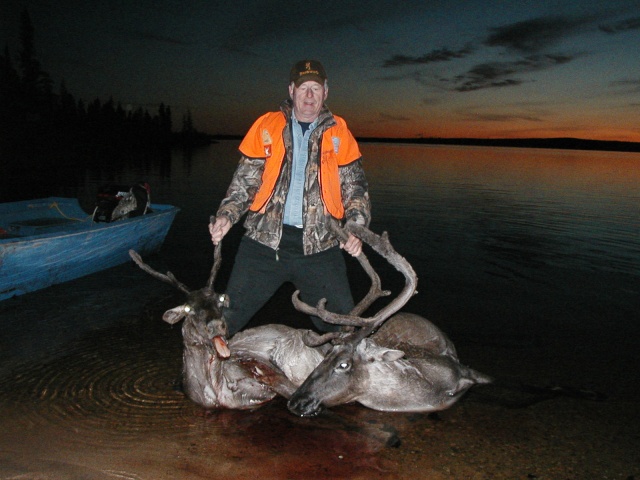
Perhaps some of you have by now heard of the latest numbers on the George River caribou herd that straddles the Quebec-Labrador border, and they are not good. The herd appears to have declined 90 percent in less than twenty years, from about 780,000 animals in the 1990s to less than 75,000 now in the most recent count completed this summer.

Granted the harvest/management scheme has been very liberal: two caribou per hunter, transfer privileges, season extending from August through April in many areas, no overall quota, etc. Much of that has now been tightened down, and rightfully so.

However, what I did not read in the government news release was similar conservation measures aimed at the First Nations' harvest or protection of critical habitat.

The band aid solutions continue. :(

 
since i know nothing about it, a few questions off the top of my head:

1) is the population cyclical? ie 40 years ago what was the population?
2) is their calving ground or winter range now underwater, logged off, etc?
3) what is the wolf population now vs 20 years ago?
 
since i know nothing about it, a few questions off the top of my head:
1) is the population cyclical? ie 40 years ago what was the population?
2) is their calving ground or winter range now underwater, logged off, etc?
3) what is the wolf population now vs 20 years ago?

Although the science and the counting/sampling methodology has by no means been a precise thing over the years, I do think the population of caribou generally are subject to long term cyclical peaks and lows.

The current drop in the herd matches - generally speaking - the population of fifty years ago. My concern, however, and it should be the concern of anyone who has a stake in this resource or even a passing interest in conservation, is that the landscape to which this caribou herd may recover (if they recover) will likely be very different (in a negative way) than what it was fifty years ago.
 
I lived in Chisasibi Quebec (Fort George) for a time and can offer the following: The habitat has been irreversibly altered by Hydro Quebec's mega projects in the area. There are 4 huge projects in that area. They consist of dams and diversions with massive flooded areas. This area supplies power for all of Quebec, most of Eastern Ontario and some of New York state. Mercury levels in the river have skyrocketed.

Remember when the news stories broke about how the La Grande river flow had been increased by the hydro project and over 10,000 caribou drowned and piled up on the river banks trying to get across during migration? That is where I lived. In the heart of the James Bay area.

Before you look at regulating native harvest and start talking about habitat preservation, it would be best to know who is doing what in that area. Having lived on the (dry) reserve there while my wife was a teacher in the Eeyou school, I can say I have a lot of respect for the native communities in that area. The negative impact of huge corporate projects are irreversible for the people there. Families who used to fish to survive have problems with mercury poisoning. Caribou stocks are dwindling. It sure as heck is not because of a handful of subsistence hunters who have been there for thousands of years.
 
Before you look at regulating native harvest and start talking about habitat preservation, it would be best to know who is doing what in that area. Having lived on the (dry) reserve there while my wife was a teacher in the Eeyou school, I can say I have a lot of respect for the native communities in that area. The negative impact of huge corporate projects are irreversible for the people there. Families who used to fish to survive have problems with mercury poisoning. Caribou stocks are dwindling. It sure as heck is not because of a handful of subsistence hunters who have been there for thousands of years.

I wouldn't be so naive as to point at First Nations' harvest as the reason for any decline in caribou numbers. What I will say is that First Nations must be prepared to take an active role in conservation measures, as with other consumers, and do their part to reduce their impact on a population where that is necessary. It might be that native harvest has no effect whatsoever on a decline, but if First Nations continue as they always did, they will sure as heck have trouble convincing anyone else of that fact.
 
Many do, but unfortunately most don't, and prefer to blame "someone else" for their members' "errors in judgement".

We've been going through this in the North, and it's taken a "total shutdown" to even get them to the table for discussions inregards to an 80% cow harvest and "4 wounded for each one on the ground".

No matter how one looks at it, the modern tools (ski-doos, 4X4's, high velocity rifles, etc.) all compound together on the natural cycles that nature imposes, despite making everyone a "great hunter who always brings meat home"!
 
The Caribou populations across North America are declining rapidly. Some of the reasons are predation, Change of climate It would seem that the population is in a decline that should rebound eventually they do go in cycles but this is looking like one of the deepest declines in history...
 
The Caribou populations across North America are declining rapidly. Some of the reasons are predation, Change of climate It would seem that the population is in a decline that should rebound eventually they do go in cycles but this is looking like one of the deepest declines in history...

Yes, and as you say, there are a number of factors at play. Liberal management practises and poaching are only a couple of them. Here on the island, predation is not likely the sole cause of a major decline in the woodland caribou population, but it is definitely the most serious factor in keeping the population from recovering.

As I've said, my concern has more to do with making it possible for the caribou to rebound. Tightening the management practises and reducing the overall harvest - by everyone - is just one method. Protecting habitat is also critical because the environment to which they recover in future will be very different than it was last time the population dipped and then recovered.
 
we have 2 herds up north [quebec] the LEAF RIVER HERD and the GEORGE RIVER HERD ..the LEAF RIVER HERD that i hunt with an outfitter is doing well ..we tag out every year but we go hunting in september ..for some reason [climate change] they don't come down before the middle of sept .calfs and female are first and later the bulls follow ..i have hunted caribou 6 times and HUNTING has no impact on the population ..the GEORGE RIVER HERD is the problem from what i read but i can not see why , studies are conducted and we shall wait for the answeres before jumping to conclussions ..there is plenty of food ..wolves have allways lived with the caribou ...hunters only take a small percentage ...all the caribou that i and my group have shot were fat and healthy ...


Last edited:
Many do, but unfortunately most don't, and prefer to blame "someone else" for their members' "errors in judgement".

We've been going through this in the North, and it's taken a "total shutdown" to even get them to the table for discussions inregards to an 80% cow harvest and "4 wounded for each one on the ground".

No matter how one looks at it, the modern tools (ski-doos, 4X4's, high velocity rifles, etc.) all compound together on the natural cycles that nature imposes, despite making everyone a "great hunter who always brings meat home"!

Aint that the truth!
 
Just talked to my outfitter today, I had a Cariboo hunt planned for next month in Labrador...The NFLD gov't has decided that no non-resident tags will be issued, and residents are restricted to 1 tag only.

So now it is a ptarmigan hunt with some ice fishing :)
 
Caribou everywhere are taking an absolute beating. It really sucks to see some major herds down to 10% - 15% of where they were. I think there really needs to be wader ranging regulations on harvesting herds so that herds can be properly managed wherever they migrate. Having a herd protected in one place, only to be heavily hunted as they cross a border is basically useless.
 
Caribou everywhere are taking an absolute beating. It really sucks to see some major herds down to 10% - 15% of where they were. I think there really needs to be wader ranging regulations on harvesting herds so that herds can be properly managed wherever they migrate. Having a herd protected in one place, only to be heavily hunted as they cross a border is basically useless.

likely that global warming thingy:eek:
 
Caribou everywhere are taking an absolute beating. It really sucks to see some major herds down to 10% - 15% of where they were. I think there really needs to be wader ranging regulations on harvesting herds so that herds can be properly managed wherever they migrate. Having a herd protected in one place, only to be heavily hunted as they cross a border is basically useless.

Something needs to be done at the federal level...like for Migratory Birds...Have a basic set of regulations that are a base level, then each province/territory can tighten the regs as necessary for their individual needs.

There is a huge study going on right now looking at the steep decline of the herds in recent years...overhunting is likely not the problem, however is a contributer to the herds' decline.
 
"It really sucks to see some major herds down to 10% - 15% of where they were. " Who has personally seen this? Remember, in the 80's and early 90's caribou were in a 200 year high!! And we won't see those days again, but should have reasonable expectations of a rebound from this, their low cycle.

The biologists are all jumping on the bandwagon, and hoping that they can join the club and pronounce "our numbers are down!!" .......but how much is good science, keeping in mind that the bigger herds have to keep moving in order to maintain vegetation?

We've seen this in the North, and only last week it was announced that a herd that had been estimated at 22,000 was now 100,000, and that good conservation and limits were responsible!! BS, Caribou seldom have twins, let alone quintuplets!! They just happened to look in the right places this time!!

I've spent a big part of my life with the caribou, and estimate that I've got over 18 years solid in the barrenlands living amongst them. ............The average biologist spends maybe 5% of his time in the field!!! Who has the better chance of know what's going on, me or the guy that reads other biologists' theories on the computor???

Numbers are down, and drastically in some areas, but caribou are resilent and will come back with a bit of common sense and ethical hunting practices.
 
Results of the George River caribou herd census
http://www.mrnf.gouv.qc.ca/eng...e-detail.jsp?id=8713


Chibougamau, November 9, 2010 – The Ministère des Ressources naturelles et de la Faune (MRNF), in partnership with the Newfoundland-and-Labrador Department of Environment and Conservation, has completed its analysis of the results from an aerial census of migratory caribou populations of the George River herd. In October 2010, the herd's estimated population was 74,131 animals. Specialists from both provinces believe the inventory reflects population numbers to a level of accuracy in excess of the usual standards.

The inventory confirms the extent of the decline in numbers anticipated from the biological indicators. Migratory caribou numbers are known to fluctuate significantly, due to factors that are mostly of natural origin. However, some of the causes of these fluctuations have yet to be identified, and research is continuing to find out more about the mechanisms influencing herd dynamics.

The MRNF has decided to intervene quickly in response to the declining numbers in the George River herd. For example, steps are currently being taken with the Hunting, Fishing and Trapping Coordinating Committee and other partners to prepare the next Caribou Management Plan. At the same time, work is underway to identify transitional measures for the 2011-2012 season.

As far as the Leaf River herd is concerned, the inventory could not be completed because of unfavourable conditions in the summer of 2010, and has been postponed until 2011. However, it is important to note that the biological indicators for this herd also suggest a downward trend, the extent of which will be measured properly in 2011. In the meantime, for the Leaf River herd, winter hunting in zones 22A and 22B, beginning on November 15, 2010, is not compromised.
 
Results of the George River caribou herd census
http://www.mrnf.gouv.qc.ca/eng...e-detail.jsp?id=8713


Chibougamau, November 9, 2010 – The Ministère des Ressources naturelles et de la Faune (MRNF), in partnership with the Newfoundland-and-Labrador Department of Environment and Conservation, has completed its analysis of the results from an aerial census of migratory caribou populations of the George River herd. In October 2010, the herd's estimated population was 74,131 animals.

Ha, ha, ha....I would belive if they estimate the herd at 74,000 +or - 500 or so. The 74,131 number might as well be 74,131and a 1/4....this is b/s science and we the taxpayers are paying for that b/s.
 
Ha, ha, ha....I would belive if they estimate the herd at 74,000 +or - 500 or so. The 74,131 number might as well be 74,131and a 1/4....this is b/s science and we the taxpayers are paying for that b/s.

I am sure if you had the census info in front of you, they would say its exactly that - an estimate, and probably considerably more than +/-500. Don't take everything you read at face value. :rolleyes:
 
Back
Top Bottom