













































To electro clean or not...

Harry Potter

Regular
Rating - 100%
100   0   0
Location
Ontario
Long story short, I have this K98 with a really terrible bore. Dark, appears pitted, rifling seems worn out. I used every cleaner, the old ones, the new ones, those that give you a headache, the foamy ones. Barrel brushes, patches, repeat. Bore still looked like a sewer. I decided to give a shot at the electro bore cleaner. It did the brown foamy thing and I kept the barrel filled with the fluid. Sorta cool but not overly impressive. Then i pulled a patch through it. On the first photo I show the difference between the last patch i ran through the bore after all my efforts above but before the electro treatment (left), and the first patch i ran after 2 hours of electro (right). The second photo shows some of the carbon coming out in clumps on the patch holder. I pulled about 20 more like it. Bore still bad but perking up I think. I’ll give it another go tomorrow. I though it was worth sharing. Not something i would do on a newer barrel though.
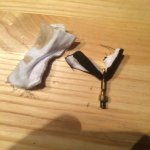
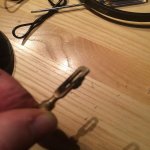
1 (1)S.jpg1 (2)S.jpg
 

Attachments

  • 1 (1)S.jpg
    1 (1)S.jpg
    52.9 KB · Views: 398
  • 1 (2)S.jpg
    1 (2)S.jpg
    72.9 KB · Views: 399
Last edited:

Maybe check the crud on your patch holder, if you saved it. Is it attracted to a magnet per desporterizer's comment ? I've had a couple SKS and just used C4 for carbon and various copper solvents afterwards. Got about 90+% Carbon out of the current SKS, just a few areas with streaks. If I go further will this cause the bullets to 'rattle' ? Ha ! And is it feasible to 'plate' the bore after getting it squeaky clean ? I've never read about anyone doing this so prob not a good idea, but maybe my senility is catching up to me and it has been done or at least dis-proved ^O^
 
What you describe - a "sewer pipe" ex milsurp bore - had done similar with at least half dozen of my own, here. Last one was a No. 4 Lee Enfield. Blacks, browns, blue from foaming cleaner, and so on - finally getting not much colour even after over night soaks. Then made "mistake" of running bore scope in there - frack!!!! There is no more carbon or copper - is actually quite "shiny clean" - except whole sections with "rust" growth out of the grooves and over the lands - like a very rough looking "smooth bore". Had dreams of making a handy dandy little rifle for my side-by-side - so sawed off to 19" barrel - probably managed to hit absolute worst section - no riflings visible at the new "muzzle" at all!!! An acquaintance has a pretty decent (he says) two groove LE barrel that has been sawed off behind the bayonet lugs - so I will likely install that whenever it shows up. I have a made-in-1896 Lud. Loewe 7x57 Mauser with reference books showing that the all matching serial numbers (except bolt), truly were shipped to ZAR Boers in 1896 - that bore simply can not be replaced - have been repeated cleaning that one, without firing it yet, at least two years - always a bit more crap comes out. Only redeeming feature is that there are still visible rifling all the way along that entire bore - but pits and lumps also - will never again be "as new".
 
I tried this method on an old sporterized .303 that had a neglected bore. It was a great gunk removal tool with all matter of crap bubbling out of the top. Rust and cordite is my best guess. The bore looked cleaner and still shot OK.
I'd use this method on any gunky barrel to get that deep clean, even getting into the pitting. I follow this with normal bore cleaning and oiling.
 
With distilled water, it seems best to take out rust and copper. With a light ammonia solution it takes out carbon along with a bunch of other stuff probably. This is not a miracle solution, but when all other methods no longer get anything out, this one seems to loosen things out some more. It remains quite time consuming. Nothing quick about this. It gives you time to think though. And again, i wouldn't do this to a new barrel, only to one where the carbon is baked-in.
 
Last edited:

OP, unless there's something really special about that rifle, re barrel it.

Every time you shoot it, you will have to go through this crap all over again.

I recently sold a Mosin M39 Finn to a friend. I bought it from Weimajack, a vendor on this site. This was several years ago.

I'm not going to dis Weimajack at all here because the rifle was listed as having an excellent bore. The rest of the rifle is definitely in excellent condition and all matching.

I sold that rifle, without ever cleaning it or shooting it.

The fellow I sold it to, for a premium price, was expecting to get a rifle that looked as good on the inside as the outside. IT WASN'T.

The next day, after he and another friend, both CGNers, spent a couple of hours cleaning up the rifle found a pitted bore.

Of course, like any other good CGNer, I promptly returned his cash.

I was curious to see if it shot well, so I loaded up 20 rounds with 174 grain .311 diameter Sierra SpBT with velocity around 2500fps.

My eyes aren't as good at picking up the sights as they once were, but this load with 52.5 grains of IMR4350 was still shooting into 2.5 moa at 100 yards.

I admit, I cheated. I was shooting from a rear bag and front rest and using the bottom edge of the 8x11 target paper and using the appx middle of it as an aim point.

This load shoots appx 6 in high with the sights on the rifles set to their lowest point.

I was pleased with the grouping.

The thing is, the rifle only shot well for the first 16 rounds.

The last four bullets opened up the group to 8 inches.

It took me close to an hour to get that bore clean again.

Likely I won't shoot it again and when the gunshows open, hopefully soon, I will be taking it there to move at a reasonable price.

If it weren't all matching, or if I was going to use it for milsurp matches, I would just put a different barrel on it and profile it to look like the original, which would actually decrease the value of the rifle.
 
Last edited:

Electro-cleaning will remove metal fouling. No doubt loosens up everything else. If the bore is eroded/pitted you are basically going to end up with clean, bare pitted/eroded steel.
I have tried it, does remove metal fouling faster than scrubbing with the various cleaning solvents. Amazing how much crap can be removed.

I suspect that most elderly rifles never had metal fouling properly removed during their period of regular use. Cupronickel was a common jacket material, and produced very pronounced nickel fouling, which was hard to remove without use of aggressive chemical or abrasive cleaners. A surplus rifle may never have had metal fouling removed.
 
Realize this thread is a bit old. But I no longer use my electro chemical bore cleaner.
I use ammonia - home hardware bottle. Leave it in for days changing it when it gets deep blue.
It cleans up these old Milsurps very well. They shoot awesome after all the copper fouling is gone.
Ammonia in these low concentrations is safe. I’ve read from chemists and experimented myself by submerging various metals in this ammonia. It’s only if you go into commercial grade levels where you can’t even buy it yourself that it could be damaging to a barrel.

I Think ammonia plugging gets a bad name because some ammonia based cleaners have a warning to remove it after 5 mins. It’s either the additives they use or they are being just too cautious. The 2-4% concentrations available over the counter are IMHO the best way to clean Milsurps with 100yrs of copper fouling.
 
FWIW, the british issued a piece of mesh with the .303 rifle pullthrough they called "metal gauze". When a rifle was badly fouled, a soldier would be instructed to pull the gauze through the bore - this would make a pretty big difference, kind of like lightly filing the rifling.

Not something you would do every day, to be sure. And likely why so many enfields have sanded looking rifling that are rounded on the edges.

I will say though, it did smooth out the sewer pipes a fair bit.
 
FWIW, the british issued a piece of mesh with the .303 rifle pullthrough they called "metal gauze". When a rifle was badly fouled, a soldier would be instructed to pull the gauze through the bore - this would make a pretty big difference, kind of like lightly filing the rifling.

Not something you would do every day, to be sure. And likely why so many enfields have sanded looking rifling that are rounded on the edges.

I will say though, it did smooth out the sewer pipes a fair bit.

This appears to be a similar process to that of the "Lewis Lead Remover" that I have used to remove lead in hand gun bores.
 
The metal gauze can be had in similar form via a roll of it from your local plumbing department / home improvement store in the form of sanding cloth.
 
In British service, using the metal gauze to remove rust or jacket fouling was a controlled affair. It was understood that it could cause premature wear if overdone. Today, we have far better products to create the same abrasive effect without causing damage. If you're thinking of trying it, try using JB bore paste and some kroil first.
 
Back
Top Bottom





















