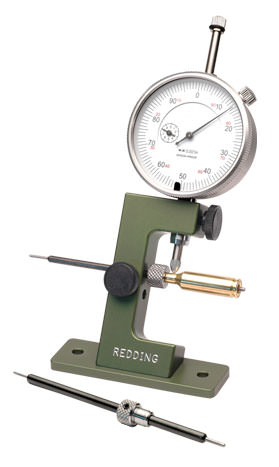
By "factory hunting rifle," I mean a complete hunting rifle from a manufacturer, not a rifle fitted with a custom barrel. I've heard it said that, for such rifles, turning necks of your brass is a waste of time. In fact, just recently, when I posted a technical question (on another forum) about one aspect of neck-turning for my .270 Win. rifle, one forum member, rather than addressing the question, questioned why I would bother turning necks with a .270.
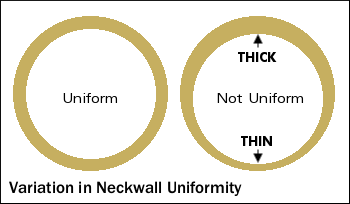
So what do you guys think? The argument against neck-turning with factory rifles--particularly those chambered for hunting cartridges--seems to be that, because the chamber is cut oversize, neck-turning accomplishes nothing of value. My argument for neck-turning in such cases is that, by uniforming the thickness of the brass in the neck via turning, you are improving the consistency of neck tension on the bullets from round to round, and even though the rifle may not be capable of benchrest accuracy, you are nonetheless improving the rifle/cartridge inherent accuracy, even if only by a little.
So do any of you guys do this with hunting cartridges?
So what do you guys think? The argument against neck-turning with factory rifles--particularly those chambered for hunting cartridges--seems to be that, because the chamber is cut oversize, neck-turning accomplishes nothing of value. My argument for neck-turning in such cases is that, by uniforming the thickness of the brass in the neck via turning, you are improving the consistency of neck tension on the bullets from round to round, and even though the rifle may not be capable of benchrest accuracy, you are nonetheless improving the rifle/cartridge inherent accuracy, even if only by a little.
So do any of you guys do this with hunting cartridges?