













































- Location
- on the road again
This is a real revolution developed right here in Canada . It is a known solution applied for the first time to the 10/22. These concepts put together result in a design that is so thorough , so complete , so perfect , it simply brings the never ending debate on the 10/22 barrel-droop to a sudden stop.
It was developed by a guy most of you know as Dr Lector.
The following explanations and pictures are his , as he posted on another website, only copy and paste-ed here . He didn't post it in here because he didn't want it to be seen as an advertising , and , of course , because sometimes he is an ####### ( but you knew that already ) .
So, this is Dr Lector :
Hello Gents,
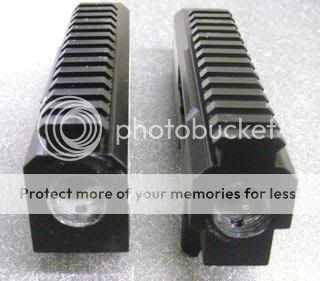
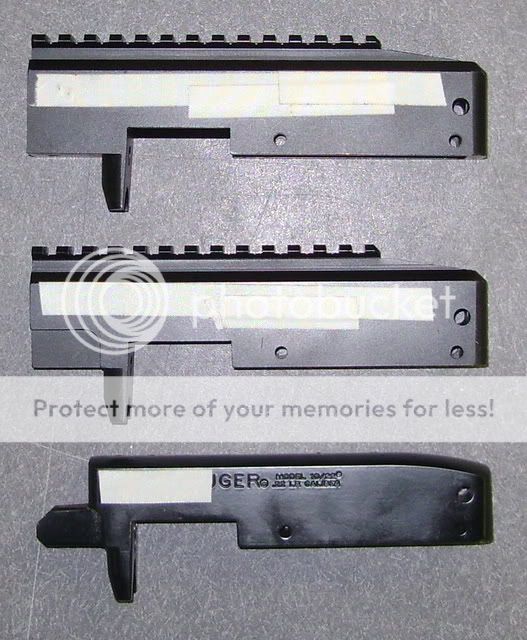
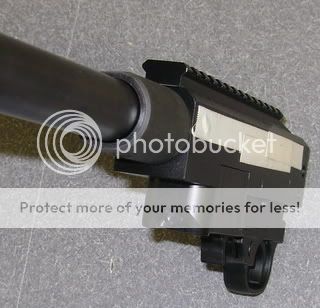
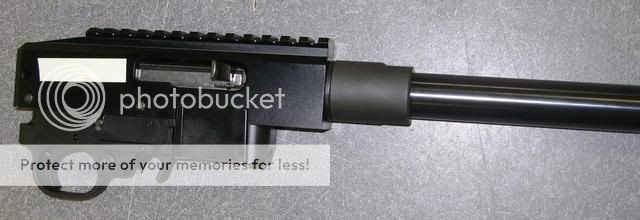
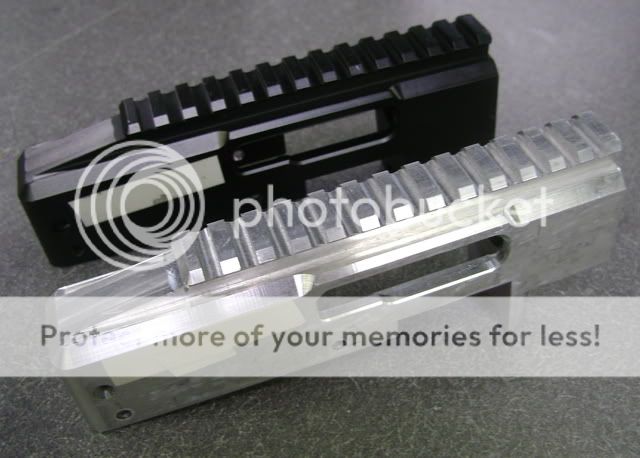
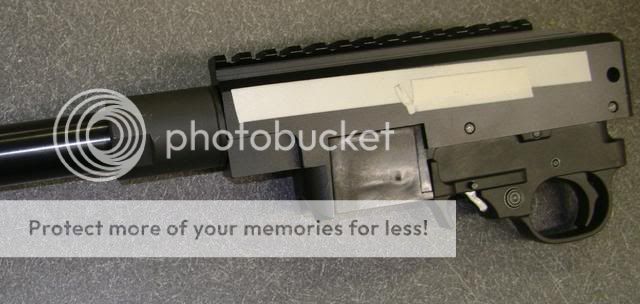
I will try to show you a 10/22 threaded receiver of a new, but simple concept.
Its first and only goal
was the highest possible rigidity of the barrel hold in the receiver I could come up with.
From the very beginning, I have to say that I did not give any consideration
to saving the "classic" look of the 10/22,
or to using unconventional solutions under a heavy disguise of a "stock" gun.
So, if you are looking for pics of a classy, or dixie, or posh, or 60's style 10/22 that has
some internal hidden tricks, then, this thread is not for you (I'm sorry to disappoint).
Instead, as I said, this receiver is designed and built with the only goal of
a strong and rigid hold of the barrel, with absolutely no regard to esthetics, style or fashion.
I have ever felt the rigidity of the assembly between barrel/receiver
can give better consistency.
In my way of thinking, there are two ways of achieving this rigidity:
1. The possibility of achieving any reasonable amount of torque
of the threaded assembly (generally, I tried to aim at torques
in excess of 38 ft.lbs. since, from my calculations, these would work),
2. Length of the thread in the receiver much longer than the tennon of the barrel in a factory 10/22.
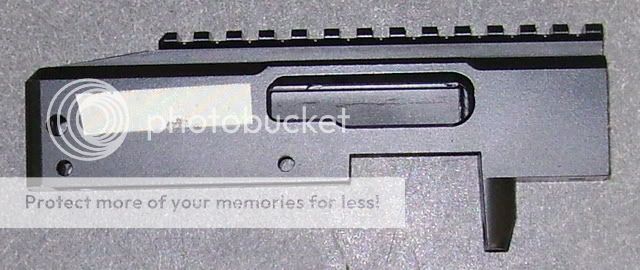
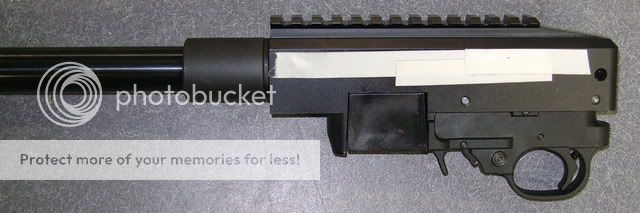
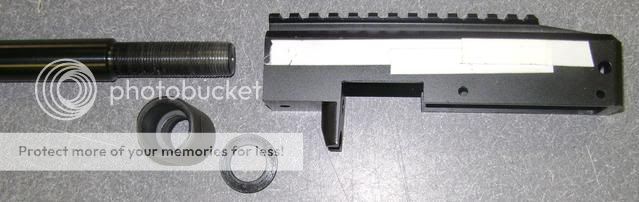
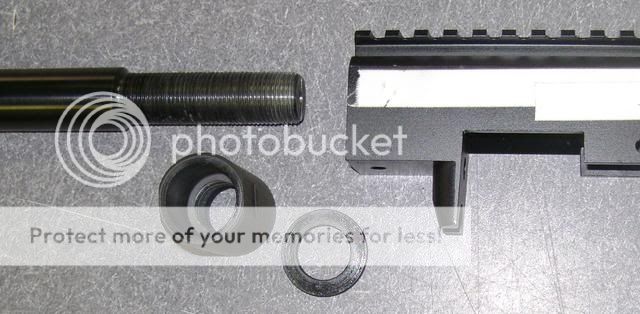
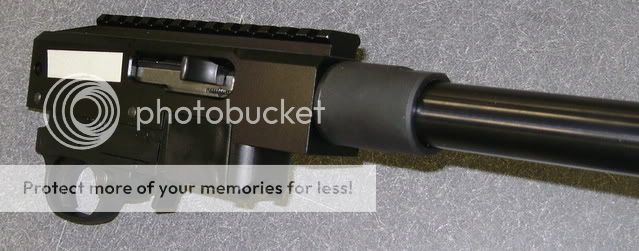
The barrel assembly:
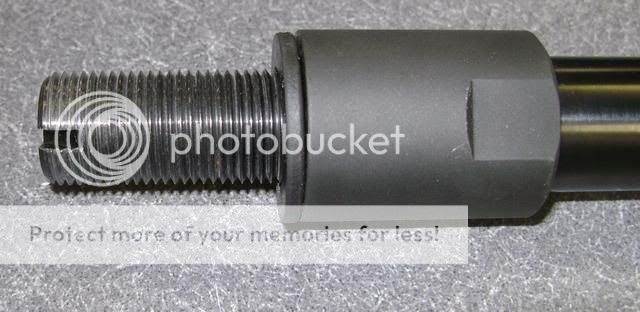
The thread is 3/4" - 16 tpi (the receiver is made of aluminum,
and in my experience and others', 16 tpi is the optimum pitch)
The diameter of the barrel is .920", only for the purpose of trials using
a stock that already had a .920" barrel channel.
Some of the trials involved using the same assembly barrel/receiver in 2 separate ways:
1. with the barrel supported in a stock for .920" barrel, and
2. free floated barrel, by slightly opening the barrel channel in the stock.
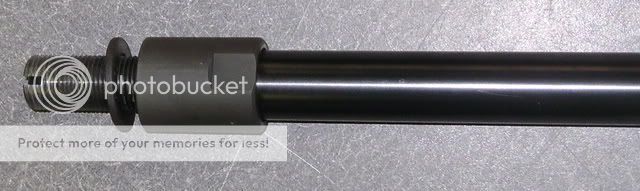
For the ease of setting the right protrusion of the barrel inside the receiver using the said thread of 16 tpi,
I used a barrel with 2 extractor notches (that is like trying to find the sweet spot
of the protrusion while using a finer pitch of the thread - or 32 tpi thread)
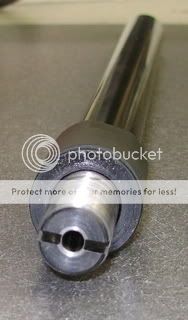
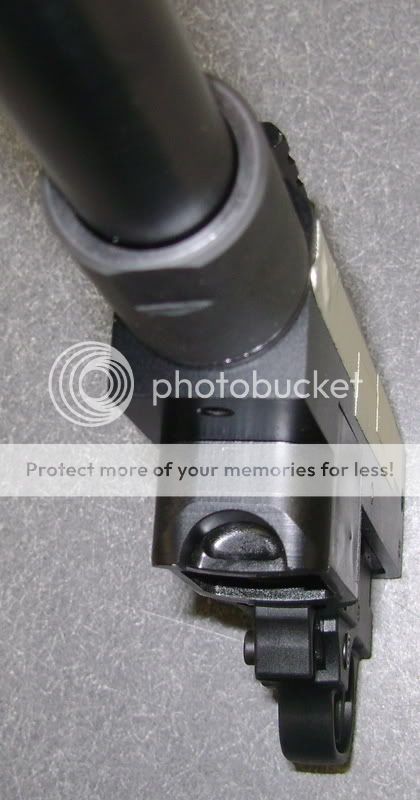
The diameter of the jam-nut is maximized up to the dimension of the width of the receiver for
the purpose of a large contact surface between receiver/jam-nut (washer).
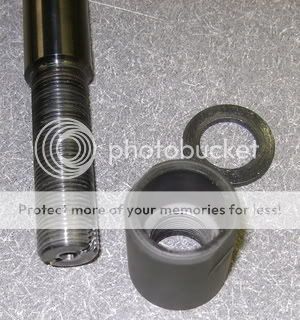
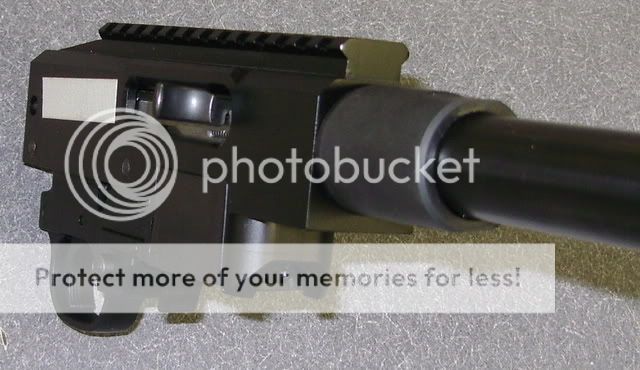
Additionally, I thought about the future possibility of using a recoil lug of the bolt action type
between the jam-nut and receiver.
This would probably eliminate the need of a washer, as the recoil lug could spread
the pressure over the surface of the receiver in a more uniform fashion.
I preferred the solution of a recoil lug in the front over the solution of thrusting the action in the stock at
the rear of the receiver, as the later would put tension the receiver.
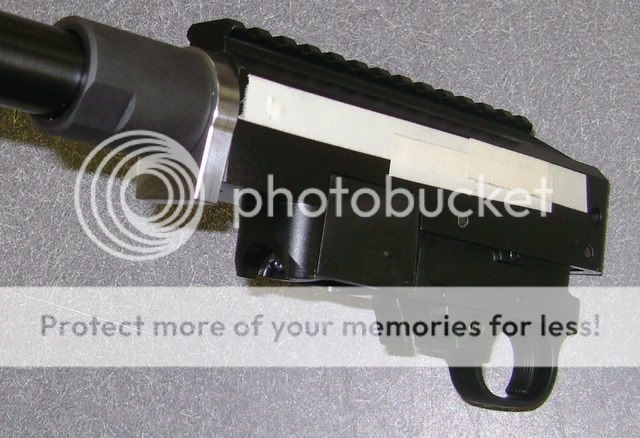

I am of the opinion that the recoil lug should be indexed - the one in the above pictures is not,
since I wanted to only illustrate the idea.
It was developed by a guy most of you know as Dr Lector.
The following explanations and pictures are his , as he posted on another website, only copy and paste-ed here . He didn't post it in here because he didn't want it to be seen as an advertising , and , of course , because sometimes he is an ####### ( but you knew that already ) .
So, this is Dr Lector :
Hello Gents,
I will try to show you a 10/22 threaded receiver of a new, but simple concept.
Its first and only goal
was the highest possible rigidity of the barrel hold in the receiver I could come up with.
From the very beginning, I have to say that I did not give any consideration
to saving the "classic" look of the 10/22,
or to using unconventional solutions under a heavy disguise of a "stock" gun.
So, if you are looking for pics of a classy, or dixie, or posh, or 60's style 10/22 that has
some internal hidden tricks, then, this thread is not for you (I'm sorry to disappoint).
Instead, as I said, this receiver is designed and built with the only goal of
a strong and rigid hold of the barrel, with absolutely no regard to esthetics, style or fashion.
I have ever felt the rigidity of the assembly between barrel/receiver
can give better consistency.
In my way of thinking, there are two ways of achieving this rigidity:
1. The possibility of achieving any reasonable amount of torque
of the threaded assembly (generally, I tried to aim at torques
in excess of 38 ft.lbs. since, from my calculations, these would work),
2. Length of the thread in the receiver much longer than the tennon of the barrel in a factory 10/22.
The barrel assembly:
The thread is 3/4" - 16 tpi (the receiver is made of aluminum,
and in my experience and others', 16 tpi is the optimum pitch)
The diameter of the barrel is .920", only for the purpose of trials using
a stock that already had a .920" barrel channel.
Some of the trials involved using the same assembly barrel/receiver in 2 separate ways:
1. with the barrel supported in a stock for .920" barrel, and
2. free floated barrel, by slightly opening the barrel channel in the stock.
For the ease of setting the right protrusion of the barrel inside the receiver using the said thread of 16 tpi,
I used a barrel with 2 extractor notches (that is like trying to find the sweet spot
of the protrusion while using a finer pitch of the thread - or 32 tpi thread)
The diameter of the jam-nut is maximized up to the dimension of the width of the receiver for
the purpose of a large contact surface between receiver/jam-nut (washer).
Additionally, I thought about the future possibility of using a recoil lug of the bolt action type
between the jam-nut and receiver.
This would probably eliminate the need of a washer, as the recoil lug could spread
the pressure over the surface of the receiver in a more uniform fashion.
I preferred the solution of a recoil lug in the front over the solution of thrusting the action in the stock at
the rear of the receiver, as the later would put tension the receiver.
I am of the opinion that the recoil lug should be indexed - the one in the above pictures is not,
since I wanted to only illustrate the idea.
Last edited:




 .....this is pretty close to utter genius !
























