Victor Sarasqueta SXS

meerkat

Regular
EE Expired
Rating - 100%
11   0   0
Location
Toronto
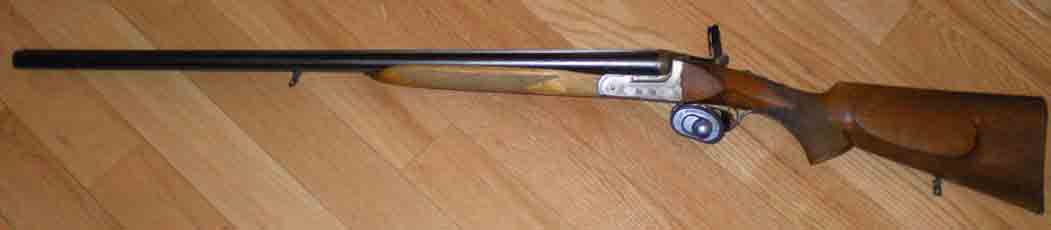
I was taking a look at my grandfather's old guns and found a nice looking SxS shotgun by Victor Sarasqueta. After doing some reading on here, it seems it's not particularly valuable, but of the Sarasqueta brothers, Victor apparently built the best quality guns.

I would like to clean it up and shoot with it, but since I am very much a newbie, it would be good to clarify a few things first.

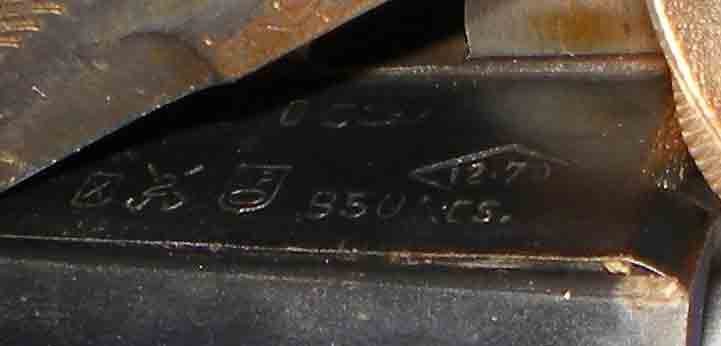
It says 12-70 on it, which I assume means 12 guage 2 3/4". Should I only be using lead shot with this one? I heard steel shot can damage some of these older guns.

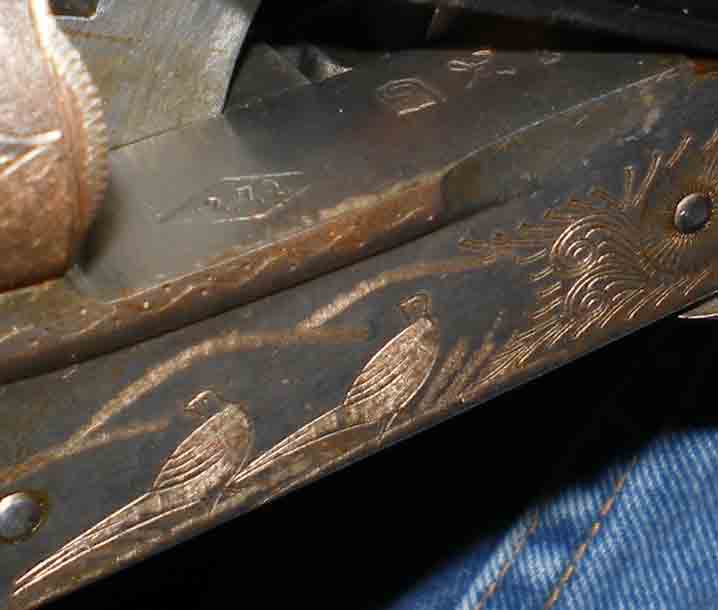
I want to date this thing, but am having a tough time finding the year code (using www.9mmlargo.com/year_codes.htm) since there are so many tiny hard to read symbols. Will post pics in here soon. Where exactly is the proofmark usually stamped?
 
Spanish SXS's can be anything from mass produced hardware store guns to the equivalent of a London "best" gun. Like most centers of production, the Spanish didn't, and still don't, turn away any business (although they tend to keep their firm name off of models that they are contracted to make cheaply).

Your grandfather's Sarasqueta could be a very nice shooter. The rule of thumb is to judge the gun you have in front of you, not the name. Pictures are a good idea.

Each gun must also be judged individually as far as being safe to shoot. If there are no obvious signs of rust, corrosion, or physical damage, yours is probably safe for modern shells excluding steel shot. It can be used for upland hunting, clay sports or any shooting where lead is legal. You can also use it for migratory birds, but you'll need to use non-toxic shot other than steel, such as Tungsten Matrix or Bismuth.

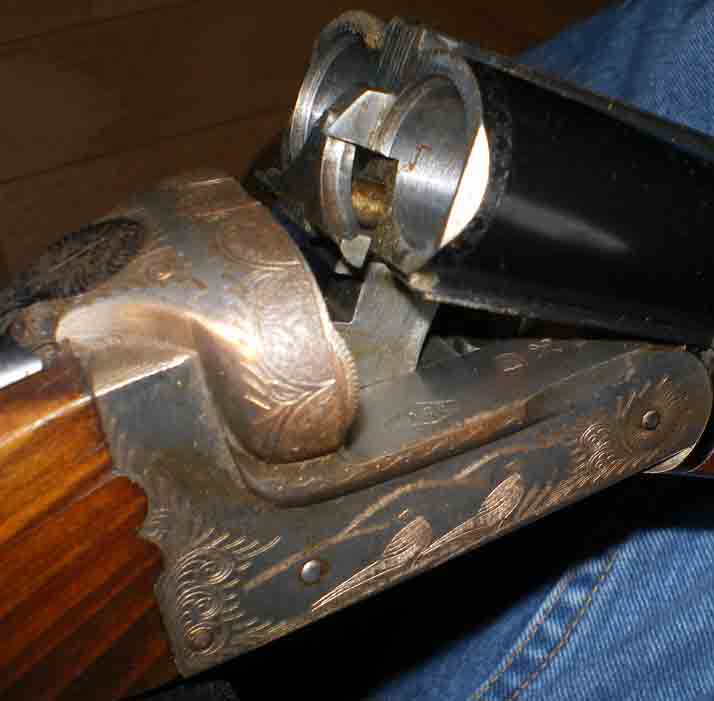
The proof marks will generally be found in two places; on the water table (the flat area in front of the fences, where the barrel flats lie when the gun is assembled and the action closed), and on the barrel flats (the flat area below the breech and on either side of the hook).
 
IMGP0360.jpg

IMGP0361.jpg

IMGP0356.jpg

IMGP03561.jpg

IMGP0357.jpg
 
Thanks for your replies. It is overall very clean and the bores are excellent. He acquired it in the 1960s. You can't see it in the pic, but there is a mark behind the others that looks like this (If I am seeing it right):

G MO>
 
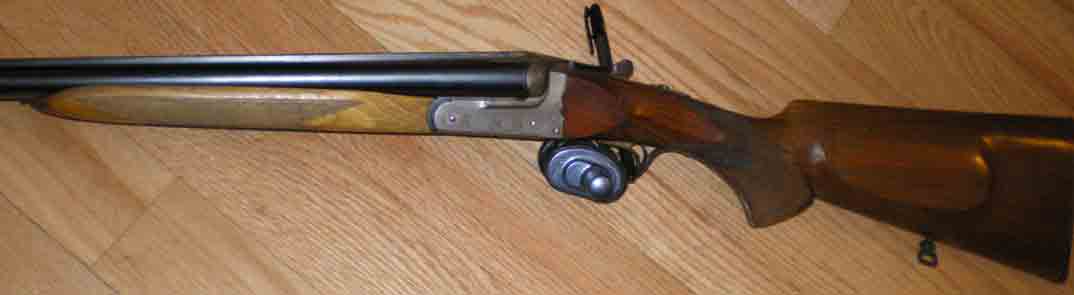
Yours appears to be a mid-grade model. The sculpted fences and rear of the receiver, and the light engraving are typical of the mid-grades. Unfortunately, it looks to have been left in storage for a long time. The rust doesn't look deep and can be polished out, but it would devalue the gun if you were looking to sell.

Chances are you don't want to do that. With the shotgun having been passed down to you from your grandfather, it likely has more in sentimental value to you than it would ever have on the open market. It looks like a fairly typical Spanish boxlock in shootable condition. If it were mine, I'd clean it up and take a bird in memory of grandpa every year.
 
You can take the gun apart further. #### the gun first. Push in the little button at the tip of the foreend, and swing it down away from the barrel to remove it. Now when you open the action, hold the barrels and swing them down until they separate from the receiver as well.
 
You can take the gun apart further. #### the gun first. Push in the little button at the tip of the foreend, and swing it down away from the barrel to remove it. Now when you open the action, hold the barrels and swing them down until they separate from the receiver as well.

Excellent. I've taken it apart and can read everything clearly now. It is marked
G1 (=1961). Thanks.

straightshooter, yes it definitely has sentimental value for me. I will clean it up nice and try to bag my first upland bird with it!
 
You could also determine choke types via the marks on the barrel flats - in that case, those would likely be numbers [read figures with decimal(s)] - that sxs will likely have the usual combination of fixed Full/Mod choke i.e. left/right bbl respectively.

Since you are planning on using the shotgun - it may be prudent to have a more experienced individual check it out for you or better still have a gunsmith thoroughly service the firearm.....you may incur a charge of $50-100 bucks, however, that will simultaneously offer you peace of mind as well as a properly cleaned firearm :)
 
Last edited:
You could also determine choke types via the marks on the barrel flats - in that case, those would likely be numbers [read figures with decimal(s)] - that sxs will likely have the usual combination of fixed Full/Mod choke i.e. left/right bbl respectively.

I was just looking at those actually!

The left one is: 17.3 18.5
Th right one is: 17.8 18.5
 
I was just looking at those actually!

The left one is: 17.3 18.5
Th right one is: 17.8 18.5

The fig 18.5 represents the true bore diameter.....your left could well = Mod and right = IC ......afraid don't have my chart to quote offhand....that combo, if my estimation is true, will make it even better for Upland.
 
the 18.8 referemce is millimetres ... equivalent to 0.728" the true bore diameter.

The barrel marked 17.8 is choked to 0.701" about 0.027" of Improved Modified.

The other barrel, 17.3 ( if it is a "3" and not a "5") would be 0.681", or
about 0.047" of choke, which is very tight ... if it was 17.5 it would be
0.689" or 0.039" choke ... normally considered Full.

Like any other shotgun however, the only way to properly determine pattern percentage is to shoot a paper pattern at 40 yards, enclosing the greatest amount of shot in a 30" diameter circle. The difference between the shot in the circle and the actual number of pellets in the shell is the pattern percentage. "Full" choke is variously quoted as 70 to 75 percent.
 
Remember the 1961 manufacturing date - shotshells back then would have been likely felt pads and no shot cup! What is now considered Imp Mod and Extra Full was likely producing Mod/Full patterns with the then-current shotshells. You could reload paper hulls with felt wads old-style, or just get them opened up to work with newer shotshells, more like 0.010" and 0.020" if you're after upland game.
 
Remember the 1961 manufacturing date - shotshells back then would have been likely felt pads and no shot cup! What is now considered Imp Mod and Extra Full was likely producing Mod/Full patterns with the then-current shotshells. You could reload paper hulls with felt wads old-style, or just get them opened up to work with newer shotshells, more like 0.010" and 0.020" if you're after upland game.

...or contact Fasteel on this board and get yourself some of those Gamebore Pure Gold with the felt wads and the low pressure loads. I love those shells!
 
Back
Top Bottom