Weird M44 maybe one of a kind?

Smithwess

Member
Rating - 100%
13   0   0
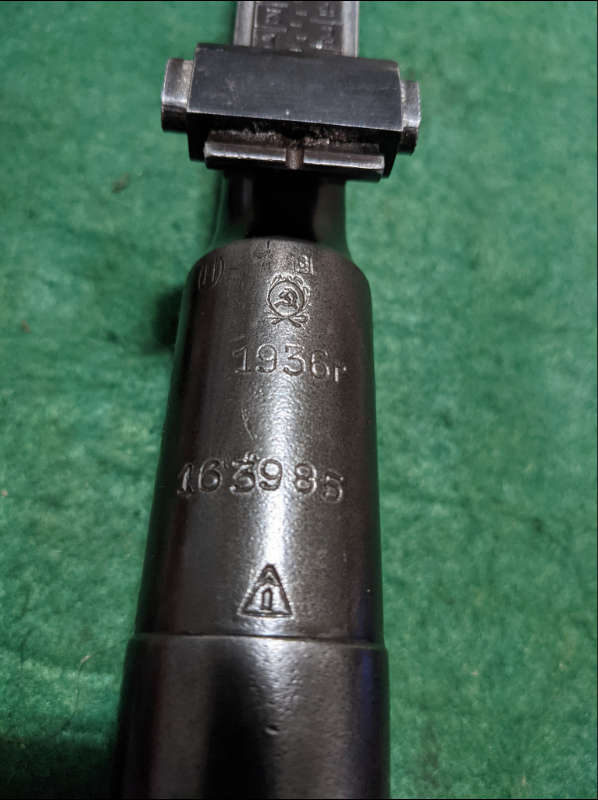
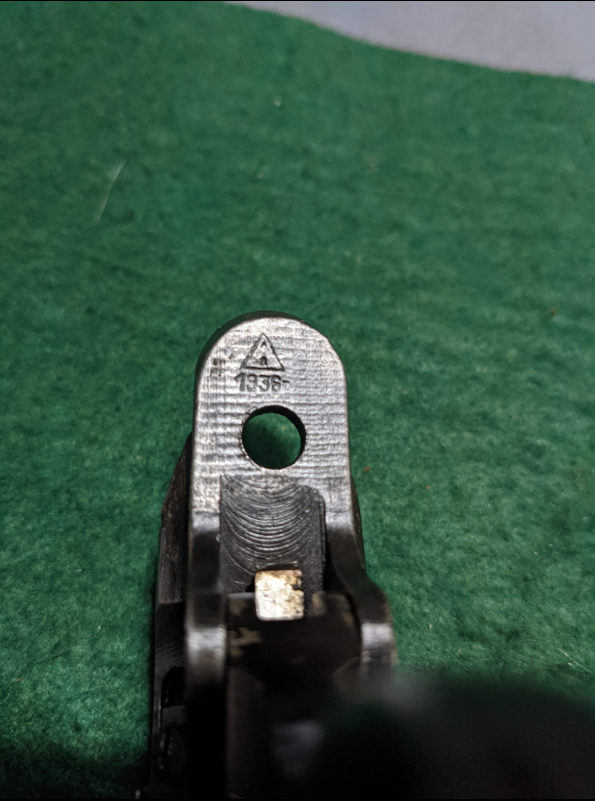
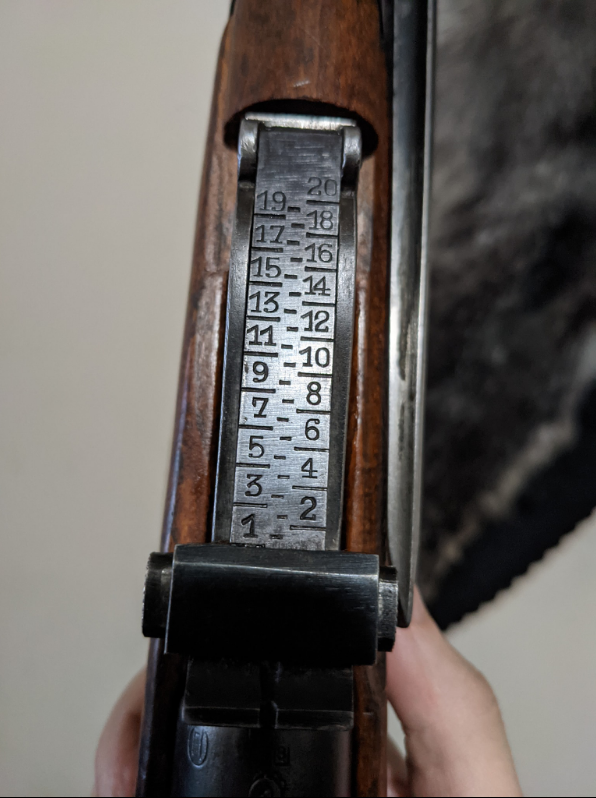
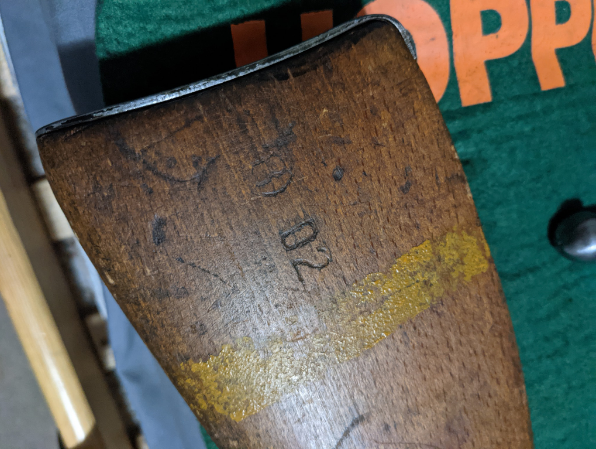
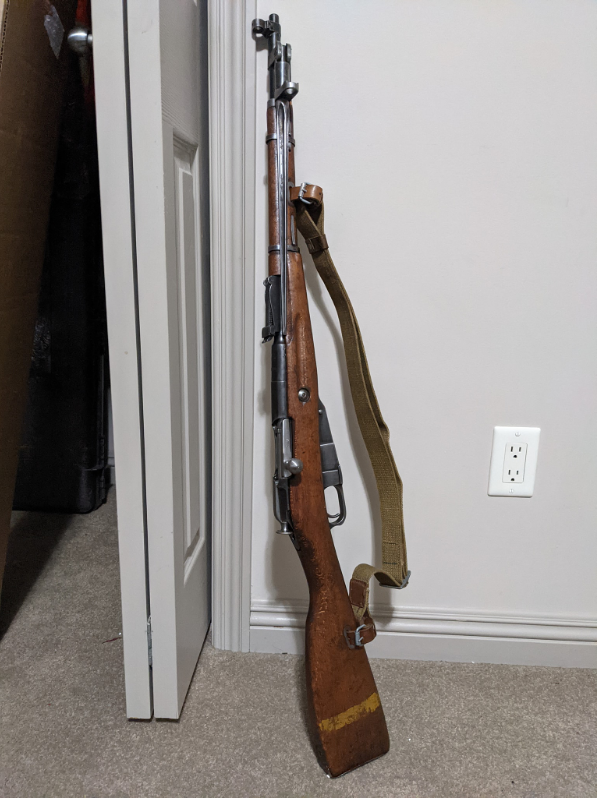
I can't find anything like it. It's a 1936 M44, the tang matches the barrel shank in being a 1936 Izhevsk meaning this must have been cut down from a M91/30? Rear sight is not typical of M44s I believe either and it has several "02" markings which means Hungary but I can't find ANYTHING on them doing this, to my understanding they made their own M44s. The butt plate, trigger guard, nose cap and stock are all Hungarian marked. There is also a yellow band painted around the stock. If you have any insight let me know, thanks for looking.
be3146f3b96c216aad5207193ce073f5.png
6080fcc01d88f9c64035523cf43c6e17.png
e083155fb1e0f83667095a79e3be963a.png
e6073fe00dff989eb27f85c139266c05.png
1d61f56f881117c67019967c826d05ca.png
 
The yellow band may signify an instructional rifle?

Australian SMLEs had yellow paint on the last 8 inches, up to the muzzle supposedly signifying training purposes but OK to fire.

Maybe have the rifle inspected by someone competent, before shooting it.

That rear sight is definitely from a 91/30

I would agree that the barrel has been cut back and the muzzle turned down to accept the M44 sight/bayo sleeve, then the whole thing put into an M44 stock.

If it was done after being surplussed, it was done very well.

I remember a bunch of Romanian M44 rifles coming into Lever Arms, some of them had similar bands, but they were red and blue. They were genuine M44s.

OP, your rifle appears to have all the proper bands and cut outs for the M44 configuration.

It likely isn't a one off, but it's not common either. Maybe it was an early transition rifle???

This is what makes collecting milsurps so interesting. It's always satisfying to get provenance for identification, but the ones that have a story, often have nothing written down about where they've been or what their purpose was.
 
Last edited:
The yellow band may signify an instructional rifle?

That rear sight is definitely from a 91/30

I would agree that the barrel has been cut back and the muzzle turned down to accept the M44 sight/bayo sleeve, then the whole thing put into an M44 stock.

If it was done after being surplussed, it was done very well.

I remember a bunch of Romanian M44 rifles coming into Lever Arms, some of them had similar bands, but they were red and blue. They were genuine M44s.

OP, your rifle appears to have all the proper bands and cut outs for the M44 configuration.

It likely isn't a one off, but it's not common either. Maybe it was an early transition rifle???

This is what makes collecting milsurps so interesting. It's always satisfying to get provenance for identification, but the ones that have a story, often have nothing written down about where they've been or what their purpose was.

I was thinking along the same lines as you on most things, I think/hope it was done by the Hungarians as an early sort of test/transitional thing as well. It is of course possible it's a home job but I don't see the point and feel that if that were the case not everything would likely be Hungarian. Doubt it's a one off, if it was done by their arsenal it was likely in a batch of who knows how many at the very least but I am feeling quite foolishly hopeful that what I have here is quite special, I'd spent several hours researching looking for a similar rifle and the only one I've found close is this. http://7.62x54r.net/MosinID/MosinRare1904M44.htm
 
It was likely done post war.

I've seen M44s in M38 stocks. The Soviets never threw anything away that might prove useful or valuable in the future. I've seen M38s in M44 stocks as well. The bayo cutout and the stock ferrules are hard to mistake. They all are interchangeable for a reason.

I suspect, unless someone has some real information on your rifle, maybe and old armorer, that you will be pondering this mystery for as long as you own it.

I don't know what Hungarian Drill Purpose marks look like.

Maybe try looking that up and checking your rifle for such marks.

Some nations made their DP rifles unserviceable by cutting a slot in the chamber, some marked them DP and some just used obsolete models as is.

I've spoken with post Korea paratroops and they were given all sorts of firearms to carry on training drops. Some of which they didn't recognize. Parachute drops are very hard on firearms and other equipment.
 
It was likely done post war.

I've seen M44s in M38 stocks. The Soviets never threw anything away that might prove useful or valuable in the future. I've seen M38s in M44 stocks as well. The bayo cutout and the stock ferrules are hard to mistake. They all are interchangeable for a reason.

I suspect, unless someone has some real information on your rifle, maybe and old armorer, that you will be pondering this mystery for as long as you own it.

I don't know what Hungarian Drill Purpose marks look like.

Maybe try looking that up and checking your rifle for such marks.

Some nations made their DP rifles unserviceable by cutting a slot in the chamber, some marked them DP and some just used obsolete models as is.

I've spoken with post Korea paratroops and they were given all sorts of firearms to carry on training drops. Some of which they didn't recognize. Parachute drops are very hard on firearms and other equipment.

I am quite certain it was done post war, Hungary didn't start making their own M44s until I think 1952 iirc. So I would imagine it was done around then. The stock is 100% Hungarian and the buttplate, bottom metal, and nose cap are all Hungarian marked.
 
My WAG is made at some point from rifles captured by the Israelis and shipped to Pakistan (where the yellow DP band was applied) during the Soviet-Afghan War.

Pure speculation though.
 
Receiver was manufactured in 1938

Barrel was manufactured in 1936

Stock is 1950s Hungarian

"Unique" and "1 of a kind" are terms I would not use...

They're both 36, throw on some glasses. And feel free to provide a link to one similar to show it's not unique thanks ;)
I'm also having a really had time trying to find where your "1 of a kind" quote came from?
 
From my understanding, it's less common is to find a Soviet M44 with Eastern European markings on the metal (each country was making their own). Most likely an early soviet M91/59 converted to the M44 spec by Hungary (02 factory B for the Budapest arsenal).

A red stripe is "Instructie" you can see that here: ht tp://7.62x54r.net/MosinID/MosinRareInstEx.htm

My thought is the yellow band is for one of two possibilities, 1) Non conforming rear sight markings. 2) Rifle markings on rifles from places like Syria and the general area and tend to be mostly rack numbers.

Still, interesting for a Mosin collector.
 
Back
Top Bottom