












































You are using an out of date browser. It may not display this or other websites correctly.
You should upgrade or use an alternative browser.
You should upgrade or use an alternative browser.
Wood or plastic stocks
- Thread starter oldtiredman
- Start date


Wood looks way better, more of a natural look and feelI hear wood can be a pain in damp weather, but it looks so much nicer. For someone looking at their first rifle, when so you recommend wood vs. plastic?

maple_leaf_eh
CGN Ultra frequent flyer
Wood is ok for military surplus rifles, but for hunting synthetic stocks are better.
Plastic - absorbs some of the felt recoil in flexing, which for hunting distances is OK. Not the same if you are trying to bug-hole tiny groups
- cleans with a toothbrush and Windex. No requirement for alchemist's formulations of virgin lamb's wool squeezings and linseed oil, finished with rare Japanese beetle shells in alcohol
- should never split, crack or break
- absolutely impervious to the weather
- won't hold moisture if the firearm is moved in and out of heated or warmed shelter
- no issues if the carrying case gets moist
- can be fabricated as a solid lump, a foam filled shell, applique panels that screw onto a chassis
- can be repaired with a Canadian Tire fibreglass resin and motorboat repair kit.
- can be sculped to fit with positive materials. Try finding a gunsmith who'll admit to having a wood stretcher in the back shop.
And, ask yourself. Does the deer care how pretty the rifle was that killed it?
Plastic - absorbs some of the felt recoil in flexing, which for hunting distances is OK. Not the same if you are trying to bug-hole tiny groups
- cleans with a toothbrush and Windex. No requirement for alchemist's formulations of virgin lamb's wool squeezings and linseed oil, finished with rare Japanese beetle shells in alcohol
- should never split, crack or break
- absolutely impervious to the weather
- won't hold moisture if the firearm is moved in and out of heated or warmed shelter
- no issues if the carrying case gets moist
- can be fabricated as a solid lump, a foam filled shell, applique panels that screw onto a chassis
- can be repaired with a Canadian Tire fibreglass resin and motorboat repair kit.
- can be sculped to fit with positive materials. Try finding a gunsmith who'll admit to having a wood stretcher in the back shop.
And, ask yourself. Does the deer care how pretty the rifle was that killed it?
Cdnhunter117
CGN Regular
- Location
- Northern Ontario
I like being able to do spray paint camos and being able to switch em' up if I want to.Wood is ok for military surplus rifles, but for hunting synthetic stocks are better.
Plastic - absorbs some of the felt recoil in flexing, which for hunting distances is OK. Not the same if you are trying to bug-hole tiny groups
- cleans with a toothbrush and Windex. No requirement for alchemist's formulations of virgin lamb's wool squeezings and linseed oil, finished with rare Japanese beetle shells in alcohol
- should never split, crack or break
- absolutely impervious to the weather
- won't hold moisture if the firearm is moved in and out of heated or warmed shelter
- no issues if the carrying case gets moist
- can be fabricated as a solid lump, a foam filled shell, applique panels that screw onto a chassis
- can be repaired with a Canadian Tire fibreglass resin and motorboat repair kit.
- can be sculped to fit with positive materials. Try finding a gunsmith who'll admit to having a wood stretcher in the back shop.
And, ask yourself. Does the deer care how pretty the rifle was that killed it?
My first rifle has a wood stock and is still my favourite! Both my hunting rifles are wood, but where I am at it is not often that I get caught in rain, mostly snow during deer season and I likely am not going grouse hunting in the rain, haha. Also, relatively dry climate. I am in Alberta. Hunting, I am walking around all day with the thing in my hands and like the warmth and feel of wood.
I use plastic and metal on the range, just because it allows more options to adjust fit and balance for competition and I am more concerned with accuracy gains of an aluminum bedded action.
Where do you live and what is the rifle for?
I use plastic and metal on the range, just because it allows more options to adjust fit and balance for competition and I am more concerned with accuracy gains of an aluminum bedded action.
Where do you live and what is the rifle for?

Which guns did you have problems with?I have had issue with wood stocks on rifles throwing on off my shot. Prefer synthetic on rifle.

Wood has been the preferred stock of all guns for most of all history until last few decades. In WW2 some composites were begun to be tried. Wood of course just due to its organic nature can warp and dry out over time which can then affect the set of the barrel when it expands from shooting and accuracy however it takes extreme conditions to do this and very long periods. That's why bedding a rifle is important or re-bedding if it warps. The advantage of plastic is that this can also happen but there's less chance, plastic can also be lighter but not necessarily it can also be heavier sometimes than wood. It also is waterproof and can be colored or made in comoflage. The main reason everything's going to plastic now is its cheaper for manufacturers to mass produce this stuff and make guns cheaper. Personally I think plastic is ugly, feels like crap in the hands & the dings and scratches it gets is ugly and can't be fixed like on wood. I don't see any reduction in gun prices even though they're made with cheaper materials, the only advantage obviously is for the manufacturers to just make more profit. I'm a lover of wood and the traditional look and feel of a rifle or handgun in my hand with wood stocks. If you properly store and maintain wood based firearms they can give you a lifetime of trouble-free service. There are rifles out there that are over 100 years old with the original wood stocks that still fire fine and have no issues. At the end of the day it's a personal preference some love plastic now others still love wood
Therein lay the advantage of a good fiberglass stock. It can be lighter than both wood and injection molded stocks and is very easy to fix and alter over the same tasks on wood and tupperware. Slap in some bondo and paint.Personally I think plastic is ugly, feels like crap in the hands & the dings and scratches it gets is ugly and can't be fixed like on wood.
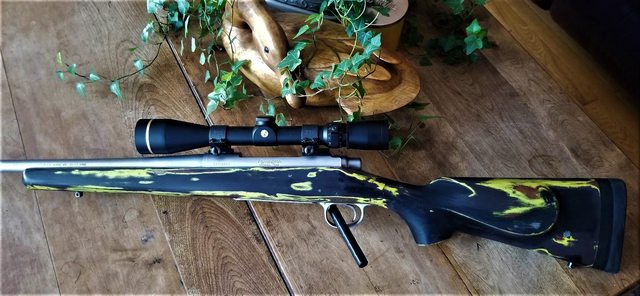
Take this old fiberglass Brown Precision stock for example. It is at the pinnacle of fine stocks in both form and function and not easily topped.


All wood here, but I am planning on a something synthetic for #### weather days, and maybe for lightness when putting on the walking miles. My 8x57 is a tank. But its bedded and shoots well with and almost no recoil. The others I have are lighter, so I do have options still. Hmm.
Sometimes will sitting and waiting for game, i admire them.
Sometimes will sitting and waiting for game, i admire them.






















