









































Wooden stocks

treebutcher

CGN frequent flyer
Rating - 100%
9   0   0
Location
Nova Scotia
I would like to try to make a wooden stock. Has anyone tried to build a stock? If so what kind of wood did you use? I have it in my head that I would like to try to use a native hardwood (maple, oak, ash, birtch) I am leaning towards ask or oak, but I don't know how it will hold up under recoil (7mm-08). I have used ash and oak before for different projects and its very durable, but its weekness is stress along the grain. Maple has good properties and is easly worked, but the grain will not stand out like ask or oak.
 
Grain flow, density and weight are generally the parameters for choosing wood for stock making. Oak is very heavy and openned grained for stocks....generally not used. Walnut, maple, myrtle, mequite are a few that I've used. Walnut is by far the is the best for carving, shaping, finishing and durability. You need minimum 2" thick material to build a stock with a cheek piece. Good luck with your project.
 
I would go with Maple or Birch ... avoid Oak and Ash entirely.

A good piece of Fiddleback, Flame or Birdseye Maple can make up into a very nice stock.
There are several finishing techniques available that were developed by instrument makers as well as the old flintlock makers... specifically used to bring out the grain of Fiddleback Maple. See if you can get hold of a copy of Stockmaking by Alvin Linden, Professional Stockmaking by David Wesbrook and Checkering & Carving of Gunstocks by Monte Kennedy ... all are available from Brownell's .

Good luck with your project.
 
If you cut that piece diligently, you might get two stock blanks out of it. Make up a paper template and lay it out, could be a nice surprise.
 
I've always been tempted to try Aspen for a light recoiling rifle. It very light when dry, and quite hard. Certain cuts can even show a lot of contrast and color. I'm sure the grain is too broad to handle a heavy hitter, but a .222 or .223, or maybe even a 7x57 shouldn't be excessive. Getting it to dry straight (and stay that way) might be a bit of a challenge. A friend of mine built a gun cabinet out of it a few years back, and it came out beautiful with streaks of grey against the white backgound.
 
Do you drink or swear? With this project now's your chance.

I have done relief and in the round carving for years and last year I decided to put my enjoyment of carving together with my love of guns. In the process I have developed some pieces that would make salvadore dali quite proud and others I have just quickly hid.

Here's what I have tried so far:

1 -4 attempts at re-stocking a 30-30 winchester all ended in hand-crafted pieces of precision fire wood. All of these were done in maple. No problems with the wood, just the order in which I approached the work.

5. gave up on the 30-30 for now. went to work on a .303 ross. This attempt was in a 2 x 8 piece of oak. too straight a grain through the grip. split right there.

6. still on the .303, more of the same oak. brought it to the right humidity et al of work shop did the relief for barrel and magazine, discovered a knot. next day had a curve to what was a beautiful piece of wood.

- Try carving one/more in a cheap a$$ piece of spruce first to work out the bugs in your processes. also, you may want to cut a small piece of your wood off and strike with a hammer to see the effects on the birds - eye.
 
I've done a couple of semi-inlet. First off,study gunstocks,hold them in your hands,lift them,aim them,all with you eyes closed. A Remington BDL has some good points worth copying. To get that "feel" ,you'll be surprised how little wood has to be removed. I used coarse metal working files. What scarces me ,is the inletting. I'm not that good with a mortice chisel. I think when I come to that with my blanks,it's going to be a plunge router and templates.Good luck
 
I agree I think the router is the way to go for inletting.THE.KJK you confirmed what I was afraid of, Oak will not hold up under recoil. I would think the Birdseye would be an advantage in terms of strength as they run across the grain. I have been trying to lay out my stock last night and I can't get two out of it. I have to twist the stock 20-30 degrees to the edge so the grain will run through the forestock into the butt. If nothing else I will make some fancy firewood.
 
I did a birdseye maple stock for a .308 Husqvarna, took quite a while to get it right, but it is my number 1 gun. The gun handles the recoil without an issue, and I find it much lighter than than the original. Good luck with your project!
 
I agree cherry, rosewood or cocobolo would look great. They might be over budget, alot over budget. My wood source tends to be the firewood pile or trees I help remove from yards. I have read that some of the exotic hardwoods can cause wierd reactions on woodworkers, I think cocobolo was at the top of the list. Just a side note for the woodworkers out there
 
We sometimes forget some of the softer woods and how tough they can be. In 1977, I married a woman with a young son. He was a really decent kid and had an affinity for shooting. He was only 8 at the time and not really strong enough to hoist the Cooey 22 single shot Ranger I gave him. We carved a new stock for it out of a piece of 2nd growth cedar, cut on the quarter grain. He still has that little rifle today. In 1983, the marriage went awry but the young man continued to enjoy shooting.

In 1984, being flat busted by a costly divorce, I came across a cut down Brazilian 7x57 mod 1935 barreled action. I couldn't afford a decent walnut blank and couldn't find a surplus stock (no CGN at that time) that did the rifle justice. I talked to my father and asked if he had anything around that would work for a gun stock (my father hated guns by the way). He gave me a piece of Larch (Tamarack) that had been aged for about 10 years. That wood was as heavy and hard as a piece of iron. I carved it into a very decent stock and mounted the barreled action into it. Thankfully, an old friend with a lot more experience than I had helped me out with the bedding. When it was finished, it looked very much like the light blond, walnut stocks so many of the 1908 and 1935 Brazilian mauser 98s wore. It was a heavy rifle though but it was easy to hold off hand. That rifle still wears that stock and it stands up well to the elements. It was finished with the Swedish pumice powder process and today the finish is kept up with Kiwi shoe polish. It doesn't get much use any more but I have an eager 5 year old grandson coming along. Hopefully I'll be able to keep him interested.
 
...I'm sharing the dream! I have a few toy's I'd like to wrap in pretty wood as well...(maye even lighten up some of my full-cord WWII favs....)

One thing that may cheapen and, liven your stock-options (pun intended) is laminating a few different flavours of wood together. You can use softwoods (might make some of you cringe) in the core and save your beautiful bird's-eye Maple for a nice skin. The other thing that can make an absoloutely gorgeuos stock is using some poplar in your laminations...it's cheap, local and, can have the most exotic of colours.
The other possibilty? faux-fininsh...if you can paint (I can't) you can actually "mock" any wood you'd like...

One wee-warning....when actually carving out your your blank, take the smallest amount of material you can at a time...it takes a LOT longer but, success rates are better.
 
If that can help....

http://www.canadiangunnutz.com/forum/showthread.php?t=388246

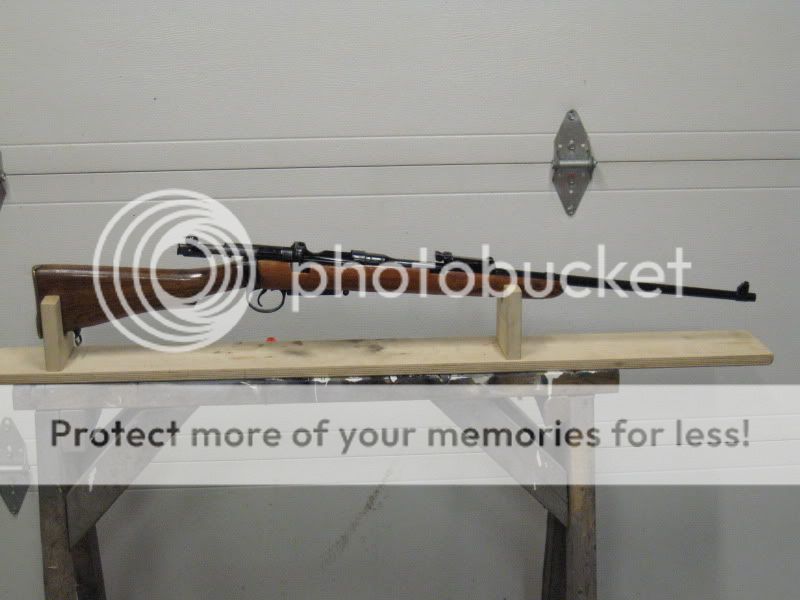
From this

SMLE005.jpg


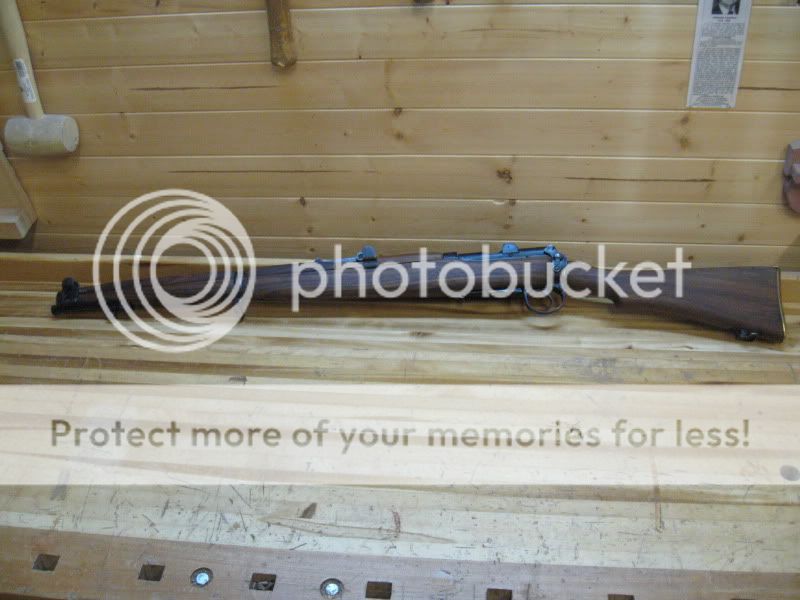
To this

SMLE92005.jpg
 
Man Bob thats nice work!! I doubt I'm going to be at that level of craftmanship. I plan on starting this weekend. I probably wont get any serious time on my stock untill things at work slow down.
 
Have never made a gunstock, but...
here are some cool pictures of wooden bicycle frames and if you'll note the "woodbike" about halfway down the page, you'll discover, as I did, that compressed kiln technology can improve wood properties significantly.
http://bikerodnkustom3.homestead.com/woodeye3.html

I had some other links to the technology awhile ago but they're dead now. Basically, clamp (think hydraulic jack kinds of pressures) the heck out of your green wood in two dimensions, dry it, and you've got superwood.

I was thinking that this would do wonders for aspen, or "poplar" as it is known around here. Maybe oak too. Splitting is minimized with the compression drying. One day I'll have time to try it, maybe...
 
Back
Top Bottom