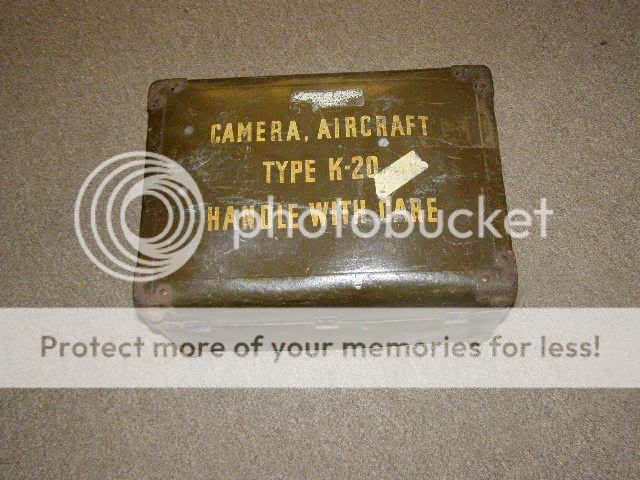
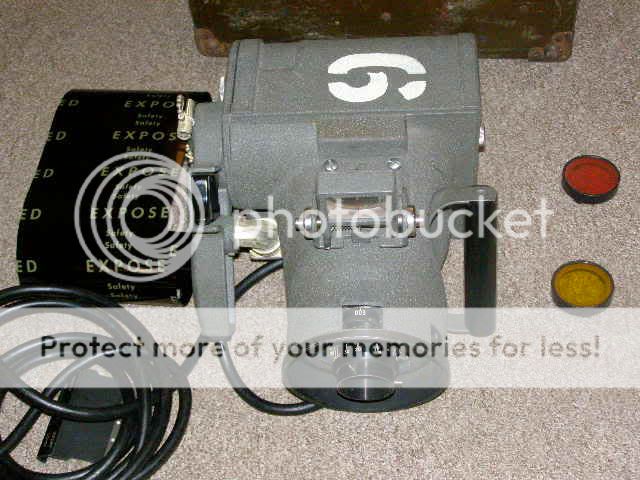
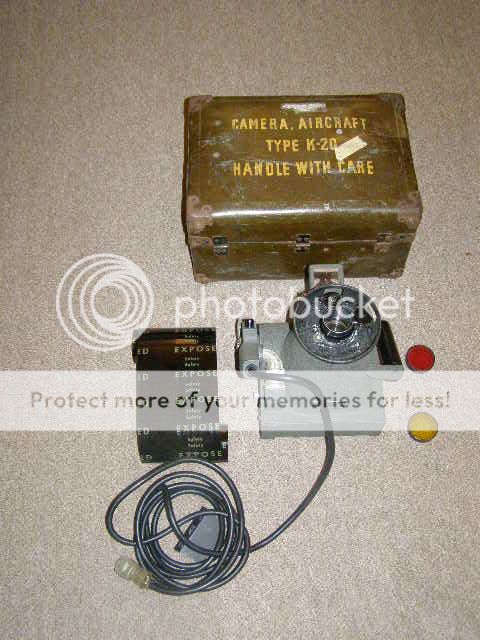
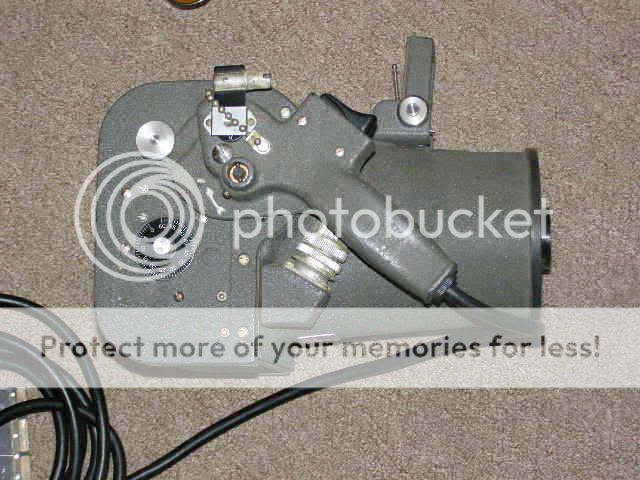
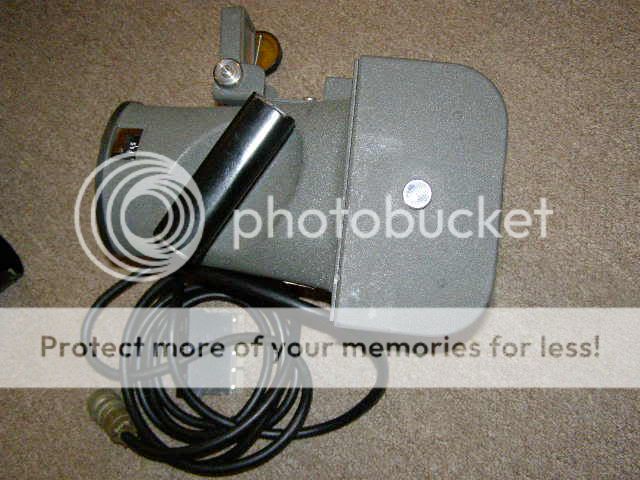
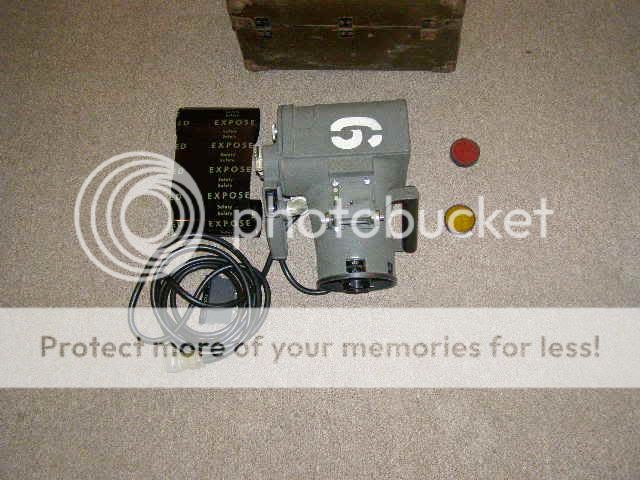
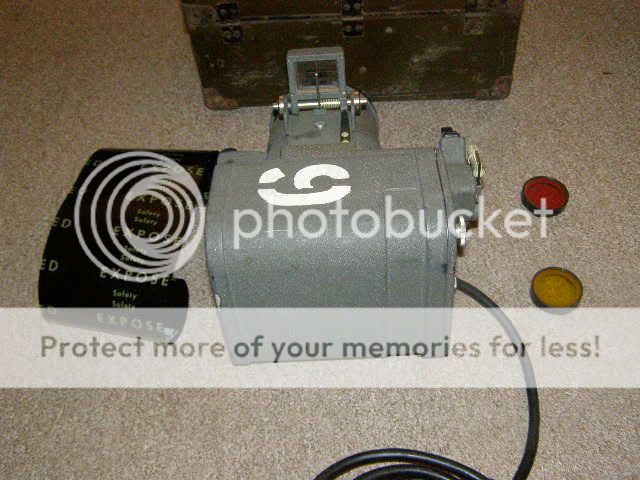
The shutter assembly was made by Graflex, lenses by Kodak. Shutter assembly should have a serial number which can be searched. George Eastman Museum has a useful entry on these.
You used roll film 5-1/2 inches wide and there was a processing machine for the thing. If you don't have a processor you can develop the negatives in a tubful of D-76 in a darkroom, alternating lifting one end of the roll high in the air, then the other, dipping the film into and through the chemical on each pass. Use D-18 for heightened contrast if you want to but stay away from D-82 if at all possible; it eats itself, is based on caustic soda and is good for only a single use..... and the contrast will be very high, generally losing detail. When the film is developed, you stop it in Stop Bath for 1 minute and then hand-pass it as previously through the Hypo Fixer for 3 minutes until the lights can be turned on and now you can gauge the process by sight: Fix for twice as long as it takes to clear. Now wash in cold water for half an hour, squeegee carefully and hang to dry.
Your finished negatives are 4 inches by 5 inches and you can use them to make contacts for stereo use or enlargements of single frames for analysis. They are also useful (on the ground) for when you want a picture of a building a quarter-mile away and you want DETAIL; you will be able to count the individual bricks. Not good for close-up shooting; the lens is fixed-focus. But you are good for up to about 30,000 feet.
There should be a PLATE riveted to the camera somewhere to tell you the contract number, where and when it was built and its official designation.
They are a lot of fun to play with but cost a mint to feed.
I saw a wonderful photo taken with this one's big brother, the K-18. It was of the bombed-flat city centre of Cologne with the Cathedral rising almost untouched from the ruins, rail-yard destroyed utterly and the Hohenzollern Bridge looking perfect but with an 11,000-pounder hole in the exact middle. The photo was taken by Lawrence Stuckey of Brandon, Manitoba just a few days after the end of the War. Lawrence had to get the pilot of the Lancaster to fly around the bridge 5 times before he got the exact picture he wanted. When it came to photography, Lawrence was an absolute perfectionist.... and his work REALLY showed the results; his passport photos were better quality than most guys' portraits....... and I mean that. Absolutely the FINEST photographer I have ever known. He taught me a great deal and did it in a very few words; other guys would have written volumes and said far less. A genius in his field, if ever there were one.
Hope this helps.
WONDERFUL Toy!
.
















































 Are there any dates on the case or camera?