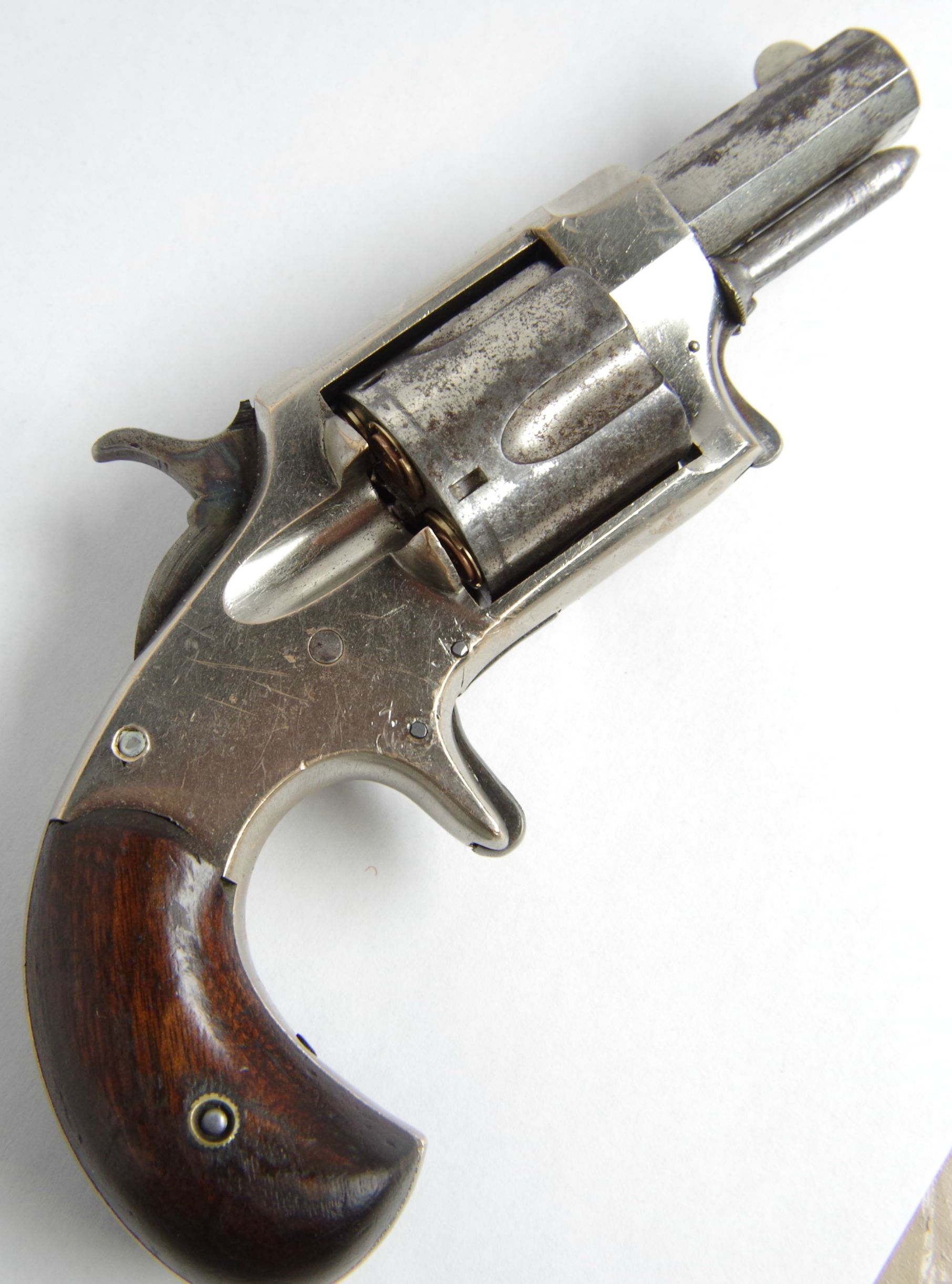
broken spring -- Identifying .38rf spur revolver. 2 inch barrel.

Status
Not open for further replies.
navy arms ammo was smokeless so was some of the C.I.L and other bigger rimfire ammo made in the 1900's all of it decently hot (navy arms way too hot). that gun is a wall hanger now id leave it as such
 
For failure, really it's more complex than the frame letting go at one crack. With brass and stress fracturing the brass gets rapidly more brittle as it passes its yield point and work hardens, so areas that undergo stress aren't just 1/3 weaker from the loss of 1/3 of the material, but rather significantly moreso since the remaining material has stretched and hardened, making it almost incapable of stretching again. In this case, the frame can let go in multiple places for multiple reasons, meaning the entire top strap could bend back towards you before coming loose, or if the stretching continues before letting go you could get a case head separation or blown out base from poor headspacing and blow parts of the case or receiver out the back around the hammer. Just be aware that for all it's a small cartridge it's also very contained, which is important in understanding the forces acting on the gun. Whatever you've got invested in it isn't worth a chunk of metal embedding in your cheek or eyebrow and swinging up underneath or behind your eye... or the superficial damage that could also occur.

I understand that once the crack appears, the risk of further cracking or complete failure increases exponentially. For that reason, I used epoxy. Not to repair, but to attempt to distribute stress over a greater area (like rounding out a corner).
Parts of the gun imbedding themselves in my face is a top concern, given that I already wear ballistic goggles and have my hands moderately protected.

I'll watch the head spacing... I've already (yesterday) added epoxy to the ratchet indents behind the cylinder, to reduce the head spacing issue slightly and make cycling easier. Spacing is near flush when cocked, but upon firing, it works its way into those grooves.


It just came back in my memory, it's likely whitneyville Armouries affiliate Prescott Pistol Co. of Hatfield.

Again a pretty rare gun, not a whole lot of them produced, made during the 1870's sometime.

This is the closest thing I can find to it online. Very similar design in many aspects, but marked "Paragon No 38" on the top, rather than "(Star) No 38".
Paragon%20No%2038.jpg

http://milpas.cc/rifles/ZFiles/Pistols/19th century cartridge revolvers/Prescott/Prescott.html
Based on this, I can almost certainly say that it was made by Prescott of Hatfield, but I still don't have a model name, so I wouldn't be able to satisfy the authorities..


I still plan to shoot it.... I've got .358 lead on the way. I'll hold off until it arrives. Pictured in page 1. I'll try to have the camera rolling whenever I go out to shoot it. If I end up with a lump of scrap metal or a new facial accessory, I'll have video evidence, so I can be a poster-boy for not firing antiques.
With that said, I'll be as safe as I can, keep an eye on the frame, and keep it well lubed. If anyone feels the need to reach out and save it from further abuse - I'll entertain offers by PM.

Also... was there a thread full of FRTs somewhere? I thought the FRT list got leaked at some point. I can't find a relevant thread. I'd prefer not to call and ask. Payphones are few and far between these days.
 
Last edited:
sounds like someone wants a Darwin Award we all shoo antiques just fine but shooting that thing is asking for something bad to happen and in turn it can affect us all. if you are shooting this at a range with other people around you may not be the only one hurt
 
No range, just field. I'll be yet another poster boy for not firing cracked frame revolvers and nothing else.

There are much better ways to win the Darwin award. I'll have my wife behind the camera to drive me to the hospital if things go sideways. Gotta love free healthcare.

I think I've got enough info for a printout. I'll just put a date range and call it a Star No 38. http://www.canadiangunnutz.com/forum/showthread.php/861067-Antique-Status-Letter-For-Download
 
I just pulled out my Flaydermans book 9th edition.

Here is the summary word for word:

Prescott Pistol Company Revolvers:

Prescott Pistol Company, Hatfield, Massachusetts, Single and Double Action Pocket Revolvers. Made c. 1873-1875.
Quantities limited. Estimated at few hundred each. These revolvers were made after the expiration of the Rollin White patents and thus are not considered infringements.
Although on outward appearance they may be mistaken for "suicide specials" their collectibility is based on much better than average quality and their manufacture by Prescott.
Although few of them carry the Prescott name, they are identifiable to their Prescott origin from various manufacturing features and the fact that an occasional original boxed specimen has been seen bearing the Prescott Pistol Company markings.

Star Model; Five-shot. Brass frame; spur trigger; nickel finish; bird's-head butt; walnut grips. Octagon barrels all calibers.
Prescott markings not present but they all have trademark of a large 5-pointed star stamped on the topstrap over the cylinder accompanied by No. 32/No. 38/No. 41. Boxed/labled specimens that have been viewed do bear prescott label as well as the word Star for their model name.
Although 41 caliber is the most commonly encountered, traditional collecting patterns cause it to bring the higher prices:

32 Caliber rimfire:
Values - Very good $200 Exc. $450

38 Caliber rimfire:
Values - Very good $200 Exc. $450

41 Caliber rimfire:
Values - Very good $375 Exc. $750


Hope this helps.
 
Star Model; Five-shot. Brass frame; spur trigger; nickel finish; bird's-head butt; walnut grips. Octagon barrels all calibers.
Prescott markings not present but they all have trademark of a large 5-pointed star stamped on the topstrap over the cylinder accompanied by No. 32/No. 38/No. 41. Boxed/labled specimens that have been viewed do bear prescott label as well as the word Star for their model name.

Very helpful. Thanks again.

That reference should guarantee me an FRT, should I ever need to conclusively confirm its antique status.
 
I understand that once the crack appears, the risk of further cracking or complete failure increases exponentially. For that reason, I used epoxy. Not to repair, but to attempt to distribute stress over a greater area (like rounding out a corner).

I'll watch the head spacing... I've already (yesterday) added epoxy to the ratchet indents behind the cylinder, to reduce the head spacing issue slightly and make cycling easier. Spacing is near flush when cocked, but upon firing, it works its way into those grooves.

.

epoxy might have a small benefit in a compression use but the cracks you showed appeared to be tension cracks; ie the front of the gun is trying to stretch away from the back. Unseen beyond the visible cracks are almost certainly stressed areas which require very little extra strain to also completely separate. Over and above what appears to be an unsafe frame is the bore diameter. You need to drive a lead ball down the barrel (one that is slightly larger than the bore) and measure its resulting diameter with a micrometer. You could easily be shooting grossly oversize slugs through the gun and the cracks could easily be from your own shooting

cheers mooncoon
 
You could easily be shooting grossly oversize slugs through the gun and the cracks could easily be from your own shooting

Yeah.

That was my original concern.

Deep regrets.

According to the HC collection documentation, the first ~20 shots I fired would be about .371 diameter after resizing, and it was at that point that I closely inspected the gun and noted the indents and cracking. 108gr slugs, .371".

Assuming a .360" bore, that would have led to overpressure. Yup.

I do have a couple of lead balls, but I don't have access to a micrometer, so at this time, I cannot slug the barrel. It's a bit late for that, though, honestly.
 
Last edited:
Assuming a .360" bore, that would have led to overpressure. Yup.

I do have a couple of lead balls, but I don't have access to a micrometer, so at this time, I cannot slug the barrel. It's a bit late for that, though, honestly.

Assuming... This is your error. Assuming you know what size the bore is before shooting is both foolish and irresponsible. Even now you are planning to shoot this compromised pistol without first verifying the actual caliber required. Have you learned nothing?

All it takes is a set of calipers that will measure down to .001, Digital ones are often on sale for $9.99 at Canadian Tire and they work just fine.

Do not fire this gun. It is unsafe. You could easily end up with a top strap in the noggin or worse you could hurt someone around you. Slug the barrel to educate yourself on how it is done and earn a lesson for your investment but do not fire this gun.
 
Last edited:
I have to say, you're being pretty willful in ignoring the repeated advice on here. Mic'ing a bore isn't hard and a cheap micrometer is necessary for reloading anyways.

Past that, if you want to destroy your property, that's your business, but the fact is that if something bad happens it has potential to affect the entire antique community. We exist because we don't bother anyone and police ourselves, and a lot of the stress this thread is causing is because there are concerned people worried that you're going to hurt yourself or some bystander, and if that isn't enough, get the attention of the CFO or CFC at large and give them a reason to go on a crusade against antiques.
 
I repeat, I do not have access to a micrometer. I also do not have access to a Canadian tire.

Past that, if you want to destroy your property, that's your business
Yes, it is.

the fact is that if something bad happens it has potential to affect the entire antique community
No, it does not. People get injured by firearms all the time - it doesn't make the news unless they injure SOMEONE ELSE.

get the attention of the CFO or CFC at large and give them a reason to go on a crusade against antiques.
Anyone shooting an antique anywhere has the potential to get the attention of a CFO or the CFC and give them a reason to go on a crusade against antiques.
THEY DO NOT CARE ABOUT POTENTIAL FOR SELF INJURY. That is not the intent of ANY of our firearms laws.


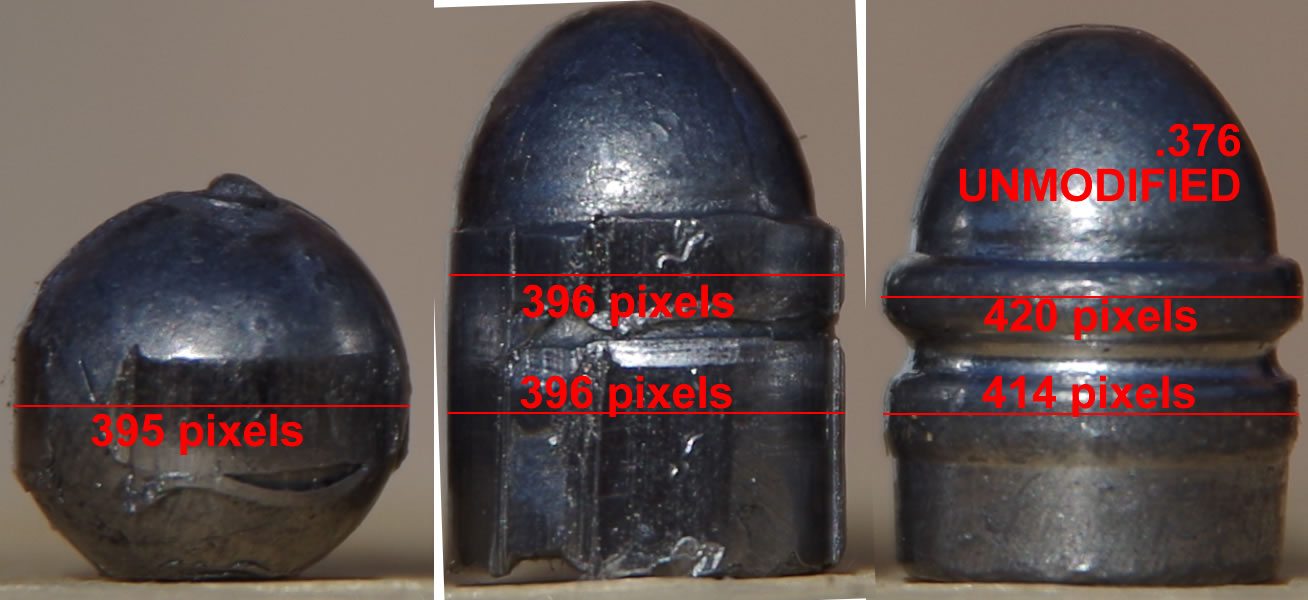
Now, on with the picture. I HAVE SLUGGED THE BARREL.

bI5enXZ.jpg


Assuming the slugs are actually .376":
Bore size = <.354"

Meaning = I broke the gun. I emailed HC Collection a request to put a notice on their .38 rim fire pages, to prevent others from making the same mistake.
 
Last edited:
I title this image "the horror"

ousZHYm.jpg


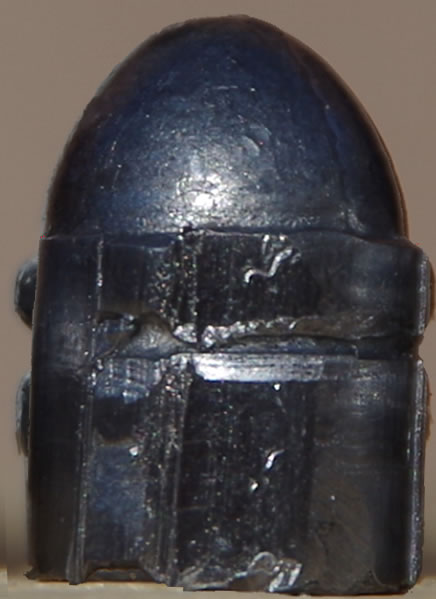
Note that I added <.353 because I accidentally took the picture of the slugs improperly, including some of the lead that was in the rifling.

Also, can you really blame me for my reckless disregard for personal safety after wrecking a 140 year old gun like this?

If I still feel reckless next week, I'll post a video on either youtube or liveleaks (depending on the gore factor) when my new bullets arrive.

Don't let me troll you. If all you've got to say is don't shoot it, then stay out of this thread.
 
Last edited:
O54yGxF.jpg


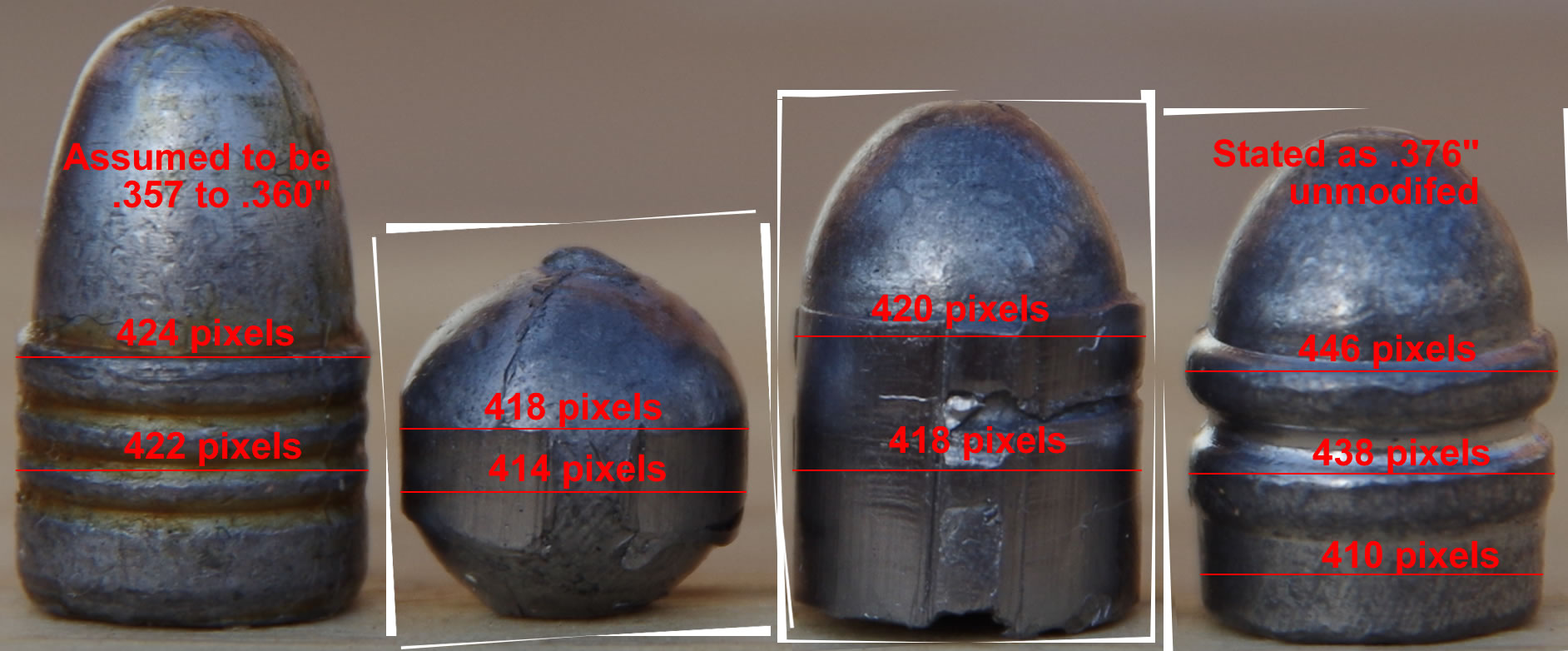
Here's another.

Assuming the slug on the left is .359, the calculation again gives me a bore diameter of .354".

That's a pretty tight bore.
 
.38 rimfire ammunition was made by so many different companies and it was all different specs. The barrel tooling was definitely not always precise as well and huge ranges in barrel dia. are found from manufacture to manufacturer.

130 years ago firing over or undersized BP loads through this gun would not have shown itself as an issue and if it did, no one was going to do anything about it anyways.

Fast forward to 2014 and this old girl is hard for wear and just begging to be babied at the best of times.

I still think that despite you running over sized, this gun has seen some abuse from previous owners running smokeless. Just a terrible idea in an old brass framed BP firearm. The wrought iron guns will tend to stretch on you instead of cracking.

Regardless of the who dun it though, this gun is pooched.

Retire her while your still with all your digits, this is a foolish endeavor.
 
Thank you very much for the pictures.

You slugged the barrel. Perhaps not in the most conventional manner but I give you an A for effort. Your measuring technique is creative to say the least and I can see that you are trying. I don't think I will be shopping for any 424 pixel bullets anytime soon :) The actual process of forming the slug is the hardest part and now that you have done it a few times it will be even easier when you purchase your next antique.

I know you are pissed off. You broke a very nice toy that can't be easily replaced. I also sense that you feel a bit of the responsibility that comes with curating something historical. As long as you learn from the experience you can gain enough to make it worthwhile. Your excellent pictures = curration. At this point, blowing up the gun doesn't really add much to the equation. It is just a knee jerk reaction designed to satisfy your ego. If you keep it as-is you may get the opportunity to teach someone else what you have learned and you can show them what to look for with this tangible example. Also, who knows? in a few years 3d printing may evolve enough that printing a new brass frame may be easy as long as you have the original as a reference. I have cast in silver and gold and the melting point of brass (1724 °F) is less than that of gold (1,948°F) so casting a new frame is not out of the question as long as you have a template.

-If you are going to shoot an antique firearm you need to verify the caliber of the bullet first and foremost. The seller said it was X isn't good enough. I thought it said X on the barrel/gun isn't good enough, as you learned here. Yours is an exceptional example btw. the *no 38 on the barrel is misleading. think of the *no 38 stamped on the top strap to be the name of the gun as much as 'British Bulldog' is merely the name of others. There was no standard for stamping the caliber on the firearm back then as there is today. As a result there is way too much variation (as pointed out by Tyockell18). To complicate matters even worse there is the question of heeled bullet .38 or modern internally lubricated .38? The first bullets you purchased were of the original 'Heeled' variety (pic 3 in your post #33). the firearm turned out to be (more than likely) something closer to an internally lubed .38 (modern)

-After bullet size comes the question of bullet composition. I know you asked about this earlier and I don't think anyone has responded yet. If the gun is an antique the safe answer is pure lead / softest lead. The flow characteristics of pure lead are wonderful. Nothing will obdurate/seal/flex better than pure lead. I would endeavor to guess that part of the reason this piece isn't in 'pieces' is because you were shooting the very soft HC bullets, albeit grossly over-sized.

-The third consideration is powder/charge, or 'reloading data'. Ironically this is the place that many people seem to start.

What did you use for brass?
 
Last edited:
Thanks for the reply.

-The third consideration is powder/charge, or 'reloading data'. Ironically this is the place that many people seem to start.

What did you use for brass?
HC collection brass, with 13gr of FFFg black powder. I find that they last only about 4 shots each, due to a common failure point where the cap is installed. Overpressure could be a contributing issue though. The bullets are resized first by the chamber itself before they enter the barrel. I'm not aware if that is normal or not, as the .360 ammo is not resized until it enters the bore.
http://www.hc-collection.com/PBSCProduct.asp?ItmID=7669698


Nothing will obdurate/seal/flex better than pure lead. I would endeavor to guess that part of the reason this piece isn't in 'pieces' is because you were shooting the very soft HC bullets, albeit grossly over-sized.
Yeah, that's a concern I have about the new bullets. They're smaller, but still over sized at .358, and they're not pure lead. Brinell Hardness Level 25.

in a few years 3d printing may evolve enough that printing a new brass frame may be easy as long as you have the original as a reference. I have cast in silver and gold and the melting point of brass (1724 °F) is less than that of gold (1,948°F) so casting a new frame is not out of the question as long as you have a template.
It wouldn't be legal to cast a new frame, unfortunately.


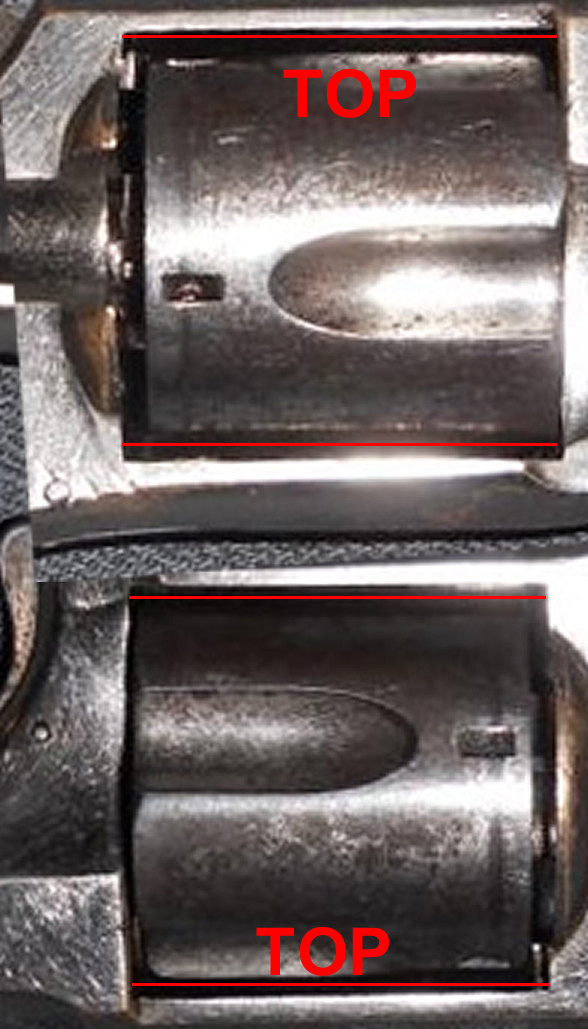
Additional info: I measured the pixels on some other photos, and have estimated the length of the upper receiver to have stretched between 0.33mm and 0.46mm. The variation is due to the images not being taken straight on, unlike the slug images. This was expected as a cause of the crack, and I did ruler based measurements earlier in the thread.
 
This was taken from a two low resolution pictures that were available to me from the previous owner. Lines are drawn at equal length, top and bottom of the cylinder. Image enlarged to 300% for easier viewing. Despite the low resolution, I am fairly confident that the frame was not stretched when these photos were taken. I consider the "who dun it" to be solved.

VkT5tAs.jpg

edit:
Going through my camera and finding other pictures, putting together the history, this damage would have occurred within the first 6 to 11 shots, as that is all I got through in my first day of shooting. Those shots would have been about .371 diameter, and the barrel was unlubed. (Bullets were lubed, barrel was not)
In the ~40 shots since then, the crack has not changed.

More gun #### - 6 shots in:
dIXoDO6.jpg


edit:
Imgur seems to reprocess my image. Zoom+darken+sharpen =
OIwvVWC.jpg

Same size and shape of crack as currently exists after ~40 extra shots.

ehhhhhhhhhhh..............

I'm likely going to kill this gun now, unintentionally, in the name of pseudo-science. Since this thread practically insists on it, I can wear a steel helmet in addition to my ballistic goggles and deerskin gloves. I've got a steel mesh that I can use over my face, too, just to completely eliminate the possibility of serious injury. There's no point in shooting it out of a vice. If it dies and I still get seriously injured, as statistically unlikely as that is, considering the crack location and safety precautions, I probably deserve it. The only way I could possibly lose digits, wearing deer skin gloves, is if I was holding it wrong, if all cylinders exploded at once, or if the receiver broke off at the rear on the bottom, which it clearly would not.

I'll try slugging the barrel with one of the new bullets, to compare difficulties, before shooting it, of course... that said.... I'm going to shoot it. For pseudo-science.

 
Last edited:
Status
Not open for further replies.

Back
Top Bottom