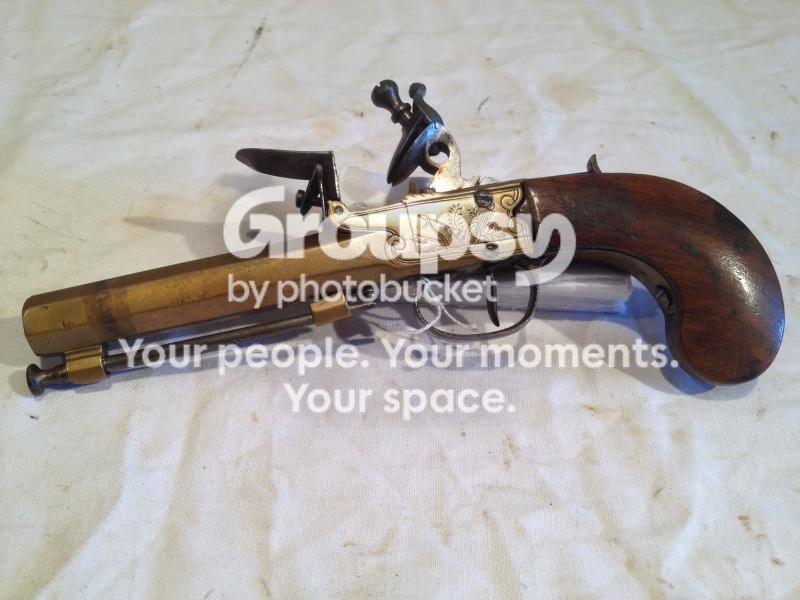
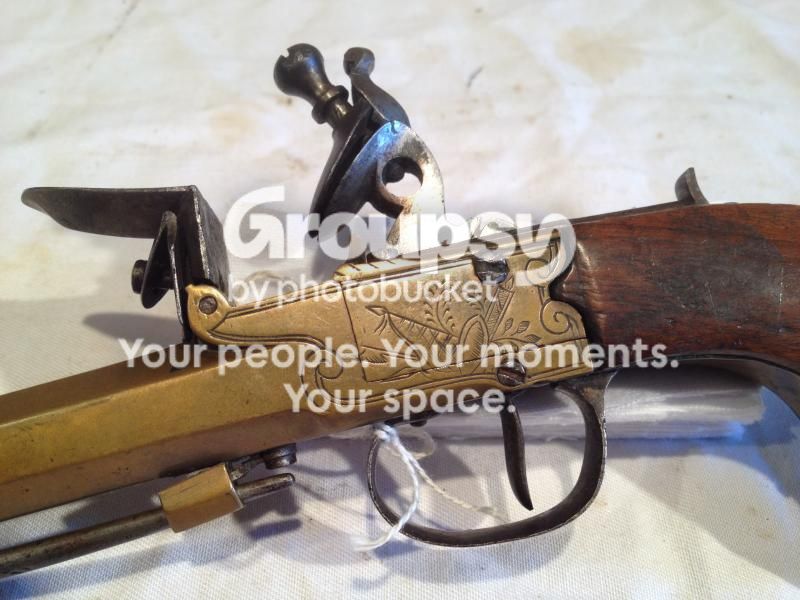
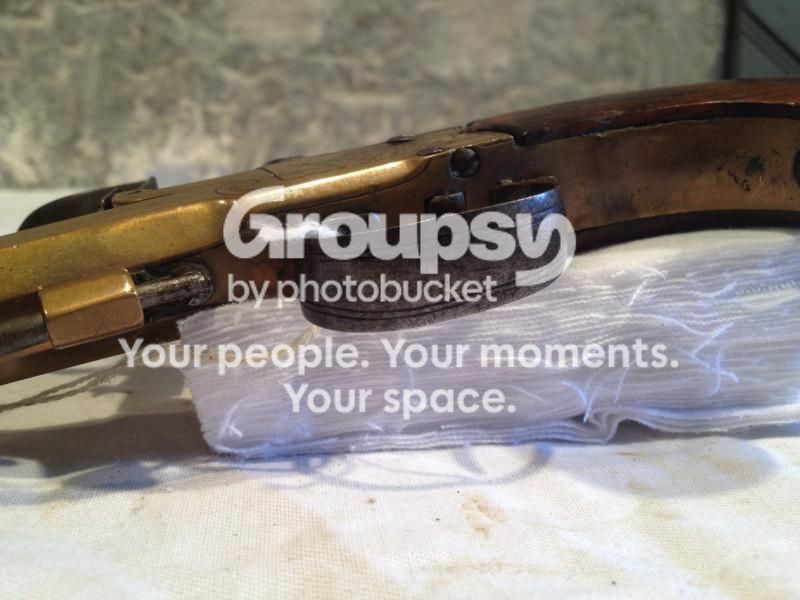
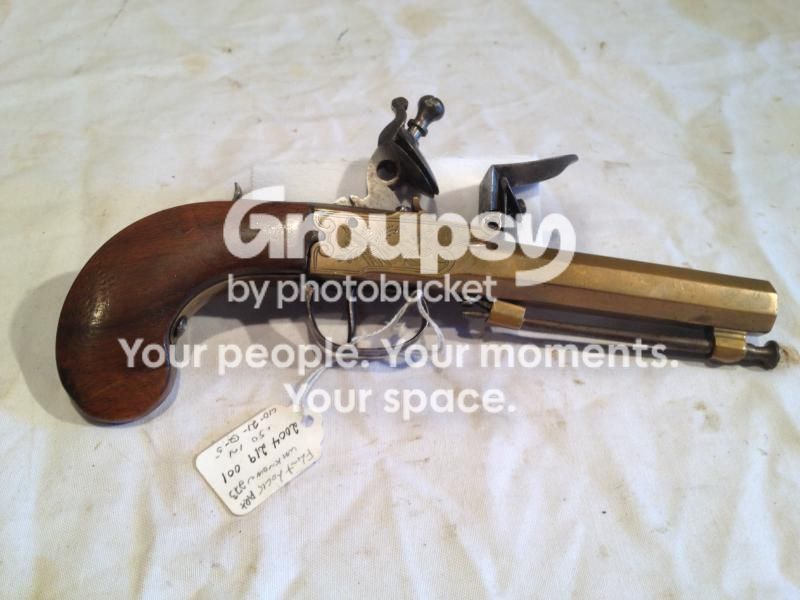
Museum's inventory: Flintlock pistol

dauph197

Regular
Rating - 100%
7   0   0
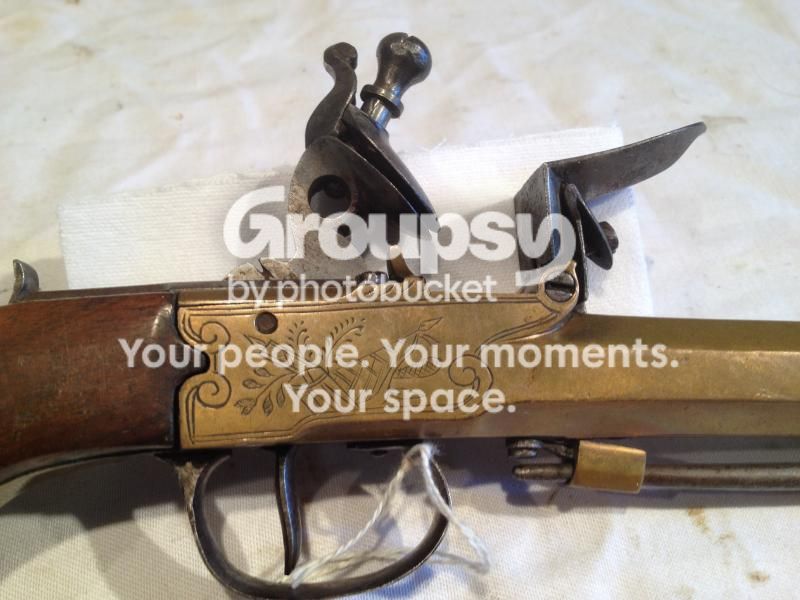
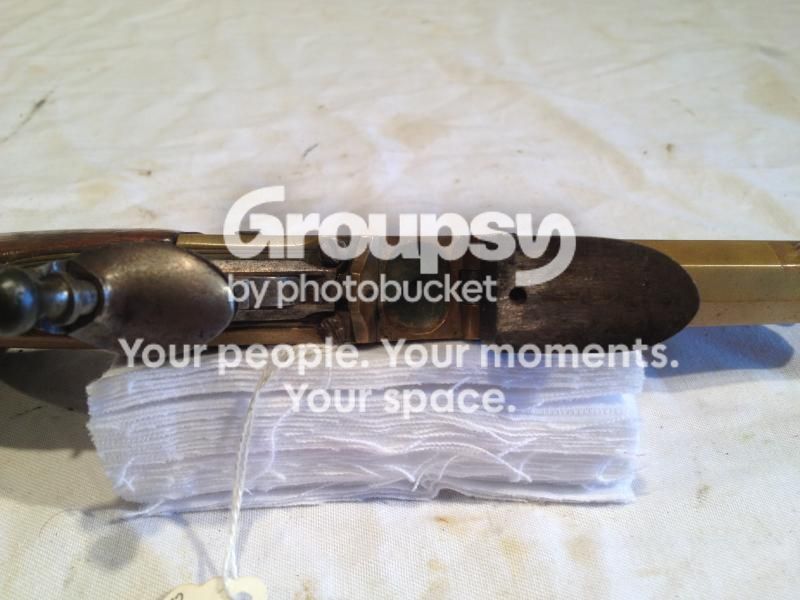
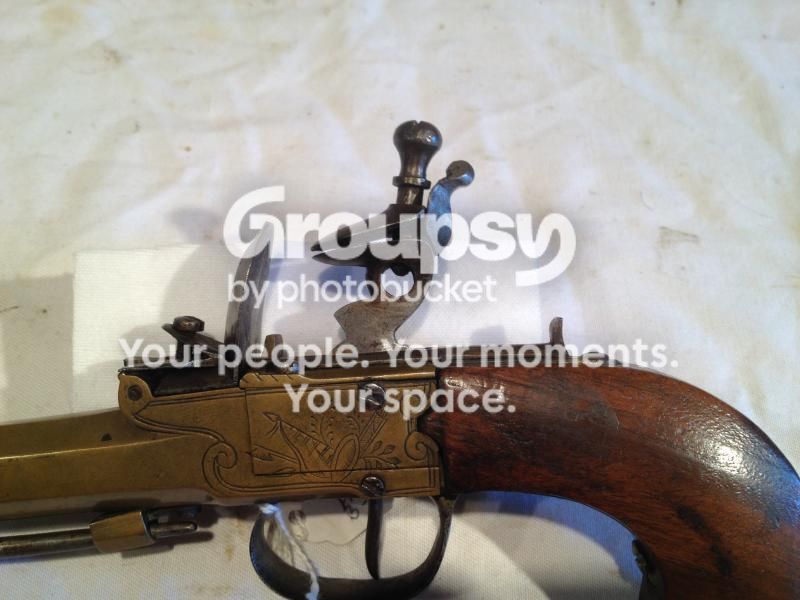
I wonder if anyone of you have some info about this little brass made flintlock pistol? There is no indication at all written on it! I can't say for sure if the engraved drawing are from French influence. It can be French or English... what do you think?

Martin


Make sense... we have a similar one with ''SMITH'' written on it. The engraved drawings are confusing me because there is a lot of stuff from France with this kind of flags and cannons. But again, it was very popular in the era!

Martin
 
like these:
DSC_8798.JPG

DSC_8799.JPG
 
This is what I got off the website were I bought it:


Early English Flintlock derringer. Small English box lock flintlock pocket pistol with screw off barrel, folding trigger, bar safety and walnut stock. The pistol has a 2 ¼”,.45 cal round smooth-bore barrel. The left side of the iron lock is marked Ryan Watson and the right London. Two British proomarks are stamped on the button of the lock

If you do a search on 'Early English Flintlock derringer' with yahoo and choose image for the result you should be able to find some other ones similar to mine and yours to gather more info.
 
NOT a Derringer - named for the American inventor many years after these pocket or muff pistols were made. The proofmarks are not British, but English, unless they were made in Ireland, which had its own proof house in Dublin at the time that these pistols were made. They are not as old as you might think - the bottom pistol is percussion, a system not generally used until the middle 1830's in handguns of this type. They were both of the type carried by a lady during here travelling around the country by stagecoach, and concealed in the hand-warmer.

Do you have the C-spanners/barrel wrenches used to turn off the barrels in order to load?

tac

 
Yes I realize it's not a Derringer that name is being used by many people to indicate short barrel pistols these days and google will respond with many photos of the type above.

I do not have the wrench for it. The one at the beginning of the thread has the ram rod so it must of been loaded by the muzzle. but neither of mine have a ram rod.


hope I am not hi-jacking the thread.

http://www.thefirearmsforum.com/threads/english-flintlock-pistol.119892/ here is a link for dauph.
http://www.ctmuzzleloaders.com/antique_guns/muff_pistols/muff_pist.html

NOT a Derringer - named for the American inventor many years after these pocket or muff pistols were made. The proofmarks are not British, but English, unless they were made in Ireland, which had its own proof house in Dublin at the time that these pistols were made. They are not as old as you might think - the bottom pistol is percussion, a system not generally used until the middle 1830's in handguns of this type. They were both of the type carried by a lady during here travelling around the country by stagecoach, and concealed in the hand-warmer.

Do you have the C-spanners/barrel wrenches used to turn off the barrels in order to load?

tac

 
Last edited:
here is one almost the same minus the scroll work and wood.

http://www.gunstar.co.uk/mathe-pari...ther-Military-Guns/694253#M3BAyiPOTGDVSEoz.97


C1800 French, Brass Octagonal Barrel & Frame Flintlock .32 Bore Pocket Pistol By Mathe Paris. Sn 10112

This is a fine brass framed flintlock pocket pistol by Mathe Paris. It is 8 inches overall with a 3 1/2" octagonal barrel. On the left side it is engraved with the name of the French manufacturer 'Mathe' and the right 'Paris' both within simple wreaths. It has a sliding safety, steel hammer fitted with flint, steel trigger guard, trigger and ramrod. The action works as it should with a strong spring action. It has an impressed 'IM' mark on the underside of the brass frame. The bag shaped Walnut wood grip with chequered panels and fluted back edge is excellent & undamaged.
Read more at http://www.gunstar.co.uk/mathe-pari...ther-Military-Guns/694253#cIgXamV6OFVtPbMX.99
 
British and belgian guns would both have proof marks on the barrel. The gun looks in good enough condition, I would slightly wonder if it is not a modern replica

cheers mooncoon
 
Yes I realize it's not a Derringer that name is being used by many people to indicate short barrel pistols these days and google will respond with many photos of the type above.

I do not have the wrench for it. The one at the beginning of the thread has the ram rod so it must of been loaded by the muzzle. but neither of mine have a ram rod.

Ah, confunglement here - the two muff pistols in post #7 need C spannners, the pistol with the ramrod does not.

tac

 
OP,

Check out "Queen Ann pistols" for infos on this type of gun and you can concentrate your research in the mid-XVIII century, as it's when the hammer was moved from the right side to the center of the gun to make it more compact. Mostly civilian guns (boatmen loved the brass guns), they usually have a screwed barrel (interchangeable). I agree with Mooncoon that British and Belgian guns should have been proofed, but by the time this gun was produced (if it's not a replica) they were produced all over Europe.
 
Dakotamar... no worries about stealing the thread. There is no stealing, just an occasion to discuss and learn form others.

To all the other ones, you did provide a lot of information and I do appreciate. I still believe it is from French influences but very hard to confirm and also hard to pretend it is not a fake! The are some very copiers in this world that gave us hard time in identification.

Thanks,

Martin
 
Back
Top Bottom