












































Light loads, filler/no filler?

H4831

CGN Ultra frequent flyer
Rating - 100%
151   0   0
Location
BC
When loading light loads, like less than half a case of powder, a big controversy is always whether to use a filler, to hold the powder tight against the primer.
Sometimes I've thought a filler improved groups, while other times I've thought it just to be a waste of time. I did some testing today with the chronograph and while it is no where near enough shooting to prove a point, the little shooting I did certainly favoured using a filler.
With the 45-70 I loaded four rounds with 420 grain flat base cast bullet, charged with 24.5 grains of 4227 and no filler.
Then I loaded four more just the same, only used that light cotton they use as fillers in pill bottles, stuffed tight onto the powder.
These loads were nearly 200 fps slower than I thought they would be, judging from adapting some changes from the figures given in the Lyman book.
I shot the no filler loads first, with the first shot being from a oiled barrel, so in all fairness, we won't figure in the first shot. But here they are.

997, 1080, 1032 and 1177.
By not figuring in the first shot, we get an average of 1096 from the other three, with an es of 145.

Here are the four with fillers.
1147, 1088, 1154 and 1161.

These four averaged 1137, with an es of 73.

This would indicate that Johnn, and all the others who believed in using a filler, may just have been right! And Johnn, somewhere in my house is a few feet of the round door seal material left over from what I used before, after you put me onto it. Just got to find it!
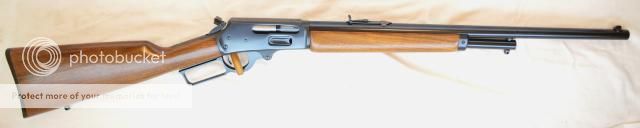
I used this rifle for the testing.
Bruce
 
throw that 1088 out of that string and you have a winner.............

now that your inspired and set up for this, try the 10 grains of unique in a 30-06 case with and without fillers and see what the difference is, the first thing I noticed was the lack of unburnt powder in the barrel, if that's the only benefit I am okay with that
 
I use .5gr poly fiber. In my 7.62x54R lobbing a 200gr 314299 bullet over 13gr of 700X or 14Gr of Herco....seems to keep the velocity spread to a minimum.
Belive it or not the poly fiber fill actualy changes very little after firing. I figured the powder would shrivel it up and burn it away but it comes out pretty much the way it went in just black and dirty
 
I have tested fillers for years, and there isn't a slightest doubt in my tests that they tend to stabilise a more consistent pressure relationship from round to round.

I have tested filler (Dacron pillow stuffing) in 45-70 cast bullets, 35 Remington, 303 British, 30-06, 308 Win. In every case, it has improved the standard deviation noticeably, and reduced the extreme spread values as a result.

As far as accuracy goes, I would hazard an educated guess that maybe 90% of the loads that use Dacron filler shoot more accurately.
Low standard deviation "doesn't ALWAYS" indicate the best load/most accurate load, but in a large % of instances, it does.

I also noticed that as the powder charge was incrementally increased in load development, load stats improved. Until, the pressures hit the critical yield point of the bullet alloy used. Then precision fell off quickly.

Dacron filler material is able to maintain improved accuracy to slightly higher velocities due to the filler aiding in sealing the combustion gasses, and offering some degree of bullet base isolation/protection from hot expanding gasses.

I insert just enough filler to occupy the "entire" volume between the bullet base and the top of the powder charge. I do "NOT" compact the filler. Very slight compression is fine. The Dacron's natural expanding action is enough to keep the powder in place if the volume differential is maintained.

After powder load density gets at or above approximately 80%, I don't normally use fillers as well.
 
Last edited:
Clays with no filler in 7.62x54,7.62x39 and 223 all with cast bullets has been plenty accurate and consistent for me at 25m.

I have almost never even tried fillers in bottle neck rifle rounds.

I should edit this to say that the very first very light loads I tried in a 30-06, I used cornstarch, or some other such powder, as a filler. They were so messy, that I quit using fillers.
Later, I tried some with toilet paper in the 30-06, but it didn't really seem I was gaining anything.
A while back on here I pointe out some of the extra mild loads I did in the 30-06 and 270. Like down to about 6 grains of a fast powder. Most of these loads were for small boys to shoot, so accuracy didn't matter.
But shooting the 30-06 in the basement, I made clover leaf groups at 30 feet. And the penetration tests I did were surprisingly consistent.
 
Last edited:
I've never bothered with fillers yet, used as little as 8gr in a 7x57 and 7-08 with Lee 130gr and NEI 150 gr, no issues. I've hunted and shot matches with those loads. I never used fillers with my 32-40,at 13.5gr, in matches, and haven't used them in my 450-400 @ 45-53gr.
Some people are saying the Kynoch wad material works well in the bigbore doubles, and by the same token, many don't use any filler. Not sure what is right or wrong with either method, for myself.
 
I only find fillers necessary when the fill % is less than about 70%, and with powders slower than about Alliant Blue Dot, with some exceptions such as SR4759 and the 4198's. I've used a lot of 4198 in the 45-70, 45-90 and 458 Win Mag, from 1200 fps to "ouch!" without filler, to good effect.
 
Get a bucket of Trail Boss and fill the case up to the base of the bullet and call it good. Cannot overcharge it, and it is a pleasure to shoot.

Trailboss was designed for this purpose you bet, but it "seldom" shoots to the potential that other powders do. At least in the 10+ different rifles I have tried.

YMMV

If a shooter has achieved performance that they seek without filler, they are lucky indeed!
But chances are, if they tried fillers, their favorite combinations would "likely" improve.
 
In response to the idea that you can't overload Trail Boss... Trail Boss does not react well to compression IME. I do not use filler in bottle neck cartridges, and find it unnecessary with 60%+ charges in the shorter straight walled cartridges (.38, .357, .44 etc...), but with loadings under 70% in longer straight (and straight"ish") walled cartridges; (.45/70, .38/55 etc...) I have found filler to be beneficial. By "beneficial," I am referring specifically to results on paper.
 
I'm totally new to this but I've started loading 25-20 with some light SR4759 loads.
No filler produced inconsistent results so far starting at 6gr of powder.
Fair bit of unburned powder left in the barrel.
So I'm going to give this a try but haven't yet scrounged up any filler.
 
So what is the story about "barrel ringing" when using fillers? Nonsense or what?

Not nonsense at all. Some used to use a disk of paper/cardboard/felt or other solid materials for fillers. If any of these are used with a space left between the bullet base and the "over powder wad", you run the risk of ringing the chamber (I have experience!!!). A solid column of a dense material used for filler from powder to bullet base probably won't cause a ring but in this case I would caution against using high pressure loads in guns not meant for them as the column should be considered part of the bullet and its weight must be included as such in load calculations.

The method of using a tuft of Dacron/pillow ticking (without any card) used by H and others on this thread is widely accepted as a safe way to contain powder to the back of the case.
 
I'm totally new to this but I've started loading 25-20 with some light SR4759 loads.
No filler produced inconsistent results so far starting at 6gr of powder.
Fair bit of unburned powder left in the barrel.
So I'm going to give this a try but haven't yet scrounged up any filler.

Any fabric store will have bundles of it (Dacron). $5 will buy enough for a lifetime of shooting.
 
Get a bucket of Trail Boss and fill the case up to the base of the bullet and call it good. Cannot overcharge it, and it is a pleasure to shoot.

In large BP sized rifle cases this isn't the case. The huge volume of a 45-70 would certainly be one such example. The rule of thumb you posted applies to handgun size casings for sure. But not so much to the bigger rifle cartridges.

And even when loaded within the data check the high pressures generated in some rifle loads vs the low muzzle velocity obtained. I found that in roughly half the options TB was a poor choice due to high peak pressure and a poor muzzle velocity despite the high peak.

I've only tried using the Dacron filler with one batch of 30 test rounds. But it looks like the two bundles I bought at $3.50 each on sale will easily last me for what is left of my shooting days and I'll still be able to pass down one unopened pack in my Will.... :d

One concern I've got with the Dacron fill is the issue of the powder working it's way into the fibers if the rounds are stored nose down in the box. This may not occur while sitting on the shelf. But during the drive to the range and with the vibration I could see a lot of the powder sifting its way down into the spaces in the fibers. Of course this is easy enough to fix by simply storing them head down in the case.

Bruce, what's this about the foam weather stripping? It sounds interesting. I've got some round foam plastic weather strip that I got from Home Depot. And besides it's certainly easy enough to make a plug cutter from a slightly larger case with a sharpened end and the case head removed and then make up any number of plugs from that same style foam packing material.
 
Last edited:
The door seal we talk about is round, like a rope and about fifteen feet or so long, to go around a door.
There are some differences in the size it comes in, but I was able to get the smallest, half inch, which is near perfect for a 45-70. Just cut off pieces of the right length.
I got it from Home Depot.
Bruce

Edited to say it sometimes comes in bulk rolls, which is much cheaper way to buy it.
 
Not nonsense at all. Some used to use a disk of paper/cardboard/felt or other solid materials for fillers. If any of these are used with a space left between the bullet base and the "over powder wad", you run the risk of ringing the chamber (I have experience!!!). A solid column of a dense material used for filler from powder to bullet base probably won't cause a ring but in this case I would caution against using high pressure loads in guns not meant for them as the column should be considered part of the bullet and its weight must be included as such in load calculations.

The method of using a tuft of Dacron/pillow ticking (without any card) used by H and others on this thread is widely accepted as a safe way to contain powder to the back of the case.
Thanks for the explanation.
 
Back
Top Bottom




















