












































Couple questions re: new LEE turret press

Zedbra

CGN Ultra frequent flyer
Rating - 100%
45   0   0
Location
Squamish
Happy Easter fellow nutz. I have a couple of questions for you regarding my new LEE turret press that I got a few weeks ago. Thus far, I have reloaded 500 rounds combined of both .357 and .38SPL, using different bullet weights and varying the powder loads slightly to see what my Dan Wesson prefers.

First - I have noticed on some of my casings, the bullet press die is scratching the .357 brass about 2/3 of the way down the casing. I don't know if that is a bad thing or not, but I did have a heck of a time ejecting some of my .357 brass from the initial reloads (but also other factory bought .357 loads in the past). I have tried adjusting the die up higher but it still likes to scratch them a bit. On the .38 SPL rounds it lightly scuffs them but sometimes, but nearly as much as the .357 brass. Is this a problem?
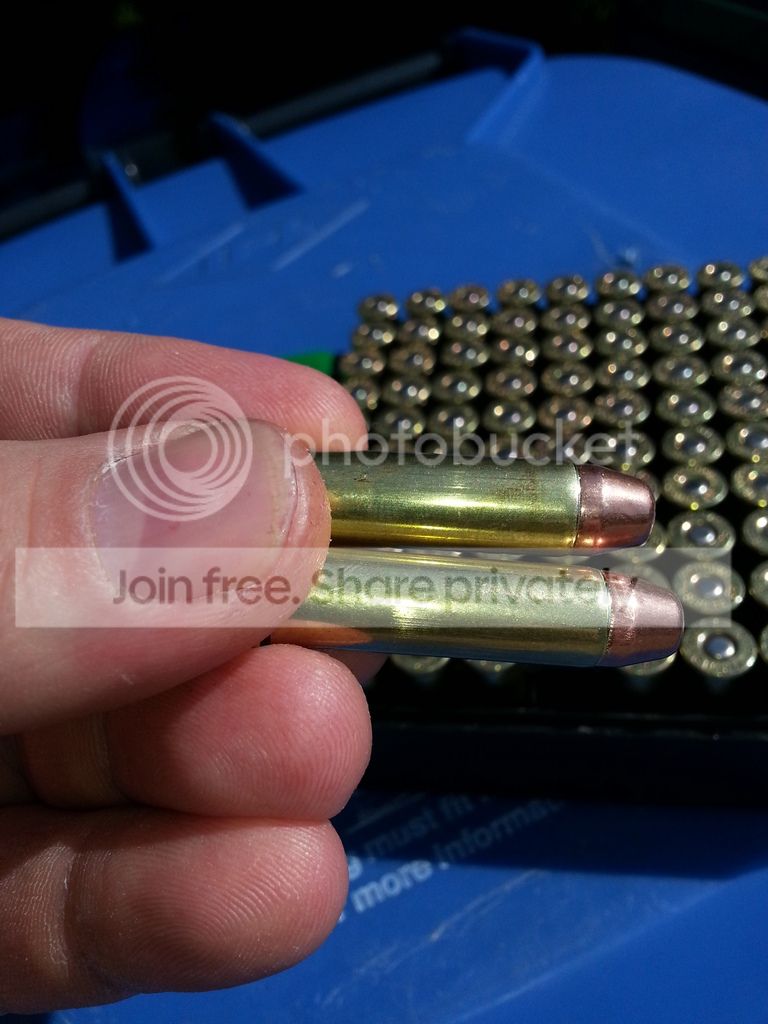
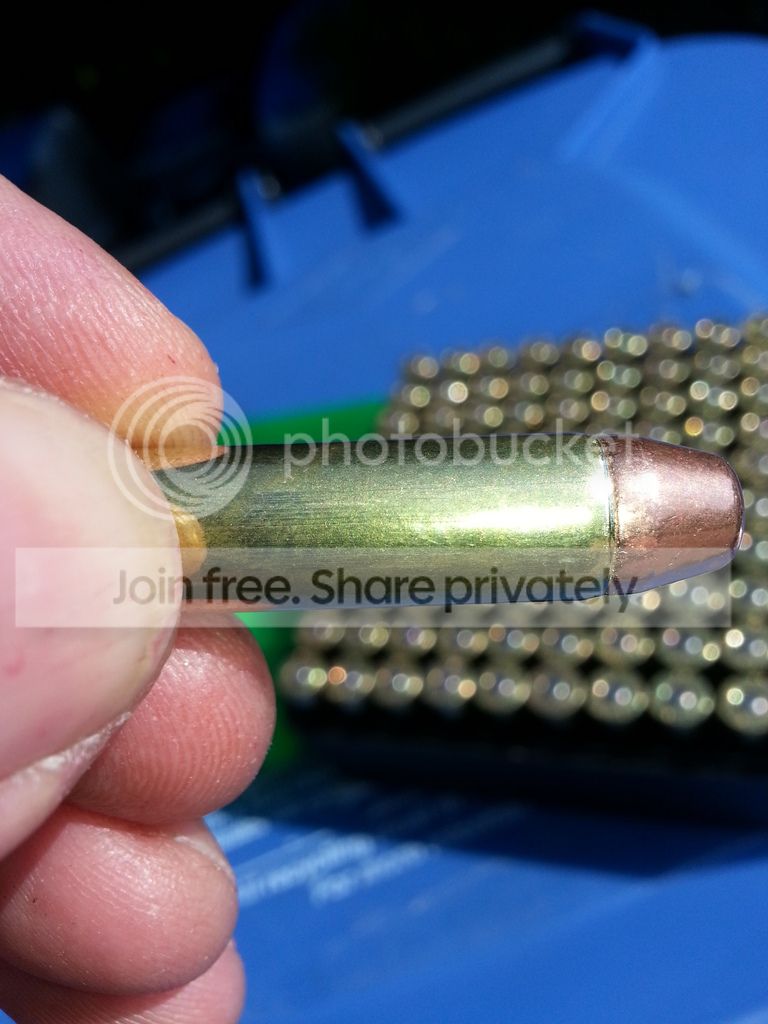


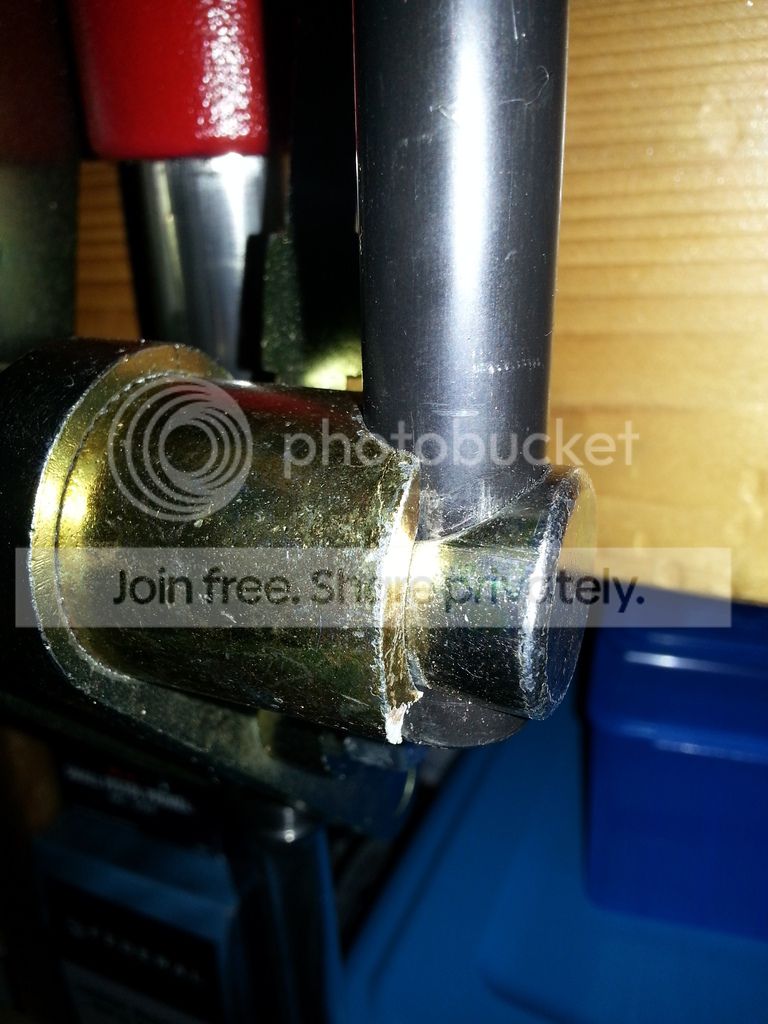
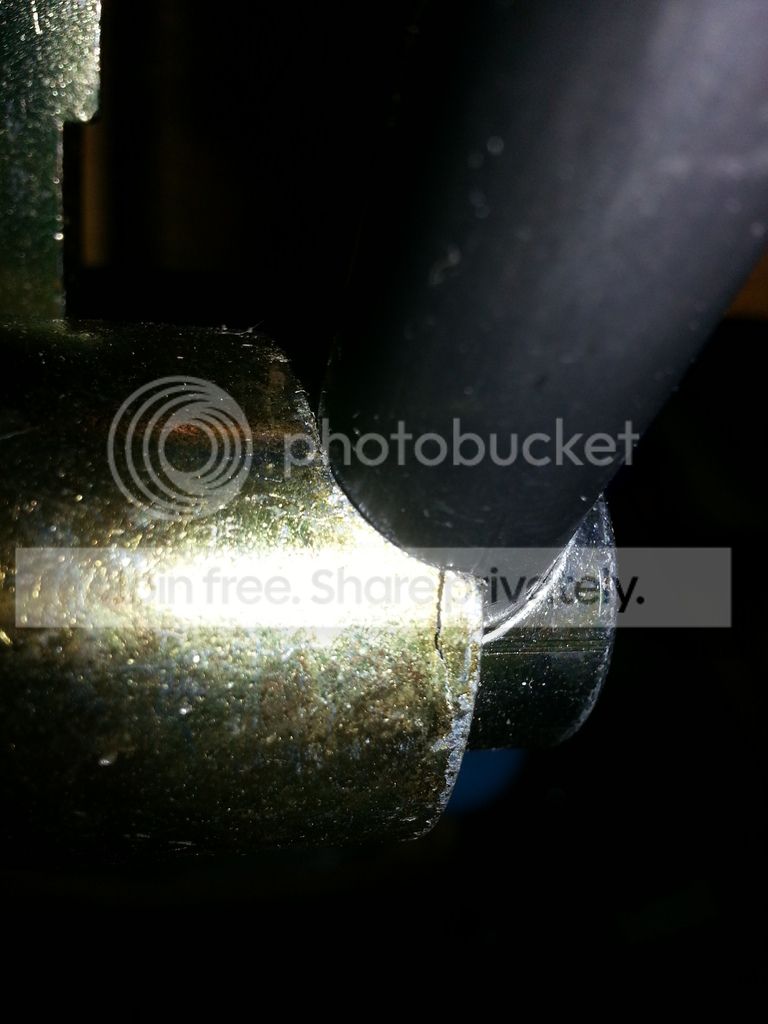
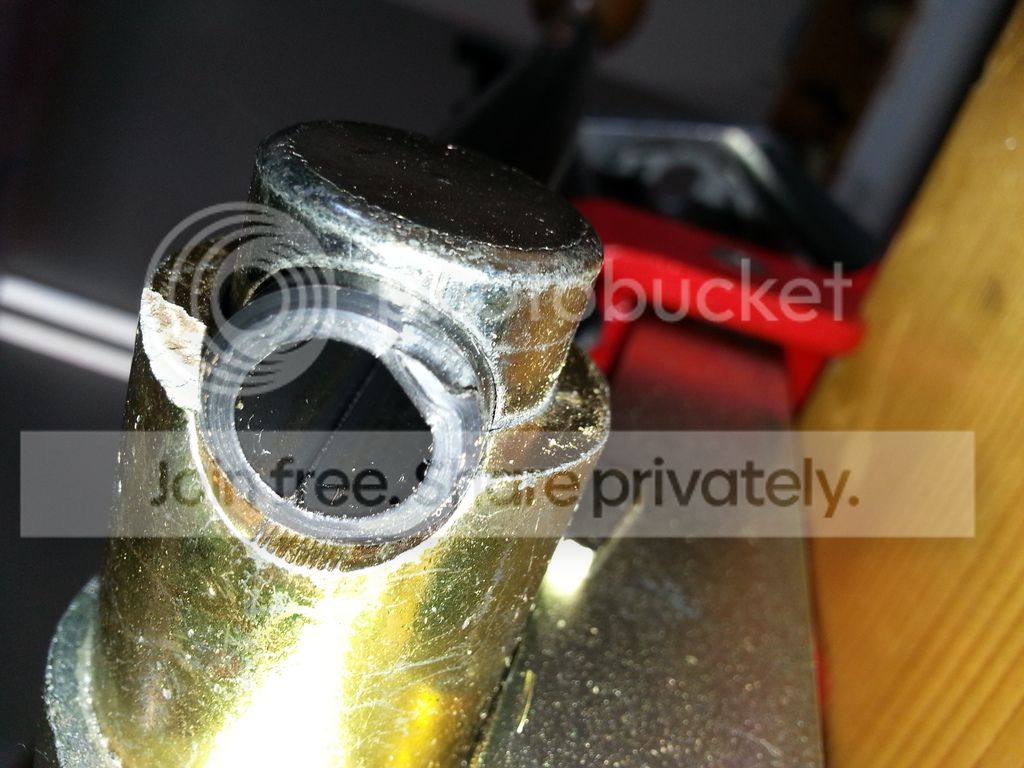
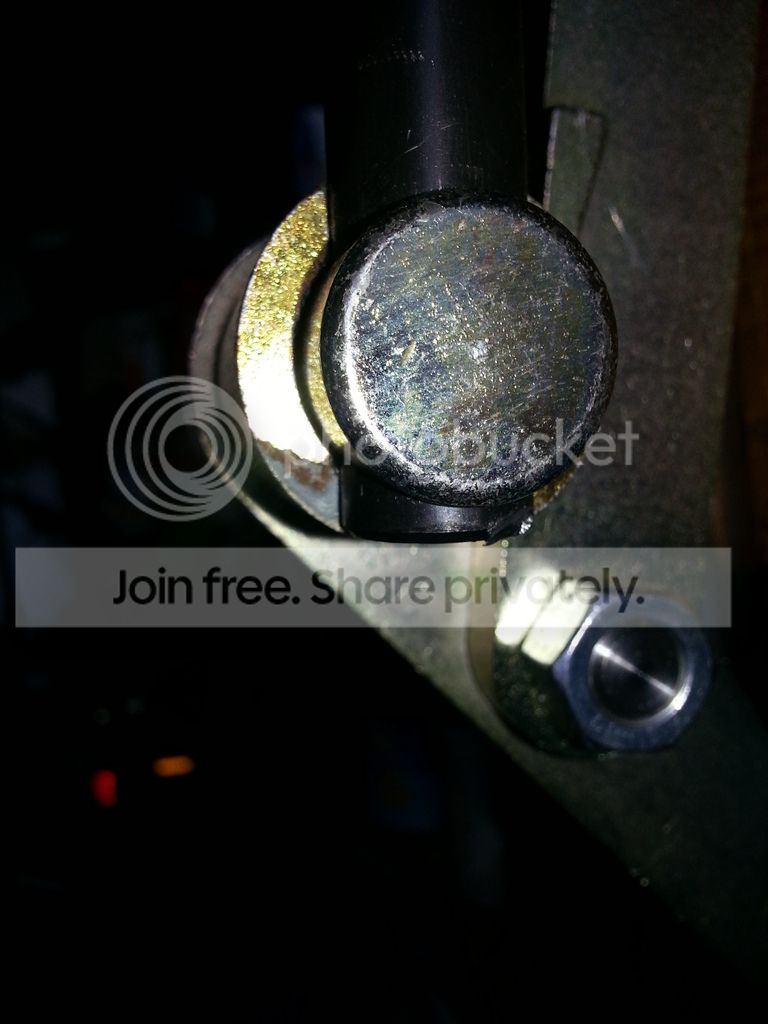
Second - Upon setting up my press, I had a small sliver of metal fall off the press where the pull handle enters the press. I didn't think it was much of a big deal, but I did let Henry at Budget know about it; he suggested I contact LEE directly. Last night, I noticed that the other side of the same piece has a small crack very similar to the first. Have a look at the pics and let me know if this is really anything to be concerned about? It doesn't look too structurally integral to me.


Thanks as always.

Ian
 
The marks on your brass:
They're either from your chamber or from the sizing die.
Clean the chamber, clean the brass before sizing, clean the die, maybe a dab of lube when sizing.
Or, don't worry about it, it isn't hurting anything.

The Press:
Send those pics to Lee.
You probably wouldn't see a problem for quite some time, but if it ever did let go, it would be at the most inconvenient time possible. ;)
 
Regarding the scratches on the cases, I don't think that the resizing die is causing that.
My reason being that the .357/.38 special case is straight rather than tapered. So i
would think that if the carbide in the resizer has some marks in it, it would be all
the way up & down the case.
As already noted above, perhaps it is your gun that is causing the scratches or perhaps
some dirt on the cases when you resize them.

As far as the cracks on the press I would go after Lee to either fix it or replace it.
 
The gun isn't causing the scratches - after noticing the scratches on the first reload, I was pulling out each cleaned round to see where the damage was happening and it was indeed from the bullet seating die. I checked over 100 rounds straight while reloading.

I will call LEE tomorrow regarding the cracks - they conveniently don't list an email address to contact them.
 
The gun isn't causing the scratches - after noticing the scratches on the first reload, I was pulling out each cleaned round to see where the damage was happening and it was indeed from the bullet seating die. I checked over 100 rounds straight while reloading.

I will call LEE tomorrow regarding the cracks - they conveniently don't list an email address to contact them.

I should have read your post more carefully. That makes sense now as the bullet seating die does not go down
all the way. The scratches are very light and won't hurt the brass. Or you can take some sandpaper & smooth out
the inside of the die that is causing the marks.
 
What dies are you using? If you are using the Lee dies, the crimp die actually resizes the brass and will correct cartridge base bulge. The scratches may be from the crimp die squeezing-in in bottom of the case.

As others have said, send some pics to Lee and I'm sure they will send a replacement part. Those cracks shouldn't be there.
 
I have a Lee cast iron turret press, never had a problem, The handle hole is defective, (hole looks too small) , it hitting the corner, before bottoming out against the bottom of the hole. They will replace it. Maybe next time run you handle down a little deeper through the hole, so both sides have support against the side of the hole.
I've pulled the handle on my Lee turret ......1000's and 1000's of times, and always works great.
I looked at all the B.S. on the Lee turret press before I bought one...I'm glade I bought one and would do it again, in a heart beat!
The scratches on the casing, could be a bad die, but seem to be in the same place on all the casings....could be a bad chamber ( bulge in chamber) , so when you run the resizing die down on it, it has to push "hard" on the side of the case to resize it....Just my 2 cents..
Hope that helps,
Cheers
Brian
 
No comment on the case marks other than clean brass, lube it and check/clean the interior of the die.
The Lee die will seat and roll crimp in one go so perhaps back off on the crimp slightly and see if your marks clear up?
The press damage looks like it was either;
A) run with a loose handle, or
B) the handle wasn't fully through the linkage (too shallow).
 
^ the position the handle is in is the depth I have always had it, I initially had it 90 degrees but the top angle was hitting the primer feed (I didn't load any, was just testing the arm), so I simply rotated it and the lower piece fell into my hand when I loosened the handle. It wasn't until I went to take pics here that I noticed the top crack as well.
 
I spoke to LEE, then sent them an email with the pictures. They already replied that the arm wasn't in far enough and that a replacement part will be shipped tomorrow at no cost to me. Great customer service. Also, the tech told me to prevent the die scraping my casings, to back out my bullet seating die more than 3 full turns - he suggested 3 turns for .38 SPL and then more for 357. I will try that next time and see how it works.

Here's the email LEE sent:

Hey Ian,
The part broke because the lever does not pass all the way through the lever sleeve.

Please see Figure (2) in instructions.
http://leeprecision.com/cgi-data/instruct/90064.pdf

I placed an order and a replacement part should be sent out in tomorrow's mail.


Sincerely,
Raquel
 
Just to ensure you don't get any further issues with the replacement handle saddle I'd take a file to the corners and chamfer the points so the chamfer is about .04 wide across the points where the old one cracked away pieces. That'll move the contact points lower into the U of the saddle a hair and give the metal more support. It won't affect the retention power of the handle but it'll put the point load into a bigger portion of the metal in the saddle piece. As it was the sharp corners is why it levered the pieces out.

Are the dies used by any chance? I've only bought two sets of used dies but I ended up with one set having embedded grit in the metal that simple could not be cleaned out. I finally tossed the offending die from the set and kept the other one as a spare for the new set that I bought fresh in the box.

Are those FMJ bullets or Berry's plated bullets? They look amazingly like the Berry's I've been using lately. If they are then you are crimping WAY TOO TIGHT! ! ! The Berry web site states that the crimp used should only be tight enough to bring the mouth back in flat to the rest of the casing or no more than a hair more. Crimping inwards risks cutting the copper plate. So if you can see the side of the bullet jacket crimping in as your loads clearly are then it's far too much.
 
In that case I'm not sure of what would cause those scratches.

For the helluv'it what are you using for cleaning and polishing?

The die is easily adjusted for no crimp at all to a lot. The trick is that due to the fact that it's the outside thread that adjusts the crimp it's very sensitive and a slight adjustment goes a long way. Like 1/16 of a turn is the difference between too much and just right. As in if you set a casing in that position and manually screw down the die by the time it feels like you're tight enough to produce a barely felt resistance to turning the die down onto a casing you've gotten to the right spot or even gone too far.

As stated above if you end up with the crimp cutting the plating you can expect to see a hit on accuracy at greater distances when the damaged plating peels off and affects the flight of the bullets to some degree.. But if you're shooting at out around 10 yards you may not see the difference unless you actually begin to find shards of the plating that came off and cut into the cardboard separately.

On regular jacketed bullets the amount of crimp can affect the pressure build and consistency. And with consistent pressure you get more consistent muzzle velocity and that gives better groups. With some loads a firm crimp can really help with this. Also on loads such as full power .44Mag you need a firm crimp to avoid the bullet slipping the crimp and moving in or out of the casing while in the cylinder. And to some extent this can also be an issue with things like .357Mag, .45acp and some other rounds. But you don't have the option of heavy crimping on plated bullets.

I like to use a strong small light source shining off the side of the case and bullet. The bright line this produces makes it easier to see how much crimp or flare you have and any distortion in the plating of the actual bullet.
 
For cleaning I am using a Frankford Arsenal tumbler with corn media and some NuFinish polish - the brass is coming out looking like new. As the LEE tech suggested, I am going to wind that one out even more and see if that resolves the issue.

As for the crimp, I shall try it with less crimp. Question - for the .38SPL I am using wadcutters and setting the bullet at the edge of the bullet, with the wad sticking out a few mm past that by design. Are these meant to be seated in farther, as the mini OAL is basically the size of the case on my book? I hope you don't mind me picking your brain BCRider, you seem to know your reloading stuff - when I am looking in my book for reloading my 7mm MAG my powder is not listed for some of the bullet g - how do I determine the proper amount of grains to use?


Today I deprimed, trimmed, reamed, measured, washed, then tumbled (still tumbling the last 75) 150 7mm MAG cartridges - ready to load. I learned a few things: reloading rifles rounds is tedious, large primer pockets are not fun to clean, you can always tell good brass when you first pick it up, and don't wait to prep 150 hunting rounds - that took hours.

I also stripped the stock of my friend's 44 carbine, it has a large 4" crack that I am going to repair, though I did tell him to order another stock while they are still available. Should be a fun little side project.
 
No problem Zedbra. If I wasn't interested in helping folks from what I've learned I wouldn't be typing all this. Trust me, I've made my share of mistakes and avoided others by asking and reading the books and forums. If I can give something back to help others then it's a fair trade all 'round.

For true "oil drum" shaped wadcutters the bullet should be at or just a few thou below the mouth of the casing. And for THOSE you can give the lip a light roll crimp to the casing mouth to aid in holding the wadcutter back and build a little more pressure before it exits the case. By rights this added pressure, which for wadcutter loads is low by comparison to most other loads, SHOULD aid in attaining a more consistent burn, peak pressure and thus muzzle velocity for even more accuracy.

Now for a revolver having them stick out a little like you did isn't a big deal at all. But on the somewhat rare S&W Model 52 semi auto the gun required that the wadcutter loads were seated at or a hair below the mouth. The 52 is their semi auto bullseye gun that was made to shoot wadcutter loads ONLY. It won't accept any other ammo or bullet style. How's THAT for specialized? :d

I was re-reading the Berry FAQ on loading their bullets again and it seems I was over reacting on the crimp issue anyway. From reading the note again they do say that a LIGHT crimp is permissible. I take that to mean that a crimp which minimally pushes into the side of the bullet is OK. But again I feel that the amount shown in your pic above is more than I would take that to mean. What you have in your picture is still very much a heavy crimp. I'll post up a picture of what I've been loading recently a bit later today so you get more of a feel on just how sensitive the whole thing is. But even my heavier crimp from early in the batch isn't as heavy as your first pictures.

For your 7mm loading if they don't list a particular powder for that particular bullet weight and you can't find a book which does then I would not use that powder for that cartridge.

There's a lot of powders that are good for some ammo but not others due to the burn rate and case volume. In some of the in between sizes I've seen powders listed for light bullets in the range and not listed for that same cartridge if used with heavy bullets. This is because the burn rate puts that powder on the edge of generating too much pressure already with the light bullet. And if you try to run a heavier bullet with that powder the peak pressure WILL be too high.

If you can find light bullet data with your powder take note of the peak pressure given and compare it to other powders. I think you'll see what I'm saying and that'll be the reason for avoiding THAT powder with THAT bullet weight. And if you look at a burn rate chart you should also see that your powder has a faster burn rate than the powders listed for your cartridge with the heavier bullets.

At least when I've run across the same issue with powders that stop being listed half way through the loading data as the bullet weights change that's what I've found is the case.
 
You are way over crimped. If you have a separate crimping die that is set correctly, you may find that your bullet seating & crimper die, the crimp portion is set too deep. If you run a separate crimper, this can be loosened right off for that die.

I have the 4 die LEE set and the crimping die is backed almost all the way off - it barely touches and that is the crimp it gives. It is still much less of a crimp than the American Eagle ammo I bought, it looked like this:

124446.jpg


Thank you, BCRider!
 
The AE stuff has a cannelure groove in the bullet though. And it's a jacketed bullet with a far thicker jacket than the plated bullets you're using. So not only can it accept the strong roll crimp it has but it also needs it. It needs it to hold the bullet in place to allow the pressure to build to a higher level before the bullet can slip the crimp. It also needs it to avoid allowing the bullet to move due to the strong recoil in guns shooting magnum rounds. Strong recoil can cause the bullet to slip forward. And on a revolver that can allow it to creep out far enough to protrude from the front face of the cylinder. And if that occurs it locks up the gun until it's beaten back in.

I was going to get that picture of the current "non crimp" and my previous crimp which I considered as too heavy for plated. But the battery is dead at the moment. I'll try to post it a bit later tonight if I don't fade away and the charger finishes up early enough.

I'm also using the Lee dies with the factory crimp as the fourth station. Yes, the die needs to be barely screwed into the press. Especially for use on the longer .357Mag cases. But it can be done. Where it's sitting now which gave us your picture in your first post is about a half to 3/4 of a turn too far in.
 
I have the 4 die LEE set and the crimping die is backed almost all the way off - it barely touches and that is the crimp it gives.

Maybe I wasn't clear enough; the die that sets the bullet OAL in position #4 also has a crimp function. If your crimp die in position #5 is backed right off, then go back and loosen off the crimp adjustment on the die in position #4, then you can use the crimp die in #5 position for better effect. All the crimp does is ensure the OAL does not change due to recoil, same for a bullet with a crimp groove. It doesn't stand a chance of holding pressure on powder ignition.
 
Back
Top Bottom





















