reloading the 32-20

WhelanLad

CGN Ultra frequent flyer
Rating - 0%
0   0   0
Location
Australia AU
hi guys I am buyin an old original 32-20 model 1892

would like to hear what components you use for your old 32 20s.

I hear I cant have much pressure??? I want to use heaviest projectile I can find for it.

the powder to use here is ADIs 2205, I have a heap of ADI2207, anyone familiar with these? they are close in burning rate, one after the other, so would I find by using a few Grs less to start I can work something out?

also any info be great thanks

Cheers

WL
 
By "old original" do you mean a black powder rifle? Or is it an older rifle from the smokeless era? They can be two very different things.
I checked the data in the Lyman cast bullet handbook and it says it's for modern smokeless firearms in good condition and not for use with older firearms meant for black powder. That can just be a liability thing though, who knows.
Even if the peak pressure is the same, the pressure curve is very different. There are anecdotes all over about "similar pressure" smokeless loads blowing up black powder cartridge rifles. I don't know how common it truly is but I would stick with black powder or a black powder substitute if the rifle wasn't designed for smokeless.

ADI branded powders aren't very common in Canada so not many will likely have experience with them. I know they do make a bunch of powders for Hodgdon so the US/Hodgdon names would be more common.

Based on a powder equivalency chart on the ADI website:
ADI2205 is within 5% of H4227, IMR4227, H110, W296, and AA1680
ADI2207 is within 5% of H4198, IMR4198, W680, and Reloader7
Where those are within 5% is unknown. Some might be 5% above, some 5% below, and maybe some are right on in terms of burn rate.

The data for the close powders might show where they are with respect to that 5%.

IMR4227 and AA1680 are supposed to be within 5% of ADI2205 but the loads for a 115gr bullets are:
IMR4227 - 7.8 to 9.7 gr producing 972 to 1171 fps
AA1680 - 11 to 13 gr producing 1083 to 1332 fps
They are quite different in load and velocity while producing similar pressures (both maxes are at the max of 16,000 CUP for this cartridge).

Similarly, for the ADI2207 equivalents:
IMR4198 - 10 to 12.4gr producing 1019 to 1272 fps
Reloder 7 - 12.4 to 15.5 gr producing 1038 to 1406 fps
In this case the velocities are closer but the loads are similarly different.

All the data I just listed is for powders that are safe to reduce so I suppose the lower load could be used and reduced a further 10% just to be safe.

According to some Australians I found on another forum:
AR2205 = H4227
AR2207 = H4198
They make these powders for Hodgdon and those are the ADI and Hodgdon names for the exact same powders. I assume ADI = AR?
My manual only lists the IMR powders (made in Canada usually) and not the H powders. They are close but slightly different.

I've swapped IMR and H 4198 at starting loads before without issue so that is a possibility if you use AR2207. The H and IMR powders are quite close in the case of 4198 specifically. IMR4198 is slightly hotter based on load data, H4198 is slightly hotter based on the burn rate chart. Starting loads always seem to be within 10%. You could use the IMR4198 data and reduce it by 10% and use AR2207 since it's supposed to be H4198.
Work up the load, check velocities, all that.

IMR and H 4227 are beside each other on the burn rate chart but I don't know how different they actually are as I haven't used either. Being beside each other just means there isn't a powder in between; it doesn't tell you how close they are.

-----------------------------------------

If it's a black powder era rifle not designed for smokeless, I'd stick to black powder personally, though I don't know what's available in Australia. In Canada we use Goex from the US but I've wanted to try Swiss Schuetzen black powder but I've never managed to find any in Canada. A BPCR shooter once told me it's not approved for importation because no one as ever applied for it to be. Licenses for the import of smokeless powder is difficult enough and not many want to deal with real black powder and it's even tighter regulations. I'm sure there are some black powder substitutes that could work as well.

----------------------------------------

Figuring out the bullet is easy at least. I'd slug the bore and find what the groove diameter is. Load up the heaviest cast bullets you can find. Data seems limited to 90-115gr bullets. There is some data for 117gr on loaddata.com but I'm not a member so can't see the powder weights. It uses SR-4759 (an IMR powder previously made in Canada) which is discontinued by Hodgdon so it may be moot.

 
Last edited:
hi guys I am buyin an old original 32-20 model 1892

would like to hear what components you use for your old 32 20s.

I hear I cant have much pressure??? I want to use heaviest projectile I can find for it.

the powder to use here is ADIs 2205, I have a heap of ADI2207, anyone familiar with these? they are close in burning rate, one after the other, so would I find by using a few Grs less to start I can work something out?

also any info be great thanks

Cheers

WL

Before you get all keen on a bunch or really heavy for their diameter) bullets for it, you should consider both slugging the bore, and trying out a couple different weights to see if they will stabilize.

The factory stuff I have is Remington "Express Rifle" ammo, with a 100 grain lead bullet on it. I suspect that with the factory rifling, that you are going to be limited to that or near that.

You should have a good look around on the castboolits forum to see what the guys there are using as far as molds. IIRC, there is at least one Aussie mold maker in business, so you can source one close to home.

Oh yeah. Pictures! :)

Cheers
Trev
 
yeh sorry mate, shes a modern smokeless powder gun, not black powder.


I will re read the above posts ver ycarefully, there looks to be some great info there! much appreciated.

gimme a minute to upload my dunger 32

WL
 
I love my 32-20 but it's a relatively new bolt action ( made by Husqvarna in the '20's) so I don't have the pressure issue that an 1892 would have. The brass is pretty delicate though, don't drink too much coffee prior to reloading. Seems to be a fair selection of bullets though, 60 up to 120 is easily found here. With affordable cast as well.
I've wondered if the 'O' ring trick would help with them as well?
 
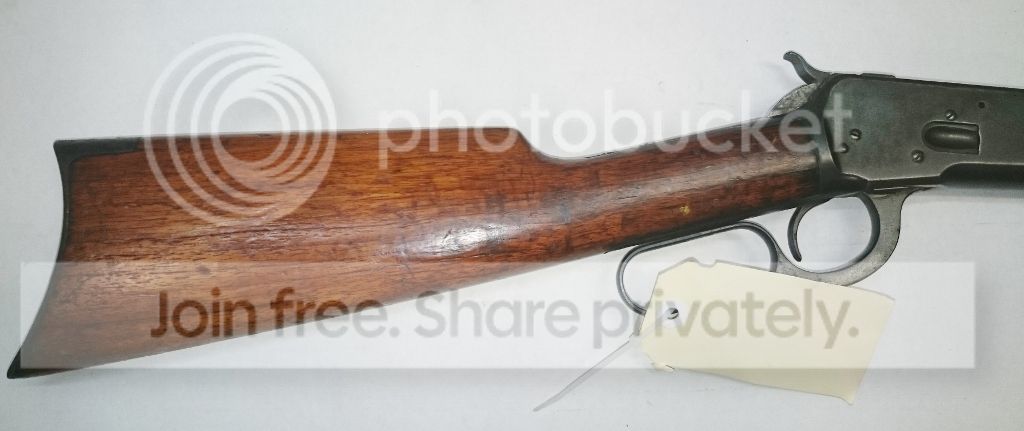
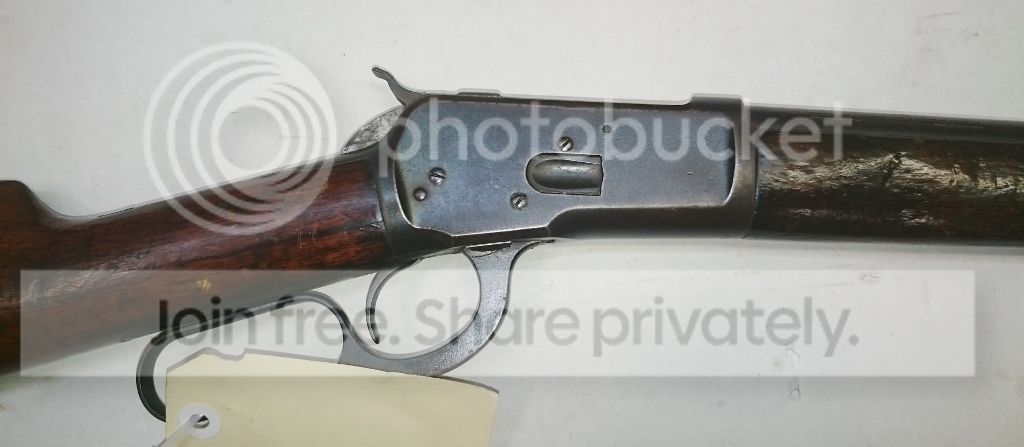
heres just from the guy at the moment, its in transfer /freight from north of aus.

$275 delievered.... cheap as chips but rough as guts haha.

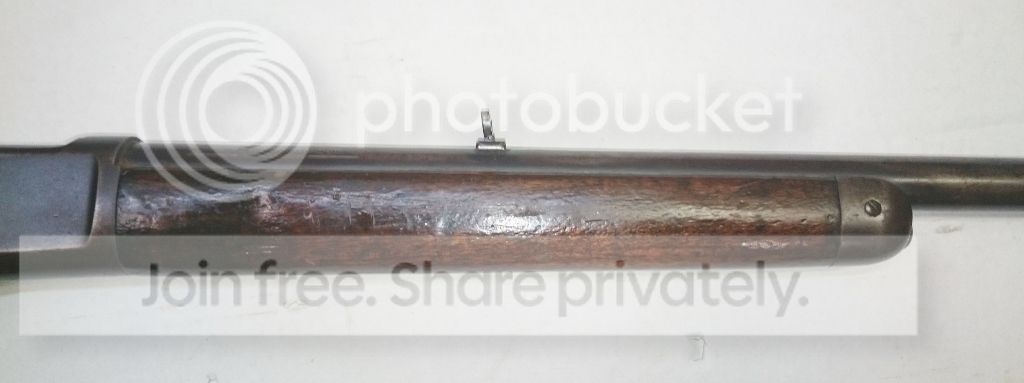
barrels ok-good

woods--- as u see. shizen

004%201024x431.jpg~original

005%201024x383.jpg~original

002%201024x447.jpg~original

003%201024x383.jpg~original

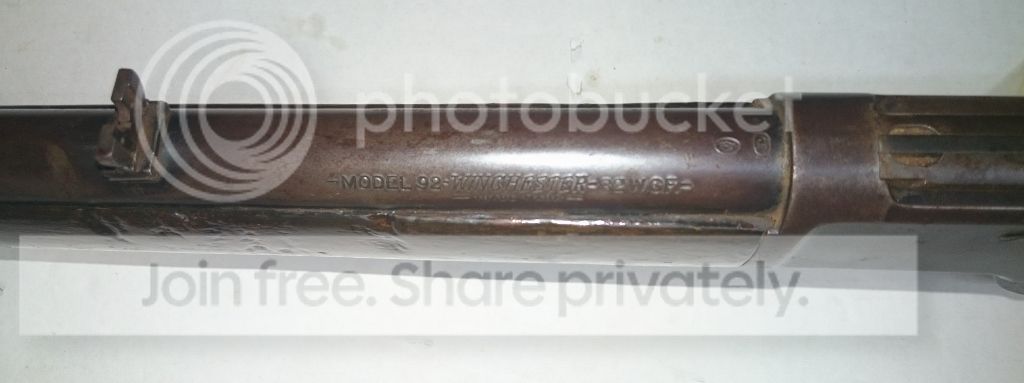
maybe u can tell me something from the pics?

Am I right to assume the 303brit an the 32 share similar sized bullets.... cos its been a hassle for .303 pills, let alone this odd ball LOL

might have to quit fishing, throw all my sinkers in the pot an make some pills. damn
 
.303 British and .32-20 do use a similar diameter bullet but they are quite differently shaped and different weights. The .303 is often 150-180gr bullets where as the .32-20 is 90-120gr. You will also want flat-nose bullets for a tube mag like on that 1892. The .32-20 is meant more for cast lead bullets but can shoot jacketed as well. Personally I'd cast for it or find someone who sells cast bullets.

For either a .303 or a .32-20, if you are using cast, you'll want to slug the bore and find the actual groove diameter. If you assume, and your bullet is too small, you can end up with leading in the bore that is a pain to remove.
 
That says .32 Winchester not .32-20.
The .32 Winchester Special (.30-30 necked up to .321") was named as such to avoid confusion with the .32 WCF (Winchester Centre Fire) which is the .32-20. Many people refer to the .32 Winchester Special as the ".32 Winchester" which can cause confusion.

To make things even more confusing there is also the .32-40 Ballard (also called the .32-40 Winchester) and the .32 Winchester Self-Loading.
 
Tagged for interest. I will be reloading for 32-20 in the next year or so. I'll be moving to the states and so will be able to put my grandfather's classic hand-ejector to good use.
 
The .32 Winchester Special (.30-30 necked up to .321") was named as such to avoid confusion with the .32 WCF (Winchester Centre Fire) which is the .32-20. Many people refer to the .32 Winchester Special as the ".32 Winchester" which can cause confusion.

To make things even more confusing there is also the .32-40 Ballard (also called the .32-40 Winchester) and the .32 Winchester Self-Loading.

hey lutnit, from those photos can you tell which my rifle is, just an old model 92 for smokeless yeah?? im not looking to drive pills fast, just enough to get the pill going..

taking in all info. thanks a lot fellas! im going to try find some jacketed stuff to begin with... brass is around $68 for 100 pieces.

cheers

WL
 
I'm afraid I don't know enough about the older Winchesters to really say. You could try to see if you can get an estimate on the date based on the serial number. The first smokeless round was the 8mm Lebel in 1886 and the 92 Winchester obviously first came out in 1892. I don't know when the .32-20 made the transition from black powder to smokeless though. If the rifle is in shootable condition (a gunsmith can verify this) it is probably good to go with smokeless loads within the normal pressure limits since the 92 action is fairly strong. It's mostly the old toggle-link Winchesters (1866, 1873, etc.) that really cause pause since the action is inherently weaker to start with even without considering its age.

The "WCF" acronym was used during the black-powder era as well to differentiate centre-fire and rim-fire cartridges of the same size and shape.
 
I'm afraid I don't know enough about the older Winchesters to really say. You could try to see if you can get an estimate on the date based on the serial number. The first smokeless round was the 8mm Lebel in 1886 and the 92 Winchester obviously first came out in 1892. I don't know when the .32-20 made the transition from black powder to smokeless though. If the rifle is in shootable condition (a gunsmith can verify this) it is probably good to go with smokeless loads within the normal pressure limits since the 92 action is fairly strong. It's mostly the old toggle-link Winchesters (1866, 1873, etc.) that really cause pause since the action is inherently weaker to start with even without considering its age.

The "WCF" acronym was used during the black-powder era as well to differentiate centre-fire and rim-fire cartridges of the same size and shape.

32-20 was originally designed for the Winchester 1873 lever rifle.

AS far as I know there were no rimfire cartridges that had similar dimensions to the bottlenecked 44 WCF, 32 WCF, 38 WCF, and 30 WCF cartridges, also known as 44-40, 32-20, 38-40, and 30-30, respectively. Rimfire cartridges of that era were generally straight walled.
 
I thought I remembered reading or hearing somewhere that there was a couple cartridges available in both rimfire and centrefire and the "WCF" was used to both differentiate them and also as an advertising thing to show how "modern" and "advanced" Winchester was for having so many centre-fire cartridges. I'm afraid I don't remember much from 1873 ;)
 
I'm afraid I don't know enough about the older Winchesters to really say. You could try to see if you can get an estimate on the date based on the serial number. The first smokeless round was the 8mm Lebel in 1886 and the 92 Winchester obviously first came out in 1892. I don't know when the .32-20 made the transition from black powder to smokeless though. If the rifle is in shootable condition (a gunsmith can verify this) it is probably good to go with smokeless loads within the normal pressure limits since the 92 action is fairly strong. It's mostly the old toggle-link Winchesters (1866, 1873, etc.) that really cause pause since the action is inherently weaker to start with even without considering its age.

The "WCF" acronym was used during the black-powder era as well to differentiate centre-fire and rim-fire cartridges of the same size and shape.

Thanks,
I actually Rang the bloke and asked a few questions, I also pulled out on the Purchase after chatting for some time. He was more than undersrtanding.

I mentioned the 32 bullets might be hard to get, and I may need to Cast... too all of which he agreed.

I don't want to Cast, plain an simple. I don't want to have 50 loaded bullets an struggle to find jacketed projies (much like my ruger303 at present)


Its still there if I decide on it but for now im passing.

Cheers

WL
 
I thought I remembered reading or hearing somewhere that there was a couple cartridges available in both rimfire and centrefire and the "WCF" was used to both differentiate them and also as an advertising thing to show how "modern" and "advanced" Winchester was for having so many centre-fire cartridges. I'm afraid I don't remember much from 1873 ;)

32-40, 38-40, 44-40 were all designed for the 1873 Winchester lever rifle, and the 30-30 was made for the M1894. There were no rimfire equivalents
 
I do believe the confusion here goes back a couple more years, into the Henry Rifles. The 44 CF was designated as such to differentiate it from the original 44 RF. At the time of the 44 CF, Oliver was just in the throws of doing his hostile take over of the Henry Repeating Rifle Corp. I think he just liked the sound of it and went forth and named all of his subsequent cartridges with the "Winchester Center Fire" moniker, he even named a few of other peoples cartridges with his "WCF", when he chambered them in his rifles.
Even though there were no identical cartridges of a rimfire persuasion to the "WCF" line up of the day, there were in fact many, many rimfire cartridges out there in many similar calibers so the "WCF" does have some relevance.
 
Back
Top Bottom