












































Would could happen?

ssapach

CGN Ultra frequent flyer
Rating - 100%
88   0   0
Location
Alberta
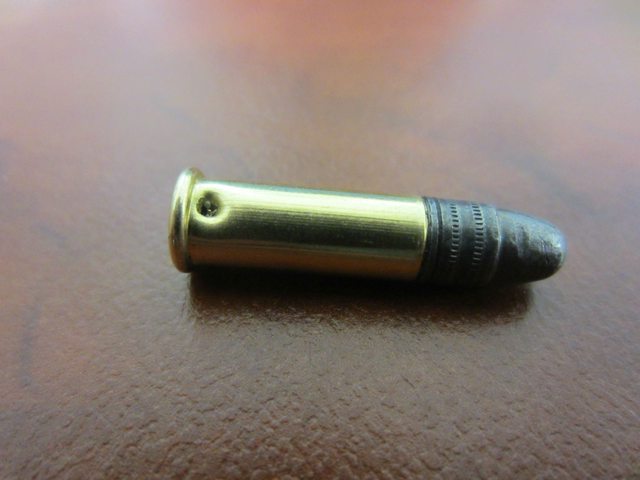
Found this among some SK ammo, actually from the Magazine .22 that comes in a metal can:
yUXYwT9l.jpg


Still has the powder, or at least some of it. But I'm mostly curious how serious something like this is if you were to fire it in a rifle? Or would it just fire like normal?

I actually didn't notice before loading it in my rifle (I seriously don't inspect every single round of .22 ammo), but it just so happened my rifle was having technical difficulties, so I unloaded it and didn't shoot anything. I noticed it among the ammo I removed from the rifle though, so it just got my wondering.

 
It will puff in your face.
Bullet get stuck in the barrel and if you shoot another round
without knowing this, well, sometimes a bit of fun will happen.
Bulged barrel and such.

You don't inspect every round?......................f:P:2:..................:rey2

I dump a bunch in my hand and observe them going into the clip/mag/tube/chamber.
 
yea that particular round shouldnt pose much of a danger - it's the next bullet you shoot after the resultant squid load that could seriously ruin your day. I've never had a gun explode in my hands (Hopefully I never do), but it doeskin look fun. I like to think I'm very cautious when shooting, but this is a prime example of how easily something dangerous can slip through the cracks...
 
Some of the gas will certainly come back out the breech. But with the chamber support on all the .22's and how they wrap around the formed rim to support the case completely I'm thinking that the bullet would still exit. The pressure will puff the shards of that hole out to the wall of the chamber and the result will be minor leakage and a drop in muzzle velocity but the bullet will exit just fine.

After all revolvers have a pretty generous cylinder gap that leaks some gas. But the bullets still fly out just fine. This won't be any different. Or the other sort of "leaky guns" like flint and percussion black powder guns. Those leak quite a lot back out the touch hole or nipple yet the bullets fly just fine.

Case extraction due to the deformation might be another issue.

Bottom line? If it were mine I'd shoot it out of curiosity. But I'd also check the barrel before proceeding if there was no easily seen strike down range.
 
I doubt much of anything would happen, I'd try it in one of my bolt actions, so it would be easy to push the bullet out if it didn't exit on its own.
 
I'm with Bruce on this one. Use it in a good strong modern chamber, just to be on the safe side, and check the bore after shooting it and clearing the firearm.
 
Yah, would not fire in a semi auto. That would likely be pretty loud, and a chance of flying brass shards (based on a case head separation I experienced once).
 
I think anyone who suggests shooting that damaged round IS damaged. Take a photo, send to whoever imports Lapua into Canada and see what they say. In the meantime, check over any ammo in the same lot and make sure none of it is damaged. Do NOT shoot that damaged ammo, or any damaged ammo for that matter.

I know the 22 ammo drought sucks, but I think your personal safety matters a whole lot more.
 
I could do a whole Mythbusters setup and put the gun in a vise, then use a pull string and hide behind something.....
 
If the round is out of round it may not chamber at all. I wouldn't even try though...even expensive rimfire ammo has a cost low enough to turf one. Depending on where I am(and which gem I'm shooting), I won't even use one I've dropped on the ground.

For experimental purposes/hypothetical what-if ramblings... If the round was used in a bolt action, and could chamber at all (if the round is out of round it may not) without swaging it into the chamber one of two things will happen to it when touched off. Either the brass will seal in the chamber well enough to launch the ball or it won't... I can't imagine too catastrophic an outcome regardless. If it does launch well, it may be sticky to extract. If it doesn't, you'll end up with a squib, and some nastiness in your face. We should all be wearing eye n' hearing protection regardless, but bring a good cleaning rod just in case you have to tap out a squib.

The only loud n' troublesome rimfire shots I've had were in semi autos in out of battery situations. Those are very loud, and all but one have caused me to tap out a squib.

For the potential harm to the gun n' shooter of a bolt action it would be an inconvenience at worst, and salvaging one deformed .22 round at best. Commonsense would dictate you just turf it, and not look back. Why bother trying? You might be giving up a nifty keepsake. I can't imagine very many rounds leaving production like that.
 
I'd have to fire that round too. Eyes, ears and a remote trigger activator just to air on the side of being overly safe. I'd take a newer bolt action to try it out on. Now would i try this with my 45-70 or my .338 Lapua? Not a chance...
 
I think anyone who suggests shooting that damaged round IS damaged. ......

I wouldn't shoot it either. But that wasn't the question asked in the opening post.

A few folks in this thread are forgetting that the brass casing on ammo only acts as two things. First is to hold all the components in place for convenient loading. Second is to act as an expanding pressure seal when the pressure forces the brass against the chamber wall. So the brass itself does not need to withstand the pressure. The gun itself does that. And we are not talking about a double charge or any other loading dangers here. So the firearm isn't going to experience anything new if that round were to be fired other than a touch of extra gas blowback.

Many of us have had a rimfire round burst the rim and all that occurs is a slight extra puff of gas blowback that we might or might not feel depending on the firearm design and how we are holding it. And this would not even be as much as that because the hole is sitting a slight ways into the chamber. So no one will die or be horribly disfigured even if they did chamber the round and pull the trigger. Assuming that it would even fit. The hole will have created enough distortion in the casing that it likely won't seat without the aid of a hammer. And that WOULD be a dangerous thing to do.

On some handguns, Glock being one example, the cases are not fully supported by the chamber. Instead the maker relies on the strength of the thicker case head of such ammo to support the pressure. But on any .22 the full length of the casing and often the whole rim is seated in a fully supportive chamber.

So the question here is if this round could be inserted and fired what would occur. I'm thinking that there is enough side wall behind the hole that it would seal reasonably well but with some slight gas leakage. But it's close enough to a regular seal that the bullet would make it out the end of the barrel and likely only loose a little velocity.
 
I think anyone who suggests shooting that damaged round IS damaged. Take a photo, send to whoever imports Lapua into Canada and see what they say. In the meantime, check over any ammo in the same lot and make sure none of it is damaged. Do NOT shoot that damaged ammo, or any damaged ammo for that matter.

I know the 22 ammo drought sucks, but I think your personal safety matters a whole lot more.


Hard to believe isn't it. "LOL" 6¢ value

R
 
Yup. Strong bolt and safety glasses (or if you are really concerned a motorcycle helmet).

I am sure it will be 100% fine. I have a tendency to do things in the name of science though.

C

So the question here is if this round could be inserted and fired what would occur. I'm thinking that there is enough side wall behind the hole that it would seal reasonably well but with some slight gas leakage. But it's close enough to a regular seal that the bullet would make it out the end of the barrel and likely only loose a little velocity.
 
Back
Top Bottom






















