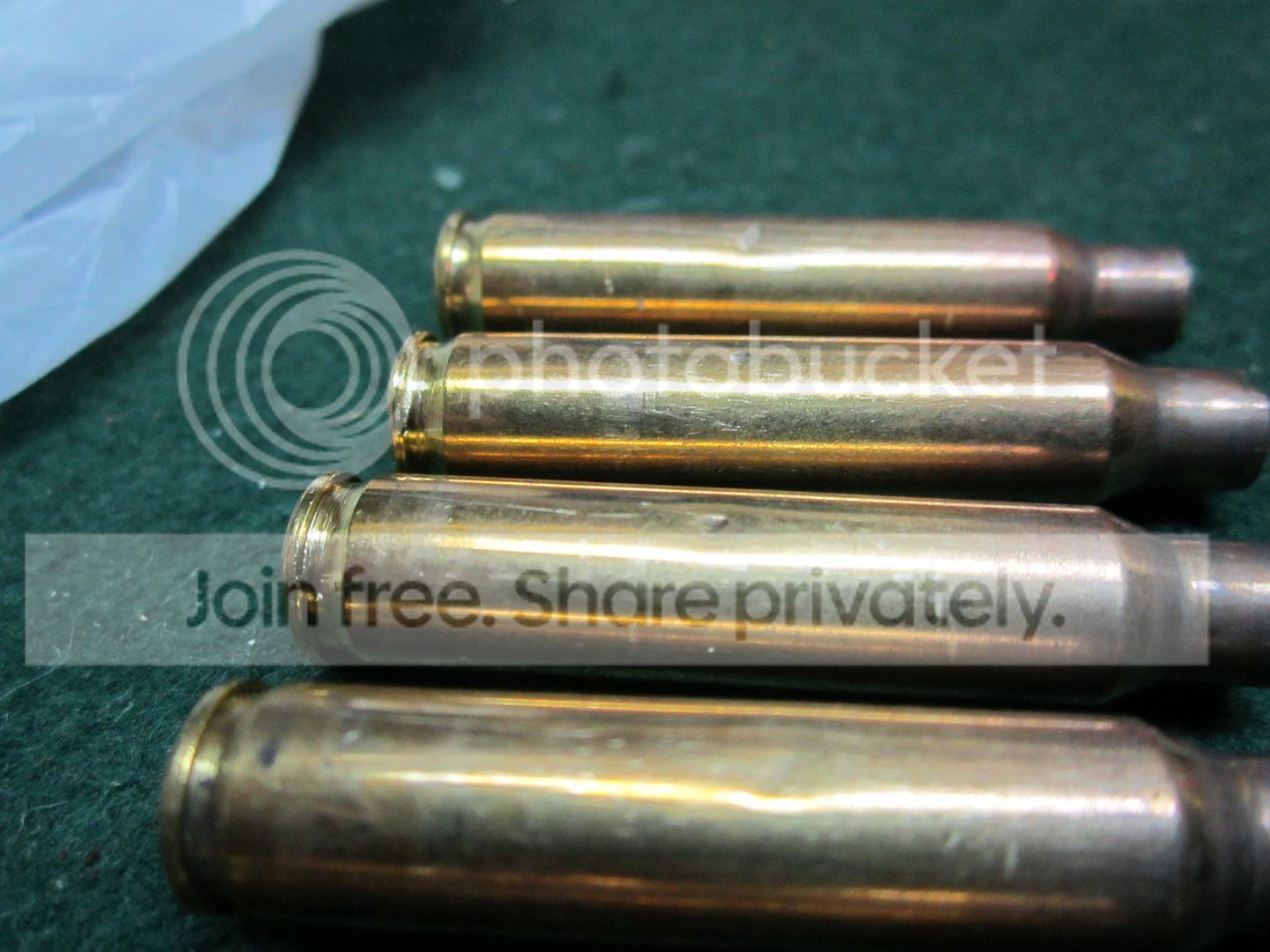
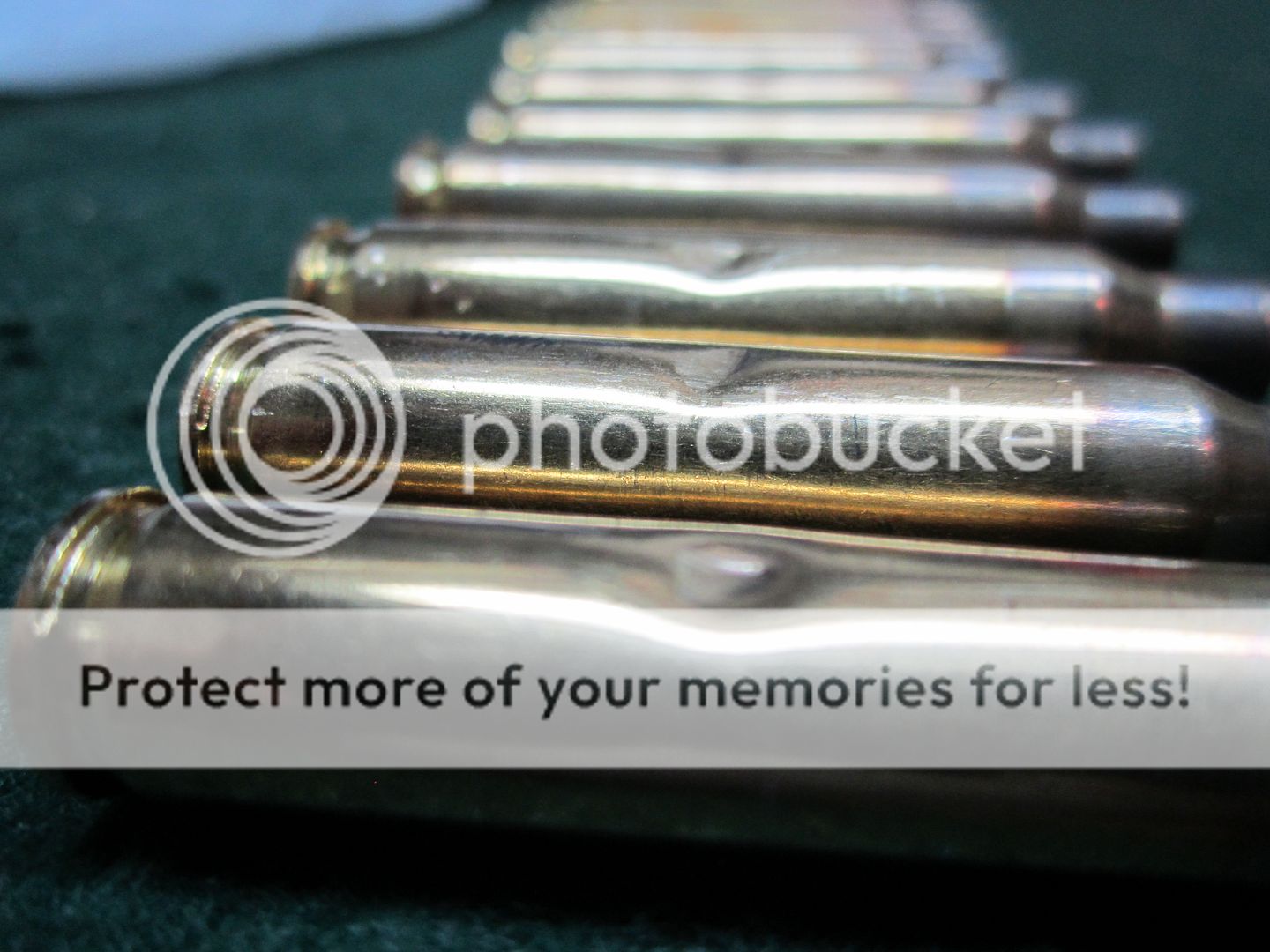
im assuming this brass is non good anymore?

Status
Not open for further replies.

wayupnorth

CGN Ultra frequent flyer
Rating - 100%
9   0   0
Location
Northern Alberta
just getting into reloading, was out at the range today and policed my brass for my Ruger Mini 14 and noticed about half of them had this significant 'DING' mark on the side from what im assuming is the ejector flinging the brass and it smacking the gun as it sails away.

im assuming this brass is now garbage because of the ding?
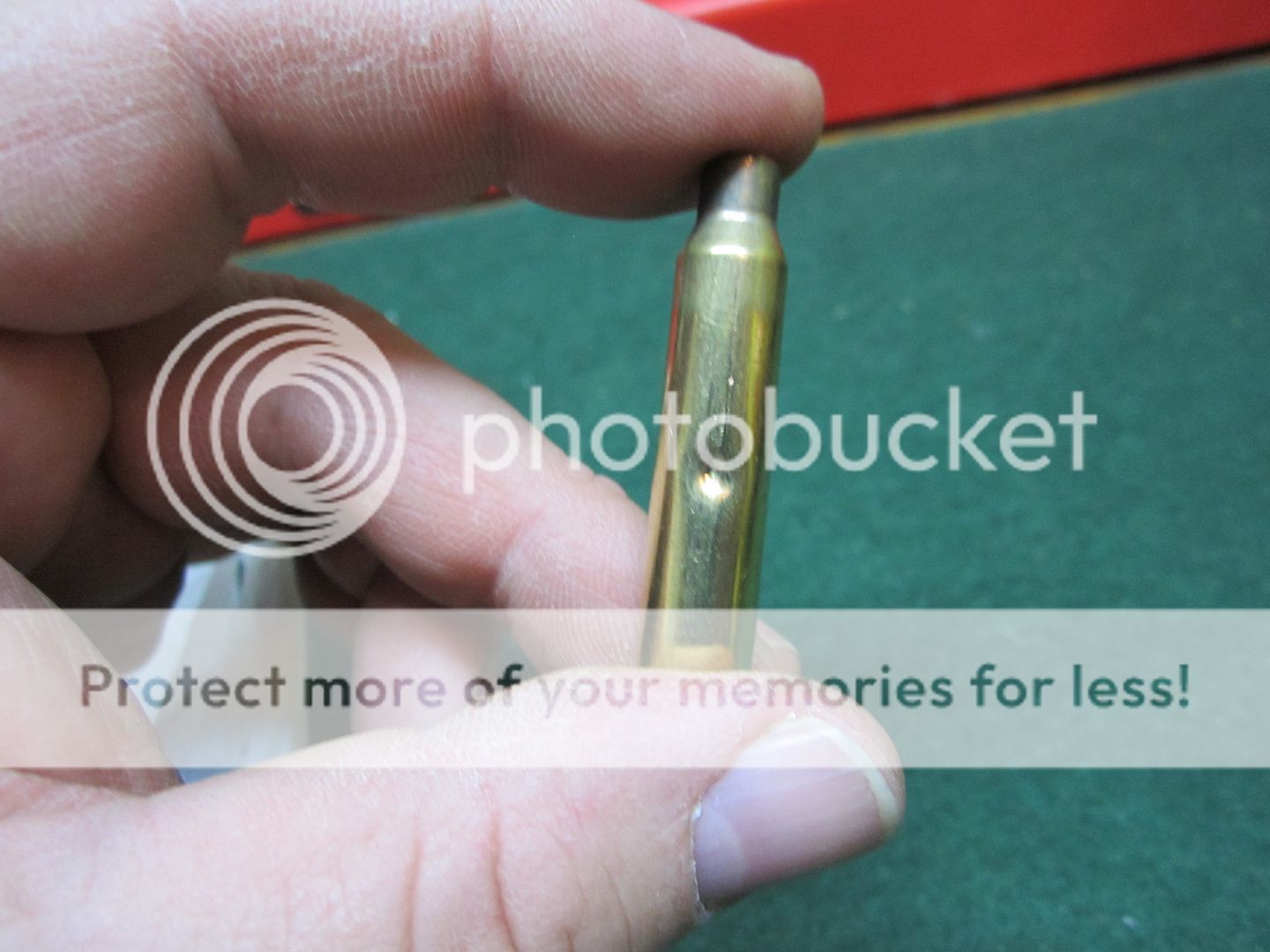
033_zpslrk1bwzb.jpg


some arnt ding'd too bad

032_zpscblmxu9e.jpg


some are

031_zpsp3iotm9w.jpg


from worst to not bad in descending order
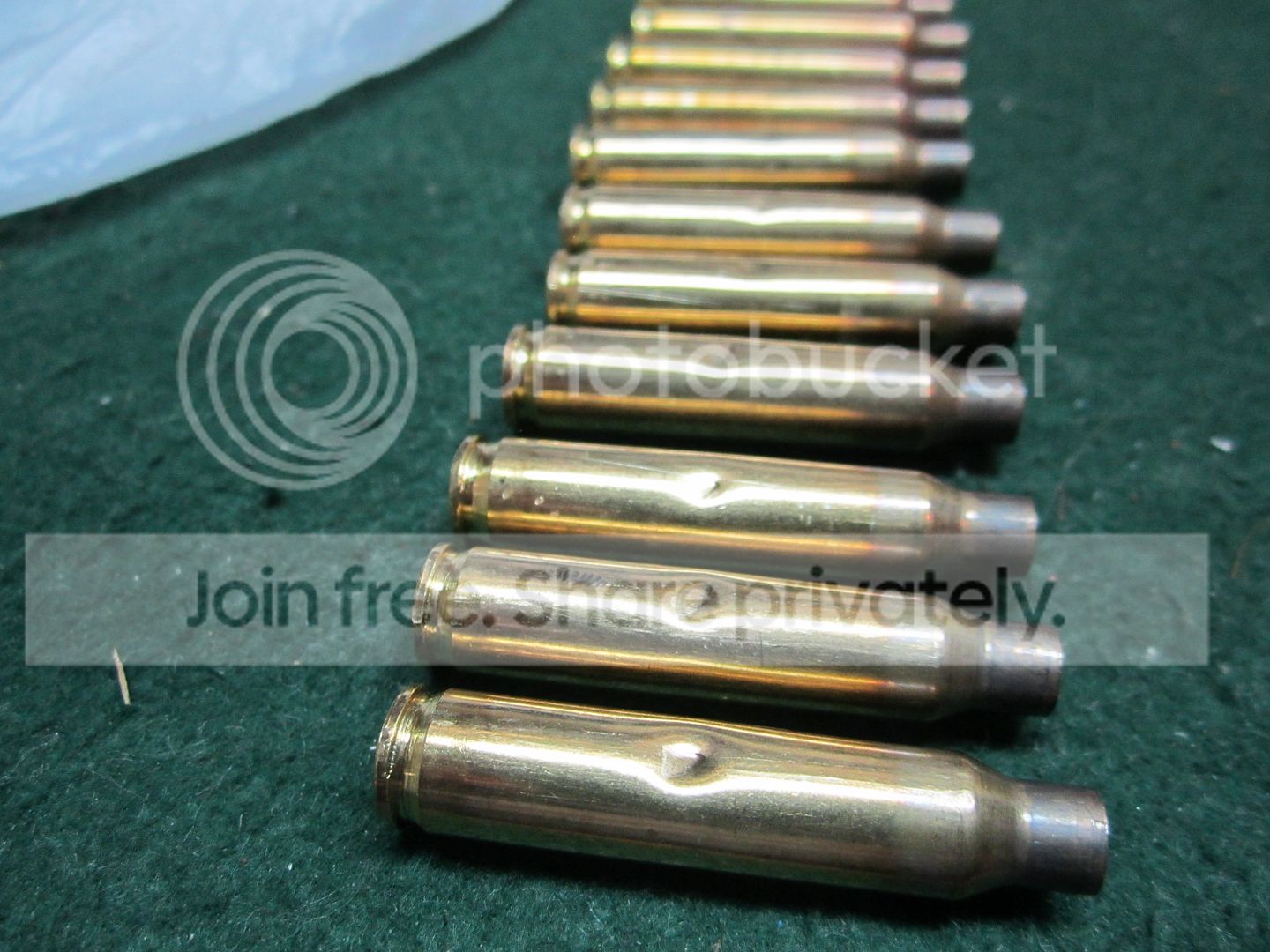
030_zps9bvaaahk.jpg


what i think it happening to them as they get flung out
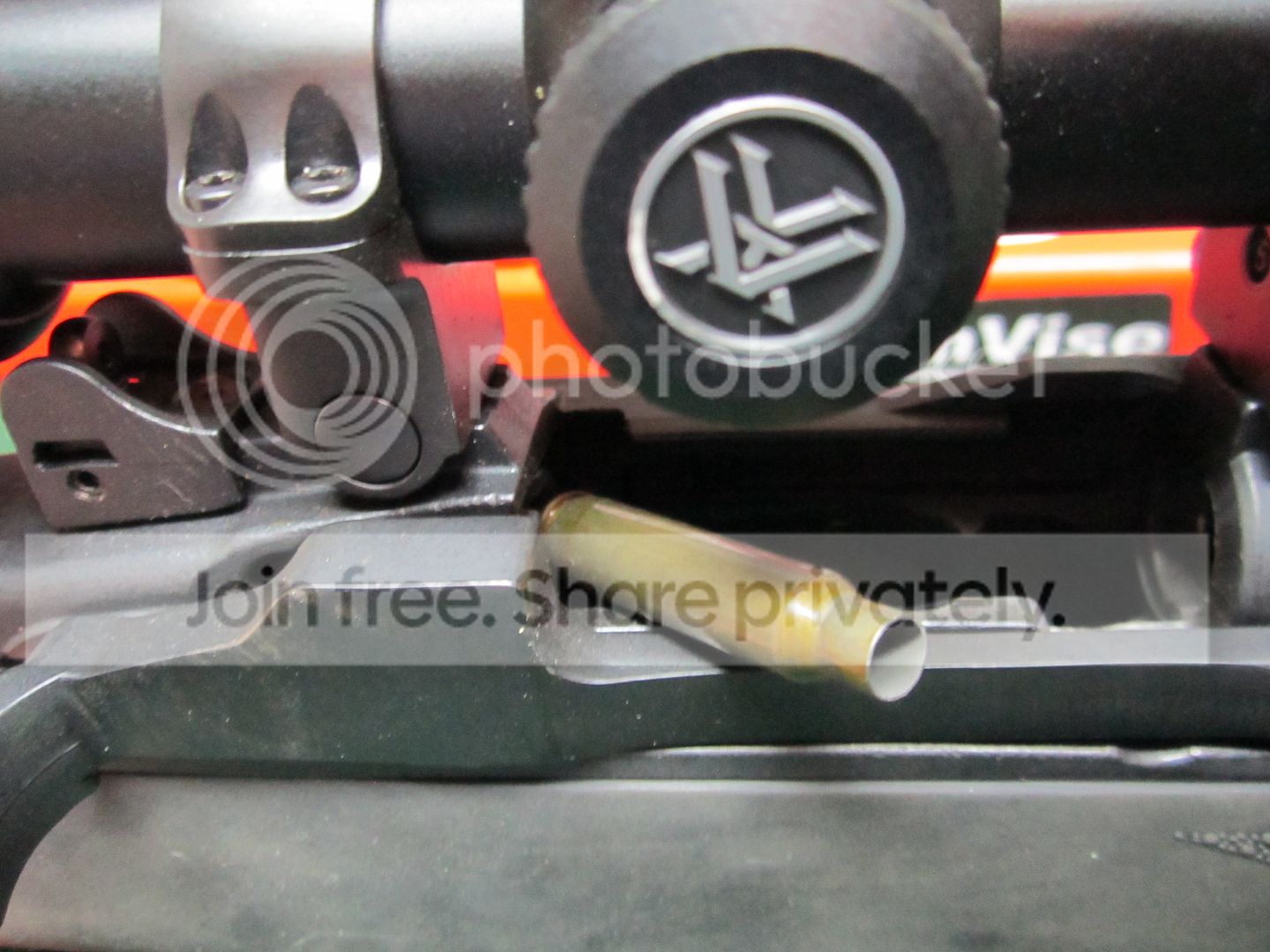
043_zpso17wvk3z.jpg
 
Meh, when you resize them, the dings will pop back a wee bit. When you shoot them, they'll fire form back to normal on another rifle other than your Mini14, which would just put the ding right back on them. I'd just set them aside as plinking brass.
 
Meh, when you resize them, the dings will pop back a wee bit. When you shoot them, they'll fire form back to normal on another rifle other than your Mini14, which would just put the ding right back on them. I'd just set them aside as plinking brass.

With tens of thousands of pounds of pressure inside the case, those will fire form right out
 
Anyone remember what brass looks like coming out of an AK or HK91..........that's dinged......Harold

 
I've gotten rid of much less damaged brass. That dent is extreme localized deformation which weakened the material albeit it in a less critical area. I would not risk experimenting with it at all, I would get rid of most of them and fix the cause. I am surprized to read what some are saying here, maybe I'm being overly cautious but I just cant justify the risk of putting another charge in those over saving the cost of a brass case . A case isn't worth it, save a penny lose a dollar I think.
 
Last edited:
seriously?!?!?!

i can save and use this stuff?
i just assumed that with those dents they where done for.

well, I'd use them, until I had a better reason to chuck them. Those dents just aren't deep enough to worry.

for what reason do you reload? If its to save money you'd sure not be saving anything if you chuck every scuffed piece of brass out of your Mini14 eh.

Firing pressures would finish ironing out that little dent.

Are you thinking of running the steel cased ammo now? Seems that rifle dents every case ejected from it.

Worst case scenario; the stress riser the worst case has would lead to an early failure, and you'd notice the crack upon inspection. It would not (likely, imho) lead to a catastrophic explosion, but you'll have to inspect each piece of brass to cull the really bad ones.

This wouldn't lead to a split case jsyk.
 
I'm the last guy to be accused of being a "Chicken Little", but based on what I can deduce from the pics, some of those aren't "dents" but what I'd call "gouges", i.e. the brass isn't just pushed in, but it's been cut.

I would cull the "gouged" ones.
 
Back in the mid '70's I had one of those Swedish semi auto M42B's. Back then nobody knew what 6.5x55 was, let alone sell brass or ammo for it.
It used to beat the crap out of the brass, chewing up the cartridge base with the extractor as well as dinging in one side. Then it would fling it half way to Alberta. My friends and I spent hours on our hands an knees in he forest searching for brass after I unthinkingly fired without planning where my brass would land. However, I did manage to get as many as 7(!!!) loads out of a Norma brass. Less from CIL.
Anyway, it's not as if 223 brass is rare or expensive. If you have ANY doubts about ANY of it, pitch it. Every range in the country is littered with it. It's like gravel, here.
Plus, if you remember what it looks like you'll recognize it when some nitwit picks it up and tries to sell it on the EE.
 
Scrap a few of the worst ones maybe that look like the brass is actually about to be punched right through. I've resized some pretty messed up cases and im still alive haha.
 
A dent without any material removed or "gouged" I would have no qualms about reloading and re using.

However if material has actually been removed or an actual gouge exists, I would pitch it in the recycled brass bin.

I have used a lot of dented cases over the last 40+ years without any issues at all.

Regards, Dave.
 
I've gotten rid of much less damaged brass. That dent is extreme localized deformation which weakened the material albeit it in a less critical area. I would not risk experimenting with it at all, I would get rid of most of them and fix the cause. I am surprized to read what some are saying here, maybe I'm being overly cautious but I just cant justify the risk of putting another charge in those over saving the cost of a brass case . A case isn't worth it, save a penny lose a dollar I think.

You haven't got the first clue what you are talking about. The case head is exposed to 60,000 psi. The brass is crushed and stretched and exposed to several thousand degrees of burning powder with each firing. Then during resizing t is crushed back down again. It goes through this cycle time and again in the hands of the average reloader. Cases can last 15+ reloads if treated right.

Brass is quite soft and maleable material that also happens to be quite strong in the right application. A small dent in the side of the case is a non-issue. As long as the case is reasonably straight and the neck is not overly crushed, it is fine to reload.

Nobody used to worry about this kind of stuff prior to the Internet bringing out the modern ninny state.
 
You haven't got the first clue what you are talking about. The case head is exposed to 60,000 psi. The brass is crushed and stretched and exposed to several thousand degrees of burning powder with each firing. Then during resizing t is crushed back down again. It goes through this cycle time and again in the hands of the average reloader. Cases can last 15+ reloads if treated right.

Brass is quite soft and maleable material that also happens to be quite strong in the right application. A small dent in the side of the case is a non-issue. As long as the case is reasonably straight and the neck is not overly crushed, it is fine to reload.

Nobody used to worry about this kind of stuff prior to the Internet bringing out the modern ninny state.

Couldn't have said it better myself - those are an angels kiss compared to what my HK91 brass used to look like and I got a doze reloads out of it without issue.

It's amazing all the stuff we "didn't know" before Al Gore invented the errornet...
 
You haven't got the first clue what you are talking about. The case head is exposed to 60,000 psi. The brass is crushed and stretched and exposed to several thousand degrees of burning powder with each firing. Then during resizing t is crushed back down again. It goes through this cycle time and again in the hands of the average reloader. Cases can last 15+ reloads if treated right.

Brass is quite soft and maleable material that also happens to be quite strong in the right application. A small dent in the side of the case is a non-issue. As long as the case is reasonably straight and the neck is not overly crushed, it is fine to reload.

Nobody used to worry about this kind of stuff prior to the Internet bringing out the modern ninny state.

Hey maybe your right, but I would still chuck them. Maybe my experience analyzing these kinds of structural defects made me paranoid. Huge machined parts made from everything like steel, aluminum, titanium...splitting in half because of a small scratch etc...Some of those dents look pronounced enough to have cause some significant cold work... but yeah brass is soft so maybe...but I would still chuck them, I have a good budget for brass and would not bother with any doubt. Nothing to do with ninny state or the evil internet... whatever that means.
 
Last edited:
Dented, I'll FL size and reload
Scratched, I'll FL size and reload
Gouged (material removed), scrap metal box

Have reloaded a few hundred cases (haven't been reloading as long as some) with dents or scratches and have never had a failure from it. My only case failures are case head separations (rifle headspace issues) and split necks (work hardening of the brass).

Remember that cases are not withstanding the pressure themselves, they are just holding the components together and acting as an expanding gas seal inside the chamber. The chamber and bolt are what are withstanding the pressure upon firing.

several thousand degrees of burning powder with each firing
I would have to disagree with this point. The heat persists for such an infinitesimally tiny amount of time the cases only increase in temperature a few degrees with each firing. I'm not sure what the flame temperature of nitrocellulose is but you would need a continuous supply of it burning on a metal for quite a while (minutes at least) to get any temperature in the thousands. It's similar to how a person can easily pass their hand through an open flame without even the slightest burn but if you hold it there, you will definitely get burned.
 
Status
Not open for further replies.
Back
Top Bottom