waterfowl dog opinion

Stubinater

New member
Rating - 0%
0   0   0
Location
Hamilton Ontario
I'm looking at get a lab but wanted to see what everyone's experience and preference between make or female? I know everyone says female's are easier to train and all that, but I'll be hunting lot's of geese so I've always leaned towards a male thinkin it would have a easier time carrying the big geese. What's everyone have to say?


Cheers!
 
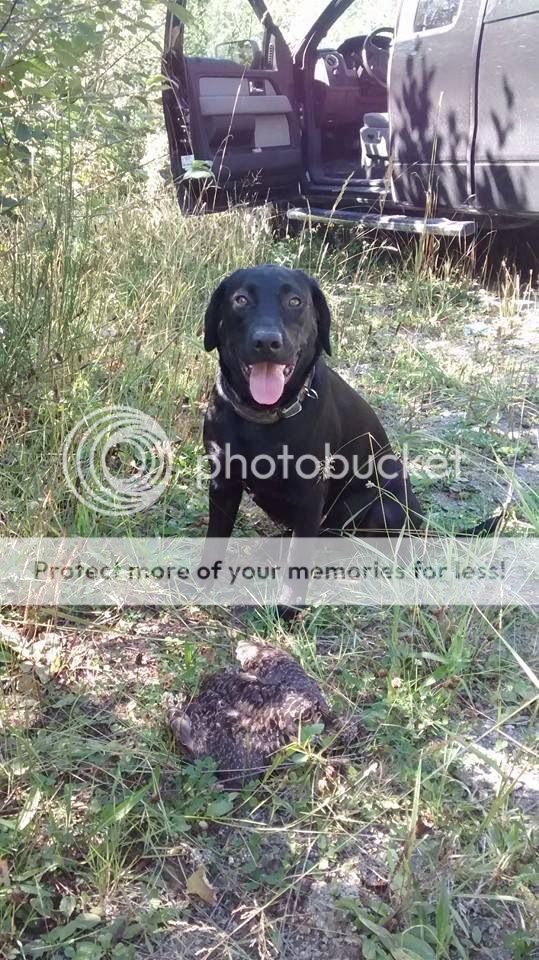
My lab is a female and just turned 2. She's my first hunting dog, and I trained her myself. She's responsive to the training and loves flushing and retrieving. I personally think you'd do well with either, it's all in the training.

16ac4b2c6c831e1dc3dba285340bade7_zpsl6uq94pt.jpg
 
I'm partial to females...in my experience they are more responsive to the training and a little more patient. But I've seen a lot of really well trained males too. It comes down to disposition of the dog and quality of the training in the end...
 
Well, your female will weigh in from 60-70 pounds plus or minus. A male will be 10-15lbs heavier (based on my labs litter). Both are more than able to handle geese. When I got my puppy, the wife said it had to be a female because she hates the leg #### when a male pees. That's the reason I choose a female.
 
Males are no more harder to train than females in my opinion, depends on the individual dog. I have had two males and two females over the years. Males tend get distracted at times when the testosterone kicks in, having the boy neutered helps. A male could have the advantage with geese as they tend to have bigger mouths thus can open wider. Although my females both fetched geese but at times would have to pause to get a could mouth position on the goose. The males would just pick it up and go for the most part.
 
I wouldn't loose any sleep over the ### of it, just find a breeder you like and feel confident and comfortable with. Tell them your goals and be honest about your training experience. Get a couple books or videos of retriever training programs and pick 1 you can follow (before you even bring your pup home). Do these things and join a retriever training club and you'll have lots of resources to become very successful with your new pup.
No Lab within breed standards is going to have a harder time retrieving a goose than any of many smaller breeds of gun dogs that go out and retrieve geese every fall. I wouldn't sweat it, I've seen males and Chesapeake bay retrievers have to change mouth position on a goose.
 
Labs are an excellent breed... and for a waterfowler they are a very good choice... not the only choice, but for a first time hunting dog owner, I feel they are the best choice. I prefer females, because I just want dogs that are smaller and less obtrusive around the house (which is 99% of the time)... females might be a little easier to train and might be a little less scatter brained, and might be a little more docile... but not always. With a female you have to put up with their heat unless you get them spayed, but with a male, you have to put up with every dogs heat, unless you get them neutered... unless you are planning a litter, have the dog fixed... it makes life much easier... if you are a first time dog owner, you should not be having a litter IMO. In training, your NUMBER ONE tool will be " patience." Your dog will make lots of mistakes, and won't understand you all the time... anger and frustration are the enemy and a good dog can be ruined in short order if you don't manage your own emotions. Lots of repetition, and short, focused training sessions are the key... make it fun, enjoy the animal, even it's mistakes... in the end, you will have a fine hunting companion.
 
I have two intact male Drahthaar's, great waterfowl as well as all around dogs. I've found that males tend to have the extra size to handle larger geese as well as the harsher weather. Most importantly is to do your homework on the breeder. They should be willing and happy to answer any and all question, and hopefully be able to provide references from past litters.
 
I have two intact male Drahthaar's, great waterfowl as well as all around dogs. I've found that males tend to have the extra size to handle larger geese as well as the harsher weather. Most importantly is to do your homework on the breeder. They should be willing and happy to answer any and all question, and hopefully be able to provide references from past litters.

I have a male Drahthaar reserved for next spring, although he will be mainly used for pheasant and upland game.
 
As said above - find the right breeder and the ### of the dog will not be so important. I have only owned and trained females, which I prefer for reasons unrelated to trainability and retrieving ability, so I can't really comment about one or the other, except to say that from what I have seen with my labs versus others' labs, ### is not that big a consideration in the final outcome compared to the pedigree, health and training that you out in. Enjoy!
 
I have a male that I love hunting with. He is wonderful on retrieving waterfowl and very competent on flushing grouse and woodcock. Do your research on breeders and training and either ### will be great. When I was hunting with spaniels I had one of each and they were both good dogs. As far as size goes even my 35 lb. spaniel female could retrieve geese though my 90 Lb. lab has an easier time with it.
 
I've got three Labs, a male and two females. The male has greater stamina and strength and will hunt for several additional hours under the worst conditions compared to the girls in both fresh and salt water. In training, he was definitely the more headstrong, however, he also had the superior retrieve and hunt drives and was comfortable and capable of effecting multiple blind retrieves at far greater distances than the girls. I don't know, perhaps it was a confidence issue. The girls, however, are both much faster than the male and do much better at flushing upland game. Their smaller size also helps in the grouse woods. Whichever ### you choose, do yourself a favor and have them fixed. Most legit breeders will require that you sign a contract proving this, unless you pay for the breeding rights. Look for a breeder who specializes in producing true gundogs, NOT show dogs! Make sure that they provide a written guarantee that their animals are free of eye, hip and elbow problems. Make sure you socialize your new puppy well. Get them used to being handled regularly from nose to tail, including during meal times. You don't want a food aggressive dog, especially if small children are in the house or may visit.

Also, be sure to regularly Pull, tug on toe nails, play with their ears, footpads, stick your fingers in their mouth and run it along their gums, lift their paws/legs, etc... You want them to accept any handling you carry out with complete trust. Be sure to get your vet to show you how to properly clip their toenails and buy yourself a quality pair of pliers type nailclippers. Avoid the guillotine type.

I know that this sounds wacky, but believe me, if you do this, when the time comes and you need to render first aid, instead of causing them more fear/panic, the handling will be familiar and calming, and you'll enjoy complete trust. This will allow you to render first aid in the field and give you the time you need to get your dog to the vet, if needed.

Finally, introduce loud gun like noises gradually. Use positive reinforcement. I like to feed my new puppies outside during gun training, and while they're enjoying the meal I will be next to them for reassurance while a partner with a loud cap gun fires off rounds, gradually closing the distance to us over a period of several days/weeks. It all depends on the dog. Don't try and force it, otherwise you end up with a gun shy dog/couch warmer and not the hunting partner you were hoping for. The training is progressive, moving from cap guns to. 22 blanks/.22LR, then. 410 shotgun and then 20/12 gauge. If you do it right, you'll end up with a dog that is conditioned to equate the sound of gun fire with something positive. Usually by the blank training pistol stage I'll introduce some fun retrieving exercises as well. Keep the training sessions short! Oh, and do the same thing for the vacuum cleaner! Your wife will appreciate the fact that the dog doesn't go nuts or covers in fear every time someone turns the vacuum on. :)

Best of luck!

 
With labs I find the males are a lot more bull headed and bit harder to train. Females seem to want to please more.


I own a male lab, Now that he's 6 years old and calmed down hes a great dog, But he did have his moments. Loves to hunt though,.
 
I have had 3 males. Two were 70+ pounds and one was 55. Of the three my smaller one was the easiest to train as he wasn't as head strong as the other two but that was just his personality, his size didn't dictate that. He did however have much more desire to please and was lightning fast. He was much calmer and patient in a blind too. His smaller size as mentioned earlier was nicer around the house too. My first one was a 75 pounder, nice dog. From day one he preferred living outside in a kennel. He hated being brought indoors except when the mosquitoes were bad, lol, aside from that he hated being in the house. My final one was a 72 pound long legged yellow who was convinced I hunted for him!! But he sure had Kojones and drive, lol. Big geese were not an issue. Funniest moment was one day a friend of mine dumped his first Canada. He wanted to line the dog up and send him as he had never done that either and the dog had not seen that bird coast and fall 150 yards away to a fenceline as he was watching it's buddies dropping dead out front. My buddy gives him the hand line and sends him, the dog races out right to the bird, picks it up like its a training bumper, starts running back then 30 yards out stops and looks at the three of us, head held high with 12 pounds of goose in his mouth and tail wagging and suddenly turns and peels out full bore goose in mouth and runs the perimiter of the 100 acre field we are hunting like someone fired a starter pistol to a race and he has entered it? Then he runs up to us goose in mouth tail wagging with a "man that was awesome" smile!! Lmao
But back to your question, male or female will not matter. Every dog has its own personality. I personally prefer a less alpha dog as an all around family pet/hunting dog but if as I was back in the day a single guy and had lots of time to train, picking out an alpha from the litter was my choice. There are proven tests for picking certain personalities or traits in puppies that do work! Gun Dog magazine can be a good source of info for picking a pup.

 
Also, be sure to regularly Pull, tug on toe nails, play with their ears, footpads, stick your fingers in their mouth and run it along their gums, lift their paws/legs, etc... You want them to accept any handling you carry out with complete trust. Be sure to get your vet to show you how to properly clip their toenails and buy yourself a quality pair of pliers type nailclippers. Avoid the guillotine type.

I know that this sounds wacky, but believe me, if you do this, when the time comes and you need to render first aid, instead of causing them more fear/panic, the handling will be familiar and calming, and you'll enjoy complete trust. This will allow you to render first aid in the field and give you the time you need to get your dog to the vet....

All good info from X-man, but especially the above. It has proved important numerous times with my male Pudelpointer, but no more so then this past fall when out of the blue, he decided to try a mouthful of porcupine after 8 years of ignoring them. He had multiple deep quills in his chin, nose, gums and a couple in his tongue. I was caught out without a leatherman three miles from the truck, and the way he was biting, licking and pawing at his face I could see he was compounding the problem.

I ended up pulling the shallow quills with my fingers, but the deep ones I needed to use my teeth. I had my fingers in his mouth for probably 5-10 minutes to keep him from biting down on the quills. When you have your face inside the jaws of your dog, while you pull quills out of the roof of their mouth, you understand the meaning of trust.
 
With labs I find the males are a lot more bull headed and bit harder to train. Females seem to want to please more.


I own a male lab, Now that he's 6 years old and calmed down hes a great dog, But he did have his moments. Loves to hunt though,.

I have a 9 1/2 week old male. Bullheaded is putting it mildly. Fortunately we have mostly wood furniture, so he has lots to eat.
 
Try squirting hot sauce on the chair legs, etc. If he's really persistent, wrap it with snare wire. However, be sure to correct the unwanted behavior instantly and be consistent. You will be doing both you and your dog a big favour if you crate train him ASAP.
 
I'm thinking he may have some latino somewhere in his bloodline. Likes the hotsauce pretty much. His preferred outdoor food of course is deer droppings followed off by dead petunias and now dandelions. Got the crap scared out of him by a bear in the yard yesterday. Pretty funny. It's great to have a Lab again.
 
Back
Top Bottom