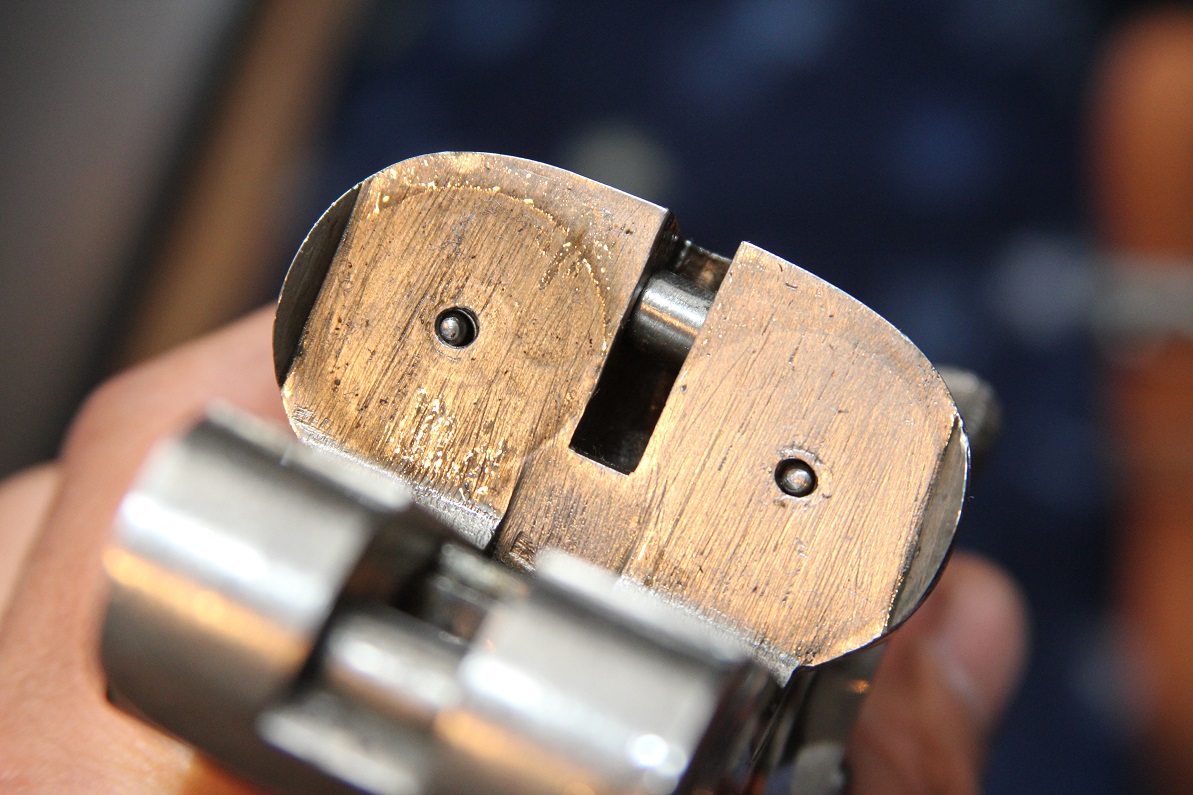
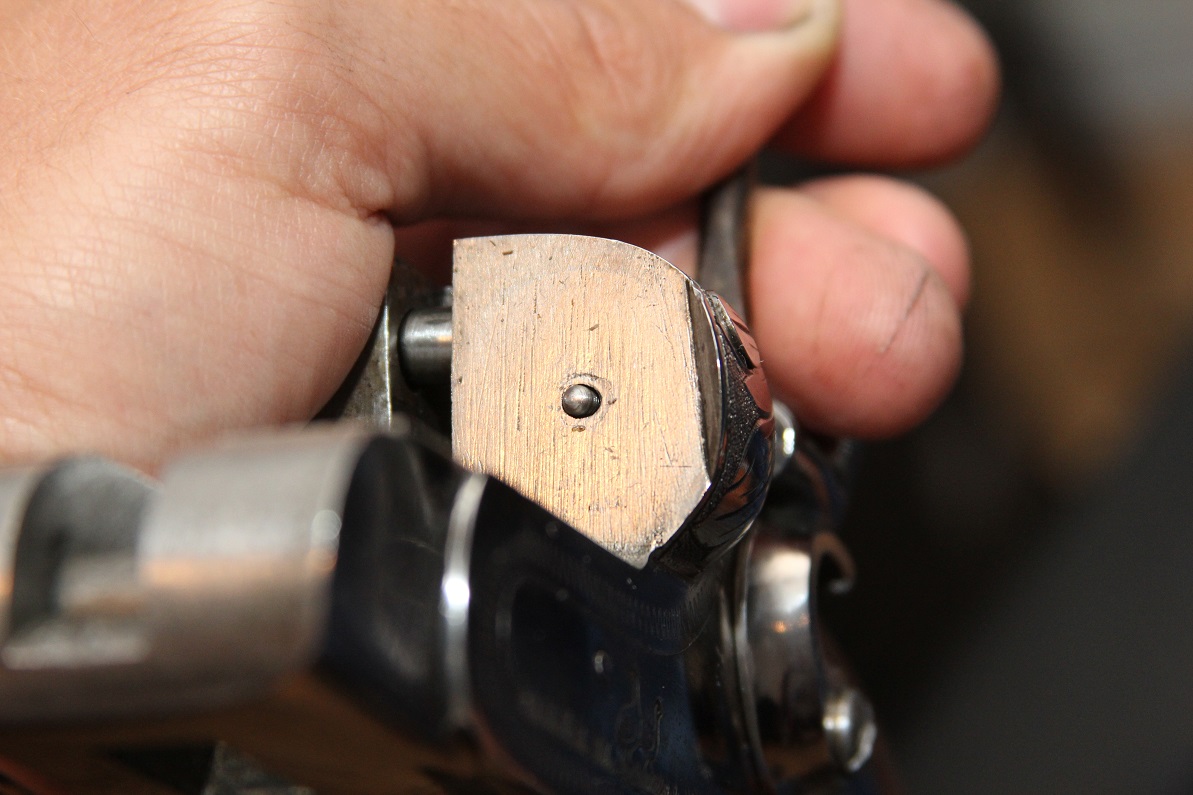
If you are talking about all the scratches on the breechface, I think it's just real bad casting or something. Other places on the receiver are like this.
No sure what you mean by bush (french canadian here).
The scratches on the fences are not due to bad casting. If other areas on the receiver look the same, they were wire brushed, too. Gouged out the way it is, I'd expect those scratches to promote gas leakage through the breech. This can be somewhat dangerous, especially if you suspect corroded primers in particular shells.
Be cautious with that gun. It could easily be chambered in 2 1/2". If it is, and you're feeding it 2 3/4", those scratches become the most likely place for any excess pressure to go.
If you know how to measure the chamber properly, do so. If not, take it to your nearest gunshop - they shouldn't charge for such a simple task. When you're sure it's chambered in 2 3/4", take a heavy load (an old duck load will do nicely) and shoot it through the gun in the following manner:
- inspect gun thoroughly. Note all cracks or bulges.
- gun loaded (not cocked), place gun across a tire that's laying flat on the ground.
- position gun and tire so butt stock rests against tire on vehicle and muzzle (as well as 90 degrees on both sides) are safe.
- tie string to trigger and run string under vehicle to other side.
- check sandbags or whatever was used to hold gun vertical, carefully #### loaded barrel and return to opposite side of vehicle.
- position yourself behind opposite wheel to protect your feet and legs from shrapnel coming under vehicle.
- pull string.
That stuff about 90 degrees just means that anything on the gun side of the vehicle must be unimportant, including the gun side of the vehicle itself. A derelict vehicle in a field is the kind of place you want. No dogs, no kids, no spectators, nothing you wouldn't want to blow up. This process is a way of stressing the gun beyond the pressures you would be normally putting it under, without going overboard and damaging the gun. A field proof test, if you will.
Be scrupulous in checking for signs of barrel bulging, cracks, or scorching from gas leaks around the face. In fact, any change in the gun from when it was inspected prior to shooting should be a sign of trouble. Using precision tools, such as callipers, is recommended.
Anyone who isn't confident of their expertise and experience with firearms, should never attempt to evaluate a gun themselves. Instead, they should take the gun to a gunsmith. However, anyone even contemplating holding up to their face and firing a gun such as pictured above, without first going to a gunsmith should, at a minimum, subject the gun to remote firing first.