












































You are using an out of date browser. It may not display this or other websites correctly.
You should upgrade or use an alternative browser.
You should upgrade or use an alternative browser.
Repeated Case Separation with XCR-L 223
- Thread starter ccwcanada
- Start date


Yep managed to find one:
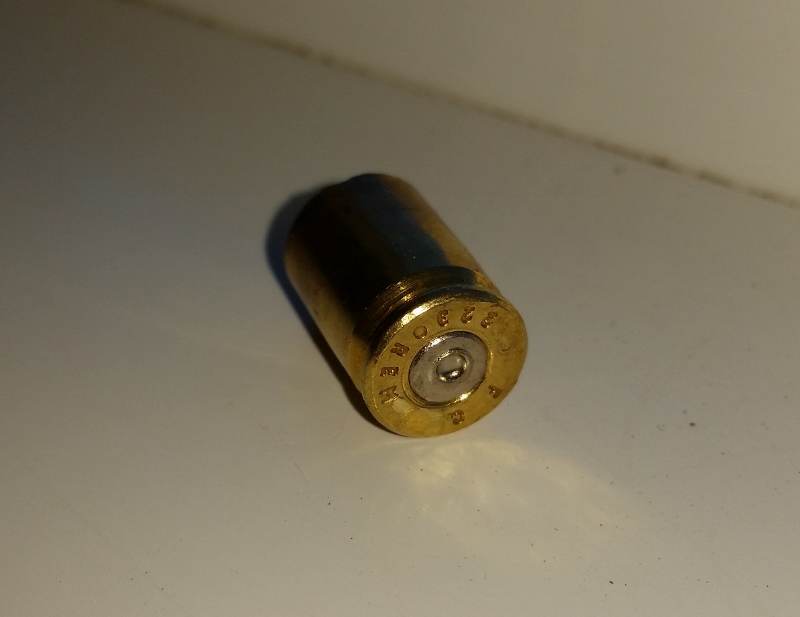
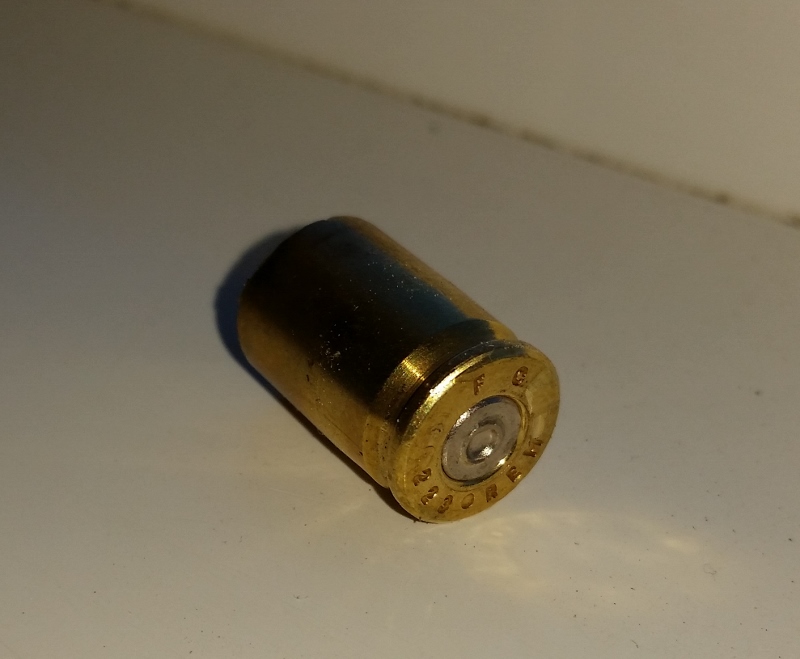
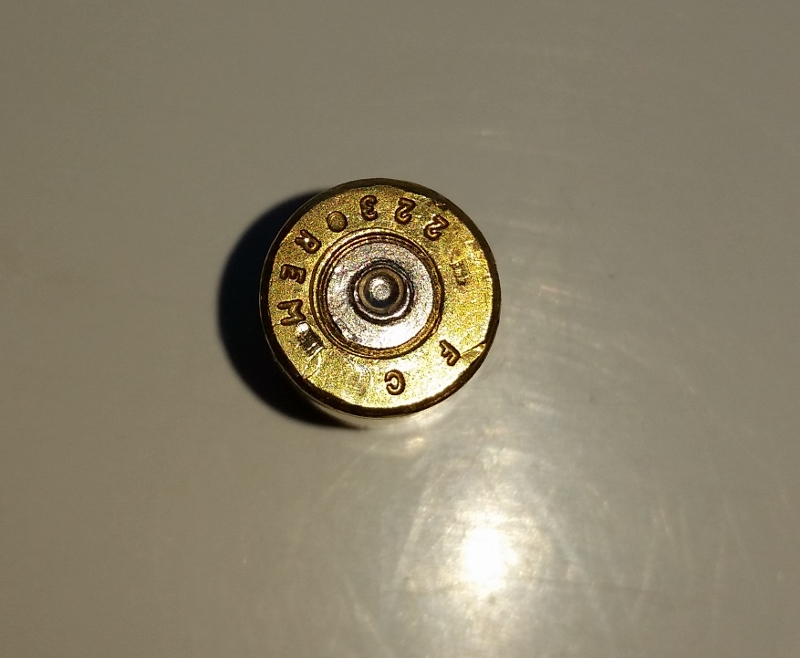
The rim looks in really good condition actually. What do you think of the primer? Normal looking or pressure indication?
This primer looks over pressured to me. The primer is extruding into the firing pin hole.
From http://www.massreloading.com/reading_pressure_signs.html
An extruded or 'cratered' primer occurs when material from the primer cup is forced back into the firing pin hole in the breech face during firing. Usually, this is caused by a loose fit between the firing pin and the opening. If this is the case, your benchmark rounds will show some degree of cratering. If no trace of extrusion exists on your factory rounds, but your reloads exhibit it, it can be indicative of excessive pressure.

An extruded primer can indicate excessive pressure
The primer in the photo above is from a neck-sized .308 reload with a maximum powder charge. A normal round from this rifle shows no cratering at all, so the extruded primer is a good indicator of over-pressure. Notice that because of the tight headspace of the neck-sized round, there is very little flattening of the primer. The rifle's bolt was hard to lift after firing this round – further indication that it's time to back off.
An extruded or 'cratered' primer occurs when material from the primer cup is forced back into the firing pin hole in the breech face during firing. Usually, this is caused by a loose fit between the firing pin and the opening. If this is the case, your benchmark rounds will show some degree of cratering. If no trace of extrusion exists on your factory rounds, but your reloads exhibit it, it can be indicative of excessive pressure.
An extruded primer can indicate excessive pressure
The primer in the photo above is from a neck-sized .308 reload with a maximum powder charge. A normal round from this rifle shows no cratering at all, so the extruded primer is a good indicator of over-pressure. Notice that because of the tight headspace of the neck-sized round, there is very little flattening of the primer. The rifle's bolt was hard to lift after firing this round – further indication that it's time to back off.
sikwhiskey
CGN Regular
- Location
- Lethbridge
That primer is normal, as been explained in a prior post. Every primer Ive fired out of an xcr looks cratered, it's not.
When was the last time you tried to "lift" the bolt on an xcr?
When was the last time you tried to "lift" the bolt on an xcr?
Last edited:

Travis Bickle
CGN Ultra frequent flyer
- Location
- Upper Lower Middle Alberta
This primer looks over pressured to me. The primer is extruding into the firing pin hole.
Notice the difference in the ,308 primer you posted and his .223 fired by an XCR.
That's caused by the way the bolt face is designed on the XCR, the firing pin hole is chamfered slightly causing the primer to swell into the chamfered hole leaving the raised crater edge. If the edge is rounded (as the OP's) then it's exactly right. The primer shows no signs of excessive pressure. That would be the fastest and most sure way to tell if that was the cause.
When the crater edge is sharp instead of rounded that is how you get the sign of overpressure in the XCR rifle from the primers. That and primer separation in whole or part
All in the Armorer Manual many XCR owners tend not to read. It's essential reading if you want to make sure it's running properly. Has a troubleshoot guide and everything.
http://emptormaven.com/img/XCR-Armorer-Course.pdf
Excessive pressure is not the actual cause of separations. Normally with excessive pressure in a semi auto as well you would see much damage to the case rim from the bolt and extractor being hammered rearward too early and much too hard.
Resizing brass, the stretching/expansion and compression of the brass even once or twice weakens it drastically from the inside out is what causes separation. If it's cheap quality brass you may not even get a first reload after once fired before it's too flimsy and separates in the chamber during the extraction cycle. Like he said they were Federal cases reloaded, they are not known for their very high quality cases especially if it was from a much cheaper bulk pack slammed out by them.
You can get case separation on a fresh/new cartridge case from VERY excessive head space on a rifle but on an XCR, if the barrel stays on the gun when you fire it, then the barrel is seated properly. The big allan bolt that holds it on is tapered at the tip so the barrel is either on properly or it's not on. If it's not seated and you manage to somehow fire it, a separated case would be the least of your concerns lol Plus on the XCR if the head space was that far out to separate a case, the bolt would not be closed and locked enough to leave an impression like that in the primer. Also there would be damage to rifle around the chamber of the barrel inside the receiver most likely.
I'd say cheap brass that was too thin inside the case wall after one cycle of firing and re-sizing/reloading and then exacerbated by being fired in a rifle with a very hard and robust extraction cycle!
Last edited:

OP once you get your broken shell extractor just use up all your federal brass and treat this incident like an extended stoppage LOL
Sounds like the thing to do!
Notice the difference in the ,308 primer you posted and his .223 fired by an XCR.
That's caused by the way the bolt face is designed on the XCR, the firing pin hole is chamfered slightly causing the primer to swell into the chamfered hole leaving the raised crater edge. If the edge is rounded (as the OP's) then it's exactly right. The primer shows no signs of excessive pressure. That would be the fastest and most sure way to tell if that was the cause.
When the crater edge is sharp instead of rounded that is how you get the sign of overpressure in the XCR rifle from the primers. That and primer separation in whole or part
All in the Armorer Manual many XCR owners tend not to read. It's essential reading if you want to make sure it's running properly. Has a troubleshoot guide and everything.
http://emptormaven.com/img/XCR-Armorer-Course.pdf
Excessive pressure is not the actual cause of separations. Normally with excessive pressure in a semi auto as well you would see much damage to the case rim from the bolt and extractor being hammered rearward too early and much too hard.
Resizing brass, the stretching/expansion and compression of the brass even once or twice weakens it drastically from the inside out is what causes separation. If it's cheap quality brass you may not even get a first reload after once fired before it's too flimsy and separates in the chamber during the extraction cycle. Like he said they were Federal cases reloaded, they are not known for their very high quality cases especially if it was from a much cheaper bulk pack slammed out by them.
You can get case separation on a fresh/new cartridge case from VERY excessive head space on a rifle but on an XCR, if the barrel stays on the gun when you fire it, then the barrel is seated properly. The big allan bolt that holds it on is tapered at the tip so the barrel is either on properly or it's not on. If it's not seated and you manage to somehow fire it, a separated case would be the least of your concerns lol Plus on the XCR if the head space was that far out to separate a case, the bolt would not be closed and locked enough to leave an impression like that in the primer. Also there would be damage to rifle around the chamber of the barrel inside the receiver most likely.
I'd say cheap brass that was too thin inside the case wall after one cycle of firing and re-sizing/reloading and then exacerbated by being fired in a rifle with a very hard and robust extraction cycle!
Thanks for this. Agreed entirely.

The XCR gas system is very robust - as an aside anyone who owned a 556 AK has had the same issues with thin brass, it just comes apart. At least you can get a couple of loads out of an XCR, the 556 AK's spit out unusable brass at high velocity in a somewhat unpredictable pattern.
























