












































You are using an out of date browser. It may not display this or other websites correctly.
You should upgrade or use an alternative browser.
You should upgrade or use an alternative browser.
Great Great Great Grandfather's gun (now with pics)
- Thread starter pastway
- Start date
There were percussion systems that didn't use caps, although caps were by far the most common. What is on the drum, where the #### insert would have struck it?


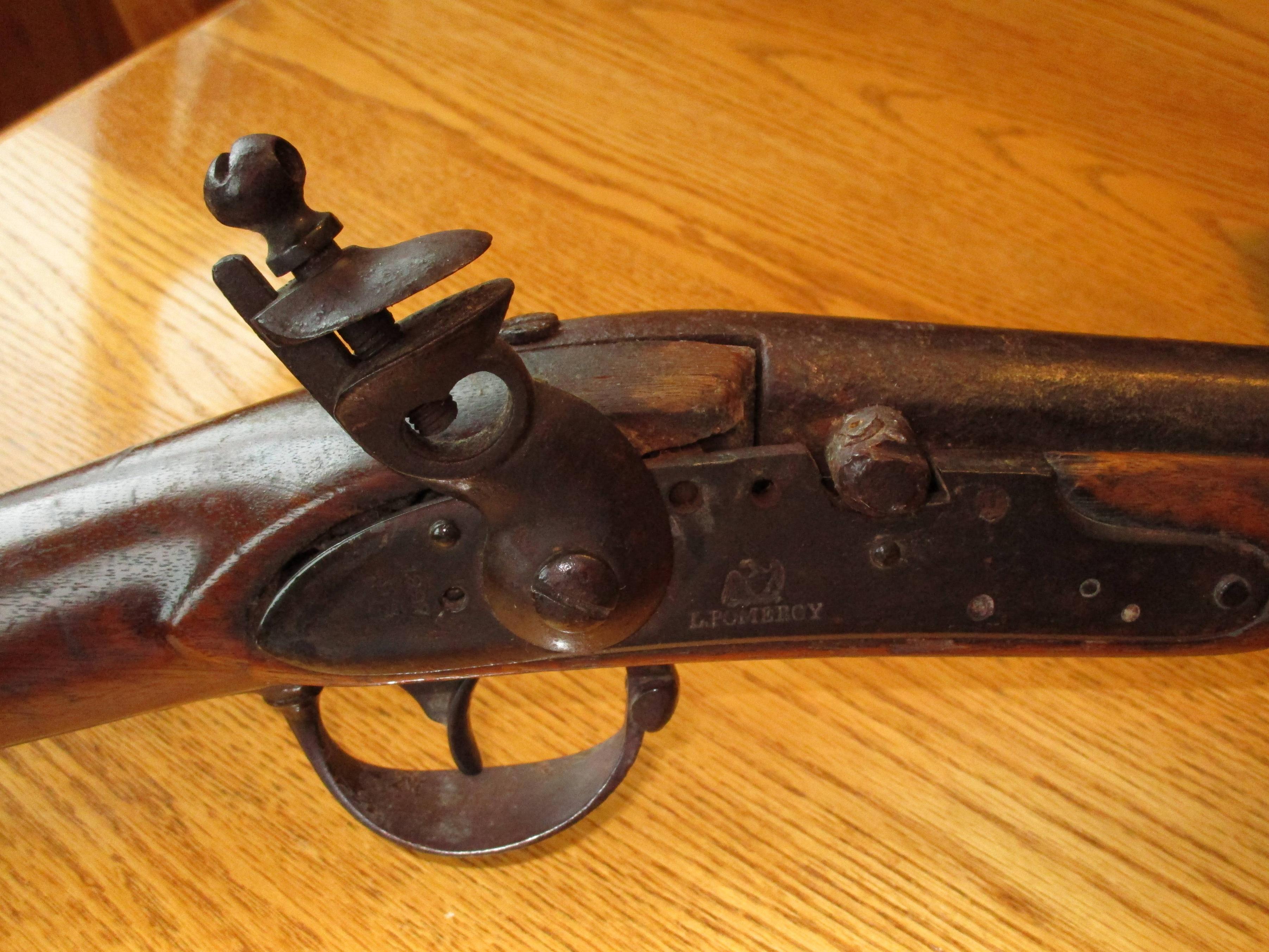
Excellent photos. In all likelihood a broken off nipple.
If so, it looks like it is hammered. That might have been us kids dry firing it
 in the 50's or 60's, when the "hammer" was still in place.
vagrantviking
CGN Ultra frequent flyer
- Location
- Southern Alberta
Really looks like a mashed nipple to me too.
Very nice to have that kind of family history. Thanks for sharing this with us.
Very nice to have that kind of family history. Thanks for sharing this with us.

If so, it looks like it is hammered. That might have been us kids dry firing it
I was thinking exactly the same thing!

- Location
- West coast of Vancouver Island
It certainly looks like an 1816 Musket. One of about 21,000 made by Lemuel Pomeroy in Pittsfield Mass. Made from 1817-1836Looks to be a US Model 1816 (aka Model 1822) musket.
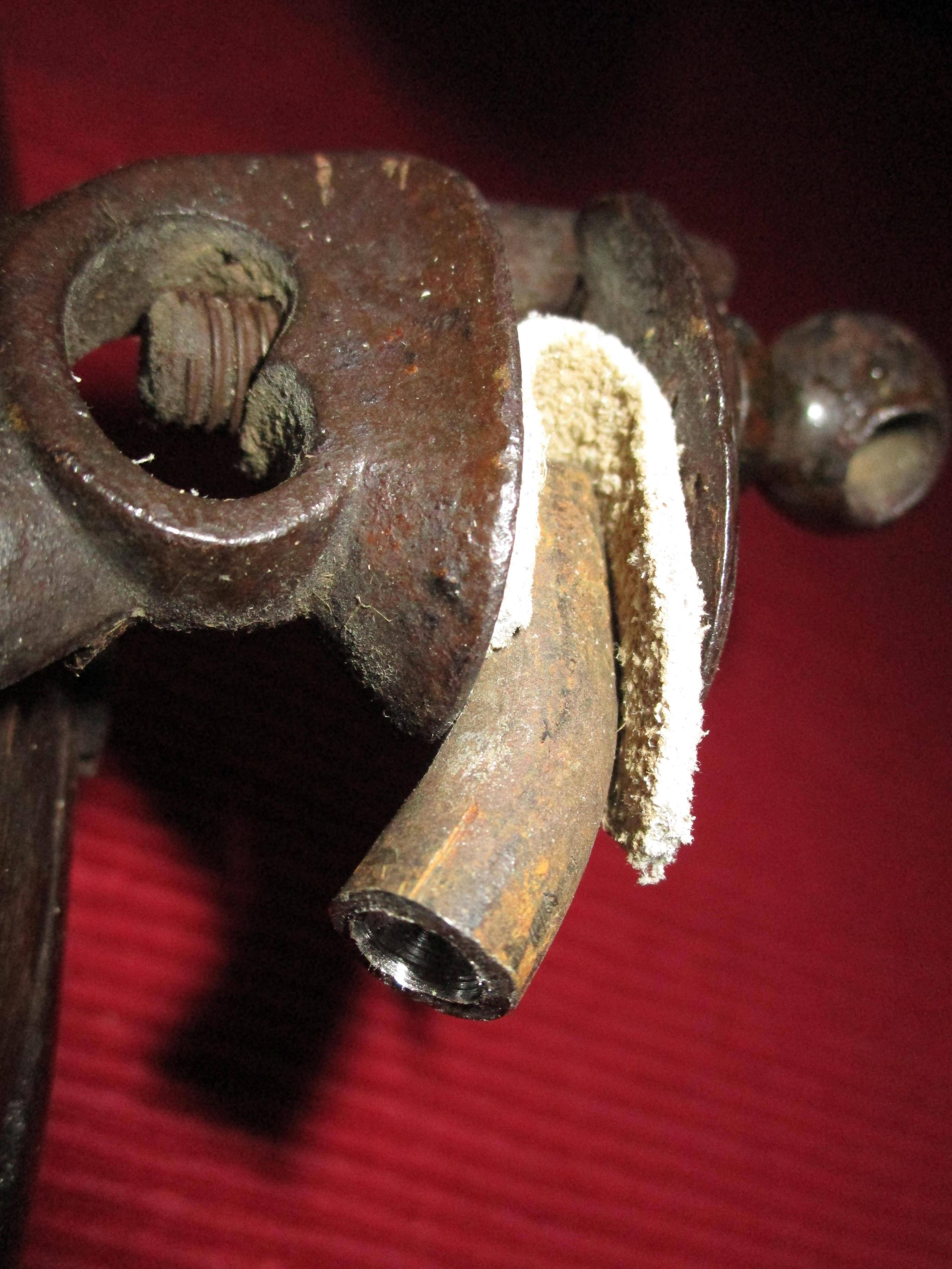
I talked to my older brother, he said that our grandfather had made the previous hammer piece, the one that I remember. Apparently it went missing before in his lifetime, so he made one after the pattern that he could remember it originally had. My brother remembered him making it, and described it as having a recessed place where it would hit the cap.
So, having nothing better to do, I made another replacement hammer as I remember seeing it, and taking into account what my older brother said grandfather had made. I also added a small piece of leather to better hold it in place, although I don't ever remember seeing one there over the years.
Now I have to rust it some. Not sure how to do that. Salt water maybe?

Also my brother said that our grandfather could remember the last time the gun was fired. Since grandfather was born in 1900 (100 years after great great great grandfather was born), I would think that the last time the gun was fired would be around 1910 -1925. The last time it was fired, grandfather said it was tied to a tree, and fired with a string, so even then they were obviously a little nervous about firing it.
After doing a little more research online, it looks to me from pictures that all the conversions to caplock, as most were, were done by gunsmiths for use in the wars in the US, and included the replacement of the cocking piece with one that doesn't hold a flint. This obviously makes sense. So I am guessing from that, that this one was not done professionally, and further that this gun was never used in the civil war. That would seem to indicate it was rejected as unsuitable, and sold off. Perhaps then, this gun came into my great great great grandfathers possession prior to the civil war. I have no idea what he used it for... hunting? shooting bothersome skunks or coons?
So, having nothing better to do, I made another replacement hammer as I remember seeing it, and taking into account what my older brother said grandfather had made. I also added a small piece of leather to better hold it in place, although I don't ever remember seeing one there over the years.
Now I have to rust it some. Not sure how to do that. Salt water maybe?
Also my brother said that our grandfather could remember the last time the gun was fired. Since grandfather was born in 1900 (100 years after great great great grandfather was born), I would think that the last time the gun was fired would be around 1910 -1925. The last time it was fired, grandfather said it was tied to a tree, and fired with a string, so even then they were obviously a little nervous about firing it.
After doing a little more research online, it looks to me from pictures that all the conversions to caplock, as most were, were done by gunsmiths for use in the wars in the US, and included the replacement of the cocking piece with one that doesn't hold a flint. This obviously makes sense. So I am guessing from that, that this one was not done professionally, and further that this gun was never used in the civil war. That would seem to indicate it was rejected as unsuitable, and sold off. Perhaps then, this gun came into my great great great grandfathers possession prior to the civil war. I have no idea what he used it for... hunting? shooting bothersome skunks or coons?
Last edited:
- Location
- West coast of Vancouver Island
Model 1816 muskets were standard issue during the Mexican War, and were used early in the Civil War, being gradually replaced as rifled muskets became available. Most had been arsenal converted to cap, although some flint guns were still in use, particularly in the South, where most anything that would shoot was valuable. The most common load was "buck and ball", a cartridge with a ball and three buckshot.
I wouldn't be doing anything to the gun. You could get a percussion conversion hammer, but that isn't how your family used it. It is actually in pretty decent condition. The varnish hasn't harmed it; if anything it has preserved it.
I would not replace the nipple and try to shoot it. It would be easy enough to remove the remains of the broken nipple, freshen the threads and install a replacement, but there is no point in doing that. It is an old family gun, enjoy it as it is.
You should do everything you can to record the history of the musket.
I wouldn't be doing anything to the gun. You could get a percussion conversion hammer, but that isn't how your family used it. It is actually in pretty decent condition. The varnish hasn't harmed it; if anything it has preserved it.
I would not replace the nipple and try to shoot it. It would be easy enough to remove the remains of the broken nipple, freshen the threads and install a replacement, but there is no point in doing that. It is an old family gun, enjoy it as it is.
You should do everything you can to record the history of the musket.
Model 1816 muskets were standard issue during the Mexican War, and were used early in the Civil War, being gradually replaced as rifled muskets became available. Most had been arsenal converted to cap, although some flint guns were still in use, particularly in the South, where most anything that would shoot was valuable. The most common load was "buck and ball", a cartridge with a ball and three buckshot.
I wouldn't be doing anything to the gun. You could get a percussion conversion hammer, but that isn't how your family used it. It is actually in pretty decent condition. The varnish hasn't harmed it; if anything it has preserved it.
I would not replace the nipple and try to shoot it. It would be easy enough to remove the remains of the broken nipple, freshen the threads and install a replacement, but there is no point in doing that. It is an old family gun, enjoy it as it is.
You should do everything you can to record the history of the musket.
I'm new to researching this, and am of course mostly guessing, but I am thinking that this gun wouldn't make it all the way south to the Mexican war, then all the way back to NB. I am open to any thoughts or corrections about that.
As to the civil war, I was just picking the odds, as it seems from what I read, most of the model 1816 guns were converted to percussion, with rifling added, if the gun passed for those changes. I guess its possible this was used as a flintlock, then later sold and ended up in the family here, where it was later converted to cap lock. However, given that he was born in 1800, came to NB from Ireland about 1820 (another interesting story), and died in 1884, it would seem that he would be getting older for purchasing this firearm at the time after the civil war. By then his family was grown and having their own kids, and the farm was divided between his 2 sons, and he was living with one of them. So it would seem that the gun would have been purchased by one of the sons by that time, yet the family history is quite clear it was his. Admittedly, its hard to reconstruct history (but fun trying).
I have no intentions of changing anything on the gun. Adding the hammer piece of course doesn't change anything. Even what we've determined to be a hammered nipple is part of its history, and I wouldn't touch it, though like you say it wouldn't be that difficult to chase new threads.
As to shooting it, I value my fingers too much. That's why I was thinking of buying the reproduction gun as I mentioned in the OP, so I could experience shooting what he shot maybe as much as 175 years ago.
I am basing the 175 years on what mooncoon said, that is percussion caps came into use about 1830. But given this one was made in 1827, I don't think he would or could have acquired it that early. I guess I really don't know when he got it. Maybe sometime between 1840 and 1870? Maybe he used it as a flintlock for a while??
Last edited:
If you go to Marstar's site at the top of the page, you will see that they have 2 M1816 reproductions - flintlock, and as converted by Colt.
There were a couple of other patterns of military conversions - a bolster could be brazed to the barrel, or the barrel breech would be upset, and a nipple seat forged in place. These used a rather offset hammer.
There is no way of knowing when the gun was converted to percussion. The simplicity of the conversion on yours suggests that it was not done by a gunsmith, more likely a home handyman type.
There were a couple of other patterns of military conversions - a bolster could be brazed to the barrel, or the barrel breech would be upset, and a nipple seat forged in place. These used a rather offset hammer.
There is no way of knowing when the gun was converted to percussion. The simplicity of the conversion on yours suggests that it was not done by a gunsmith, more likely a home handyman type.

The crudely flattened part is called a drum and was a common conversion from flintlock to percussion. I don't think that percussion caps became common until 1830 or a bit later, so the conversion was probably done then. My guess is that it was not a military conversion and done at some time after its military service. By the 1830s, percussion caps as we know them today, had become standard in the percussion system having evolved from powder then pellets and tubes. While paper tape caps were used in some military rifles in the 1850s, a gun using them would have had a piece for holding and feeding them to the nipple.
cheers mooncoon


Would that be the Maynard tape primer system?
There is no way of knowing when the gun was converted to percussion. The simplicity of the conversion on yours suggests that it was not done by a gunsmith, more likely a home handyman type.
I thought about that as well, that is, the conversion to caplock could have been done even after his death, when it came into possession of his son. That would put the conversion time into the later 1800's.
My older brother also mentioned that grandfather remembers when the bayonet was kicking around the farm. He said grandfather described it as a 3-sided thing, not a knife. I don't ever remember seeing it, though as a kid I probably wouldn't recognize it for what it was unless it had been attached. It would be nice to find an older one as a replacement, but I suspect the chances of that would be pretty remote.
There shouldn't be any problem finding a M1816 bayonet - they did make a lot of them. Price might be an issue on the US collectors' market.
Wow. I did a quick search and found one that had been for sale for $750 US. With the difference in the dollar right now, even the calculator shuddered at the thoughts of it. I tried running that by finance minister. Well she just laughed and said "Forget it".
So, Loyalist has them new on their site for $49 US. I guess I could bury it in the back yard for a couple months, and save a bit.
... I tried running that by finance minister. Well she just laughed and said "Forget it". ...
As Kipling nearly wrote, "You're a braver man than I am, Gunga Din". Even in the good old days of the loonie being at par, $750 isn't for the likes of us mere mortals.
I am wondering about this loss of wood around the area behind the cocking piece. The wood seems to have a lot of deterioration as compared to the rest of the stock. I suppose it could just be a softer area of the tree, maybe getting into the area of the sapwood, and therefore more susceptible to rot. Or would it have anything to do with some overly zealous loading of the flash pan when it was in it's flintlock configuration?
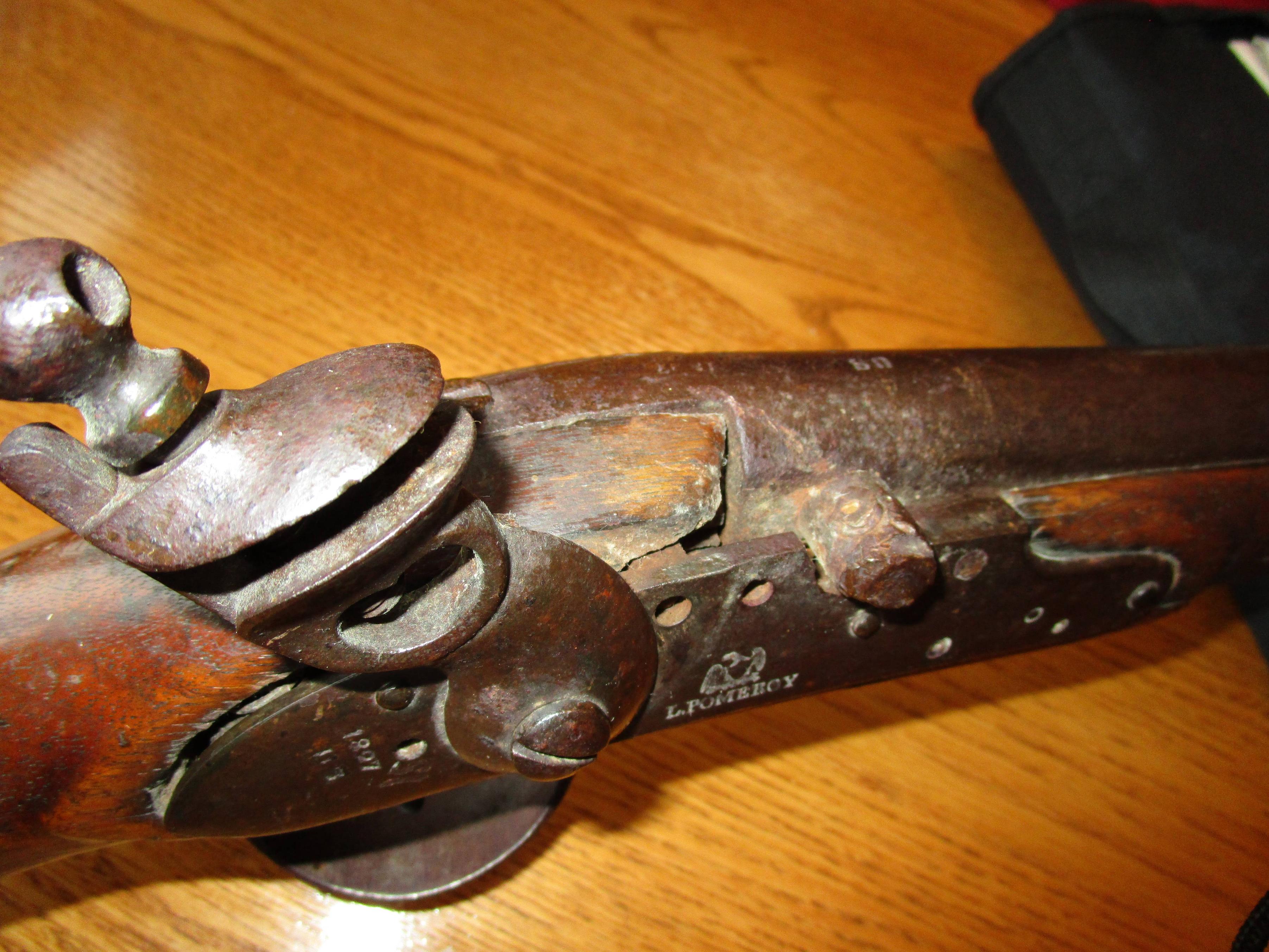
Most likely from cap flash. Note that the lock is not completely seated. This makes it look even worse.
Incidentally, the M1816 is the first US musket made with interchangeable parts. The stocks were carved on the Blanchard copying lathe. They could not hold tolerances for lock inletting, so the lock for that stock was used as the pattern for the inletting machine.
The barrels are not round at the breech - slightly oval, with the sides flattened. Barrel profiling, including the oval was done automatically by a machine.
US service arms had odd, non-standard threads. Actually, they were standard, but because the muskets were copies of French patterns, the threads were European.
Incidentally, the M1816 is the first US musket made with interchangeable parts. The stocks were carved on the Blanchard copying lathe. They could not hold tolerances for lock inletting, so the lock for that stock was used as the pattern for the inletting machine.
The barrels are not round at the breech - slightly oval, with the sides flattened. Barrel profiling, including the oval was done automatically by a machine.
US service arms had odd, non-standard threads. Actually, they were standard, but because the muskets were copies of French patterns, the threads were European.























