I agree with you but I made a mistake in ordering a rifle length gas system for this caliber which is causing cycling inconsistencies with some powders. I have an ARP 16" Mid gas barrel that has flawless cycling but isn't as fast and accurate as the JC barrel. Next one will have the Mid profile for sure.













































You are using an out of date browser. It may not display this or other websites correctly.
You should upgrade or use an alternative browser.
You should upgrade or use an alternative browser.
DI Precision
- Thread starter redshooter
- Start date

redshooter
CGN Ultra frequent flyer
- Location
- Central Ontario
What about projectiles? Have any of you tried those 55gr hdy sp you can buy in bulk? I've had really good results with 55gr V-Max and 75gr hpbt's from Hornady, also 69/77gr SMK's. I'd prefer the Sierra's but Hornady = more shooting so that's what I buy. Anything else priced like bulk Hornady's with similar results?
...I think Sqr might be getting close to that point.
Believe me if my wife only knew it would be at that point. The one positive thing about trying many AR pieces is they can all be resold.
Mystic Precision
CGN Ultra frequent flyer
- Location
- Summerland, BC
What about projectiles? Have any of you tried those 55gr hdy sp you can buy in bulk? I've had really good results with 55gr V-Max and 75gr hpbt's from Hornady, also 69/77gr SMK's. I'd prefer the Sierra's but Hornady = more shooting so that's what I buy. Anything else priced like bulk Hornady's with similar results?
Why I am currently testing the Noslers RDF's. They are priced very well for a match bullet and if they fly as good as they look, definitely a good investment. Initial testing was very promising.
My accuracy testing to date has shown Berger over Sierra over Hrn in my barrel. Another barrel may have different preferences.
Unfortunately, given the wild variations in barrel/chamber specs... there really is only one way to find out what will work.
Jerry

Interesting thread. Jerry, it sounds like your build only used a quality barrel and little else? Did you do any work to the upper (true the face)? What chamber? Still using the Norc BCG? Stock trigger?
I've always wanted a precision AR but the costs always seemed prohibitive. If I could get results like that and only have to invest in quality barrel and free float tube then that changes things considerably.
I've always wanted a precision AR but the costs always seemed prohibitive. If I could get results like that and only have to invest in quality barrel and free float tube then that changes things considerably.
redshooter
CGN Ultra frequent flyer
- Location
- Central Ontario
I bought a McGowen Pre-fit (savage small shank) off Jerry a while back. It was a nice tube, good price too (compared to the other match grade barrels).
Can anyone recommend a single chamber brake? Something like the AGL but priced like the NEA. I'm working on the assumption that something of similar mass to the A2 flash hider is less likely to disturb the status quo.
Can anyone recommend a single chamber brake? Something like the AGL but priced like the NEA. I'm working on the assumption that something of similar mass to the A2 flash hider is less likely to disturb the status quo.

Yes the cam pin is over the top but some brands have demensions that are slightly different so I tried them to see if the locking action could be made smoother.
That cam pin IS important IF it doesn't fit your receiver and rubs and drags in an inconsistent manner.
The cam pin should not touch the receiver. The only part in the bolt carrier group that (should) interacts with the receiver is the carrier.
Experiments were conducted with mated carriers and modified or machined uppers to reduce slop and 'tighten' things with the thinking that if it has tighter tolerances accuracy goes up, (lots of bolt gun ideology tried too) - and all found to not matter.
Because the bolt essentially 'floats', the slop in the carrier/receiver allows the bolt to self center with the chamber on lockup.
You want that carrier to have play with the receiver, and if your cam pin is interacting with the receiver it is likely chewing it up.
Iirc that testing was conducted by a number of outfits concurrently, - both military and civilian, and Derrick Martin from Accuracy Speaks talks about it in Zediker's book, 'The Competitive AR-15'.

The cam pin should not touch the receiver. The only part in the bolt carrier group that (should) interacts with the receiver is the carrier.
Experiments were conducted with mated carriers and modified or machined uppers to reduce slop and 'tighten' things with the thinking that if it has tighter tolerances accuracy goes up, (lots of bolt gun ideology tried too) - and all found to not matter.
Because the bolt essentially 'floats', the slop in the carrier/receiver allows the bolt to self center with the chamber on lockup.
You want that carrier to have play with the receiver, and if your cam pin is interacting with the receiver it is likely chewing it up.
Iirc that testing was conducted by a number of outfits concurrently, - both military and civilian, and Derrick Martin from Accuracy Speaks talks about it in Zediker's book, 'The Competitive AR-15'.
been saying that for years, but nobody seems to care... All they want to do is find ways to make things tighter, from carrier fit with receiver to both receivers fitting together
Mystic Precision
CGN Ultra frequent flyer
- Location
- Summerland, BC
The cam pin should not touch the receiver. The only part in the bolt carrier group that (should) interacts with the receiver is the carrier.
Experiments were conducted with mated carriers and modified or machined uppers to reduce slop and 'tighten' things with the thinking that if it has tighter tolerances accuracy goes up, (lots of bolt gun ideology tried too) - and all found to not matter.
Because the bolt essentially 'floats', the slop in the carrier/receiver allows the bolt to self center with the chamber on lockup.
You want that carrier to have play with the receiver, and if your cam pin is interacting with the receiver it is likely chewing it up.
Iirc that testing was conducted by a number of outfits concurrently, - both military and civilian, and Derrick Martin from Accuracy Speaks talks about it in Zediker's book, 'The Competitive AR-15'.
I have been playing with floating bolt head bolt action rifles for many years. The AR works on a similar premise. I don't see any benefit to a tight fitting BCG BUT if something is not fit properly and dragging in the receiver then that is bad. You aren't going to make it "better" but you can make operation worst. That's it.
Jerry
Mystic Precision
CGN Ultra frequent flyer
- Location
- Summerland, BC
Interesting thread. Jerry, it sounds like your build only used a quality barrel and little else? Did you do any work to the upper (true the face)? What chamber? Still using the Norc BCG? Stock trigger?
I've always wanted a precision AR but the costs always seemed prohibitive. If I could get results like that and only have to invest in quality barrel and free float tube then that changes things considerably.
In my rifle, the lower, upper, trigger parts (new springs), BCG/Bolt, Buffer Tube are all original. New barrel, gas block, gas tube (was a carbine on the Norc), HG, muzzle brake, furniture. New buffer, buffer spring
The barrel is set up for max accuracy NOT going to war so you will use reloads and no NATO spec ammo. But beyond that, just another AR.
Like many other precision rifle builds, many add fancy spec parts... they may not necessarily know why they are adding it nor what that part actually does. I just focused on the areas I felt mattered and left alone everything else. Why I get a giggle when some really expensive "custom" AR's don't perform.
Biggest area is how well you can make your ammo. AR's, like all semis, are super sensitive to powder charge tuning... in the 223 case, 0.1gr matters. I load for it like I do my FTR rifles and it seems to like it.
Jerry

The cam pin should not touch the receiver. The only part in the bolt carrier group that (should) interacts with the receiver is the carrier.
Experiments were conducted with mated carriers and modified or machined uppers to reduce slop and 'tighten' things with the thinking that if it has tighter tolerances accuracy goes up, (lots of bolt gun ideology tried too) - and all found to not matter.
Because the bolt essentially 'floats', the slop in the carrier/receiver allows the bolt to self center with the chamber on lockup.
You want that carrier to have play with the receiver, and if your cam pin is interacting with the receiver it is likely chewing it up.
Iirc that testing was conducted by a number of outfits concurrently, - both military and civilian, and Derrick Martin from Accuracy Speaks talks about it in Zediker's book, 'The Competitive AR-15'.
This is actually completely untrue.
The bolt tries to rotate to lock for the entire forward stroke, particularly when the bolt meets the resistance of a cartridge in the magazine. The only thing that prevents premature locking is the inside of the upper receiver. There is a pocket machined in the upper toward the front left side to provide clearance for for the cam pin to rotate on locking. The cam pin parking space is located to prevent locking until the bolt is fully forward. This also prevents the firing pin from protruding until fully forward and locked.
The carrier does not prevent premature locking - the receiver does. If the carrier blocked the cam pin, the cam pin could never lock - try it - take out your BCG, put it in the locked position and try to install it. Stoner designed it this way.
Every AR has wear marks from the cam pin along the upper left side and wear at the corner of the cam pin pocket. Take a look inside. The only time this would ever destroy a receiver is if the cam pin was burred on the left edge. The cam pin is designed to touch the upper receiver.
This wear groove is on the armourer checklist. The only upper I ever failed for this wear had a piston kit installed, that opened too fast and caused the cam pin to slam on opening.
You are right though, the carrier has nothing to do with accuracy.
This is actually completely untrue.
The bolt tries to rotate to lock for the entire forward stroke, particularly when the bolt meets the resistance of a cartridge in the magazine. The only thing that prevents premature locking is the inside of the upper receiver. There is a pocket machined in the upper toward the front left side to provide clearance for for the cam pin to rotate on locking. The cam pin parking space is located to prevent locking until the bolt is fully forward. This also prevents the firing pin from protruding until fully forward and locked.
The carrier does not prevent premature locking - the receiver does. If the carrier blocked the cam pin, the cam pin could never lock - try it - take out your BCG, put it in the locked position and try to install it. Stoner designed it this way.
Every AR has wear marks from the cam pin along the upper left side and wear at the corner of the cam pin pocket. Take a look inside. The only time this would ever destroy a receiver is if the cam pin was burred on the left edge. The cam pin is designed to touch the upper receiver.
This wear groove is on the armourer checklist. The only upper I ever failed for this wear had a piston kit installed, that opened too fast and caused the cam pin to slam on opening.
You are right though, the carrier has nothing to do with accuracy.
Correct the cam pin slides down the left side of the receiver by the resistance created from stripping a cartridge from the magazine. With the variation in pin demensions from various MOE's it became apparent on how it can affect the cycling which lead me to my optimization trials.
Last edited:
Ok the part about the cam pin is way off Matt. My post was poorly worded but directed at Mystic's post and is in reference to accuracy.
While the cam pin certainly touches the receiver, the parallel force applied to the left side of the receiver doesn't under normal operation, create binding nor does it come into play with respect to providing adverse or positive affects to accuracy of the rifle.
While the cam pin certainly touches the receiver, the parallel force applied to the left side of the receiver doesn't under normal operation, create binding nor does it come into play with respect to providing adverse or positive affects to accuracy of the rifle.
redshooter
CGN Ultra frequent flyer
- Location
- Central Ontario
 Now that we have established that some of us believe in voodoo can we put that behind us?
Brakes...not to improve the rifle but me. Most of the time the rifle settles back in the rest the same way, but not always. I can only conclude I'm doing something different, but what? I recently wondered if it will be easier to figure out what I might be doing if I can reduce the recoil to the point where it moves very little. Yes I should get some instruction, but it's going to have to wait. A single chamber brake seems like the answer. As I said in an earlier post, keeping the mass down to something close to the A2 flash hider should upset things as little as possible.
Remember two parts to this, Rifle, and Monkey. I probably need more work than the rifle.
Also no comment on the 55gr Hdy sp...anyone? A few sponsors sell them so someone must have tried them. I read a claim somewhere that they have been used by benchrest shooters. I doubt that to some degree, but if they can produce good groups why not? The furthest I can shoot locally is 100 yds, so I don't need a BT. As I shoot at Pet occasionally I'll continue with heavy match bullets as well, but the bulk sp's are dirt cheap and if that soft point doesn't cause any grief why not shoot them at 100?
Last edited:
Alternatively, you can just suck it up and put down the cash for a Les Baer AR.
That's boring though.
Way more fun to source the parts and put it together yourself then see it make tiny groups.
I've always wanted a precision AR but the costs always seemed prohibitive. If I could get results like that and only have to invest in quality barrel and free float tube then that changes things considerably.
Buy any quality direct impingement AR to get started then when you've had a little fun swap out the barrel for a barrel from Jerry and buy a free float handguard then start doing load development. As time passes you'll replace the grip once or twice or more and the stock will change a couple times, trigger will eventually get replaced then you'll start buying more parts and you'll build another upper and then another complete rifle and one day you'll have six or more and realize there no such thing as AR rehab.
redshooter
CGN Ultra frequent flyer
- Location
- Central Ontario
Well this has been pretty disappointing...thanks to those that have contributed, and thank you for coming out to the two utterly useless replies.
 beltfed you really have to work on your tact, not that I have a problem with blunt, in person I'm blunt to the point that no one likes me...I suspect I'd get people calling me a certain orifice all the time, but for the fact that I'm an angry ex-soldier, probably keeps the more timid folks in check. Angry Ex-Soldier...that has a nice ring, wonder if Greentips would let me change my name?
I'll see if I can spark a bit more interest. I think we all agree it's harder to sort out problems with a Semi. I don't have the experience to look at a 5 shot group and "see" a solution to a consistent pattern. For example the S&W M&P I had would put 5/6 of 10 shots into 0.75" consistently, but the overall group would measure 3". I would immediately assume it's my shooting, and likely is, but I'm sure there are other things that could cause it, inconsistent concentricity for example, or I'm somehow introducing some error to my scale.
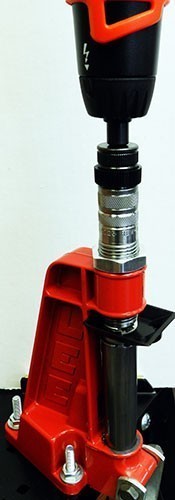
Crimping has been mentioned and along with that is a consistent case length. Trimming can be a real chore and I've found an inexpensive way to do it quickly and with little effort. I've been using a Lee Deluxe Power Trim. That and 2 rechargeable screwdrivers that I got at crappy tire for $10 on sale. Is it perfect, no, but it works as good as my Lyman Universal at a fraction of the price. leeprecision.com/deluxe-power-quick-trim.html
For those that feel the need to make a declaration that something will have NO effect is flat out ignoring what we know about Material Physics. Telling me it's not worth the effort is more correct.
beltfed you really have to work on your tact, not that I have a problem with blunt, in person I'm blunt to the point that no one likes me...I suspect I'd get people calling me a certain orifice all the time, but for the fact that I'm an angry ex-soldier, probably keeps the more timid folks in check. Angry Ex-Soldier...that has a nice ring, wonder if Greentips would let me change my name?I'll see if I can spark a bit more interest. I think we all agree it's harder to sort out problems with a Semi. I don't have the experience to look at a 5 shot group and "see" a solution to a consistent pattern. For example the S&W M&P I had would put 5/6 of 10 shots into 0.75" consistently, but the overall group would measure 3". I would immediately assume it's my shooting, and likely is, but I'm sure there are other things that could cause it, inconsistent concentricity for example, or I'm somehow introducing some error to my scale.
Crimping has been mentioned and along with that is a consistent case length. Trimming can be a real chore and I've found an inexpensive way to do it quickly and with little effort. I've been using a Lee Deluxe Power Trim. That and 2 rechargeable screwdrivers that I got at crappy tire for $10 on sale. Is it perfect, no, but it works as good as my Lyman Universal at a fraction of the price. leeprecision.com/deluxe-power-quick-trim.html
For those that feel the need to make a declaration that something will have NO effect is flat out ignoring what we know about Material Physics. Telling me it's not worth the effort is more correct.
Mystic Precision said:AT some point you hit the mechanical limits of the barrel and set up. An AR is not likely to average sub 1/2MOA regardless of what we do. precious few will average 2/3 min. But it would be great if we can figure out a process that does....
Mystic Precision
CGN Ultra frequent flyer
- Location
- Summerland, BC
Brakes...not to improve the rifle but me. Most of the time the rifle settles back in the rest the same way, but not always. I can only conclude I'm doing something different, but what? I recently wondered if it will be easier to figure out what I might be doing if I can reduce the recoil to the point where it moves very little. Yes I should get some instruction, but it's going to have to wait. A single chamber brake seems like the answer. As I said in an earlier post, keeping the mass down to something close to the A2 flash hider should upset things as little as possible.
Remember two parts to this, Rifle, and Monkey. I probably need more work than the rifle.
Also no comment on the 55gr Hdy sp...anyone? A few sponsors sell them so someone must have tried them. I read a claim somewhere that they have been used by benchrest shooters. I doubt that to some degree, but if they can produce good groups why not? The furthest I can shoot locally is 100 yds, so I don't need a BT. As I shoot at Pet occasionally I'll continue with heavy match bullets as well, but the bulk sp's are dirt cheap and if that soft point doesn't cause any grief why not shoot them at 100?
RS, the answer to the HRN bullet question is "Depends".... Accuracy from any rifle is based on these factors
Chamber - dimensions which allow a certain bullet to work... this is the esoteric world of accuracy shooting and many theories abound but the simplest answer... use the shortest throat that will allow the rifle to function. AR's are designed as fighting rifles AND their tech has evolved to be battle ready. It is this "excess" that will never let them shoot accurately as is commonly speced.
Bore quality - Air guaging to very small tolerances, quality of steel, stress relieving and other black art of the match barrel makers. Mass produced barrels just aren't held to the same precision and thus just aren't that consistent. AR's are rarely offered with true match barrels regardless of the costs. At the 2016 CMP US Nationals... 5 or the top 6 shooters ran Shilen match barrels. There is a difference and it shows on target.
Bullet quality - to answer your question directly, the Hrn varmint bullets are made to VARMINT QC. 1/2 to 2/3 min is pretty much the norm regardless of the platform used. For the shooter that is looking at cost over absolute performance, HRN is a wonderful value choice. If the goal is peak precision, you use the most mechanically perfect bullet you can launch... and these costs much more.
I am doing some R&D with a bullet maker and last time out, test groups in the 0's and 1's were achieved at 100yds from my FTR rifle. I have shot plenty of Hrns over the years, they just aren't this accurate but they are well priced and "consistent" for the needs of their target audience. Those specs are not good enough for true accurate fire.
I cannot answer the function question as I have no interest in using them in my AR but my gut tells me a properly functioning AR will not cause the bullets to hammer into the feed ramp. I feel that any rifle which causes tip damage on the bullet, it needs TLC.
Jerry
Mystic Precision
CGN Ultra frequent flyer
- Location
- Summerland, BC
Well this has been pretty disappointing...thanks to those that have contributed, and thank you for coming out to the two utterly useless replies.
I'll see if I can spark a bit more interest. I think we all agree it's harder to sort out problems with a Semi. I don't have the experience to look at a 5 shot group and "see" a solution to a consistent pattern. For example the S&W M&P I had would put 5/6 of 10 shots into 0.75" consistently, but the overall group would measure 3". I would immediately assume it's my shooting, and likely is, but I'm sure there are other things that could cause it, inconsistent concentricity for example, or I'm somehow introducing some error to my scale.
Crimping has been mentioned and along with that is a consistent case length. Trimming can be a real chore and I've found an inexpensive way to do it quickly and with little effort. I've been using a Lee Deluxe Power Trim. That and 2 rechargeable screwdrivers that I got at crappy tire for $10 on sale. Is it perfect, no, but it works as good as my Lyman Universal at a fraction of the price. leeprecision.com/deluxe-power-quick-trim.html
For those that feel the need to make a declaration that something will have NO effect is flat out ignoring what we know about Material Physics. Telling me it's not worth the effort is more correct.
RS, this is a common reality of the AR speced rifle... your situation is really no different then the vast majority of AR shooters in NA. If your AR is speced to jump out of an airplane, it will shoot like every other USGI speced rig.
Why regardless of costs, you see similar results... ON AVERAGE.... over many many AR's. Build them all the same way, why would anyone expect a different result?
Competition AR's are NOT built to USGI specs at least, I have never seen it.
IT'S NOT YOU... at least not 40 to 50% of the time as you indicated in your group. Even the most elementary shooter will eventually know when their cross hair is 2" off center. From your posts, I have to believe you would notice such an error in aiming....??????
Bad follow through can double the group size of an accurate rifle... ie take a 1/4 min rifle to 1/2 min. It will not push a 2/3 MOA rifle to 3 MOA - if you flinch that badly and no one comments about needing medical assistance, stop shooting ALONE.
What you are seeing is the same thing as a "worn out" barrel (wrt to the bullet used). Regardless of the rd count, the barrel has the same characteristics as a barrel that is worn out. In the competition world, we call that "tossing flyers" and that pipe would be coming off our rifles asap.
You can help it along by using the longest bullet you can launch. I would suggest you look at the Hrn 75gr BTHP, Sierra 77gr HPBT, Berger 73gr BT or other heavy OTM shape, and Nosler 70gr RDF
To make an AR shoot sub MOA, the specs have to be changed from a battle rifle to a self loading BOLT rifle... and then fed ammo that will allow it to work properly.
Jerry
My wife would agree with you that on occasion I too am an angry ex-army guy
But honestly, I'm quite amicable in person and the vast majority of my posts are done with zero anomosity - maybe it is my matter of fact writing style?
Anyhoo, like I've said, I'm all for testing and playing around with stuff - even if it has all been done before.
I've only tried the Sierra 63 gr. Semi point and the 65 gr. Spitzer boat tail - both soft points.
For flat based varmint bullets, I have used the Hornady 55 and 60 gr. Amax/Vmax as well as the 53 gr. HP match. From Sierra I've used the 60 gr. HP and from Berger everything that they create in .224 diameter.
The obvious problem with the soft point exposed lead bullet is the likelyhood of it getting chewed up on chambering, even if the damage is just slight scoring. It is possible too that damage isn't sustained all of the time.
You can load up some dummy rounds and feed them in the chamber a few times to see the results - but that still leaves you with the unknown from one round to the next that gets fed into the gun under shooting conditions.
I think the Hornady v/a max bought in bulk is the best value for money, but berger's an sierra's if bought in bulk on sale offer good value too.
None of the soft points offer substantial savings over a polymer tipped bullet, so unless you are desperate for bullets, I'd recommend taking a pass on them.
But honestly, I'm quite amicable in person and the vast majority of my posts are done with zero anomosity - maybe it is my matter of fact writing style?
Anyhoo, like I've said, I'm all for testing and playing around with stuff - even if it has all been done before.
Also no comment on the 55gr Hdy sp...anyone?
I've only tried the Sierra 63 gr. Semi point and the 65 gr. Spitzer boat tail - both soft points.
For flat based varmint bullets, I have used the Hornady 55 and 60 gr. Amax/Vmax as well as the 53 gr. HP match. From Sierra I've used the 60 gr. HP and from Berger everything that they create in .224 diameter.
The obvious problem with the soft point exposed lead bullet is the likelyhood of it getting chewed up on chambering, even if the damage is just slight scoring. It is possible too that damage isn't sustained all of the time.
You can load up some dummy rounds and feed them in the chamber a few times to see the results - but that still leaves you with the unknown from one round to the next that gets fed into the gun under shooting conditions.
I think the Hornady v/a max bought in bulk is the best value for money, but berger's an sierra's if bought in bulk on sale offer good value too.
None of the soft points offer substantial savings over a polymer tipped bullet, so unless you are desperate for bullets, I'd recommend taking a pass on them.






















