Need help with enfield

sookie_69

CGN Regular
Rating - 98.8%
81   1   0
Location
Okanagan
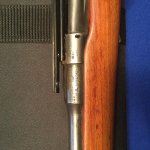
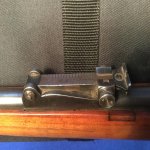
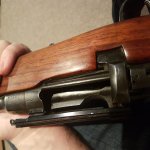
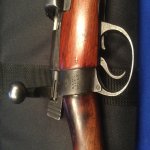
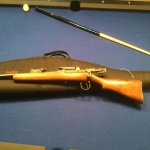
Just got this from a guy who owed me some money. Not sure if there’s anything about it that makes it special or not any help on value or exact model would be awesome. Bolt receiver and barrel all match. Thanks
F4CD56AE-A41A-41C2-8771-298C78D4F7A1.jpg

8B732623-0667-434E-8E26-8546D1DE6768.jpg

786D9580-143B-48CB-A7C6-404556767FC7.jpg

28192696-F38D-4C5F-A560-06BB4368E791.jpg
 

Attachments

  • F4CD56AE-A41A-41C2-8771-298C78D4F7A1.jpg
    F4CD56AE-A41A-41C2-8771-298C78D4F7A1.jpg
    114.7 KB · Views: 447
  • 8B732623-0667-434E-8E26-8546D1DE6768.jpg
    8B732623-0667-434E-8E26-8546D1DE6768.jpg
    81.9 KB · Views: 447
  • 786D9580-143B-48CB-A7C6-404556767FC7.jpg
    786D9580-143B-48CB-A7C6-404556767FC7.jpg
    127.5 KB · Views: 446
  • 28192696-F38D-4C5F-A560-06BB4368E791.jpg
    28192696-F38D-4C5F-A560-06BB4368E791.jpg
    137.7 KB · Views: 448
hi sookie-69, what you have is a Lee Enfield SMLE No1Mk3*. Likely the most common centrefire rifle in Canada, and not a bad gun. With a nice bore and a magazine (not sure if you have one but it is missing from the pictures), that's worth about $150 to $225. Yours has (from the looks of it) a Weaver TO-1 scope mount screwed on top of the receiver.

 
Historically, it is quite interesting.

BSA did not get a contract to make rifles again (they had produced a huge number in 1914-18) until AFTER the disastrous pull-out from Dunkirk in 1940, when the Government decided that the Army had to become a LOT bigger.... and they were about 130,000 rifles short for the men they already had...... and the Government factory was in such condition that it could not produce ANY rifles. Once the Government decided that they needed rifles, BSA charged into full production. They had a limited number of Bodies already built, but nothing like enough even to meet the existing emergency.

The first rifles they produced were very well-finished and were marked like this one. Later rifles were marked just plain B (for Birmingham) or used one of the new CODES for the BSA factory. After the Luftwaffe paid a very special visit to the factory, they got SERIOUS about local defence AND concealment of the existing factory..... and then began DECENTRALISING production. In the end, parts were produced by (literally) hundreds of small shops and only brought together for assembly. BSA erected a NEW factory at Shirley to produce the Number 4 Rifle and also provided skilled and management staff for the Government's two new factories at Fazakerley and Maltby.

Nevertheless, production of the time-tested Number 1 Mark III* continued at Small Heath until early 1943.

YOUR rifle is from the very earliest BSA World War II production..... and it shows it in the good workmanship and the full PROPER markings.

If it were in MY collection, it would be a Keeper just for its history!
 
Since it's been D&T'd I'd put a scope on it and see how it shoots, you might have a good hunting rifle on your hands. There's something right about hunting with a sporter .303.

D&T deffinately distroys any significant collector's value. Can't tell if the barrel have been cut or a new sight ramp put on?
 
Historically, it is quite interesting.

BSA did not get a contract to make rifles again (they had produced a huge number in 1914-18) until AFTER the disastrous pull-out from Dunkirk in 1940, when the Government decided that the Army had to become a LOT bigger.... and they were about 130,000 rifles short for the men they already had...... and the Government factory was in such condition that it could not produce ANY rifles. Once the Government decided that they needed rifles, BSA charged into full production. They had a limited number of Bodies already built, but nothing like enough even to meet the existing emergency.

The first rifles they produced were very well-finished and were marked like this one. Later rifles were marked just plain B (for Birmingham) or used one of the new CODES for the BSA factory. After the Luftwaffe paid a very special visit to the factory, they got SERIOUS about local defence AND concealment of the existing factory..... and then began DECENTRALISING production. In the end, parts were produced by (literally) hundreds of small shops and only brought together for assembly. BSA erected a NEW factory at Shirley to produce the Number 4 Rifle and also provided skilled and management staff for the Government's two new factories at Fazakerley and Maltby.

Nevertheless, production of the time-tested Number 1 Mark III* continued at Small Heath until early 1943.

YOUR rifle is from the very earliest BSA World War II production..... and it shows it in the good workmanship and the full PROPER markings.

If it were in MY collection, it would be a Keeper just for its history!

Thank you for your very informative post, Smellie....!
 
When doing a restoration the 6-48 screw holes are easy to remove/conceal . They can be made invisible . This could be deceitful if you are planing on reselling without informing the buyer but if done for your own pleasure will make an excellent looking refurbed to military original profile .
 
Has anyone noticed that this rifle is NOT marked as a Mark III*, but as an actual Mark III?

Originally, the Mark III* was a wartime production expedient only, the Mark III being the official standard. The Mark III was equipped with a set of Volley sights, a Magazine Cutoff and a drift-adjustable Rear Sight. The Mark III* had NONE of these in its final form. The transition took time, giving collectors a variety of transitional rifles which still pop up from time to time. Once the emergency (World War One) was over, the official pattern, being the Mark III, was resumed in the inter-War period. Cut-offs came back, then were removed again shortly before the SECOND blow-up occurred. Volley sights, no longer a necessity, remained banished, it seems.

The photos do not show if THIS rifle was slotted for a Magazine Cut-off or not, but it would not surprise me if it actually were so equipped. The 1938 contract rifles for Iraq WERE so equipped.

In passing, it is interesting to note that, but for a few very small contracts, BSA produced only two large contracts of rifles between the Wars. The first was an order for 10,000 rifles for the King of Siam, marked specially to his Wild Tiger village defense scheme. They were built to Mark III* standard. THIS rifle seems built to the Mark III* standard but is marked as a Mark III. The second contact was 1936-38, 22,000 rifles for Iraq. That was a bit over a month's work...... in 21 years.

Between the Wars, BSA kept the entire Small Heath factory inactive but capable of resuming production on absolute-minimal notice. A few rifles were built for the Trade (one of which is at Starbuck, Manitoba and still turns out respectable targets despite years of Match use) but that required very few rifles. The British Government gave away SMLEs over a quarter of the globe and succeeded in depleting their inventory quite spectacularly. When Hitler came to power, British politicians still were in their "Let's throw away our guns to assure that nice Mister Hitler that we are NOT opposed to him!" phase. Hitler kept building spiffy-new Kar 98ks while Britain was busily destroying rebuilt WW1 rifles with brand-new barrels, crushing the actions and running a hacksaw cut through the chambers. The result was a huge pile of deactivated drill rifles.... and another pile of 98s in Herr Hitler's armoury. BSA kept a careful eye on this, accurately foreseeing that the day was drawing near when they WOULD be required, even though the Government kept saying, "No!"

This situation only got worse as the Government plant at Enfield continued their experiments in 1930/31, ADOPTING first the Rifle Number 1 Mark VI and then changing the screw-threads and producing the first Rifle Number 4 in 1931. The problem at Enfield was the CONVERSION of the factory from Number 1 to Number 4 production. MANY new machine-tools had to be purchased..... and money was tight. In fact, money was much TOO tight, with the result that Enfield had stripped too much of the Long Room to resume production of the Number 1...... and still did not have enough tooling to build the Number 4. When WAR was declared, the Government factory was not equipped or able to produce ANY complete rifle!

BSA was not able to produce the Number 4 Rifle because the Government had refused to give them a proper set of blueprints, but they DID have a completely tooled-up plant for the old Number 1 Rifle..... which the Government didn't want. This plant had been maintained in key-start condition in ALL respects: machines greased, tooling in place, jigs to hand...... and CRITICAL STAFF TRAINED. Any man who had a critical job in the rifle factory had been kept on in peacetime. This included barrel-straighteners, rifling specialists, some fitters, men who could make that awful multi-start thread on the Safety, men who could mill that God-awful dog-leg passage and recess for the BOTTOM BOLT LUG, men like that. As a man approached retirement, his part of the plant would be re-started for a short time in order that a couple of younger men could be TRAINED to perform those critical operations. The result of this program was a completely-trained staff which was ready to build rifles...... and a small but considerable heap of brand-new PARTS.

When the War finally started, BSA was told that NO rifles would be needed, but that they MIGHT build 100 motorcycles for the Army..... on a VERY VERY short timeline. The 100 cycles were ready, built, crated and shipped by the time the extremely-short deadline came...... and that included making patterns for special castings on which the Government insisted! But rifles? No, we don;t need any rifles. We have enough.

And THEN came the disaster of Dunkirk, with the small Army 130,000 rifles short, trying to expand exponentially with NO rifles..... and the Free French needing to be equipped 100%. BSA, likely more than any other single private enterprise, pulled Britain's cakes out of the fire during World War Two. Small Heath built the old Number 1 until 1943. Shirley was constructed, equipped, trained and built Number 4s. BSA manpower served in the new Government factories at Fazakerley and Maltby. BSA built Polstens, Oerlikons, Hispanos, Boys' Rifles, Stens, Besas, Besals and almost anything else that went "Bang!" and did a huge amount of experimental work as well. When the War finally ended, Britain was broke, had been for 4 years.... and BSA helped the transition to the peace, transforming tens of thousands of surplus rifles into fine sporters, bringing foreign exchange to support a Pound Sterling which had had NOTHING to back it since 1941..... and bringing Britain back into the world marketplace. Governments, one by one, increased restrictions on firearms in Britain itself..... and the export market became saturated. That was the FIRST disaster. A SECOND disaster occurred in the 1960s as a new generation of Japanese motorcycles began to dominate that market, stealing designs, patents, paint jobs, even advertising layouts from British companies. In 1973, BSA asked the Government for a 1-year LOAN of 1 million Pounds in order to re-tool a part of the factory.

The Government let them go broke.

BSA today is owned by Manganese Bronze..... which is owned by CHINA.

"Sic transit gloria Mundi."
 
Last edited:
Has anyone noticed that this rifle is NOT marked as a Mark III*, but as an actual Mark III?

Originally, the Mark III* was a wartime production expedient only, the Mark III being the official standard. The Mark III was equipped with a set of Volley sights, a Magazine Cutoff and a drift-adjustable Rear Sight. The Mark III* had NONE of these in its final form. The transition took time, giving collectors a variety of transitional rifles which still pop up from time to time. Once the emergency (World War One) was over, the official pattern, being the Mark III, was resumed in the inter-War period. Cut-offs came back, then were removed again shortly before the SECOND blow-up occurred. Volley sights, no longer a necessity, remained banished, it seems.

The photos do not show if THIS rifle was slotted for a Magazine Cut-off or not, but it would not surprise me if it actually were so equipped. The 1938 contract rifles for Iraq WERE so equipped.

In passing, it is interesting to note that, but for a few very small contracts, BSA produced only two large contracts of rifles between the Wars. The first was an order for 10,000 rifles for the King of Siam, marked specially to his Wild Tiger village defense scheme. They were built to Mark III* standard. THIS rifle seems built to the Mark III* standard but is marked as a Mark III. The second contact was 1936-38, 22,000 rifles for Iraq. That was a bit over a month's work...... in 21 years.

Between the Wars, BSA kept the entire Small Heath factory inactive but capable of resuming production on absolute-minimal notice. A few rifles were built for the Trade (one of which is at Starbuck, Manitoba and still turns out respectable targets despite years of Match use) but that required very few rifles. The British Government gave away SMLEs over a quarter of the globe and succeeded in depleting their inventory quite spectacularly. When Hitler came to power, British politicians still were in their "Let's throw away our guns to assure that nice Mister Hitler that we are NOT opposed to him!" phase. Hitler kept building spiffy-new Kar 98ks while Britain was busily destroying rebuilt WW1 rifles with brand-new barrels, crushing the actions and running a hacksaw cut through the chambers. The result was a huge pile of deactivated drill rifles.... and another pile of 98s in Herr Hitler's armoury. BSA kept a careful eye on this, accurately foreseeing that the day was drawing near when they WOULD be required, even though the Government kept saying, "No!"

This situation only got worse as the Government plant at Enfield continued their experiments in 1930/31, ADOPTING first the Rifle Number 1 Mark VI and then changing the screw-threads and producing the first Rifle Number 4 in 1931. The problem at Enfield was the CONVERSION of the factory from Number 1 to Number 4 production. MANY new machine-tools had to be purchased..... and money was tight. In fact, money was much TOO tight, with the result that Enfield had stripped too much of the Long Room to resume production of the Number 1...... and still did not have enough tooling to build the Number 4. When WAR was declared, the Government factory was not equipped or able to produce ANY complete rifle!

BSA was not able to produce the Number 4 Rifle because the Government had refused to give them a proper set of blueprints, but they DID have a completely tooled-up plant for the old Number 1 Rifle..... which the Government didn't want. This plant had been maintained in key-start condition in ALL respects: machines greased, tooling in place, jigs to hand...... and CRITICAL STAFF TRAINED. Any man who had a critical job in the rifle factory had been kept on in peacetime. This included barrel-straighteners, rifling specialists, some fitters, men who could make that awful multi-start thread on the Safety, men who could mill that God-awful dog-leg passage and recess for the BOTTOM BOLT LUG, men like that. As a man approached retirement, his part of the plant would be re-started for a short time in order that a couple of younger men could be TRAINED to perform those critical operations. The result of this program was a completely-trained staff which was ready to build rifles...... and a small but considerable heap of brand-new PARTS.

When the War finally started, BSA was told that NO rifles would be needed, but that they MIGHT build 100 motorcycles for the Army..... on a VERY VERY short timeline. The 100 cycles were ready, built, crated and shipped by the time the extremely-short deadline came...... and that included making patterns for special castings on which the Government insisted! But rifles? No, we don;t need any rifles. We have enough.

And THEN came the disaster of Dunkirk, with the small Army 130,000 rifles short, trying to expand exponentially with NO rifles..... and the Free French needing to be equipped 100%. BSA, likely more than any other single private enterprise, pulled Britain's cakes out of the fire during World War Two. Small Heath built the old Number 1 until 1943. Shirley was constructed, equipped, trained and built Number 4s. BSA manpower served in the new Government factories at Fazakerley and Maltby. BSA built Polstens, Oerlikons, Hispanos, Boys' Rifles, Stens, Besas, Besals and almost anything else that went "Bang!" and did a huge amount of experimental work as well. When the War finally ended, Britain was broke, had been for 4 years.... and BSA helped the transition to the peace, transforming tens of thousands of surplus rifles into fine sporters, bringing foreign exchange to support a Pound Sterling which had had NOTHING to back it since 1941..... and bringing Britain back into the world marketplace. Governments, one by one, increased restrictions on firearms in Britain itself..... and the export market became saturated. That was the FIRST disaster. A SECOND disaster occurred in the 1960s as a new generation of Japanese motorcycles began to dominate that market, stealing designs, patents, paint jobs, even advertising layouts from British companies. In 1973, BSA asked the Government for a 1-year LOAN of 1 million Pounds in order to re-tool a part of the factory.

The Government let them go broke.

BSA today is owned by Manganese Bronze..... which is owned by CHINA.

"Sic transit gloria Mundi."

Glad to read your writing again, Smellie!

 
Yes: you are quite right; it HAS the slot for the Cut-off.

The forestock will be either a cut-down military one or, from the condition, a half-length stock made specially for a sporter after the War.

You are a Lucky Guy!
 
Back
Top Bottom