What the heck did I get? First milsurps

weasel1

CGN Ultra frequent flyer
Rating - 100%
11   0   0
Location
Onterrible
I have a slight clue, but I'm really green at this. Any information is greatly appreciated.

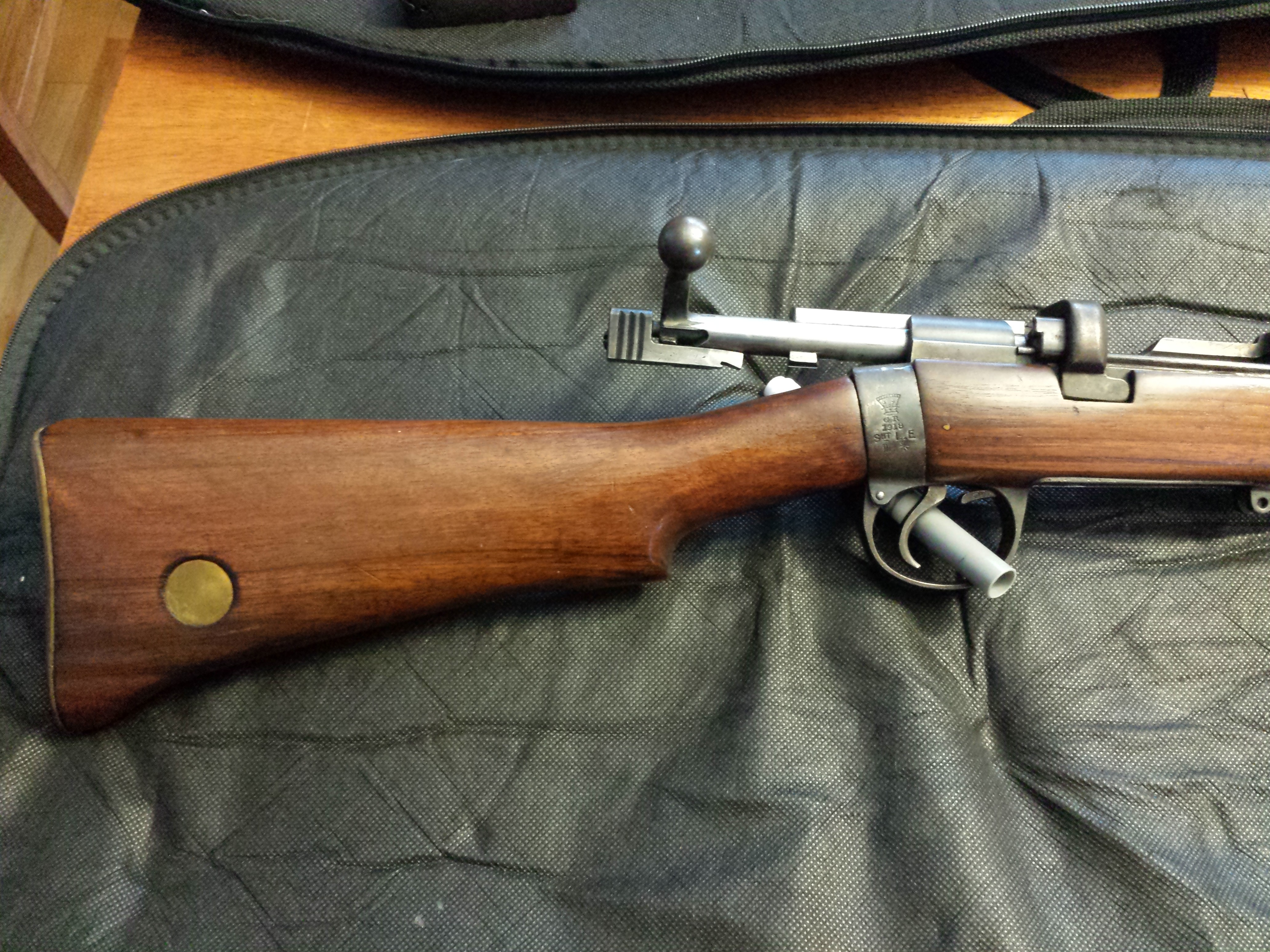
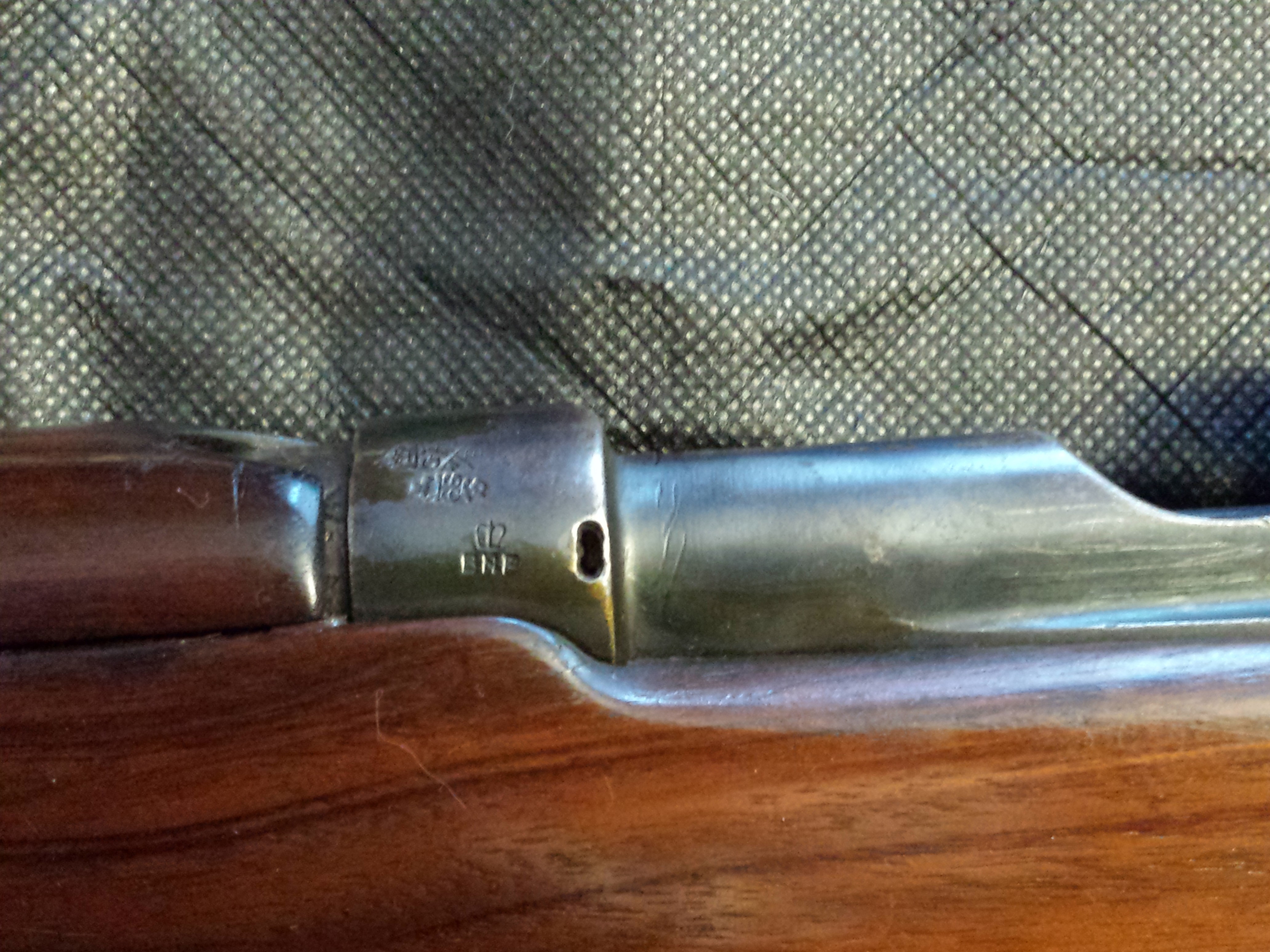
First up is a SMLE No1 MKIII?
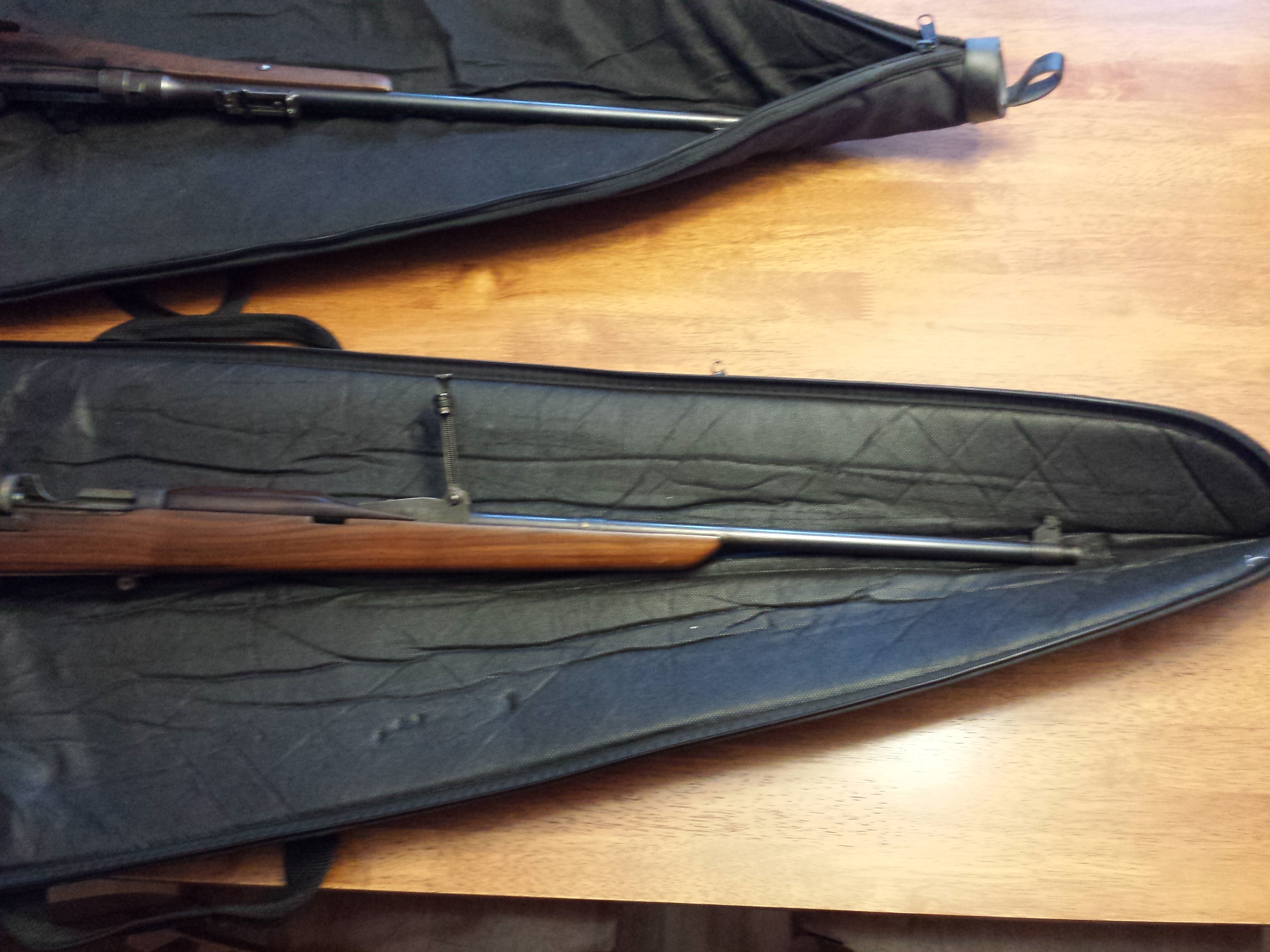
IMG_20171211_075124.jpg

IMG_20171211_075035.jpg

IMG_20171211_075301.jpg


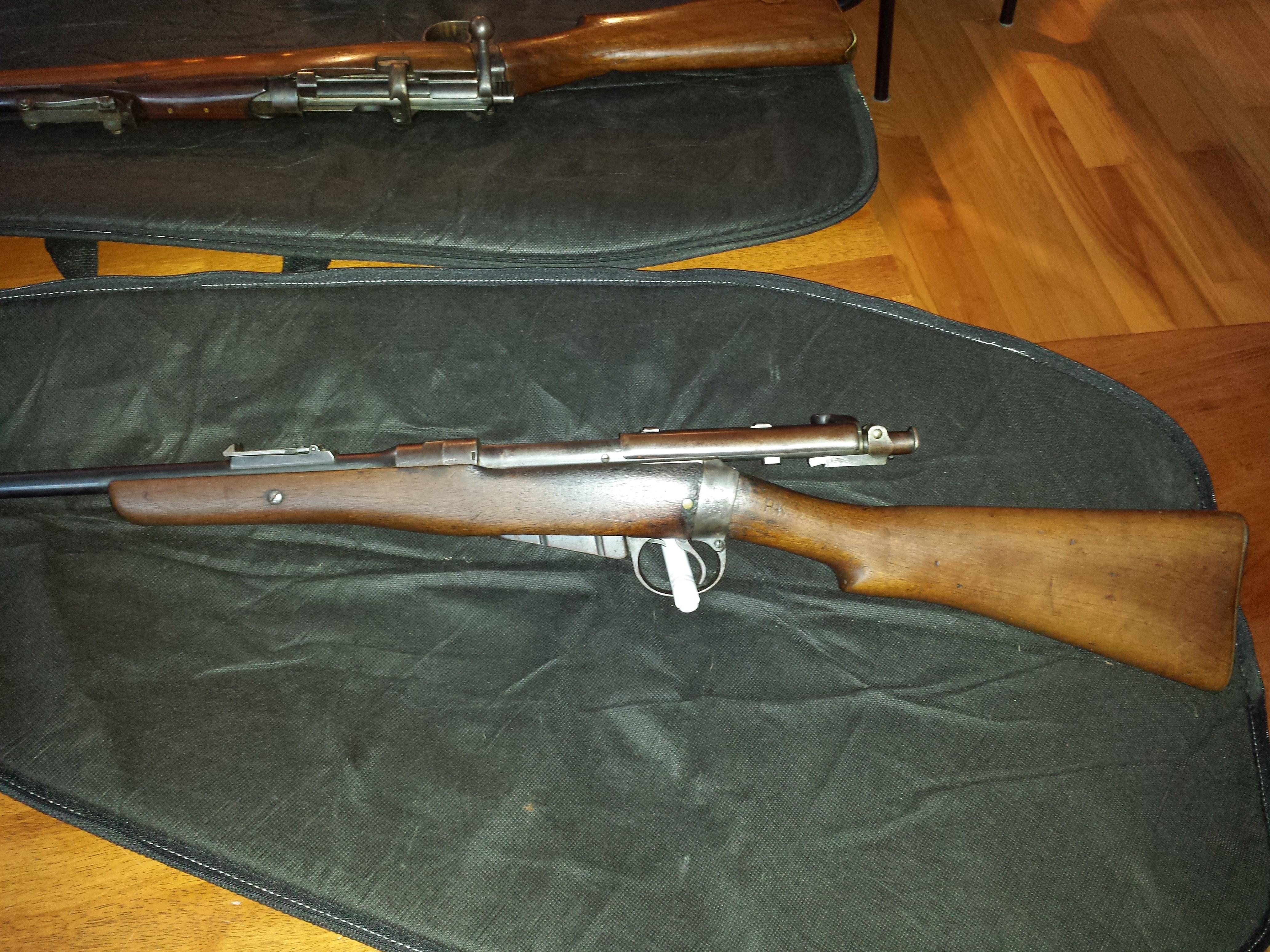
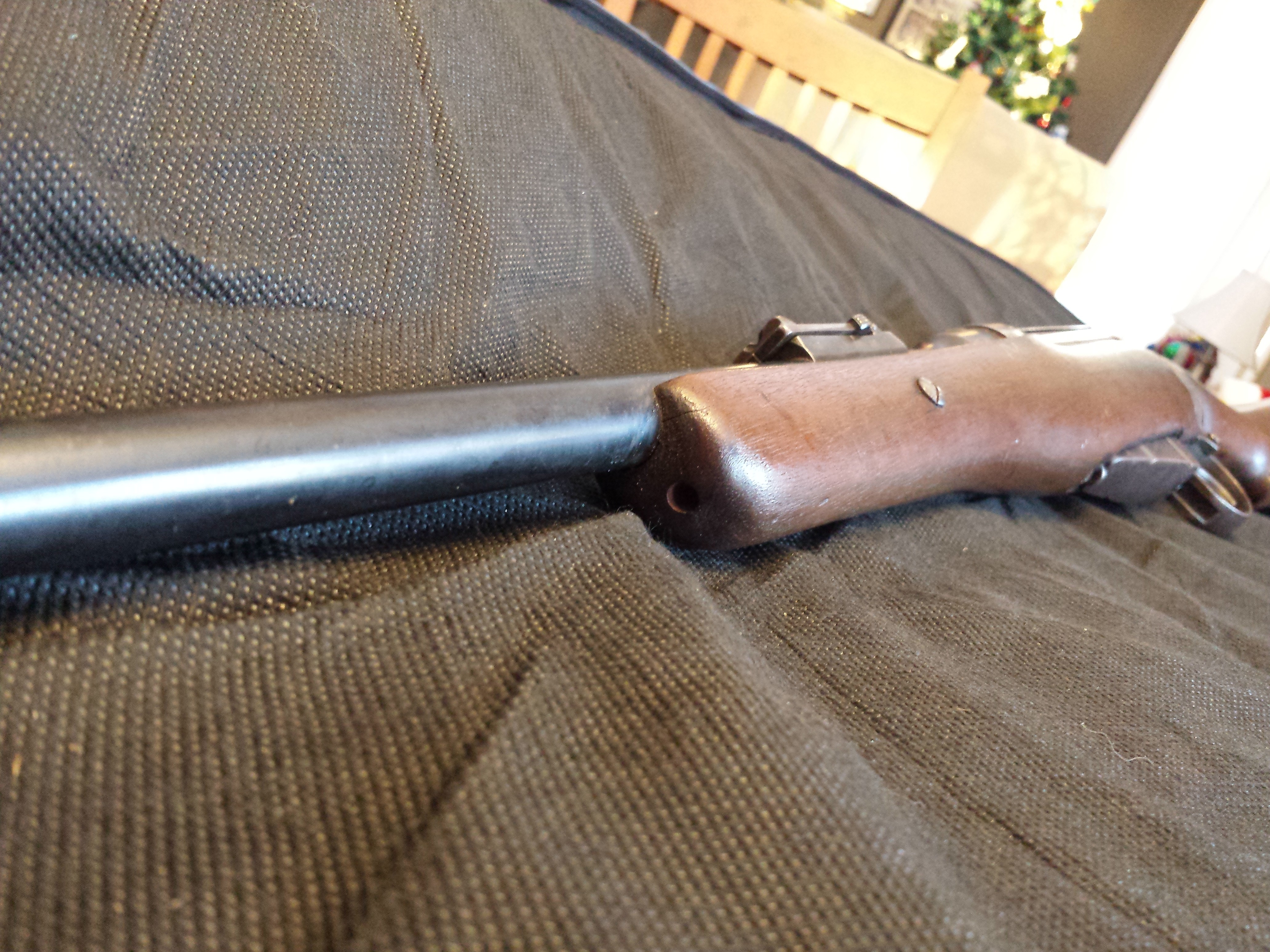
Now this, I'm not sure about at all.
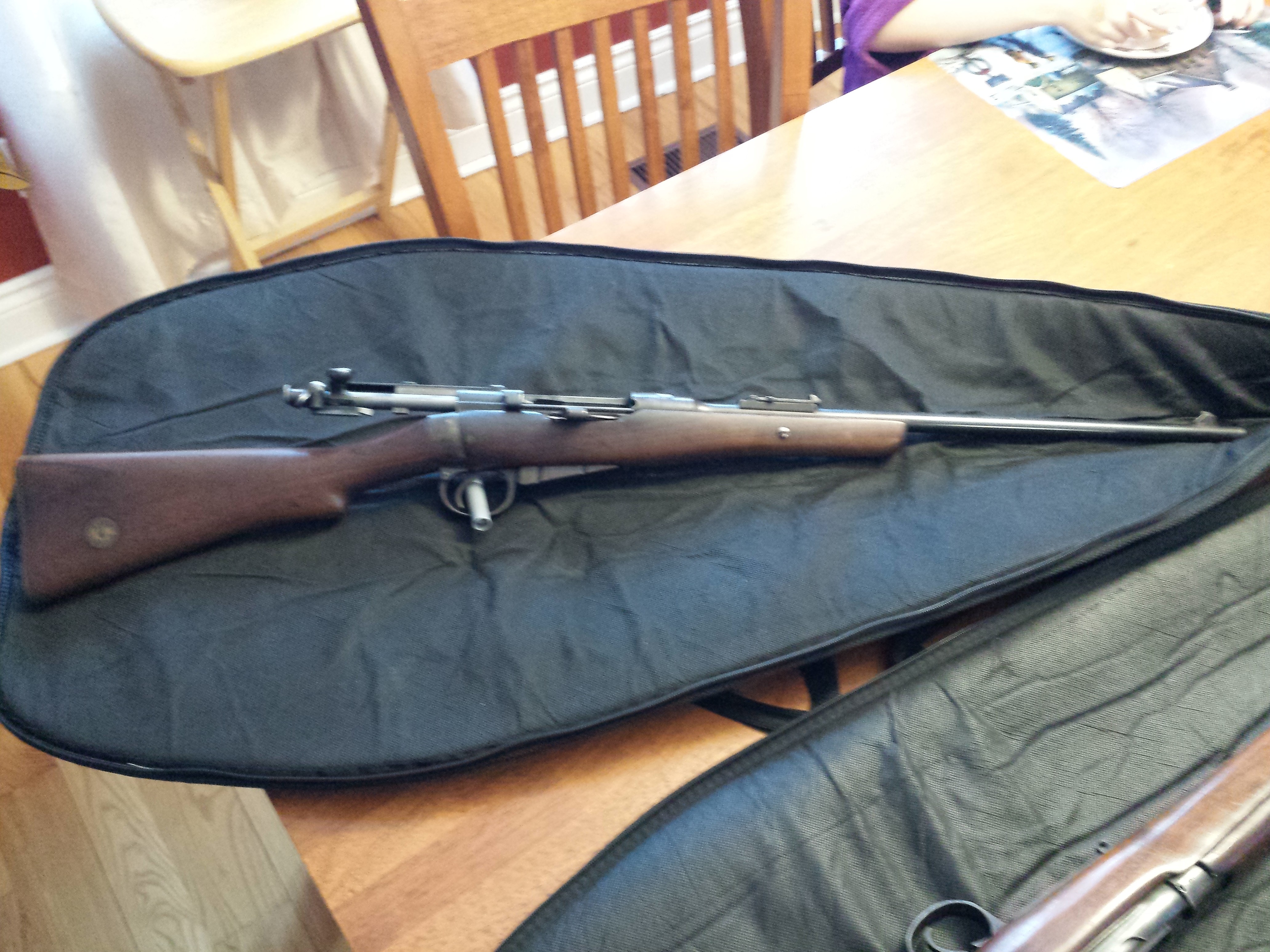
IMG_20171211_075754.jpg

IMG_20171211_075815.jpg

What's with this piece by the ejection port? It swings in and out blocking the magazine when it's in.
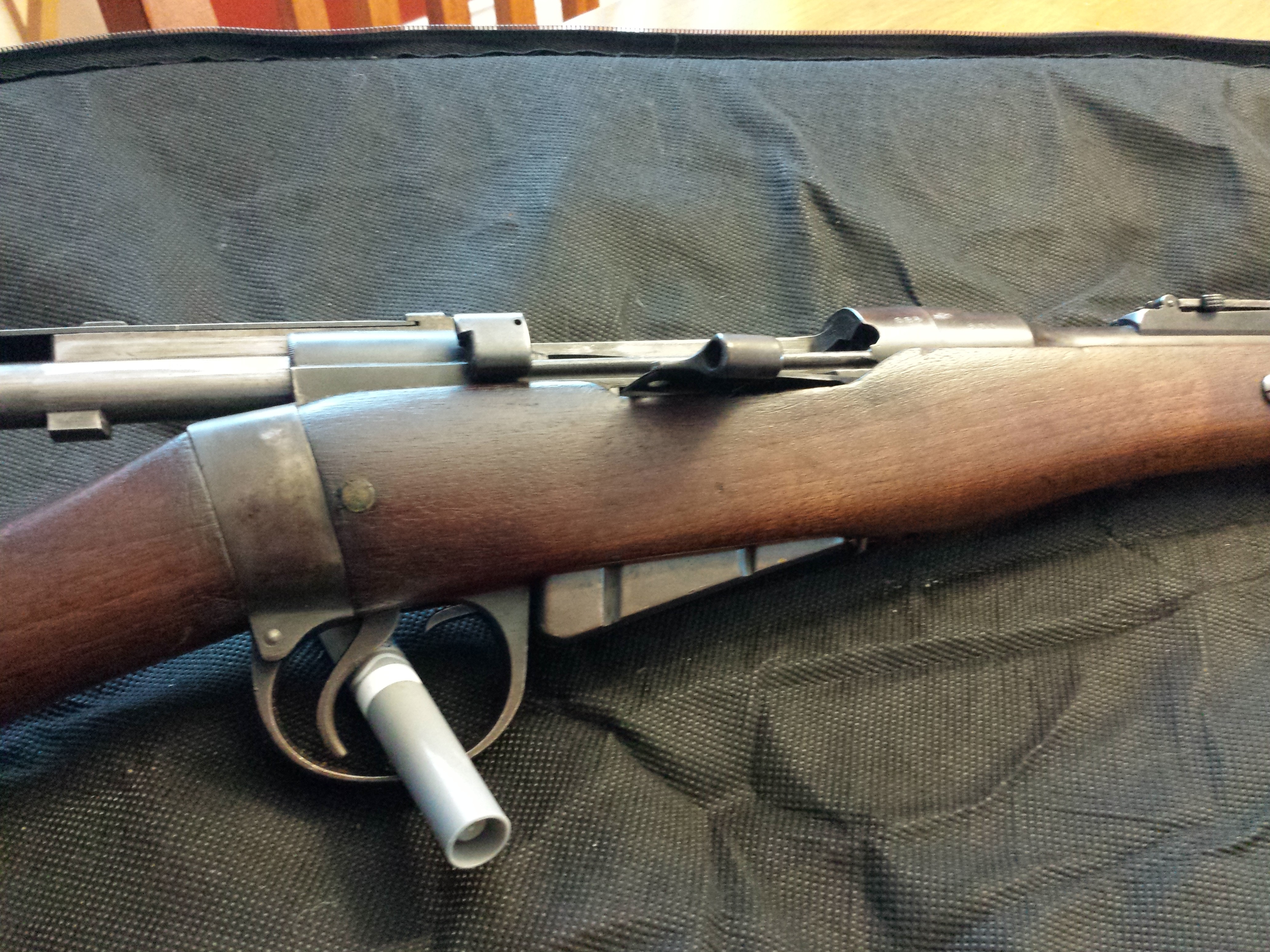
IMG_20171211_075918.jpg

IMG_20171211_080103.jpg

IMG_20171211_081221.jpg

Contents found in buttstock compartment. Cleaning tool?
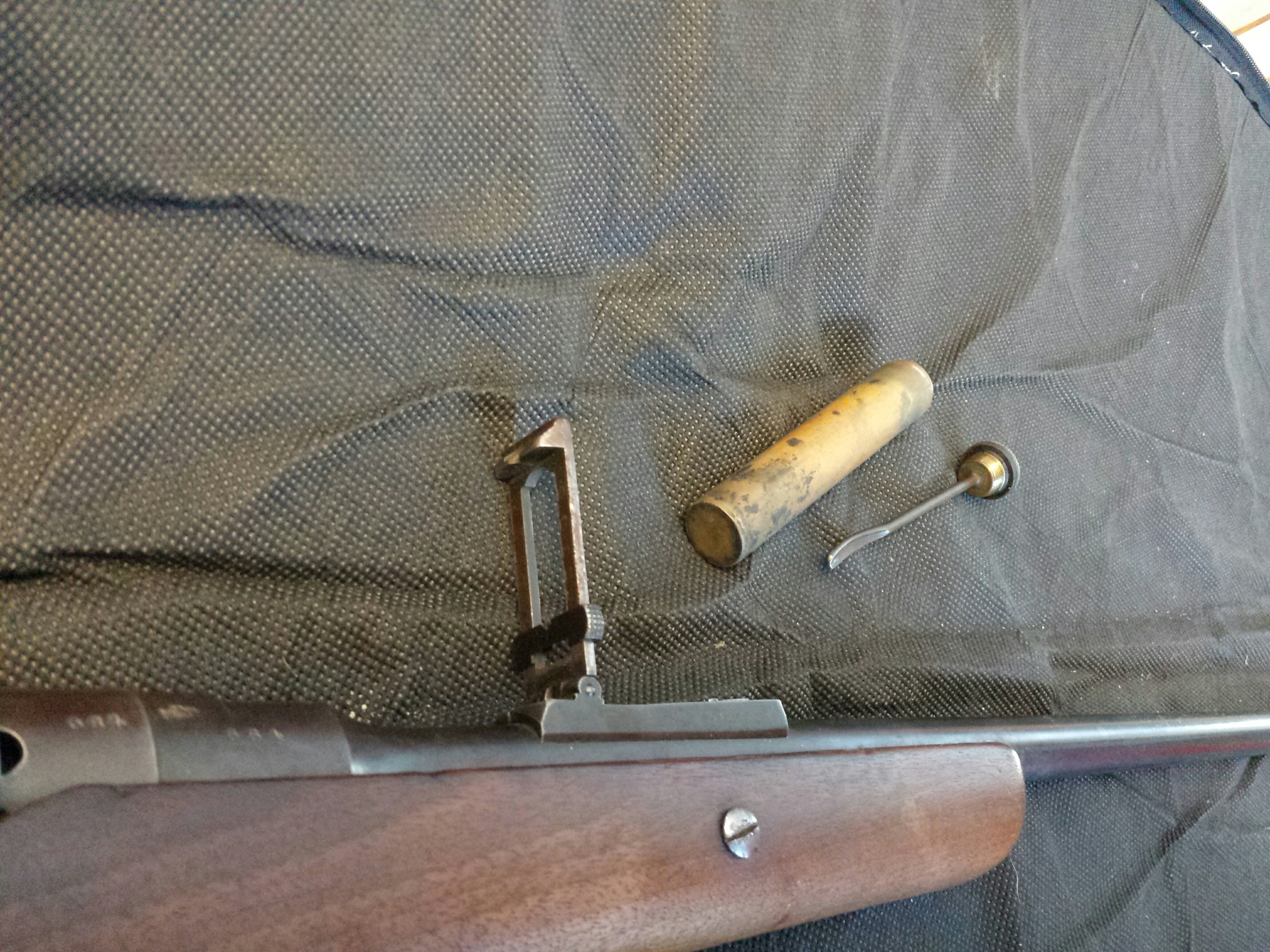
IMG_20171211_085440_01.jpg


If you folks need more pics for identification, please let me know. I'm also trying to figure out if either are a candidate for desporterization. Thinking about rebluing as well, but don't want to devalue anything.
 
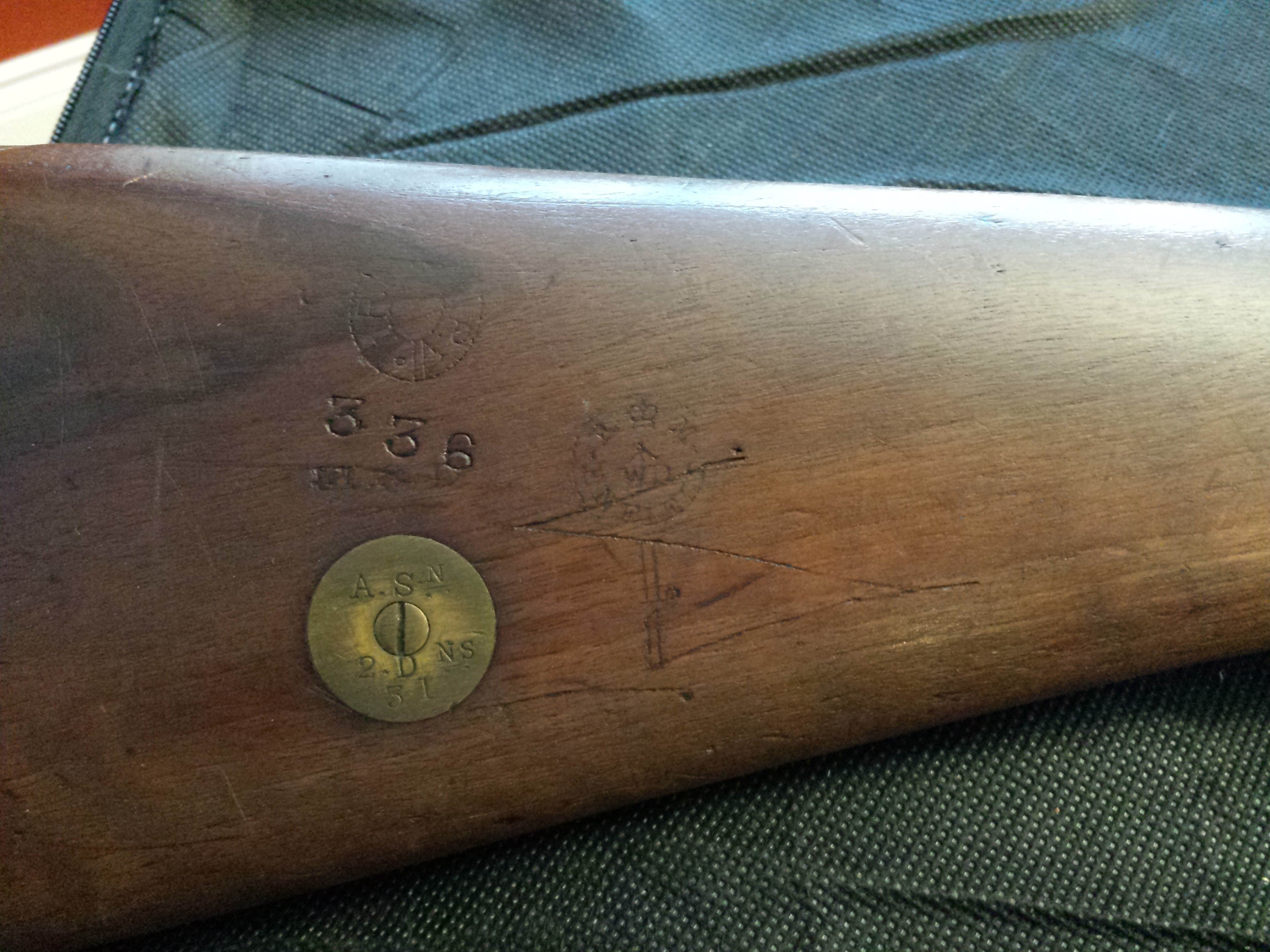
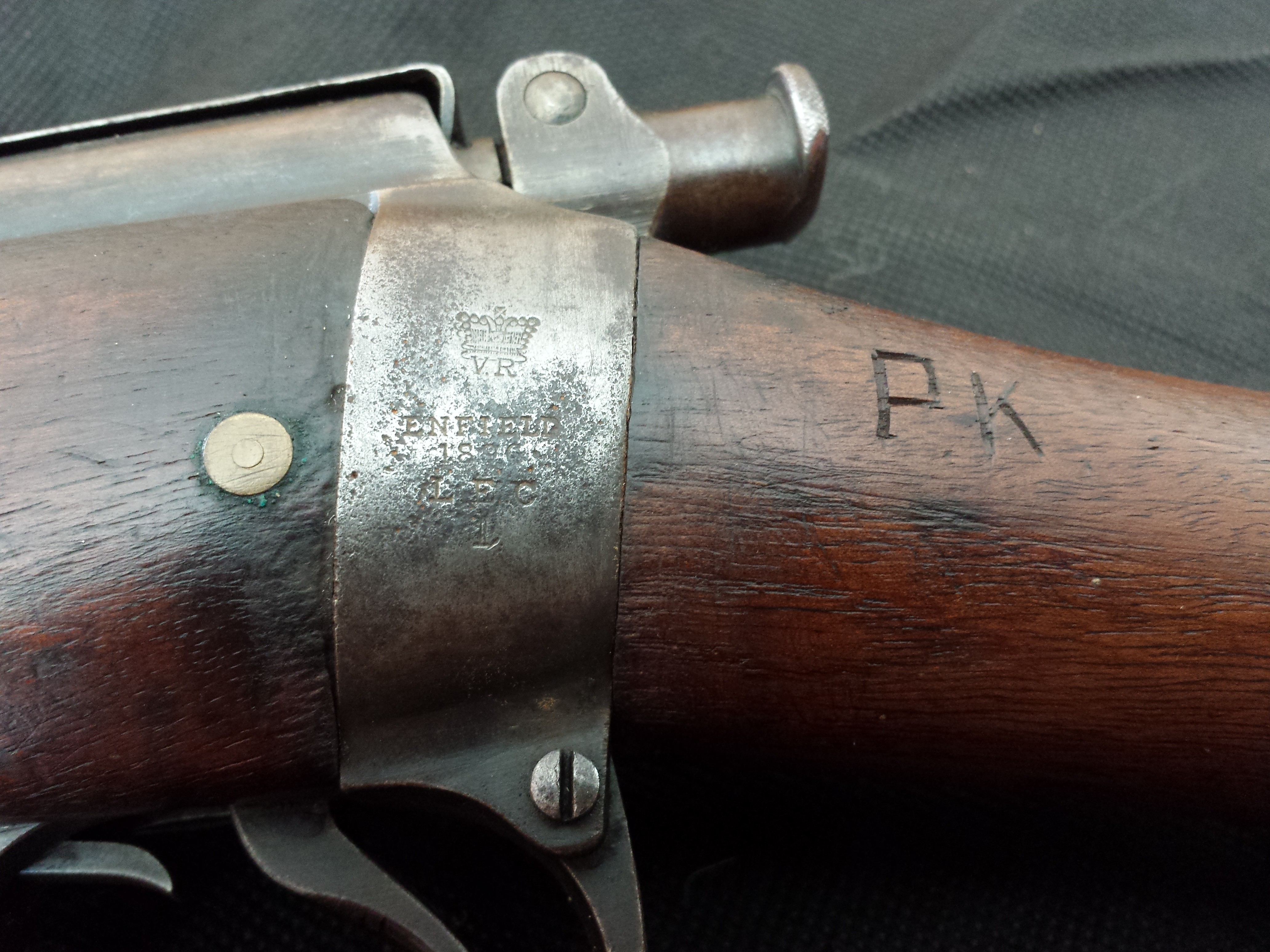
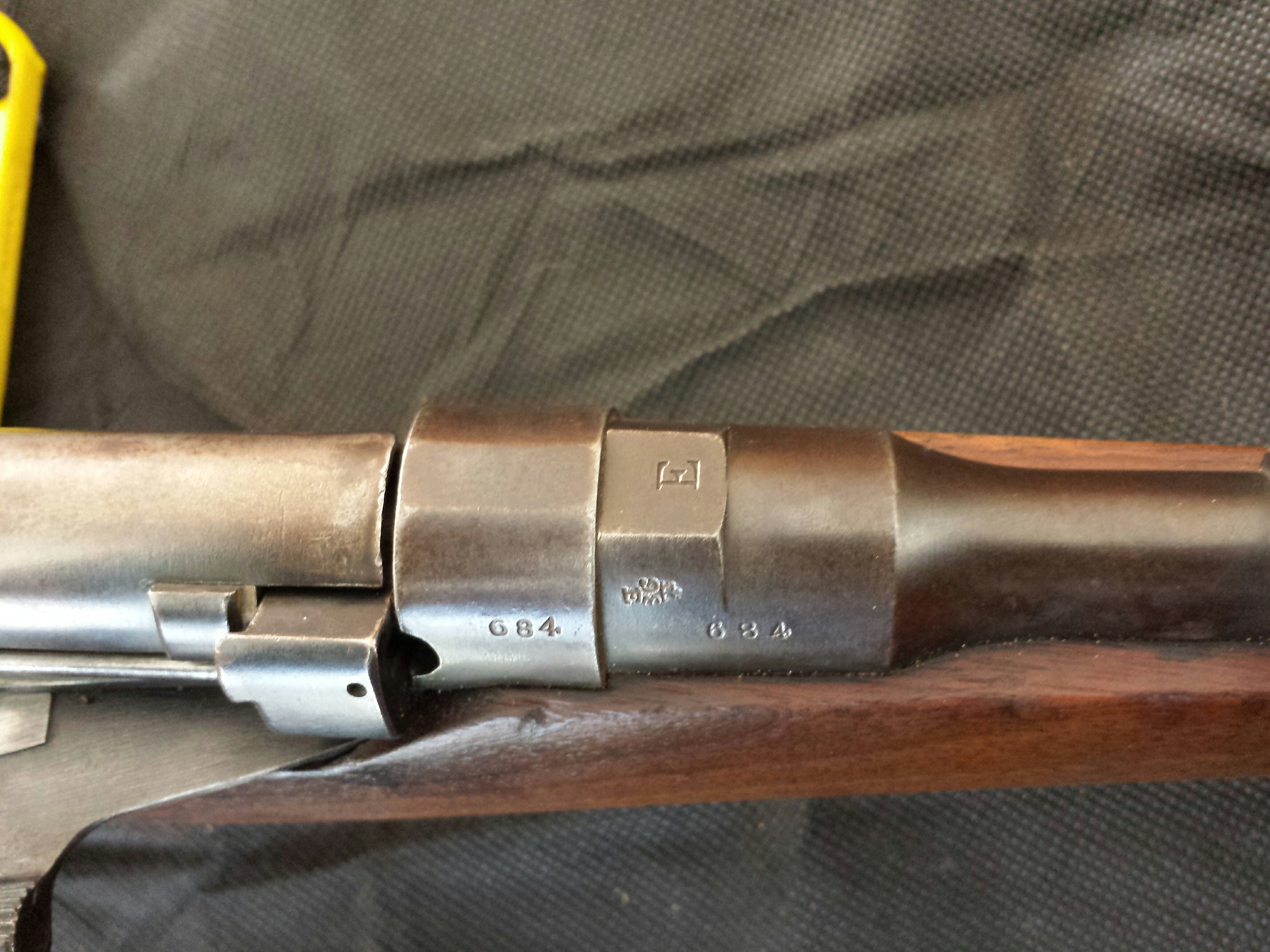
The Lee Enfield cavalry carbine is very interesting. The butt has markings to suggest service with the Royal North West Mounted Police, and the stock disc has unit markings. No.2 Division I believe.


One of the batch of 2300 carbines purchased by the Canadian Govt in fiscal year 1896/97.

It is a prime candidate for restoration.

Finished3.jpg
 

Attachments

  • Finished3.jpg
    Finished3.jpg
    28 KB · Views: 563
Lovely serial number on the LEC! I just about jumped when I saw the pic of the Magazine; those original 6-round Carbine magazines are like finding teeth in a very expensive chicken-ranch.

The other, the SMLE with the funny crown and no factory markings, is a Short, Magazine Lee-Enfield rifle Mark III* and was produced at the National Rifle Factory in Birmingham. Likely you will find "NRF" marked on the Body at the rear, just to the left of the bolt raceway. NRF was the designation for the Standard Small Arms Company factory after it was nationalised at the end of 1917. SOME SSA Bodies were completed as rifles in the early part of 1918, so it is possible to find NRF rifles marked as SSA. SSA and NRF between them produced FIVE percent of SMLE rifles built in Britain during the First World War...... and NONE during the Second War, the factory being declared redundant and sold after the end of the Great War.

Either way, you have TWO excellent candidates for restoration into unusual (scarce in the case of the SMLE, RARE in the case of the Carbine) specimens.

Hell of a way to start a collection! I want you with me at the next gun show; what you don't pick up I might be able to afford!
 
Well, holy crap. Guess I have some work to do. I imagine it will take some time to find the correct bits, but I look forward to the challenge. One thing I didn't mention, they were donated to me. The unlicensed owner thought his sleeping arrangements would better in his house than in the Gray Bar Motel.

Smellie, I looked and I found the rear of the body marked SSA.
 
Well, holy crap. Guess I have some work to do. I imagine it will take some time to find the correct bits, but I look forward to the challenge. One thing I didn't mention, they were donated to me. The unlicensed owner thought his sleeping arrangements would better in his house than in the Gray Bar Motel.

Smellie, I looked and I found the rear of the body marked SSA.


The bits you need as far as furniture goes are available as reproductions if you peruse the internet. They will of course need some fitting. The metal bits may be more difficult to track down. I find that when these rifles are found at gun shows, they're usually out of an estate or they were picked up as a project and for many reasons the interest was no longer there.

If you don't decide to put them back into their original condition, use them anyway. Sad to see them languish.

Many of those old girls were modified by commercial outlets before they went to the military. Sometimes it's difficult to tell though. One good indicator are the stamps. Many of the early rifles didn't have any stamps whatsoever, including serial numbers.

I have a Lee Speed carbine that I'm considering putting an original issue stock onto. The thing is, it's also marked by the Army/Navy Collective Society on the dust cover. Sooooooooooo which would be considered original and appropriate, full fore stock or cut back forestock??? I suggest you do more due diligence. Smellie by the way likely sees right away things I don't, so like he says they are great items to restore. The nice thing about those rifles is that restoring them will actually be an investment on the dollars spent as long as you do it right.
 
Here's a write up someone did on SSA/NRF rifles a while back, he has the change from SSA to NRF happening in June 1918

"Standard Small Arms was formed by Mr Samuel J Waring (later Lord Waring, 1860-1940) of the Waring & Gillow concern, together with a Mr Peterson, who was a man of standing in the Birmingham gun trade. They believed that the skills of the Birmingham gun trade were being neglected and could be more fully utilised in the war effort than they were. They planned to make all of the action and the nosecap, less magazines, screws and pins, and organise eight small firms and a number of individuals in the trade (probably outworkers, of whom a great many worked in the trade at that time). The barrels were to be subcontracted to Westley Richards and the wood to be cut by Waring & Gillow and Rudders & Payne (both these firms eventually dropped out). They contracted to supply rifles at 75/- each, which was the same price that BSA was paid. After a year or so it became apparent that the factory would never produce complete arms and it was instructed to produce four items; body with charger guide, bolt, bolt head and trigger guard. The company was to produce 1500 sets of components a week, rising to 4,000 when new machinery was installed. Other firms were contracted to produce less specialist items, the sets of components being delivered to Enfield for assembly in the bayonet shop, production of which was shifted to Wilkinsons and Sanderson Brothers & Newbold.

The downside of this scheme was that it only allowed for the exact number of components needed. Thus assembly of rifles was held up for want of quite minor items which inexperienced firms were struggling to produce. The scheme was revised in 1916 and became known as the Rifle Components Pool, taking every component which the 'Big Three' could make in excess of their complete rifle production as well as all that Standard Small Arms could turn out, and those produced by the 'peddled scheme' firms. Ordnance could also draw on the pool for repair parts. A considerable stock of components was built up so that any of the Big Three could draw on it if short of some item, and this was done continuously by LSA, and occasionally by BSA, and by Enfield (the pool being on the spot). Standard Small Arms did not attain an output of 2,000 bodies a week until April 1917 and two years after the start of work only 5-6,000 had been produced. By this time SSA were in financial difficulties and a government loan had to be made to keep them going. On June 1st 1918 the factory became National Rifle Factory No.1 with Mr Peterson as superintendent and instructed to prepare for manufacture of components of the Farquhar-Hill automatic rifle, although NRF-marked SMLE bodies were made after this. SSA seem to have turned out 2,000-4,000 bodies a week, depending on the Ministry of Munitions' requirements at the time."
 
Your carbine which once was carried in the saddle bucket of a red coated mountie, is now a classic deer gun. One could not want for a better rifle to take into the thick bush as we have here in Ontario.

Most of my project cavalry carbines come to me sporterised in much the similar way. It is finding the wood and metal parts that is the road block to restoring them. I used to view every sporter as a potential restoration project. But now that I have done a few, I realise that not every sporter needs to have full wood and a nose cap.
An old designer's adage;- 'Form follows function', some are fine just the way that they are for their intended use.

But try the carbine out just as it is, you might find it to be the handiest, easiest pointing, hard hitting little deer gun. I have several carbines and I keep going back to one or two sporters at hunting season.

IMG_0627.jpg
This one is my pet project. I could restore it back to its former military trim, but it is just such a nice shooter, I intend to keep it as it is.
The wood was once a military set that has been extensively modified into what you see now. It fits me like a charm and the thing points like a BB gun. Most shots, still and moving, are taken at about 50 to 75 yards in thick bush. With the ghost ring aperture rear sight set up, if I can see the target, I can hit it.
 

Attachments

  • IMG_0627.jpg
    IMG_0627.jpg
    33.2 KB · Views: 97
Your carbine which once was carried in the saddle bucket of a red coated mountie, is now a classic deer gun. One could not want for a better rifle to take into the thick bush as we have here in Ontario.

Most of my project cavalry carbines come to me sporterised in much the similar way. It is finding the wood and metal parts that is the road block to restoring them. I used to view every sporter as a potential restoration project. But now that I have done a few, I realise that not every sporter needs to have full wood and a nose cap.
An old designer's adage;- 'Form follows function', some are fine just the way that they are for their intended use.

But try the carbine out just as it is, you might find it to be the handiest, easiest pointing, hard hitting little deer gun. I have several carbines and I keep going back to one or two sporters at hunting season.

View attachment 136544


This one is my pet project. I could restore it back to its former military trim, but it is just such a nice shooter, I intend to keep it as it is.
The wood was once a military set that has been extensively modified into what you see now. It fits me like a charm and the thing points like a BB gun. Most shots, still and moving, are taken at about 50 to 75 yards in thick bush. With the ghost ring aperture rear sight set up, if I can see the target, I can hit it.

I was sort of thinking the same thing. The sporterizing was done so long ago, its an original as it is. So much so, that I think I'll clean it, oil it and leave things as is. The No.1, I think, deserves to have a full length stock. Guess I'll have to do some homework and make me a parts list. Besides that brass endplate on the buttstock, I'm pretty sure I need everything!

 
Back
Top Bottom