shotgun reloader opinions please

Lead hammer

CGN Ultra frequent flyer
Rating - 100%
3   0   0
Location
Saskatoon
Hi guys, I reload, but not for shotgun. I have acquired lots of ammo from a long time shooter who had passed on. I was digging in the reloads and found these ID cards in with the ammo. I am planning on checking this out tonight, but if anyone has any helpful info I would appreciate it. Basically translate as to if these loads are safe. I would assume they are, but its always good to double check.

heEgIrrh.jpg
[/IMG]
AeTqcFxh.jpg
[/IMG]
8wNT38Dh.jpg
[/IMG]
DWHEHSLh.jpg
[/IMG]
 
I never shoot anyone's reloads but mine. Just not worth the risk to me
The data you show on the cards is all for trap and skeet target loads which were if done properly not high pressure reloads however would be at least 25 years old probably more like 30 years plus using 571 in 28ga and red dot in the 12 ga
There is no way to say they are safe since we don't know what actually got into the hulls ( also what type of hulls were used ) regardless what the card says should be there
Cheers
 
Last edited:
Thanks for the reply, I was hoping since these were non hunting, that it would be ok to shoot. I could take a few of them apart and at least confirm the charge weigh I suppose. Feels crappy to incinerate 2000 rounds or more.
 
Leadhammer While the loads listed are certainly safe loads ,what is actually in the cases may be different. I would take at least one of each different load and carefully cut the top of the cases off and recover all the components. Weigh the shot and powder to ensure it is close to the charge listed. If they are close the shells would be safe enough to shoot. On old ammo and handloaded shotshells in particular pay close attention to the noise level and recoil of each round shot. If you have a dud round with little report or little recoil check the barrel after shooting that dud round to ensure there isn't a wad caught in the barrel.
 
Leadhammer While the loads listed are certainly safe loads ,what is actually in the cases may be different. I would take at least one of each different load and carefully cut the top of the cases off and recover all the components. Weigh the shot and powder to ensure it is close to the charge listed. If they are close the shells would be safe enough to shoot. On old ammo and handloaded shotshells in particular pay close attention to the noise level and recoil of each round shot. If you have a dud round with little report or little recoil check the barrel after shooting that dud round to ensure there isn't a wad caught in the barrel.

Thanks for the reply, I think I will do a sample of maybe 5 including various hulls from each large box/bucket that is labeled.
 
Thanks for the reply, I think I will do a sample of maybe 5 including various hulls from each large box/bucket that is labeled.

Would really like to see a pic of the hulls
These cards would be for a particular make/style of hull and not acceptable with all types.
I find it strange you are saying there is many various types reloaded
For example I can load AA and sts 28ga with the same recipe but not 28ga federal or challengers
Cheers
 
Would really like to see a pic of the hulls
These cards would be for a particular make/style of hull and not acceptable with all types.
I find it strange you are saying there is many various types reloaded
For example I can load AA and sts 28ga with the same recipe but not 28ga federal or challengers
Cheers

Maybe within each bucket, i can sort by hull type. I find it strange that hulls can have that much strength variance, but again I know zero about shotgun reloading and is why i'm here. I will get some pics this afternoon.
 
Maybe within each bucket, i can sort by hull type. I find it strange that hulls can have that much strength variance, but again I know zero about shotgun reloading and is why i'm here. I will get some pics this afternoon.

Not so much the strength. Some have taped walls some straight, some compression formed one piece designs, some separate base wad designs which gives different capacities for powder and as a result different pressures, etc etc
Cheers
 
Me too. Wouldn't be the first time I have shot handloads that were picked up from a gun show, auction or estate sale.

It is my experience that sloppy reloaders leave their signs of sloppiness all over the place, they don't do all the cleaning, trimming, crimping, labelling etc. perfectly and then just go about loading .30-06 rounds with Bullseye. You scrutinize the bunch to see if there are any obvious signs of negligence in assembly or storage, and you take a few apart to see if the interior seems to match the description. Disassemble if anything seems amiss, otherwise fill your boots. People take the warnings written by lawyers way too seriously.
 
Me too. Wouldn't be the first time I have shot handloads that were picked up from a gun show, auction or estate sale.

It is my experience that sloppy reloaders leave their signs of sloppiness all over the place, they don't do all the cleaning, trimming, crimping, labelling etc. perfectly and then just go about loading .30-06 rounds with Bullseye. You scrutinize the bunch to see if there are any obvious signs of negligence in assembly or storage, and you take a few apart to see if the interior seems to match the description. Disassemble if anything seems amiss, otherwise fill your boots. People take the warnings written by lawyers way too seriously.

You can be the very best reloader out there and if you pull that handle enough eventually you are going to have an incident. It is not limited to those that do sloppy work
What do I know only been pulling that handle since 1965 some years 25,000 rounds and yes I have had a couple
People should take warnings very seriously it is 2018 when a hang nail gets sued
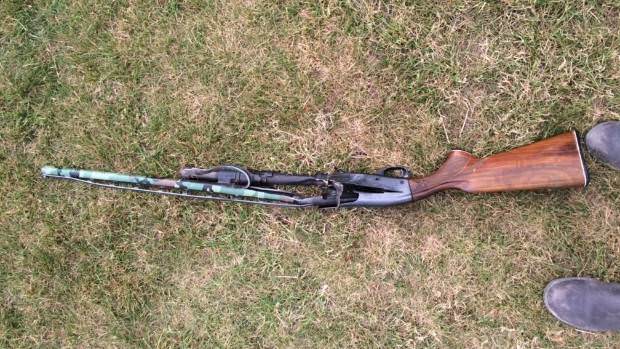
This old 1100 rem almost cost buddy his hand not something I would want to be holding
People think because it is a shotgun there is no high pressures possible. WRONG
To add these reloads are at least 25-35 years old IMO reloaded at a time when very few were are careful as we are today
Cheers

0NgF17C.jpg
 
Last edited:
Hope he found his hand after that!!!!! Scary.

There are lots of pics out there like that. Nothing to play with IMO and I am not saying your ammo is bad but you have to be careful
Cheers
From the write up
Causing a deep gash in his hand, almost tearing his right thumb off and breaking bones in his thumb and two fingers
eFv8dft.jpg
 
I'd verify that the loads match the components listed, and if so shoot them. A lot of chicken littles on this site it seems. And even if the loads prove to be very suspect, don't burn them, disassemble them or give them to a reloader for salvage. Loose shot sells for about $60 per bag now, and wads don't deteriorate. You just need a hull cutter, easy to do.
 
I'd verify that the loads match the components listed, and if so shoot them. A lot of chicken littles on this site it seems. And even if the loads prove to be very suspect, don't burn them, disassemble them or give them to a reloader for salvage. Loose shot sells for about $60 per bag now, and wads don't deteriorate. You just need a hull cutter, easy to do.

Chicken littles that have had a receiver blow on a semi from older reloads
There is a big part of this you guys just are not grasping above and beyond what recipe is in them . Yes that is very very important also but only part of it

These are 30 ??? year old reloads in hulls that the plastics and wads are probably now very brittle to the point I have seen the hull separate right at the top of the brass and stick in the barrel and the round behind it destroy the gun from the obstruction
This is not rifle brass we are talking about here. There are many factors to consider

And yes wads do deteriorate over time plus it is known some powders will do the same to them. Not to mention with these they may not even be plastic wads 571 in a 28ga I was still using felt/fiber

I understand 2000 rounds is a lot to someone that doesn't reload shotgun for target shooting so if one decides to shoot them do all you can to minimize the risk
Cut some open make sure that recipe matches that hull, weigh the powder and shot charges, check to see if the powder has gone bad, bend the petals on the wad back and forth to make sure they are not brittle. Check the hulls for cracks and flex them also to make sure not brittle
Only fire in a single shot or over under, no semi or pump and check the barrel with a quick peek to make sure nothing is left behind after firing
In 2000 rounds of this age expect some bloopers from weak primers so barrel checking for a wad left behind and listening to how they sound when fired is important

Just my 2 cents


Cheers
 
Last edited:
Good on you for wanting to confirm the load, asking if they are book loads.

The brand of hull is an important factor, could you please supply those, and a few pictures of the ammo as well.

heEgIrrh.jpg
[/IMG]

The load above; 28 ga. ¾ oz of #9, a W209 primer, and a AA 28 wad is a book load, for skeet (1200 fps) and a field load uses 20.5 gr of 571. All in a W-W compression formed hull. My source; 3rd edition W-W booklet.

AeTqcFxh.jpg
[/IMG]

The second load; 12 ga. (and I'll assume it is a 2 ¾ hull) 1 ⅛ oz of #9, 17 gr. of Red Dot, a RXP-12 wad and a WW 209. Not knowing the hull makes this one a bit more of a challenge, but Lyman #2 from 1976 lists 18.5 gr. Of Red Dot in a WW compression formed. If that is not the hull, let me know.

DWHEHSLh.jpg
[/IMG]

The above load; 12 ga. (and again I'll assume it is a 2 ¾ hull) 1 ⅛ oz of #9, 18.5 gr. of Red Dot, a 12S3 wad and a no primer specified. The 12S3 being slightly newer I looked it up in Lyman #5, and with a CCI 209, in a W-W compression formed hull, they list 19.5 gr. Again, knowing or seeing the hull would aid in determining the load.

DWHEHSLh.jpg
[/IMG]

The 410 load; ½ oz. of #9, a WAA41 wad, 14 gr of 296, and a WW 209 primer, in Lyman #5 is a mid load (13.5 > 14.5) in a 2 ½ in WW compression formed hull. This load will also be OK in a Federal 2 ½ hull. Not safe in a WW HS hull and the charge is a bit low for a Remington STS hull.

 
Back
Top Bottom