What is the difference between a standard full length sizing die vs a competition full length sizing die? Specially I have both the standard RCBS sizing die and the RCBS competition sizing die. The only difference i noticed is the external finish.













































You are using an out of date browser. It may not display this or other websites correctly.
You should upgrade or use an alternative browser.
You should upgrade or use an alternative browser.
Standard sizing dies vs competition sizing dies
- Thread starter Tiker
- Start date

The competition full length sizing die sizes the case to minimum SAMMI dimensions.
Meaning it reduces the body diameter more and pushes the case shoulder back more than a standard die.
A small base die does the same thing and and is cheaper, and the only real difference is the competition die has a raised expander.
Below the exact words from RCBS.
http://rcbs.com/Products/Dies-by-Category/Competition/Competition-Full-Length-Die-Set.aspx
RCBS® Competition Dies are meant for reloading bottleneck cartridges for competitive marksmen who measure success in fractions of a millimeter. This two-die set’s Full-Length Sizer takes cases to SAAMI minimums. It features a raised expander ball to allow extra leverage for smooth, effortless neck expansion.
NOTE, Normally I would think of these dies for competitive shooters that are using semi-autos like the M14/M1A. But they can shorten your case life if the case shoulder is bumped back to far.
In a semi-auto the case diameter should be reduced .003 to .005 smaller than its fired diameter for reliable extraction. This allows the case body to spring back from the chamber walls in fast extracting semi-autos.
This is normally not needed in bolt action rifles, lifting the bolt straight up will break the case free of the chamber walls and move the case slightly to the rear. And hot loads normally cause hard bolt lift and extraction problems.
Chambers and dies can vary in size and a skinny chamber and a fat die can cause a problem.
Meaning it reduces the body diameter more and pushes the case shoulder back more than a standard die.
A small base die does the same thing and and is cheaper, and the only real difference is the competition die has a raised expander.
Below the exact words from RCBS.
http://rcbs.com/Products/Dies-by-Category/Competition/Competition-Full-Length-Die-Set.aspx
RCBS® Competition Dies are meant for reloading bottleneck cartridges for competitive marksmen who measure success in fractions of a millimeter. This two-die set’s Full-Length Sizer takes cases to SAAMI minimums. It features a raised expander ball to allow extra leverage for smooth, effortless neck expansion.
NOTE, Normally I would think of these dies for competitive shooters that are using semi-autos like the M14/M1A. But they can shorten your case life if the case shoulder is bumped back to far.
In a semi-auto the case diameter should be reduced .003 to .005 smaller than its fired diameter for reliable extraction. This allows the case body to spring back from the chamber walls in fast extracting semi-autos.
This is normally not needed in bolt action rifles, lifting the bolt straight up will break the case free of the chamber walls and move the case slightly to the rear. And hot loads normally cause hard bolt lift and extraction problems.
Chambers and dies can vary in size and a skinny chamber and a fat die can cause a problem.
Last edited:
thanks for the info. I did notice that the competition sizer was a little bit easier to operate (less friction) but I thought maybe that was just all in my mind.
So basically loading for a bolt action rifle, the results from the competition sizer and the regular sizer are the same, correct?
So basically loading for a bolt action rifle, the results from the competition sizer and the regular sizer are the same, correct?
thanks for the info. I did notice that the competition sizer was a little bit easier to operate (less friction) but I thought maybe that was just all in my mind.
So basically loading for a bolt action rifle, the results from the competition sizer and the regular sizer are the same, correct?
You need to measure several fired cases at three points along the case body and then measure again after full length resizing in each die.
You will also need to measure how far the case shoulder is pushed back with each die.
The Statement from RCBS tells you the competition resizing die will reduce the case to minimum SAAMI dimensions. Meaning that the competition die sizes the case smaller in diameter and pushes the case shoulder back more the a standard RCBS. So these two dies are not the same and the standard die will not size the case as much as the competition die.
Bottom line, the competition die is like a small base die and you will need to measure cases resized in each die to confirm case diameter and shoulder bump to be sure.
Example, I have a standard Lee .223 full length die that will size the cases smaller than my RCBS .223 small base die. Dies can vary in size and why you measure a fired case and a resized case to see how much the die reduces the dimensions.
The competition die may be polished more inside and why the sizing effort seems to be less.
Understood that the competition die is like a small base die and will resize the cases smaller than the standard die.
I meant, if im only making ammo for the bolt action rifle, then there is no need for me to use the competition resizing die, right? The ammo from the standard sizing die works just fine and the competition die will wear out the brass sooner. Is there any benefit for me to use the competition die?
I meant, if im only making ammo for the bolt action rifle, then there is no need for me to use the competition resizing die, right? The ammo from the standard sizing die works just fine and the competition die will wear out the brass sooner. Is there any benefit for me to use the competition die?

Compare run out between the two dies.
Any competition or match dies I’ve used and compared against regular FL dies (.308, .223, 6.5x55, 30.06) have less run out of both the sized brass and finished round when compared to regular dies.
My comparisons are hardly scientific, but if you are spending good money to reload, the cost of dies is pretty small in the grand scheme of things. Ymmv.
Any competition or match dies I’ve used and compared against regular FL dies (.308, .223, 6.5x55, 30.06) have less run out of both the sized brass and finished round when compared to regular dies.
My comparisons are hardly scientific, but if you are spending good money to reload, the cost of dies is pretty small in the grand scheme of things. Ymmv.
I've been looking to switch to a set of Redding dies. I wrote them an email in regards to their premium die set vs their national match die set. Their reply was "The same FL sizing die is found in both die sets. Both come with a floating carbide sizing button found on the decapping rod."
So I guess it varies between brands, but in Redding's case, they have the same FL sizing die in their premium and national match sets.
So I guess it varies between brands, but in Redding's case, they have the same FL sizing die in their premium and national match sets.
Below German Salazar is answering a question about partial full length resizing and why full length resizing is better. If a case body is thinner on one side the thinner side expands more and the case warps. Full length resizing reduces the body diameter more than partial sizing and prevents a warped case from having a adverse effect on bullet alignment in the throat. And the quality of your cases has a great deal to do with the loaded round being concentric. I have had Remington cases with .009 neck thickness variations and the best dies in the world will not make these type cases concentric.
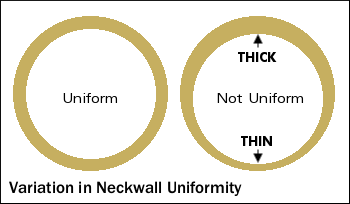
NOTE, The Whidden custom die website tells you they get the most concentric cases with non-bushing full length dies. And Whidden custom dies does not make neck sizing dies, and this should tell you something.
Reloading: Partial Neck Sizing
by German A. Salazar
http://riflemansjournal.########.com/2010/06/reloading-partial-neck-sizing.html
"Now the last scenario, a full-length sized case in which the neck is also fully sized. There is clearance at the neck and in the body of the case, the closest fit anywhere is the bullet in the throat. If the neck to bullet concentricity is good (although it needn't be perfect), then the bullet will find good alignment in the throat and the case body and neck will have minimal influence. Let's not forget that the base of the case is supported by the bolt face or the extractor to a certain degree as well; this is yet another influence on alignment. As you can see, there are several points from base to bullet that can have an effect. My procedure is to minimize the influence of those that I can control, namely the case body and neck, and let the alignment be dictated by the fit of the bullet in the throat and to some extent by the bolt's support of the base. Barring a seriously out of square case head, I don't think the bolt can have a negative effect on alignment, only a slightly positive effect from minimizing "case droop" in the chamber. Given that a resized case will usually have a maximum of 0.001" diametrical clearance at the web, this isn't much of a factor anyway."
If you want a good die with little to no neck runout then buy a Forster full length benchrest die with its high mounted floating expander. When sizing the Forster die holds and centers the case neck when the expander enters the case neck. And the floating expander can not pull the case neck off center because it is held by the die.
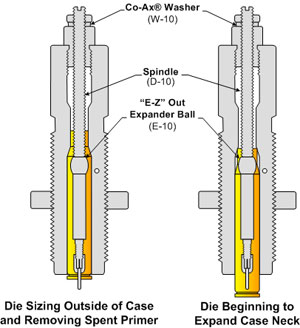
Below I installed a modified Forster expander and spindle assembly on my Redding .243 full length die to reduce neck runout.
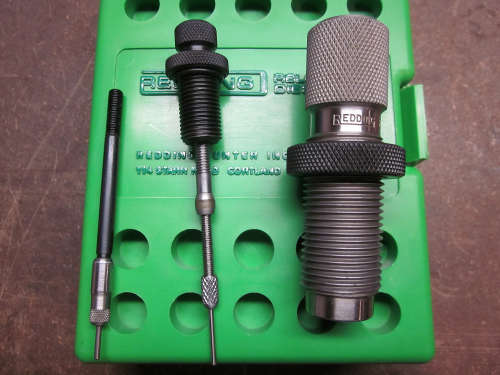
I also installed Forster expander assemblies on all my older RCBS dies. They fit directly on the RCBS dies and greatly reduce case neck runout. The biggest cause of neck runout is cause if the expander is locked down off center. The Forster floating expander is always centered and can not pull the necks off center.
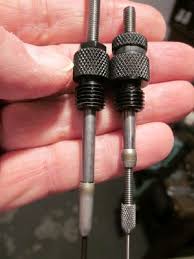
You can also remove the expander on any die and use a expander die to expand the necks on the up stroke of the ram.
Expander Mandrels and Neck Tension
http://www.accurateshooter.com/technical-articles/reloading/expander-mandrels-and-neck-tension/
The standard Lee full length die has a fixed ridged expander and would be my second choice and the cheapest die. The Lee die just doesn't reduce the neck runout as much as the Forster die but the Lee expander can not be locked down out of alignment as far as RCBS or Redding expanders.

NOTE, The Whidden custom die website tells you they get the most concentric cases with non-bushing full length dies. And Whidden custom dies does not make neck sizing dies, and this should tell you something.
Reloading: Partial Neck Sizing
by German A. Salazar
http://riflemansjournal.########.com/2010/06/reloading-partial-neck-sizing.html
"Now the last scenario, a full-length sized case in which the neck is also fully sized. There is clearance at the neck and in the body of the case, the closest fit anywhere is the bullet in the throat. If the neck to bullet concentricity is good (although it needn't be perfect), then the bullet will find good alignment in the throat and the case body and neck will have minimal influence. Let's not forget that the base of the case is supported by the bolt face or the extractor to a certain degree as well; this is yet another influence on alignment. As you can see, there are several points from base to bullet that can have an effect. My procedure is to minimize the influence of those that I can control, namely the case body and neck, and let the alignment be dictated by the fit of the bullet in the throat and to some extent by the bolt's support of the base. Barring a seriously out of square case head, I don't think the bolt can have a negative effect on alignment, only a slightly positive effect from minimizing "case droop" in the chamber. Given that a resized case will usually have a maximum of 0.001" diametrical clearance at the web, this isn't much of a factor anyway."
If you want a good die with little to no neck runout then buy a Forster full length benchrest die with its high mounted floating expander. When sizing the Forster die holds and centers the case neck when the expander enters the case neck. And the floating expander can not pull the case neck off center because it is held by the die.
Below I installed a modified Forster expander and spindle assembly on my Redding .243 full length die to reduce neck runout.
I also installed Forster expander assemblies on all my older RCBS dies. They fit directly on the RCBS dies and greatly reduce case neck runout. The biggest cause of neck runout is cause if the expander is locked down off center. The Forster floating expander is always centered and can not pull the necks off center.
You can also remove the expander on any die and use a expander die to expand the necks on the up stroke of the ram.
Expander Mandrels and Neck Tension
http://www.accurateshooter.com/technical-articles/reloading/expander-mandrels-and-neck-tension/
The standard Lee full length die has a fixed ridged expander and would be my second choice and the cheapest die. The Lee die just doesn't reduce the neck runout as much as the Forster die but the Lee expander can not be locked down out of alignment as far as RCBS or Redding expanders.
Ed - I've always enjoyed you posts, and the wealth of information you provide. I wanted to understand the context of your quote by Mr Salazar, unfortunately the link is dead. I fully understand what is being said, but am unsure of its suitability for a recreational shooter that is just learning the ropes of reloading. The suggested method is to load tight to the lands to centre the bullet. As you know, loading tight to the lands requires some finesse, and can cause its own issues, least of which is a stuck bullet in a hunting rifle.
Centering the bullet via the shoulder (ie partial resizing) can achieve desirable results using standard grade dies in "hunting grade" rifles, with the benefit of increased case life. Moreover, as you point out, match grade dies are not needed to address runout (assuming runout is present and problematic in the first place).
Centering the bullet via the shoulder (ie partial resizing) can achieve desirable results using standard grade dies in "hunting grade" rifles, with the benefit of increased case life. Moreover, as you point out, match grade dies are not needed to address runout (assuming runout is present and problematic in the first place).
Last edited:
Ed - I've always enjoyed you posts, and the wealth of information you provide. I wanted to understand the context of your quote by Mr Salazar, unfortunately the link is dead. I fully understand what is being said, but am unsure of its suitability for a recreational shooter that is just learning the ropes of reloading. The suggested method is to load tight to the lands to centre the bullet. As you know, loading tight to the lands requires some finesse, and can cause its own issues, least of which is a stuck bullet in a hunting rifle.
Centering the bullet via the shoulder (ie partial resizing) can achieve desirable results using standard grade dies in "hunting grade" rifles, with the benefit of increased case life. Moreover, as you point out, match grade dies are not needed to address runout (assuming runout is present and problematic in the first place).
Thanks to The Wayback Machine dead links still live......enjoy
Reloading: Partial Neck Sizing
https://web.archive.org/web/2015031...om/2010/06/reloading-partial-neck-sizing.html
Last edited:





















