I can't get banned again, lol.
What’s the prob dude?
Last edited:













































I can't get banned again, lol.

So how would the PC bullits compare to berry plated bullits.
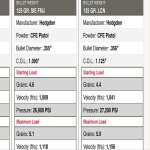
Right now I’m using berry 124 g over 5.1 CFE.
But I’m going to switch to PC 125 g bullits.
I can't get banned again, lol.
So how would the PC bullits compare to berry plated bullits.
Right now I’m using berry 124 g over 5.1 CFE.
But I’m going to switch to PC 125 g bullits.
So the exact opposite of what jethunter stated about jacketed bullets? Or do the terms resistance and friction differ in this case? Maybe jacketed bullets offer more resistance but less friction? Now I'm really confused...
Thanks for the tip.
CFE pistol is like Franks hotsause...I need to try me some of that CFE Pistol in .38 special.
CFE pistol is like Franks hotsause...
It seems like you skip over my observation jethunter, not interested anymore? Maybe you can speak towards terms like frictional co-efficient or obturation? We should probably get this squared away in the event that other forum members stumble upon this thread.
https://www.shootingsoftware.com/moly.htmIncreased Accuracy
...We have all seen claims about moly coated bullets and perhaps a few horror stories from shooters who tried them. To a some extent most of the positive claims are true for "certain" shooting applications. The horror stories about corrosion and wrecked barrels may also be true depending on how these products were used. Bench rest shooters are usually the first to adapt new technology and the first to discard things that do not work. A few years ago some benchrest shooters where shooting moly bullets. Few competitive bench rest shooters are shooting moly bullets (although a few may still be adding moly to their powder). This does not mean moly bullets have no valid applications...just that the benefits are not applicable to all forms of shooting.
An early claim regarding moly coated bullets was increased accuracy. It was surmised that less bore friction would reduce tearing of "fins" on the bullet's base producing less turbulence in flight. To our knowledge this claim has never been substantiated. Even if true, reduced turbulence will only be evident at extreme long ranges. We expect the improved accuracy some shooters see are due to other factors such as moly's affect on the pressure curve, neck tension, etc.
Moly Will Change Your Loads
Switching to moly will change your load performance. Velocity and pressures should decrease when switching to moly coated bullets. This is not bad if you have a chronograph or the time to work up new loads. Because bullet to barrel friction is drastically reduced you can often push bullets faster and still stay within safe pressure limits. Normal loads that crater, flatten or puncture primers "may not" when shooting moly bullets. The increased velocity that "might" be achieved with moly coated bullets is often sufficient to reach a higher velocity "sweet spot" where groups will tighten again, or allow you to fire heavier bullets at acceptable velocities.
Note: The bearing surface of a bullet increases exponentially with bore diameter. Generally the larger the caliber, the greater the difference in acheived velocity for a given powder charge. Smaller/lower pressure calibers often show only 10 to 20 fps velocity reduction while large magnum calibers may show 100 to 150 fps velocity reduction when switching to moly coated bullets.
This also may introduce another issue. As bore friction is reduced, the bullet may accelerate down the bore as if it has lighter mass. This can result in secondary pressure spikes if the powder is barely fast enough for the bullet's rate of acceleration.
http://www.sprinco.com/testresults.html
By: #### Hatfield
Recently I became aware of a product called Spica Gold manufactured by the Parsec Group in Bel Air, Maryland. (Note: This product is now available as "Plate+" from Sprinco, USA the authorized distributor for shooter materials from Parsec. Any questions or comments should be directed to Sprinco not Parsec.) This product is a colloidal suspension of extremely finely divided (less than 0.5 microns) Molybdenum Disulfide, or "Moly", in a light oil with various proprietary inhibitors. According to Parsec/Sprinco, one could use the product to coat the inside of a gun barrel and increase the corrosion resistance of the barrel and not have to use Moly coated bullets to get the benefits of reduced galling or copper deposition. Being able to coat the barrel offered the chance to compare various combinations of bare and coated barrels and bare and coated bullets. I have a sporterized Model 1903 Springfield with the original military 30’06 barrel (well used) that had never had Moly coated bullets fired in it. Although not an accurate gun, it would work nicely for a set of velocity experiments. I cleaned the barrel thoroughly with a chemical copper remover (Barnes C-10) until there was no sign of copper and followed this with JB (a very, very mild abrasive) and finally a fine polishing compound used on plastics. I then loaded up 100 rounds using military brass, Remington 150-gr. soft points and H414 powder with a load that had worked well in the past. All 100 rounds were as alike as possible. Fifty of the bullets were Moly coated using the NECO tumbling process. The bullets were 0.065" from touching the lands in order to keep the overall length short enough to feed through the magazine. The experiment first consisted of firing 25 rounds of non-coated bullets through the clean barrel. As expected there was considerable evidence of copper in the bore. I again cleaned the barrel of all signs of copper using the above process. I then fired 25 rounds of Moly coated bullets. There was some copper on the lands following the firing, but not nearly as much as with the bare bullets. (Remember that this is a rough, used, military barrel. A modern, lapped barrel would probably show no copper.) Cleaning was easier and followed the above procedure until there was no copper. The barrel also had no apparent sign of Moly, as it appeared shiny like fresh steel. Following the Parsec/Sprinco instructions, I corked the barrel, filled it and soaked it in Spica Gold/Plate+ for 5 days (48 to 72 hours recommend) then cleaned with a few dry patches. I observed a dull gray coating on the bore. I then fired 25 rounds of bare bullets in the Moly coated barrel. I observed some copper fouling on the lands. I judge that it was about the same as that following the Moly coated bullet firing. I then ran a few patches through the barrel and made no attempt to clean it. The last test was with Moly coated bullets in the Moly coated barrel. Again there was some copper fouling, some of which was left over from the previous test. But I couldn’t see particularly more than before. The velocity (in feet per second and the group sizes are in inches) results were as follows:
BULLET
BARREL
HIGH
LOW
MEAN
SPREAD
STD. DEV
GROUP
Bare
Bare
2777
2719
2747
58
13
3.8"
Moly
Bare
2735
2665
2701
70
19
3.4"
Bare
Moly
2819
2773
2789
46
13
4.7"
Moly
Moly
2796
2726
2753
70
18
4.2"
Conclusion
Moly coated bullets do cause the velocity to drop as reported in the literature. A Moly coated barrel will give increased velocity as reported by the Parsec/Sprinco. A combination of the two cancel and give essentially the same results as no Moly at all. Note that the standard deviation for Moly coated bullets was over 45% greater than with bare bullets. I don’t understand why. There was no apparent effect on group size, but this is no benchrest gun either. How long will the coating on the barrel last? I don’t know. Parsec/Sprinco suggest running a patch with the Spica Gold/Plate+ through the barrel after each firing string, i.e. when you would normally clean it, and you should get 500 to 1000 rounds before a re-soak is needed. We will see. Frankly, coating the barrel seems to have some advantages: no fuss with Moly coated bullets, a slight gain in velocity, and a corrosion resistant coating in the barrel. I have done some reading of the scientific literature on Moly and there is repeated evidence that Molybdenum Disulfide plus water (in the air) plus oxygen (also in the air) will yield a bit of sulfuric acid which is not good on either your bullets or your barrel. I would like to see some more experimenting along the lines of the above. If you are interested in such experiments, contact Sprinco USA, Inc. in Chandler, Arizona at 800-397-9530 who now offers small amounts of Plate+ for the shooter.
Ha ha, 9 mm,40 S&W,38 special,357 mag,45 ACP,45 LC so far.
They all hit what I was aiming for.
I’ve already got a few thousand lead bullits,If I was starting over, I would powder coat all my pistol bullets. I'd buy custom sized molds undersized specifically for PC and shoot unsized and unlubed other than the coating itself. Less equipment, less work.
Is there any consensus of PC bullets vs lubed lead re: accuracy?
My shooting buddy, who’s a smith,and casts his own bullits, says the PC are more accurate.Is there any consensus of PC bullets vs lubed lead re: accuracy?