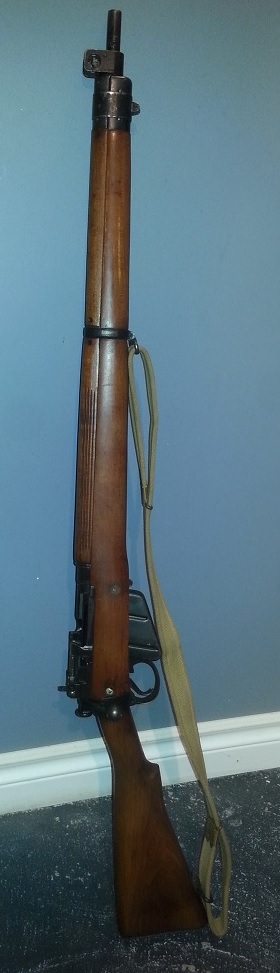
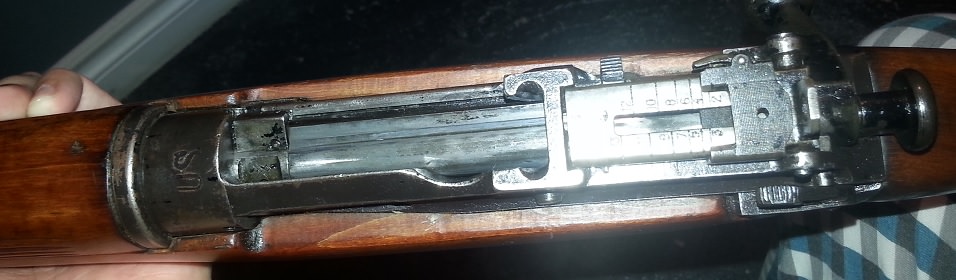
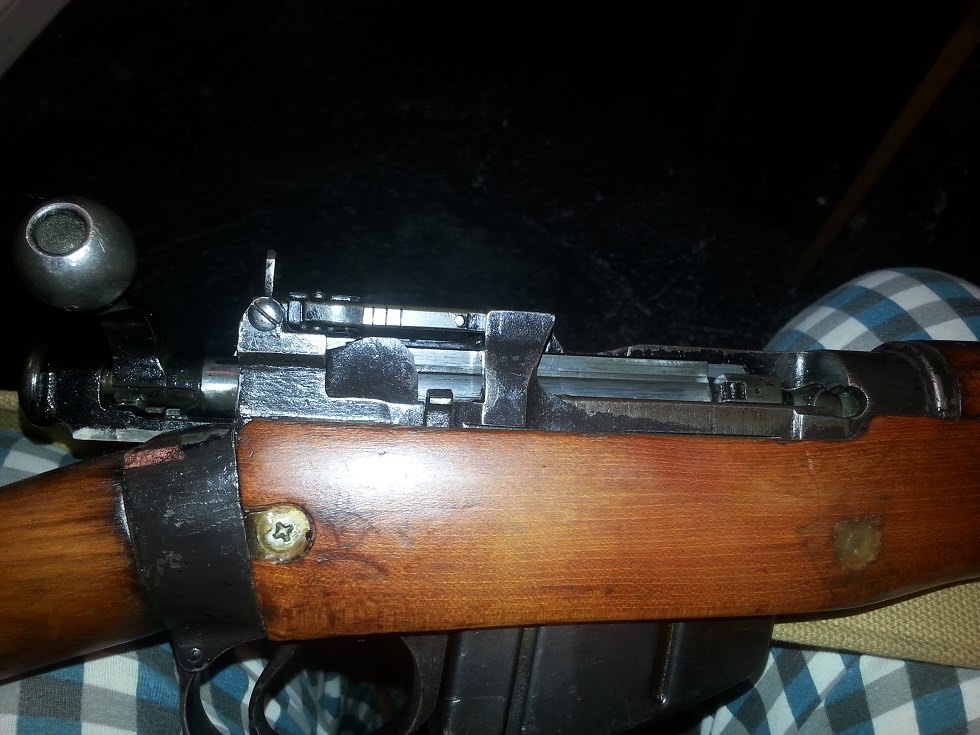
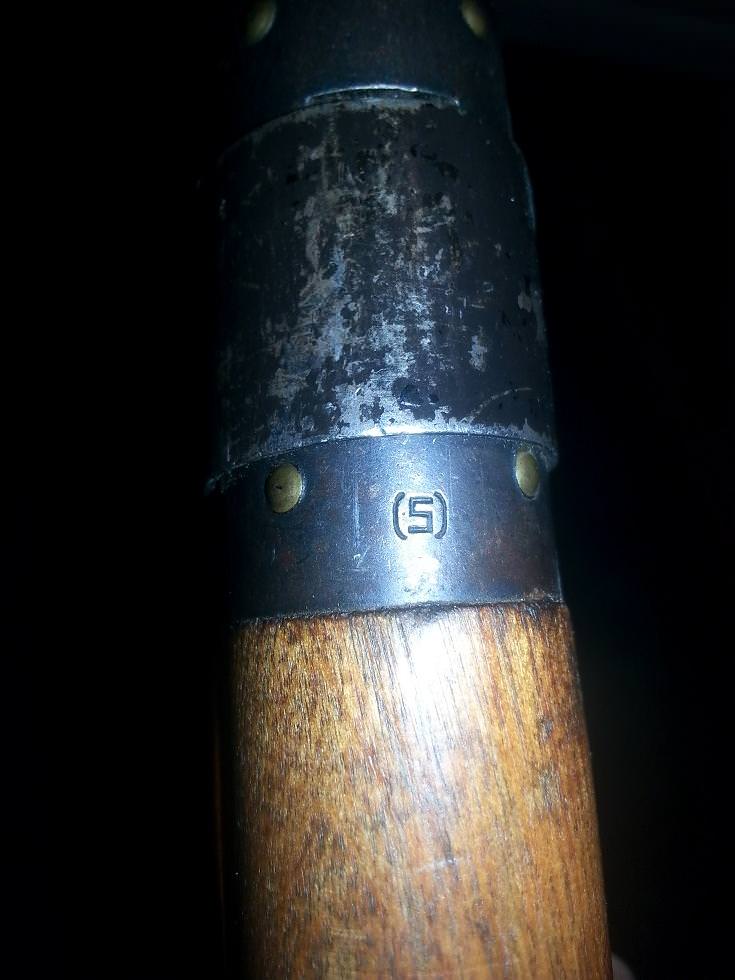
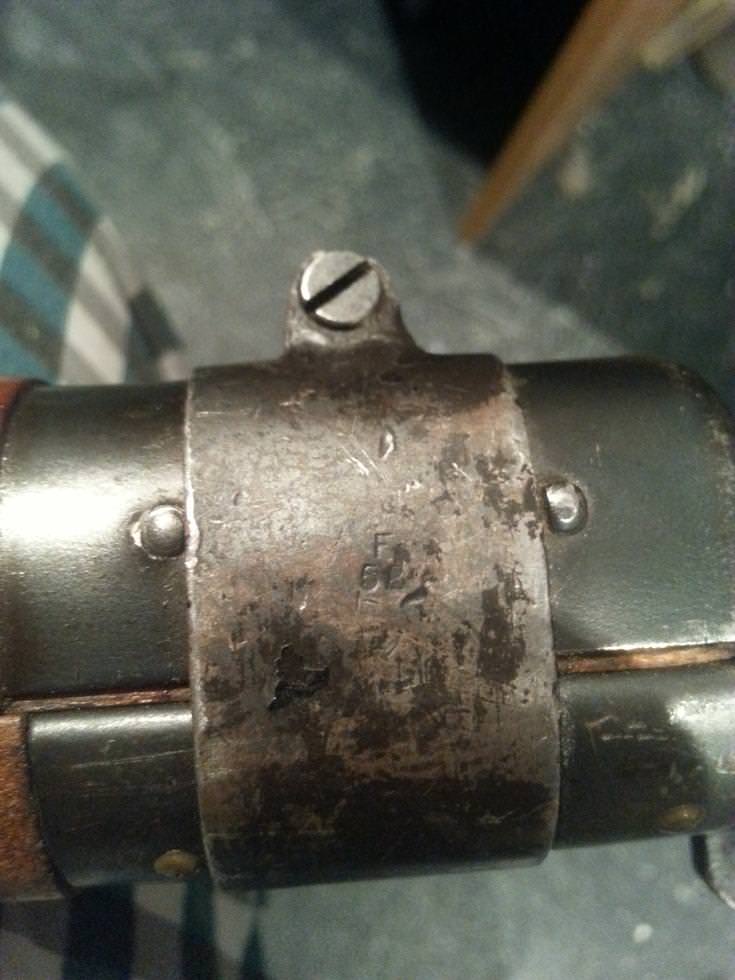
Anyone recognize this US stamp on my No 4 Mk1?

playkation

CGN Regular
Rating - 100%
42   0   0
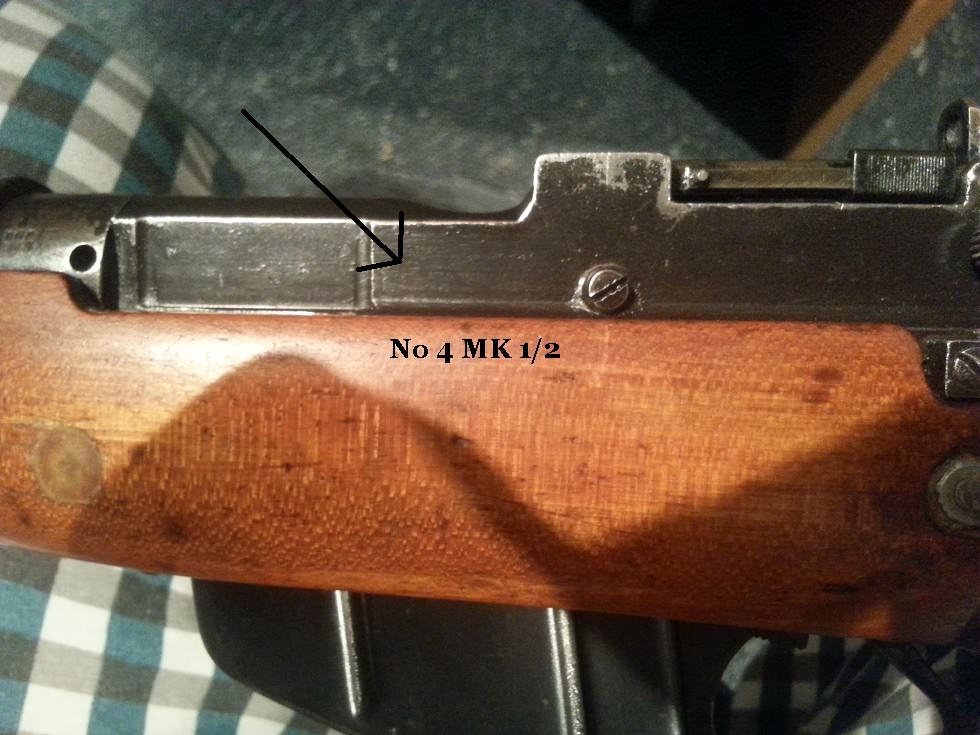
I bought this non matching refurb No4 several years ago and it's been my favorite shooter. Can anyone identify any of the markings on here? Both sides of the butt stock socket have been scrubbed. Was this standard practice during the 1/2 upgrade? The right side is blank, left has a serial number stamped into it along with the number 3. On the left side of the receiver it's faintly marked No 4 MK 1/2 under the finish, it's too faint for the camera to pick up. The left side of the front barrel band has an upside down F stamped into it with the numbers 52 below. Any thoughts on the big US stamp?


8Ij0qGA.jpg

0ka2XAg.jpg

Y2gK889.jpg

SA539TO.jpg

68S5qEY.jpg

J474nO3.jpg
 
That's a US Capture rifle from when America Captured Britain in the War of Independence. They peen off all that offensive Royal Insignia that the Revolutionary Army didn't like...…
 
That might be a left over savage marked part from when they stopped production. I believe I read that long branch got all the left over parts and continued making them post 1950 but used parts from different factories. If I am wrong someone correct me.
 
The cross dowel just below the front receiver ring is not a military thing - something similar done by target shooters back in the day to stabilize the front of action in the stock. The rear cross bolt does not appear to be a military part - correct ones have a slot, not a phillips, head. Seeing the nut on the left side, I would guess someone adapted a Mk.1 stock to use on the Mk. 1/2 conversion, but not done by a military armourer or supplier. Good question about the US stamp on top of the receiver - I have not seen one like that. The F52 mark is from Royal Ordinance Factory Fazakerley, 1952. The squared "S" is the Savage factory mark. Round cocking piece - must have been getting way down in the parts bin - used early on No. 4's, but most WWII era have slab sided version.
 
Last edited:
My first words were, "f#ck is that ever rough". Let's look at the sum of the parts:

- VERY scratchy casting, but slightly more finished on the left sidewall
- marked as a Mark I/2 conversion
- 1st type button cocking piece, so that part is early wartime or prewar
- British Mk I style bolt latch so it could not be a Savage Mk I*, except if this is a first production run Savage before the asterix variation was approved
- huge "US" stamped on receiver ring, but not in the usual place as a Savage "US PROPERTY" marking
- light coloured beechwood stock, which would be appropriate for a British postwar FTR rebuild
- the crosspin is an Indian affectation mentioned in the British manuals, meaning the stock could have been issued in India and travelled the world before landing in Canada
- Philips head screw on stock, which to me screams home gunsmithing project
- traces of Suncorite finish

I would ignore the markings on the detachable parts. They came out of a bin and could be any maker or age, as long as they were serviceable. To my eye and references, you have an early Savage No.4 Mk I that has a non-standard "US" marking for Lend Lease purposes, and which was rebuilt postwar to the MkI/2 standard, and has since been experimented with or repaired in recent years. The shame of it is the original Savage markings are now gone, so it has curiosity value and shooting value, but exceptionally limited collecting value.

 
That front bolt is not in the usual "Ishapore Screw" position (normally in front of the barrel reinforce) and it appears to be the same hardware as the bolt put through the rear of the forend. I've put threaded brass wire through the forend in the same position as the front one to attempt to stabilize a crack originating at the front triggerguard screw. None of this looks like in-service repairs to my eye.

milsurpo
 
Thanks guys. The stock has various markings stamped into it underneath so I would guess this is how it came out of the ftr process? In the last pic at the far left under the US stamp is a BNP under crown. My understanding is thats a post 1954 marking. So would it have gone through the FTR and 1/2 update at the same time then a number of years later come in for proofing? Did the brits proof them before surplusing them out? And any ideas as to why the socket markings got scrubbed? Did the brits scrub the savage marked guns?

 
Isn't his rifle considerably "newer" than the late 1700's War of Independence?

Yep. Could be a previously issued and marked British rifle sold or given to the US army as part of the kend leave or somehow brought into American service. Other land lease rifles that were not in previous British service would not have the English crown on them.

It could be a rebuild of several rifle parts also.
 
Thanks guys. The stock has various markings stamped into it underneath so I would guess this is how it came out of the ftr process? In the last pic at the far left under the US stamp is a BNP under crown. My understanding is thats a post 1954 marking. So would it have gone through the FTR and 1/2 update at the same time then a number of years later come in for proofing? Did the brits proof them before surplusing them out? And any ideas as to why the socket markings got scrubbed? Did the brits scrub the savage marked guns?

It wasn't the British who would have scrubbed off every marking, but the Indians. BTW, is the serial number anything like one or two digits and a C, then four digits? Any hints of a 1941 or 1942 production year marking on the sidewall?
 
The SN is stamped on the left side of the socket about 1/2 way up and is 19###. The bolt is NA24998A. I looked closely at both sides and there's no other markings I can see. The paint on here is on quite thick so that's not helping either. The No4 MK 1/2 (with the O in underlined superscript) is forward of and level with the ejector. That lettering is not stamped, it looks more like that chemically etched on lettering which is why it's so hard to see. That side of the receiver does have some pretty rough machining marks, not a nice cut by any means. Seems odd because pics of other ones I've seen they did not mill off all the info just to rebrand it a 1/2.

I looked closely and noticed (and now remember the seller mentioning this years ago when I bought it) that there was a stock crack repair done. Right behind where that front mystery screw is. I guess some home gunsmith fixed a crack, added the front screw for support and changed the rear so they matched.
 
Mo idea why there is that US on the receiver ring.
It appears to be a bitser. Who knows where or when it was assembled.
 
The SN is stamped on the left side of the socket about 1/2 way up and is 19###. The bolt is NA24998A. I looked closely at both sides and there's no other markings I can see. The paint on here is on quite thick so that's not helping either. The No4 MK 1/2 (with the O in underlined superscript) is forward of and level with the ejector. That lettering is not stamped, it looks more like that chemically etched on lettering which is why it's so hard to see. ...

...

OK, the small underlined O in the lettering for Number, is stylish but means nothing. The stamped serial number is good, but there is a letter missing and some other code like M47C for BSA, ROM for Maltby, or F or F in a circle for Fazakerley. The bolt number is in the range for a Royal Ordnance Fazakerley piece. Their digits were 20,000 to 29,999 with prefixes of HA through PF. Likely a replacement part made somewhere along their run between 1941 to 1944 and 1946 to 1955. The table I am reading in Skip Stratton's book isn't more explicit. As for the rifle serial number and the hand-applied other markings, yup that was how they did it. Perhaps there was a surplus of electric engravers and a shortage of stamps, but all postwar rifles seem to have this barely functional marking method. I am even more convinced that this is a parts rifle with repairs.
 
Last edited:
Thanks for your insights guys. I'm thinking the roughly scrubbed socket and the US stamp may have been some importer or someone else trying to pass this thing off as something other than a cobbled refurb or parts gun. Everyone wants their gun to have some interesting lineage to it, this one just doesn't. Fortunately the price I paid at the time reflected that so I'm not butthurt about it.
 
Back
Top Bottom