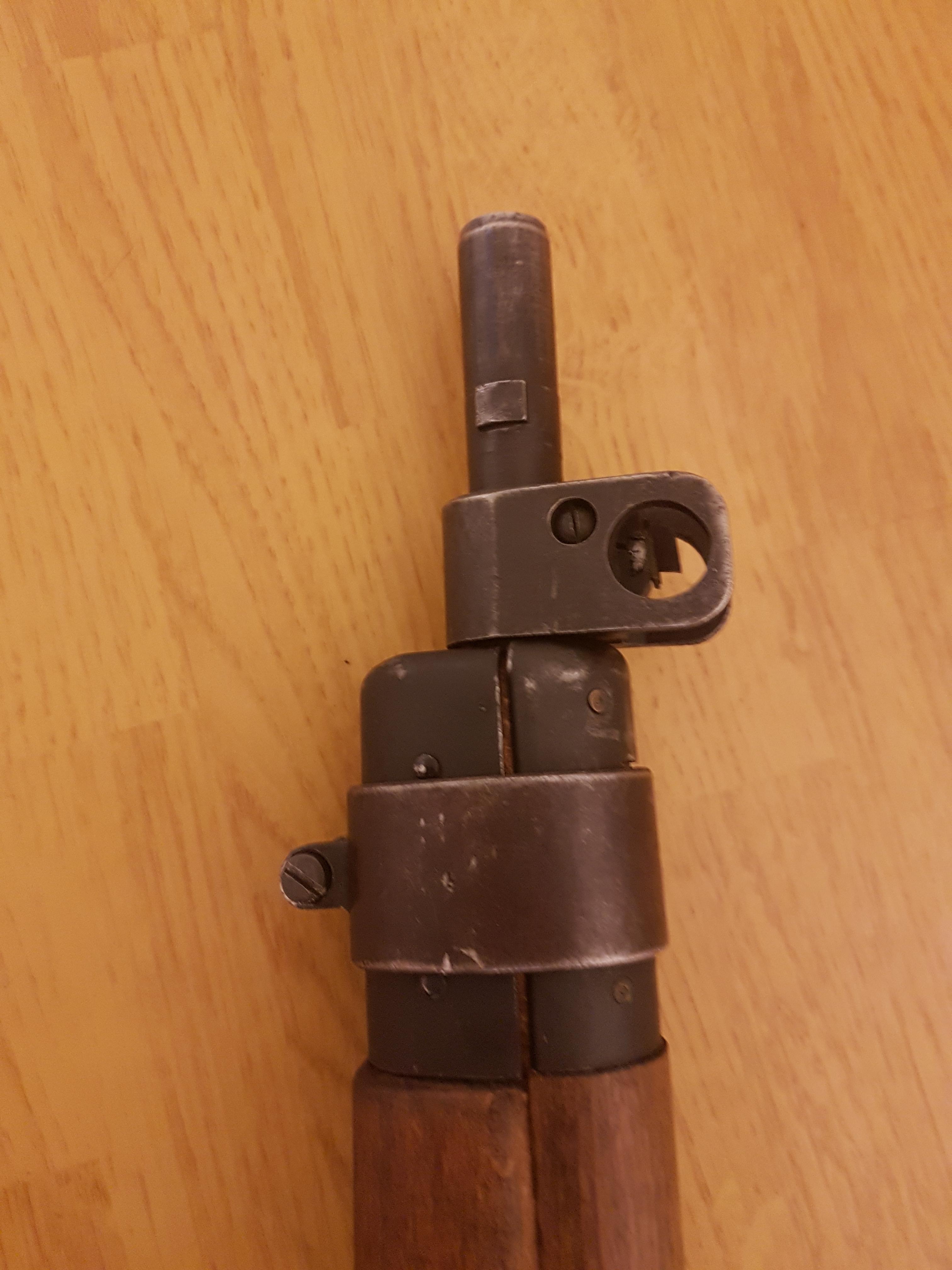
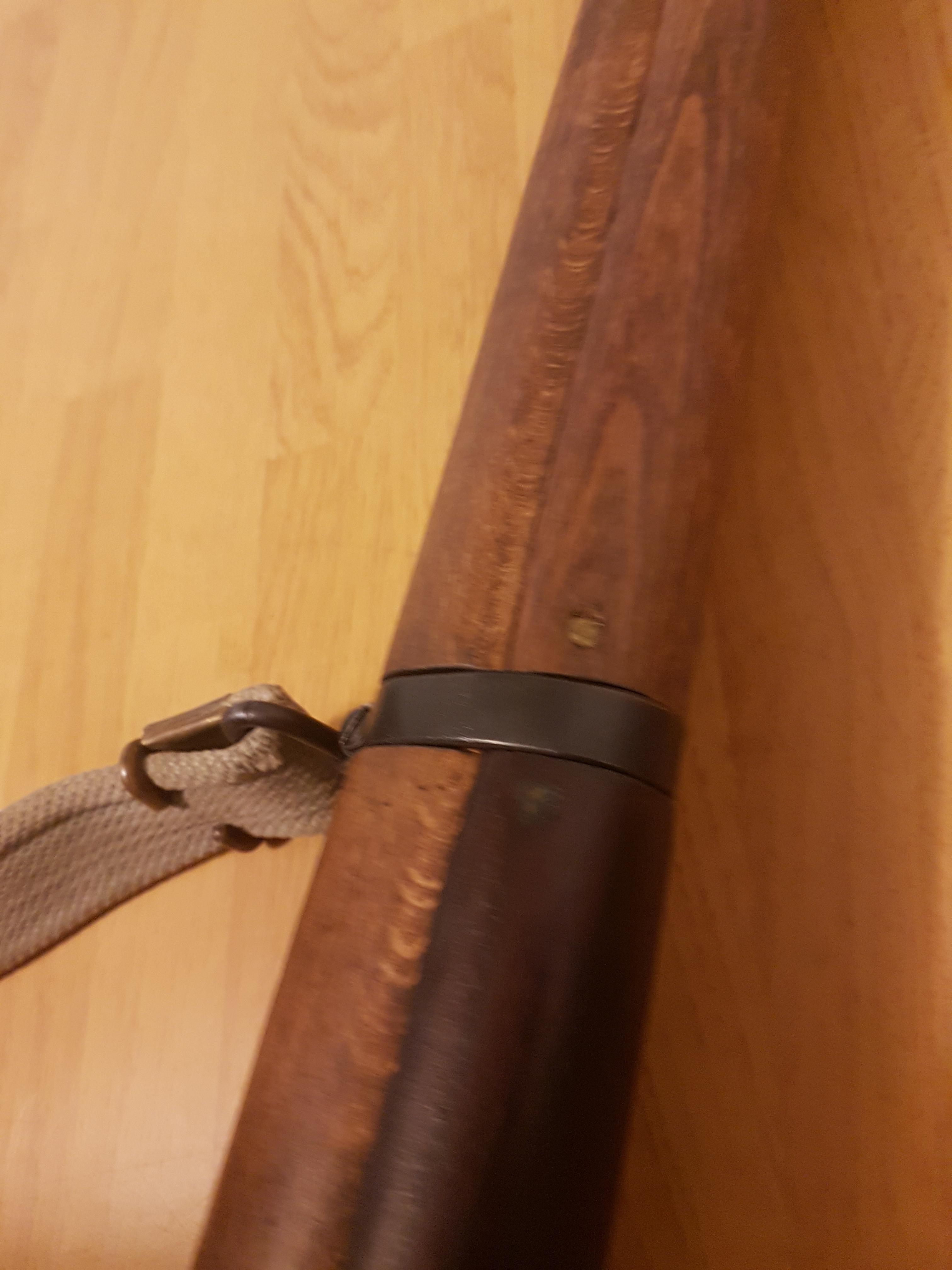
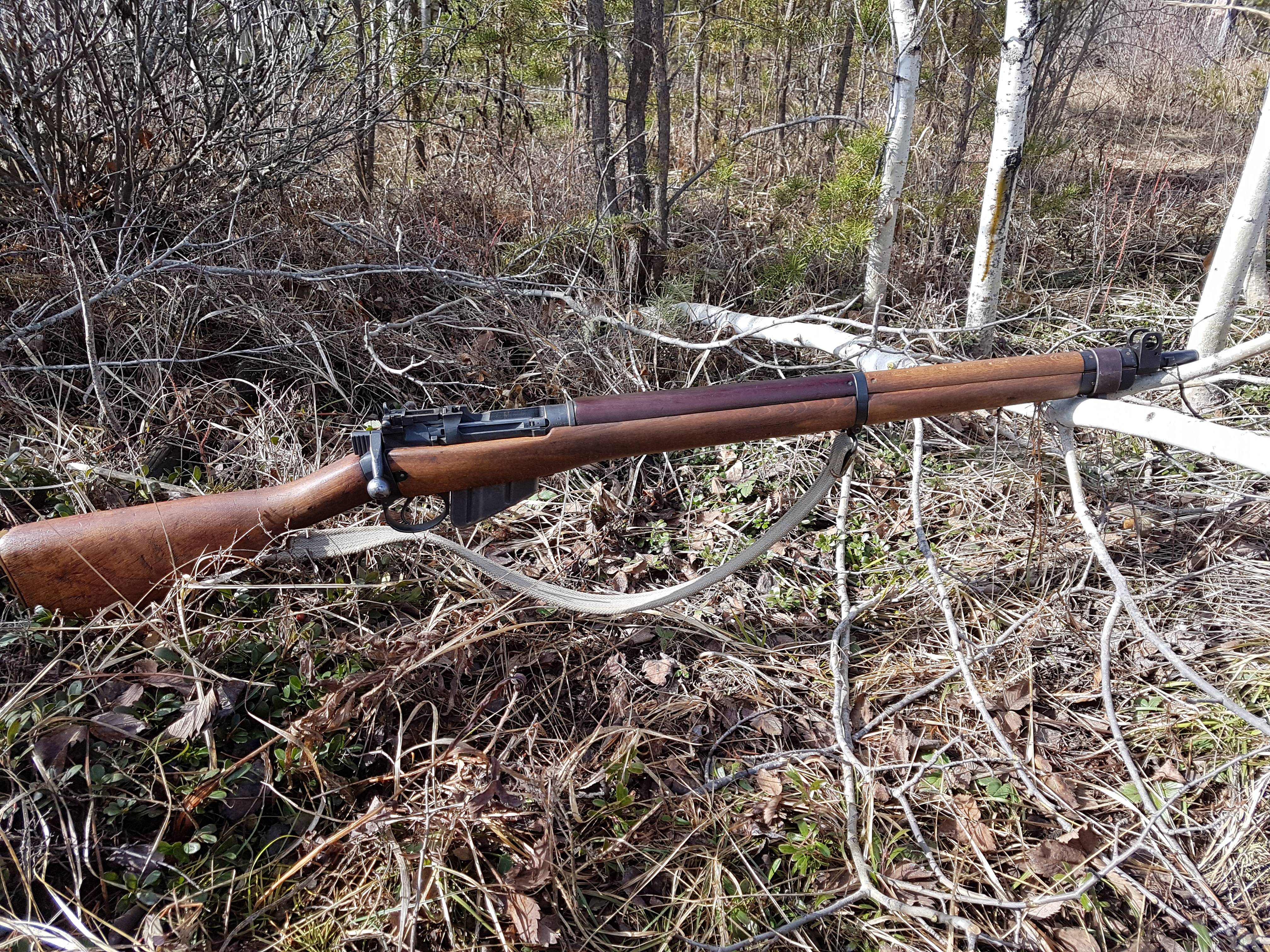
I recently restored a Lee Enfield No1 Mk3 recently and figured I would share it. I also did a No4 in the past so take away whatever you want from this. If some pictures are not showing up I think imgur is having issues. I am trying to fix it.
Here are the parts and tools you need. (not seen is the chisel) By far the hardest part of these projects is finding the parts. I can’t help you with that so good luck, but I can show you what you need. I am using a Ishapore 2A forend because finding 100 year old parts is very hard. If you want to be picky on having matching wood you either have to be lucky or chase around parts for the rest of your life.

If you need to replace the magazine you need to get the proper one. The left is a No1 and the right is a No4. The one on the right will work in both rifles but the one on the left will only fit in a No1. On a side not the OA on the left one means its Australian manufacture. The broad arrow on the right one means its British made.

You might as well prep you wood parts now. I recommend lin seed oil because its cheap, easy and what they used back in the day. Lin seed oil will spontaneously combust if you leave a soaked rag laying around for too long. You can google how to deal with that. Or you can just use paper towel and go burn it out side when you are done. Its by far the easiest method.
Before and after


First thing to do is loosen the buttstock screw, it’s a flat head and yes you need a comically long screw driver. You have to do this because the screw helps in holding the forend on the rifle. On the No4 this step is not needed, this is the first difference.

Next is removing these two screws. Might be easier if you take the bolt and magazine out. I won’t insult anyone’s intelligence with how to do that.

Remove the barrel band screw next. Or do this first, it won’t matter. The No4 does not have this piece. If your No1 does not have it good luck figuring out how to put on one but most will have it. You might have to tap the wood off the rifle with the bottom of your screw driver if you can’t just pull it off.

Put the sight protector. It’s a two screw system so you will need two flatheads to screw it in. The No4 does not have this.

Do a test fit of the nose cap and try to screw in the bolt and nut. I had to chisel out some wood because the bolt did not reach the nut with the nose cap on the forend. When you test fit is successful tape the nut in place. It will make your life a lot easier.


Try putting the forend on to the rifle. It might just slide on nicely but chances are you will have to tap it with the screw driver handle to get it on. Not so hard that you ding up the wood though. I was able to tap on my No4. Doing this No1 was a fight. I tried putting it on with hand pressure then taking it off and looking for the hot spots. If you look around inside you should be able to small compressions or scrape marks. Take you chisel and remove small amounts of wood in the various spots. I was not able to get a good picture. For the No1 make sure the barrel band is lined up in it’s grooves when you are doing this.
Reattach the trigger to the rifle. You may have to remove some wood to do this but try and get the angel right first. The No1 was picky on getting it in place. Once you have the screws back in put the bolt in and do a couple dry fires to make sure it works. You may notice the trigger feels different from when it was a sporter. I don’t know why this is. The No4 was a lot different and the No1 was a little different. It makes no difference on accuracy or reliability.
The No1 trigger needed some wood fitting. When I squeezed the trigger it worked fine. If you squeezed it too far, let’s say because the safety is on it would stick back. Then when you released the safety the firing pin would go forward. That is obviously a problem. It took me awhile to figure it out but below you can see the area I removed some wood (mostly with sand paper). After a little wood is removed the trigger worked like its suppose to.

When putting the forend back on make sure the barrel band is in its grooves. For the No4 you need to put the ring around the barrel to hold the rear handguard in place. Ring can be seen below. Forgot to buy one and it really slowed down my No4 restoration.

Here are the parts and tools you need. (not seen is the chisel) By far the hardest part of these projects is finding the parts. I can’t help you with that so good luck, but I can show you what you need. I am using a Ishapore 2A forend because finding 100 year old parts is very hard. If you want to be picky on having matching wood you either have to be lucky or chase around parts for the rest of your life.
If you need to replace the magazine you need to get the proper one. The left is a No1 and the right is a No4. The one on the right will work in both rifles but the one on the left will only fit in a No1. On a side not the OA on the left one means its Australian manufacture. The broad arrow on the right one means its British made.
You might as well prep you wood parts now. I recommend lin seed oil because its cheap, easy and what they used back in the day. Lin seed oil will spontaneously combust if you leave a soaked rag laying around for too long. You can google how to deal with that. Or you can just use paper towel and go burn it out side when you are done. Its by far the easiest method.
Before and after
First thing to do is loosen the buttstock screw, it’s a flat head and yes you need a comically long screw driver. You have to do this because the screw helps in holding the forend on the rifle. On the No4 this step is not needed, this is the first difference.
Next is removing these two screws. Might be easier if you take the bolt and magazine out. I won’t insult anyone’s intelligence with how to do that.
Remove the barrel band screw next. Or do this first, it won’t matter. The No4 does not have this piece. If your No1 does not have it good luck figuring out how to put on one but most will have it. You might have to tap the wood off the rifle with the bottom of your screw driver if you can’t just pull it off.
Put the sight protector. It’s a two screw system so you will need two flatheads to screw it in. The No4 does not have this.
Do a test fit of the nose cap and try to screw in the bolt and nut. I had to chisel out some wood because the bolt did not reach the nut with the nose cap on the forend. When you test fit is successful tape the nut in place. It will make your life a lot easier.
Try putting the forend on to the rifle. It might just slide on nicely but chances are you will have to tap it with the screw driver handle to get it on. Not so hard that you ding up the wood though. I was able to tap on my No4. Doing this No1 was a fight. I tried putting it on with hand pressure then taking it off and looking for the hot spots. If you look around inside you should be able to small compressions or scrape marks. Take you chisel and remove small amounts of wood in the various spots. I was not able to get a good picture. For the No1 make sure the barrel band is lined up in it’s grooves when you are doing this.
Reattach the trigger to the rifle. You may have to remove some wood to do this but try and get the angel right first. The No1 was picky on getting it in place. Once you have the screws back in put the bolt in and do a couple dry fires to make sure it works. You may notice the trigger feels different from when it was a sporter. I don’t know why this is. The No4 was a lot different and the No1 was a little different. It makes no difference on accuracy or reliability.
The No1 trigger needed some wood fitting. When I squeezed the trigger it worked fine. If you squeezed it too far, let’s say because the safety is on it would stick back. Then when you released the safety the firing pin would go forward. That is obviously a problem. It took me awhile to figure it out but below you can see the area I removed some wood (mostly with sand paper). After a little wood is removed the trigger worked like its suppose to.
When putting the forend back on make sure the barrel band is in its grooves. For the No4 you need to put the ring around the barrel to hold the rear handguard in place. Ring can be seen below. Forgot to buy one and it really slowed down my No4 restoration.
Last edited: