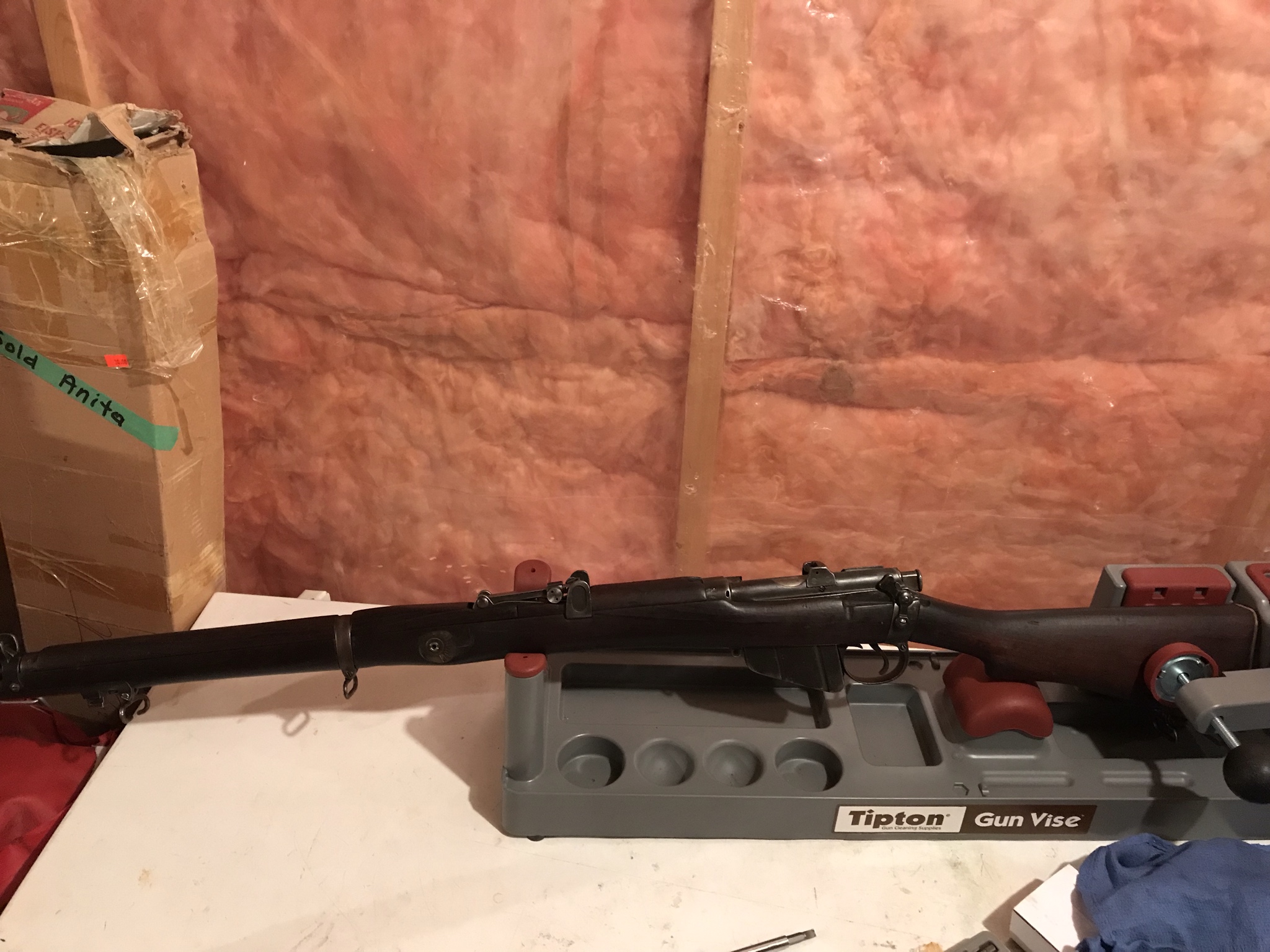
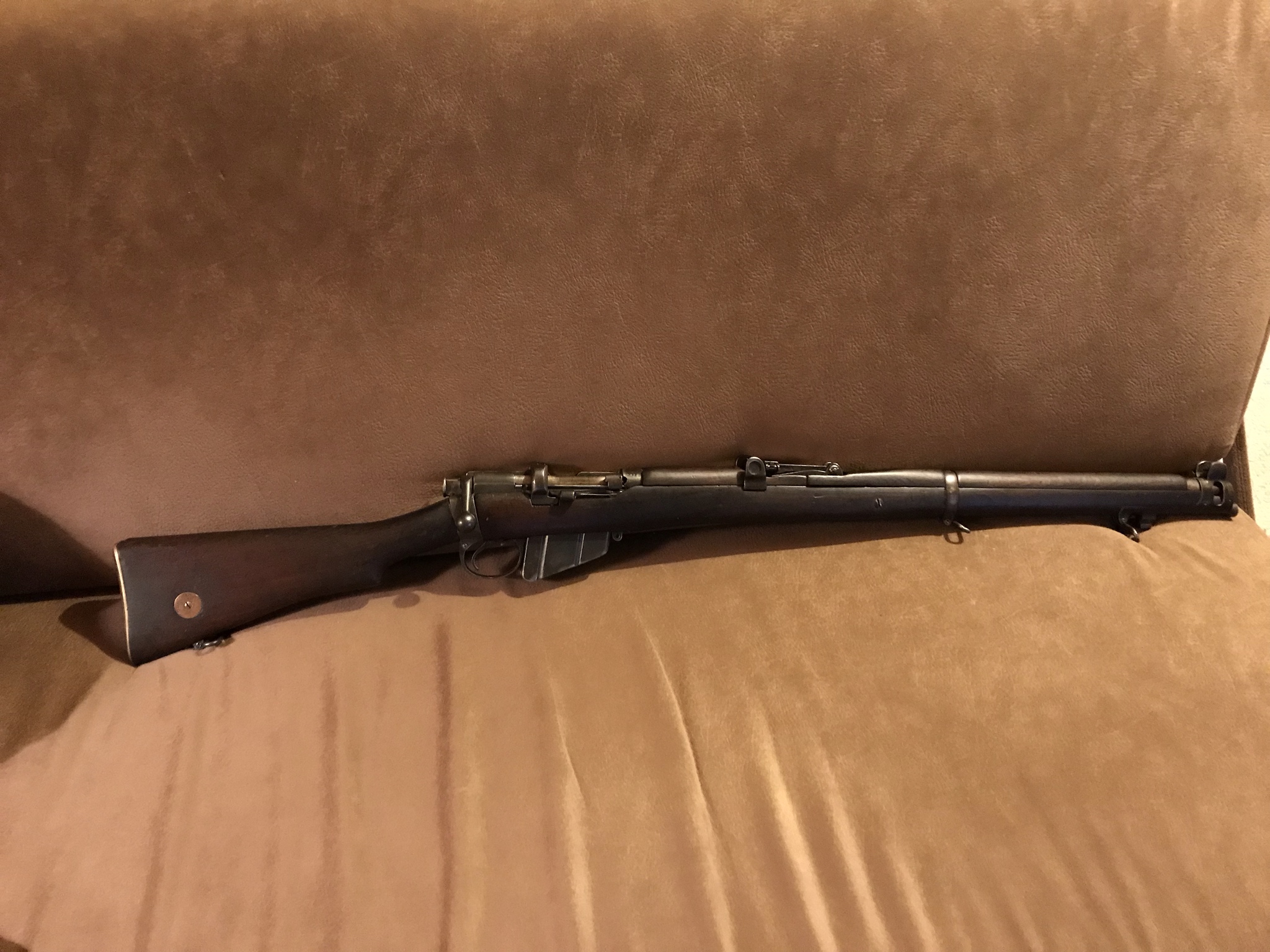
Your rifle is interesting in that the markings do tell a bit of a story.
It is a nice example of a Mk.III that looks like it has been there and done that. It has taken (and no doubt given) a schmitt kicking in two world wars.
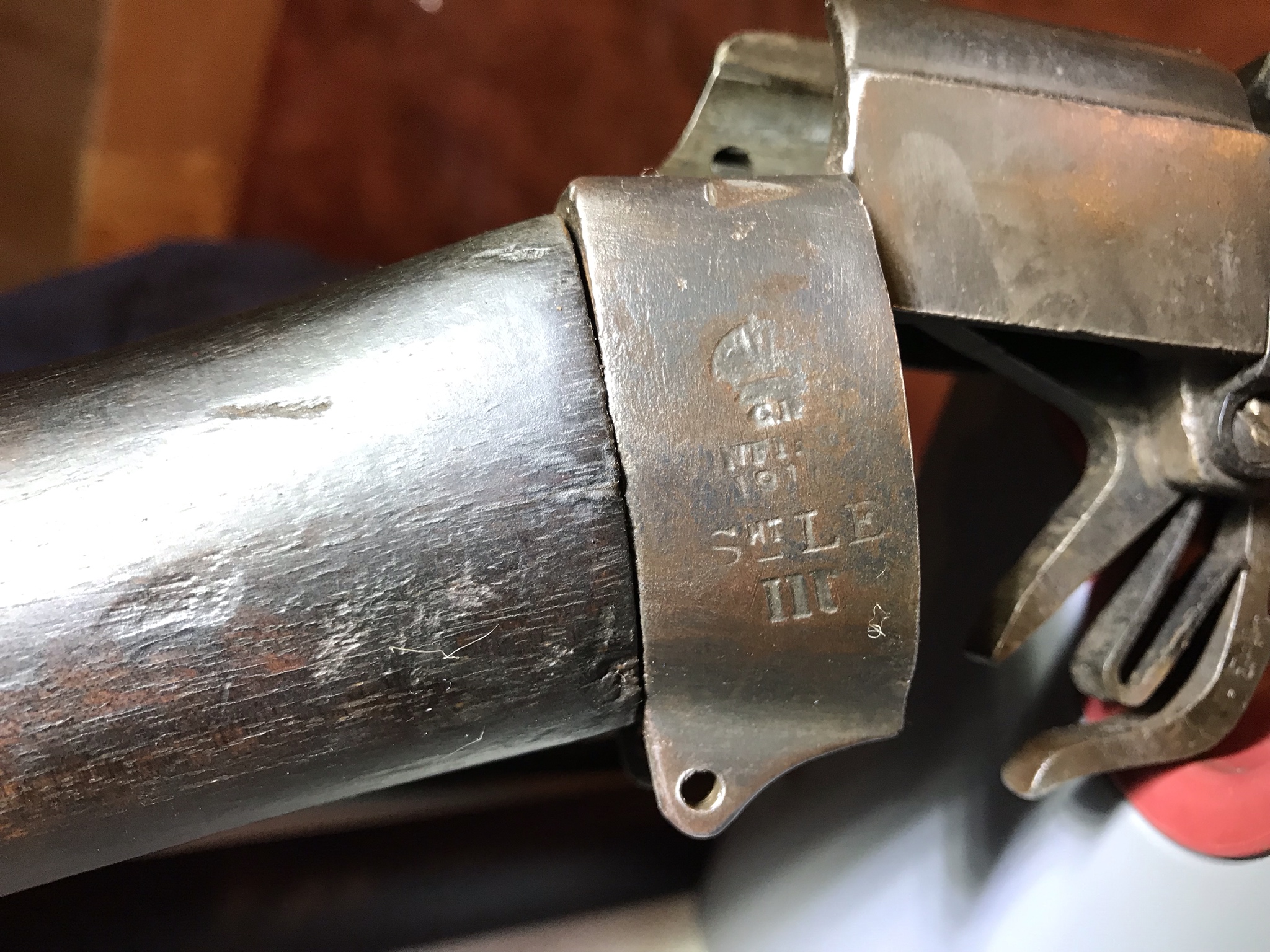
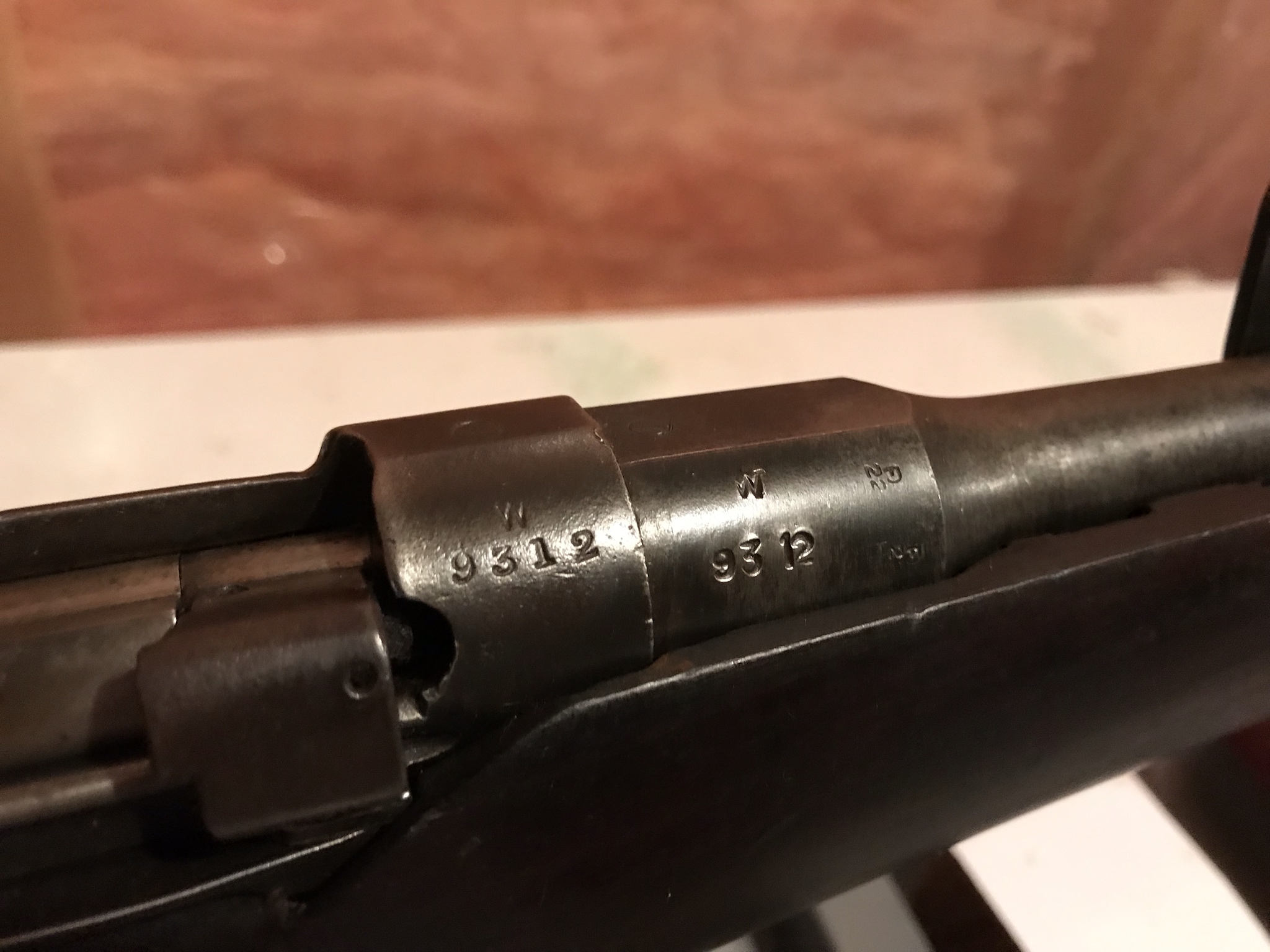
Starting out as a 1910 (or whatever) Sht.LE Mk.III, it probably saw service in the first world war. It saw enough use to need a new barrel.
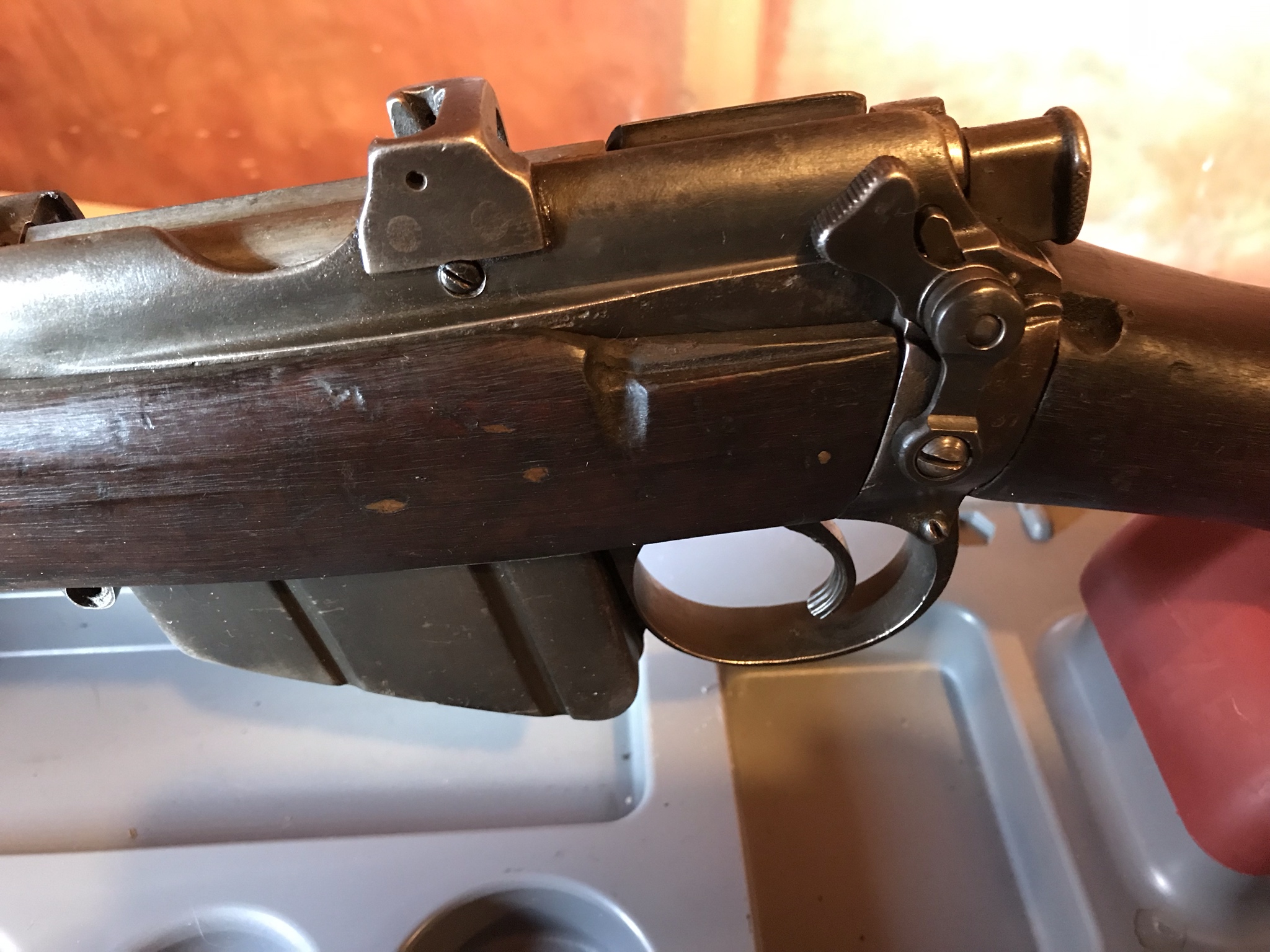
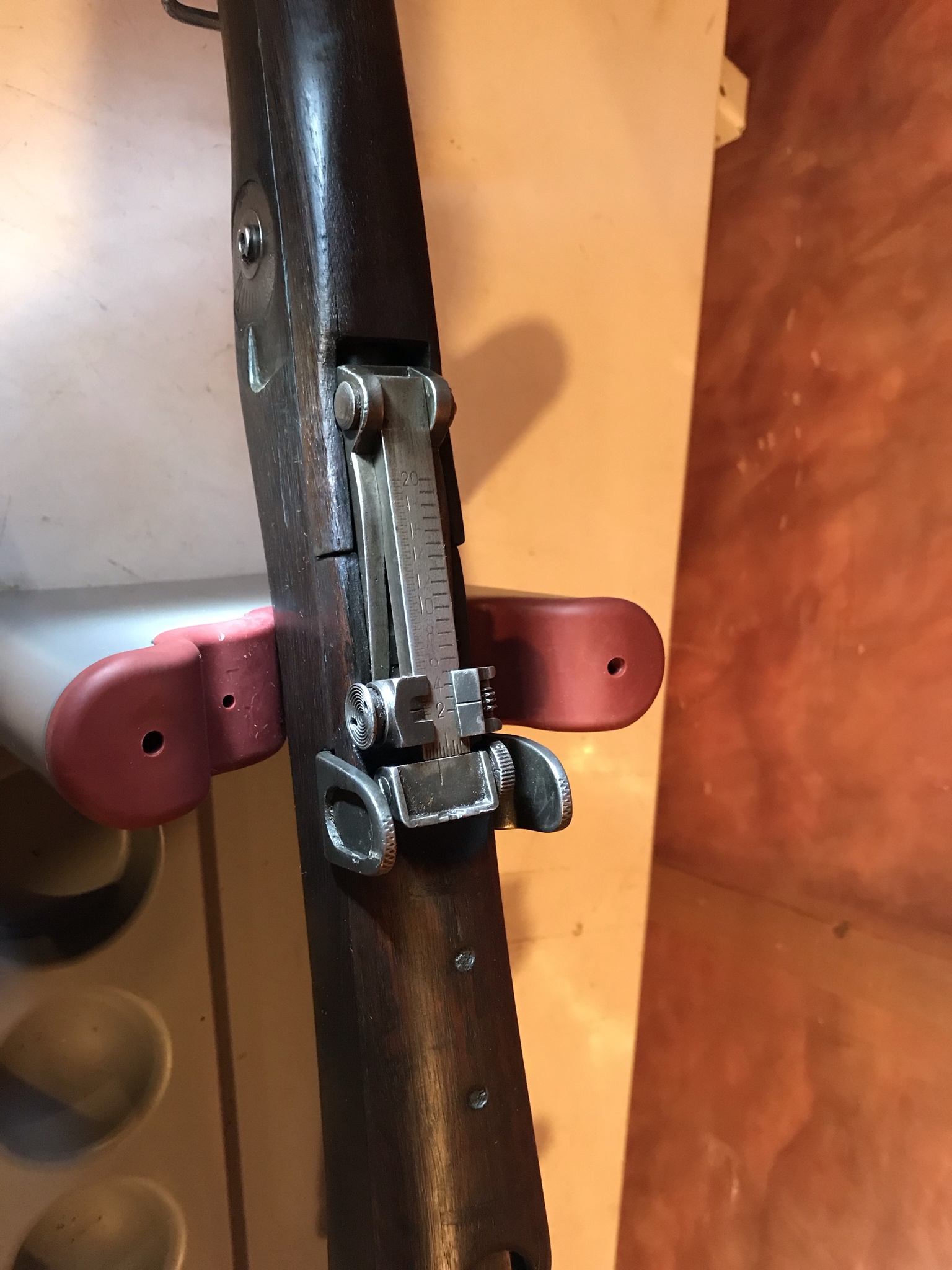
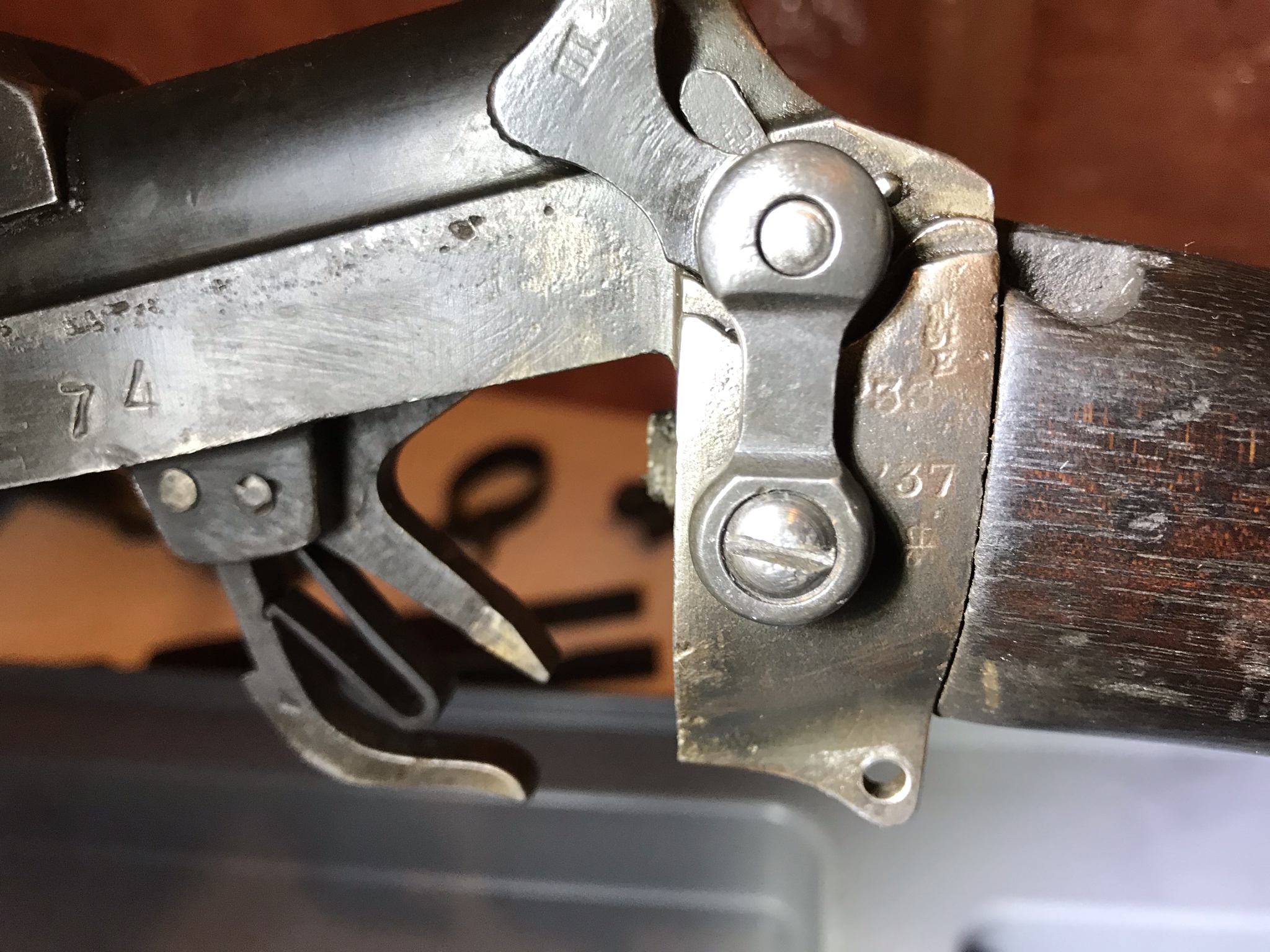
After the war in 1933 and 1937 it went back through RSAF Enfield for repair or up grades, as witnessed by the date and inspector stamps marked on the left hand wrist. Could have been an earlier barrel change or the sight upgrade for Mk.VII ammo. Could have been lots of things but it was sufficient work to be inspected and noted on the rifle.
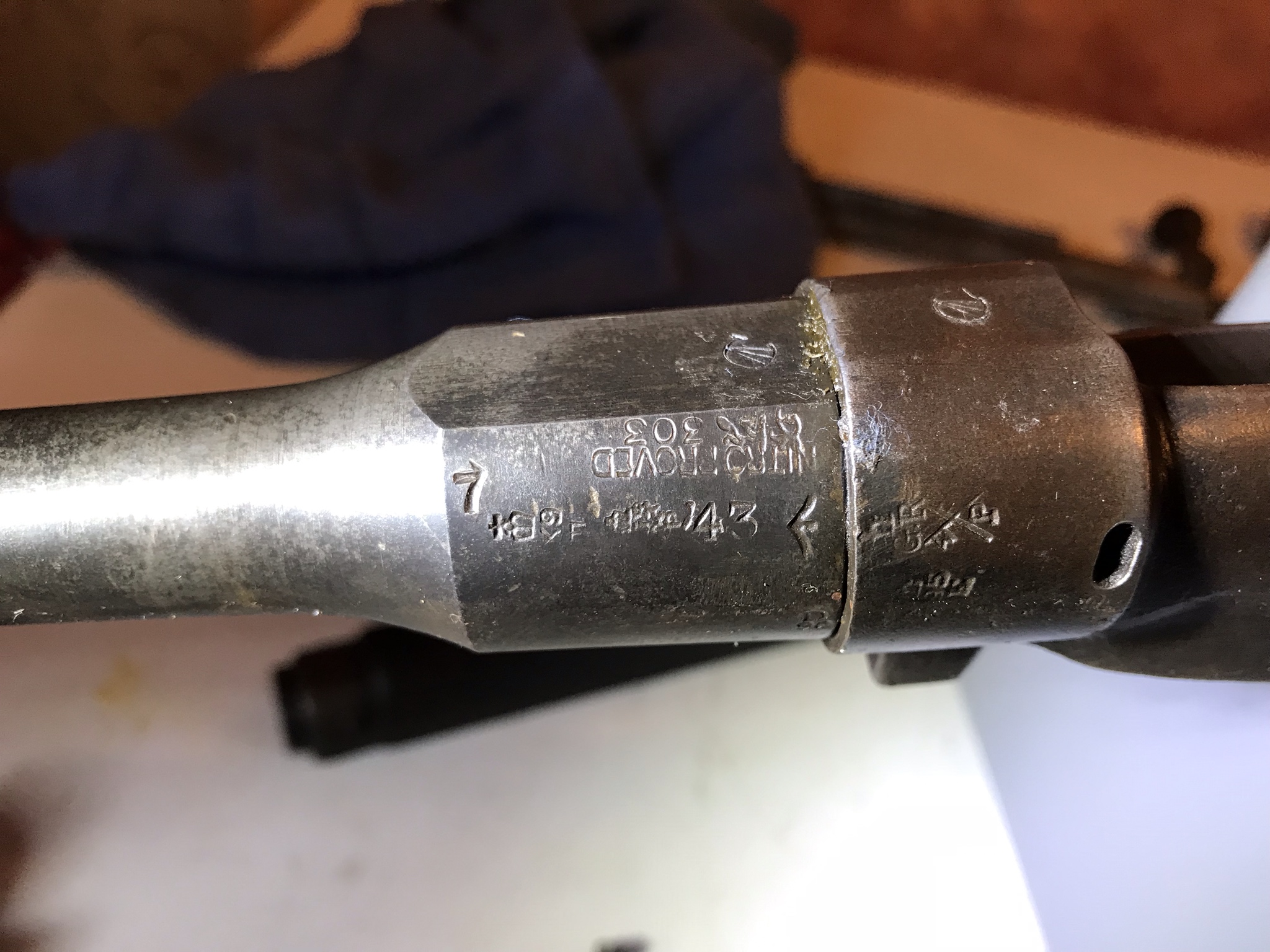
This is where the imagination can be used. In 1943, it had its barrel replaced with an Enfield made unit. This could have been the first or second barrel change. Most likely done in the UK. Need to see the right hand side of the nocks form to help determine who did it, factory or unit armourer.
Canada had a similar barrel replacement program around that time, but used Long Branch made Sht.LE replacement barrels. They tended not to number the barrel to the action.
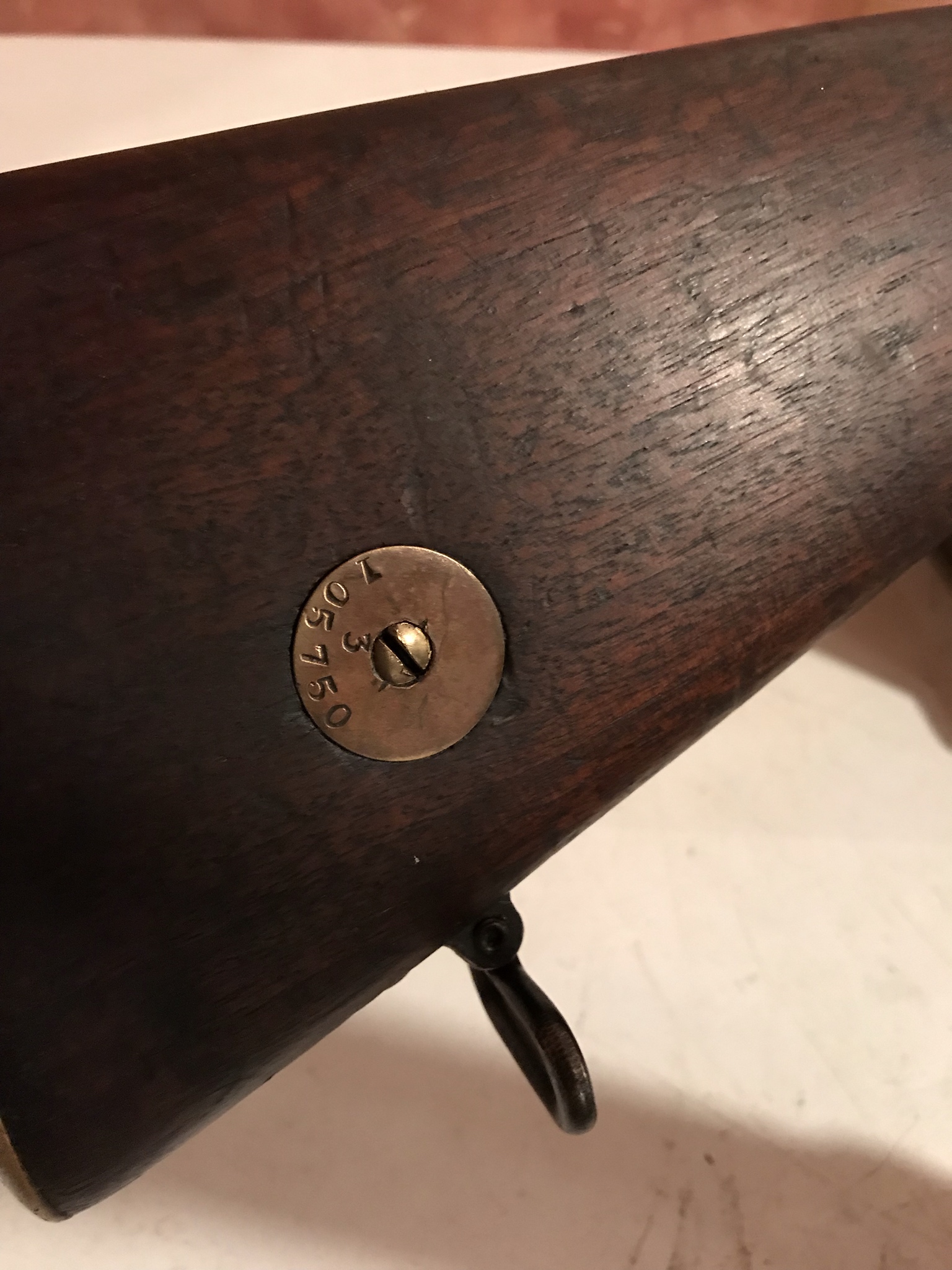
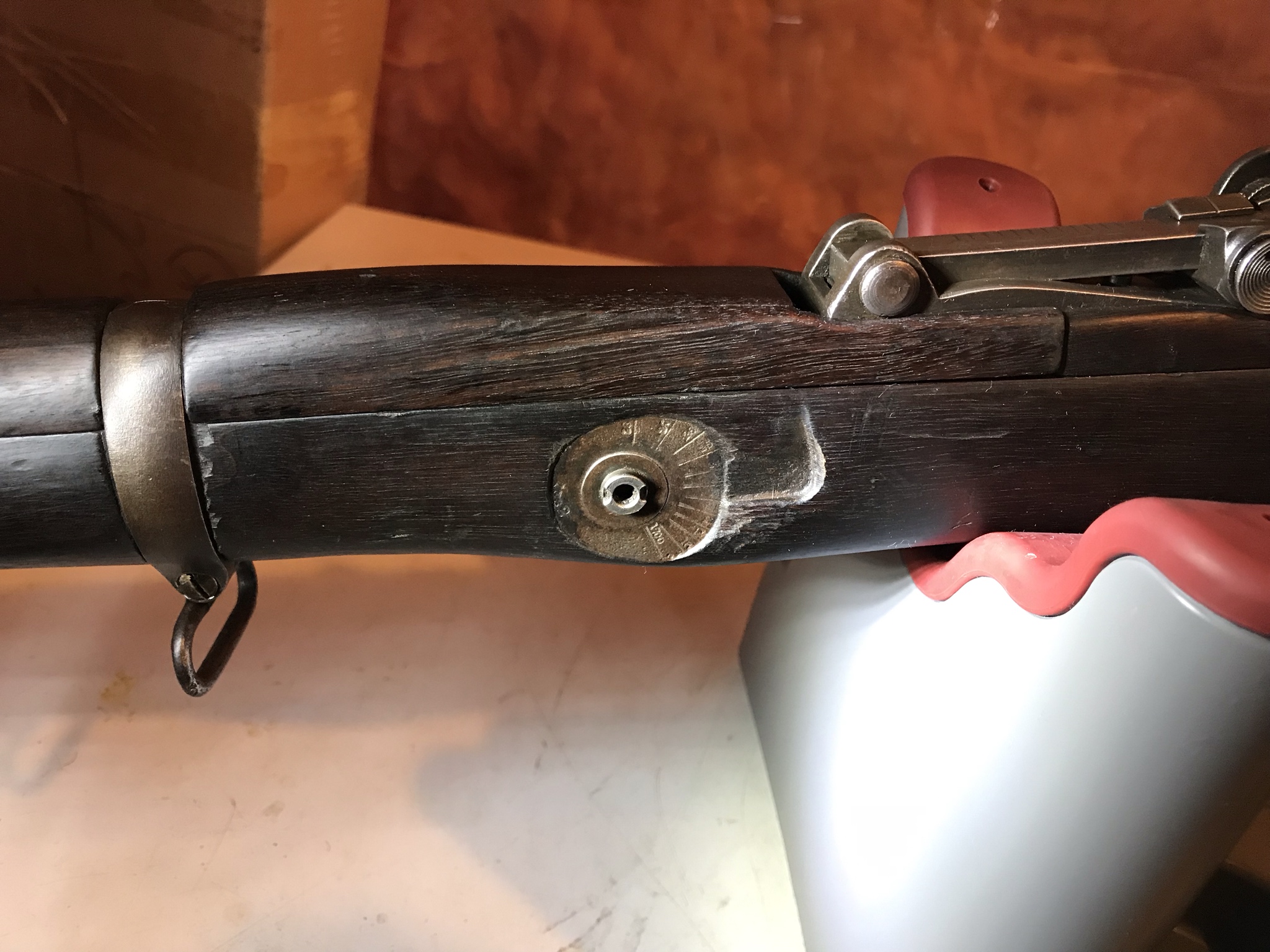
The rifle came into Canadian possession after the barrel change in 43 and was marked with the 'C broad arrow' govt acceptance markings. This mark was used from 1905 up until 1949 when a new stylised maple leaf became to be used, but the C broad arrow is found still marked on things into the early 1950's. The acceptance mark could have been applied by a Canadian unit in England. I dont recognise the unit markings on the butt disc, but it is another clue.
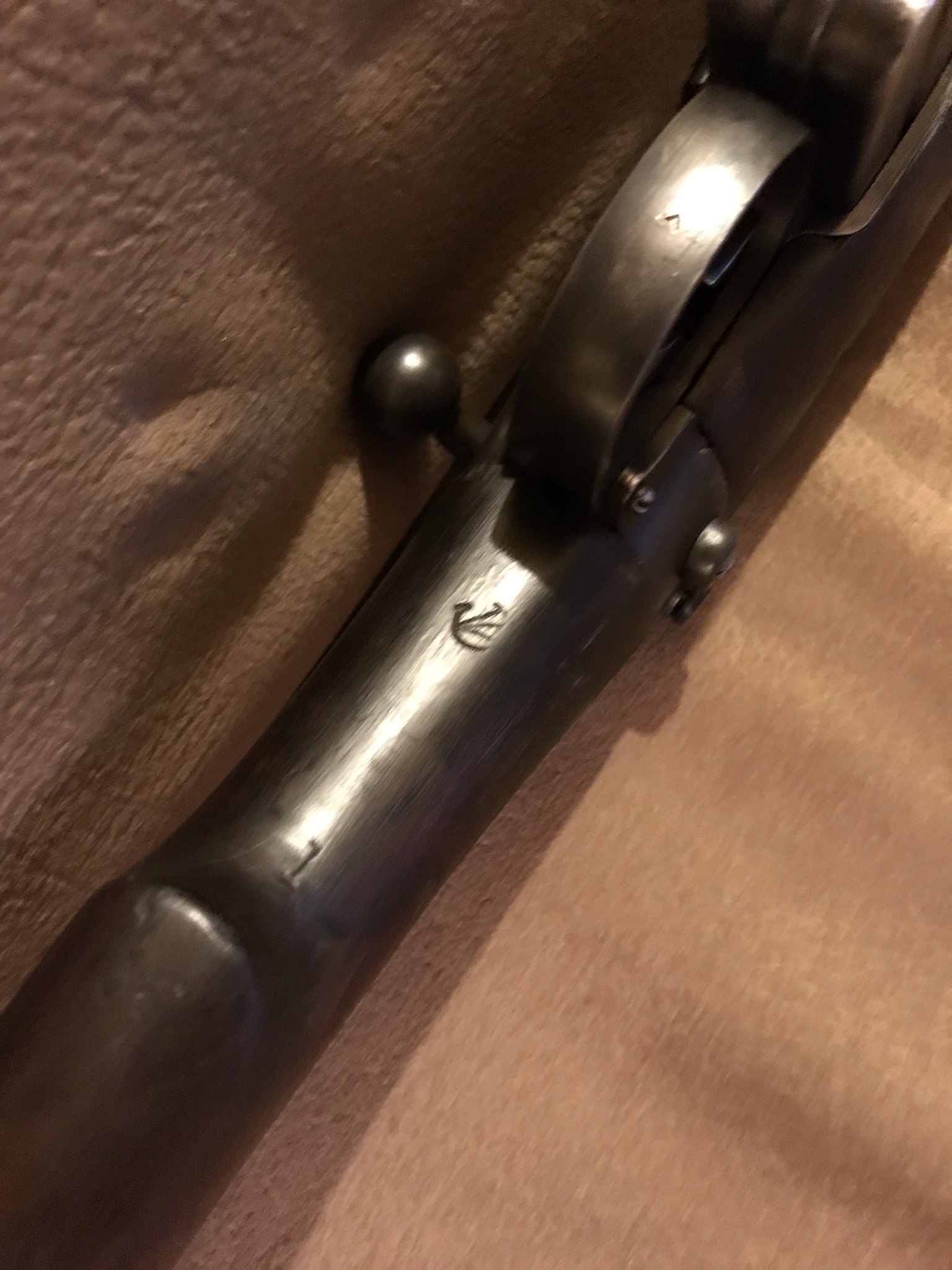
So after the second World war, it was in still England and was sold off as surplus onto the UK domestic market through the British Gun Trade. There is a London Proof House marking right beside the NITRO PROVED. Marking is a graphic of an armoured arm brandishing a scimitar sword called a 'seaxe'.
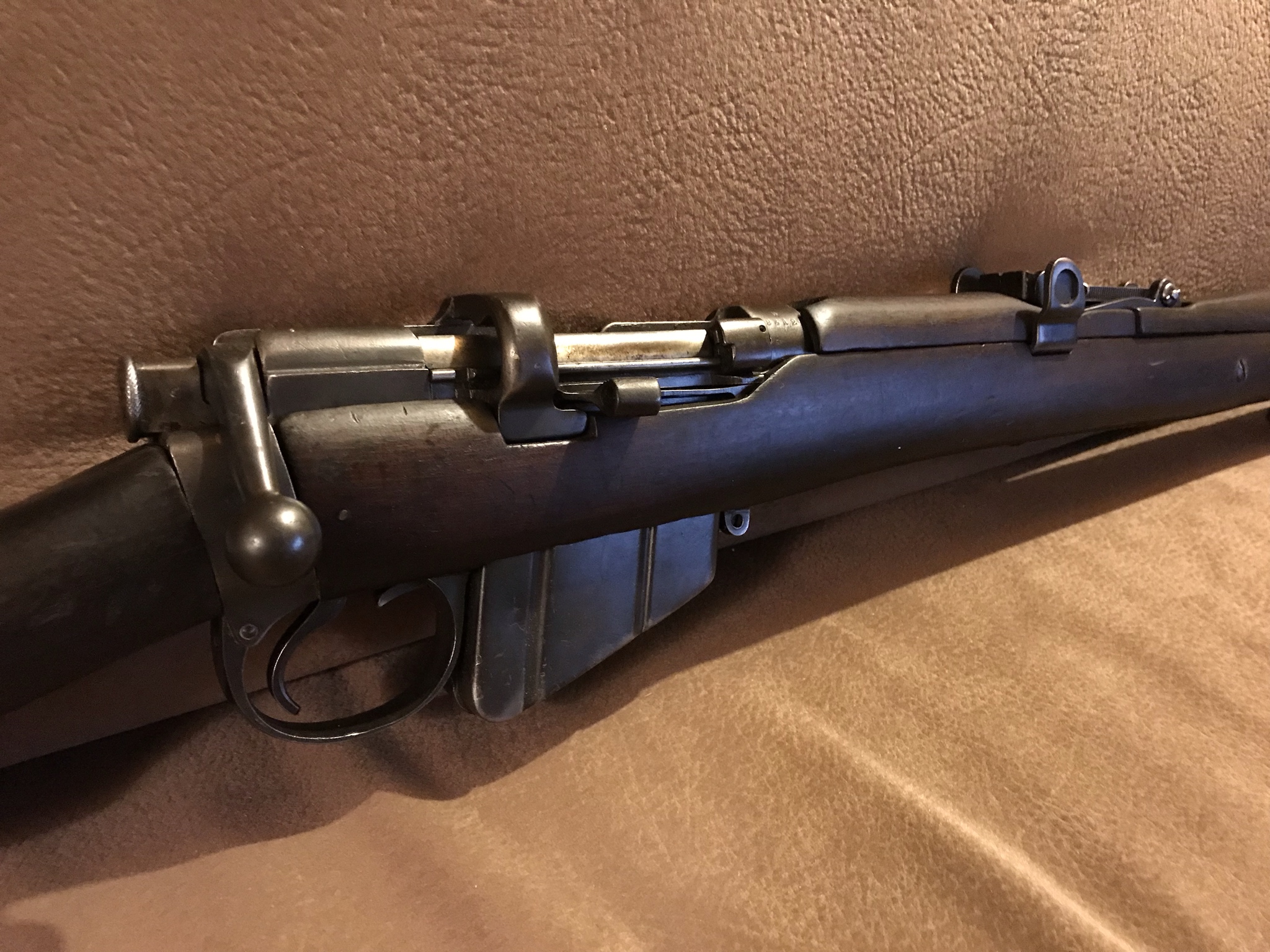
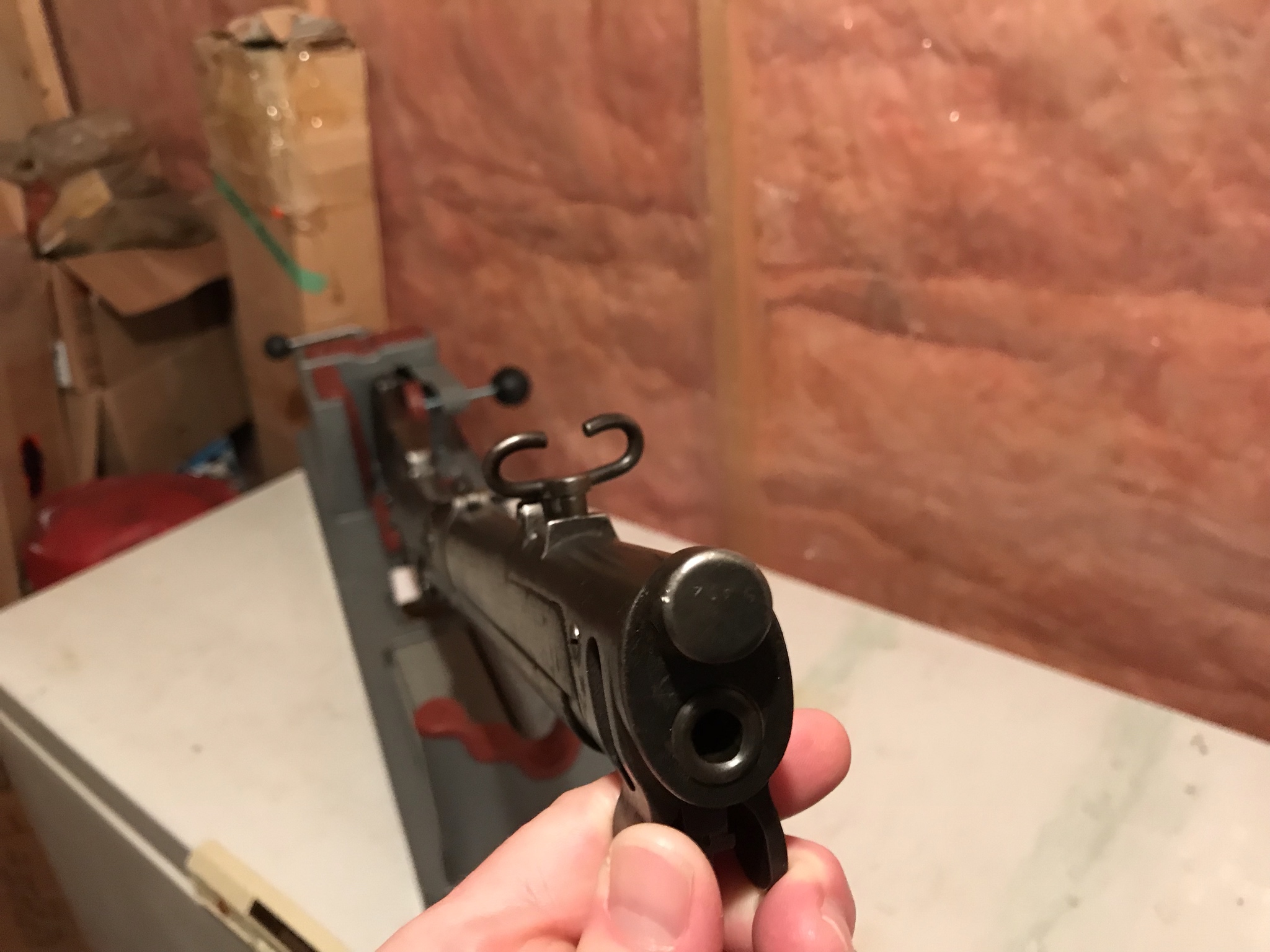
This one still has the remnants of the volley sights which were made obscolete in 1916. It has retained them until a point where the flip up arms were removed as an expediency. The rifle did not get a full factory rebuild to like new up to date specs. It did not get new wood as the old wood was still serviceable. This was war time and a dark times for England.
So lots of possible scenarios for this one. But it is basically complete and original, not a desporterised example. Reading the markings, tool marks, wear in the blue all are clues to the detective work in figuring out the story.
A nice example to have in any collection. Yes, volley arms are available, you will find them on ebay every day. But to fit such is actually taking away one or two of those clues to the rifle's history. Leave it alone, it probably saw service looking exactly as it does now. I suggest that if you want a rifle with volley sights, go find another example to add to the collection.

) You actually have a bit of a time capsule frozen in time.
If you added the volley sight arms, with a 1943 rebarrel, they would be a dead give away that the rifle has been messed with post service. If I picked it up at random and evaluated it and saw volleys sights and the three late dated repairs, I would be very suspicious that it was a desportered one too.
In a similar way that many new owners of Sht.LE rifles think that the rifle needs to have a magazine cut off plate and piling hook to be complete. If I see those, I think either that the rifle has been hiding untouched in stores somewhere, or more likely improved and 'corrected' by civilian owner.