












































You are using an out of date browser. It may not display this or other websites correctly.
You should upgrade or use an alternative browser.
You should upgrade or use an alternative browser.
303 brass life
- Thread starter drill702
- Start date


Full power loads in a Lee-Enfield 3-4 loads max usually. Low power loads with cast I am getting 8. In my P14 'S cast loads I am at 17 so far. Try neck sizing I get acouple more firings. I full length resize as I am not going to keep nine separate cases lots for my rifles. I use most brands of cases basically what I can find. PPU seems to last the longest no matter how powerful I load them.
Lee-Enfields are known for stretching the cases due to rear locking lugs making the bolt have some spring in it. Bolt flexs under pressure. Some guns stretch their cases more than others.
Keep a good supply of cases for future supply.
Lee-Enfields are known for stretching the cases due to rear locking lugs making the bolt have some spring in it. Bolt flexs under pressure. Some guns stretch their cases more than others.
Keep a good supply of cases for future supply.
I've loaded hundreds of cast loads for 5 different 303's ( #1, 2x #4's, #5 and a Ross) I try to keep brass separated by rifle. Neck size only. Have got as many as 20 reloads on some cases. Have had one case separation in 40yrs and that was a jacketed reload. I feel segregated brass and neck sizing is the way to go for long case life


In 1914 the Enfield chambers were reamed larger due to poorly made ammunition and the dirty conditions of trench warfare. Meaning a WWI dated Enfield rifle will have larger chambers and very hard on brass.
On a new bolt action rifle you bump the shoulder .001 to .002 from its fired length when sizing. And on these rifles the distance between a GO and NO-GO gauges averages .003 for setting up a new rifle.
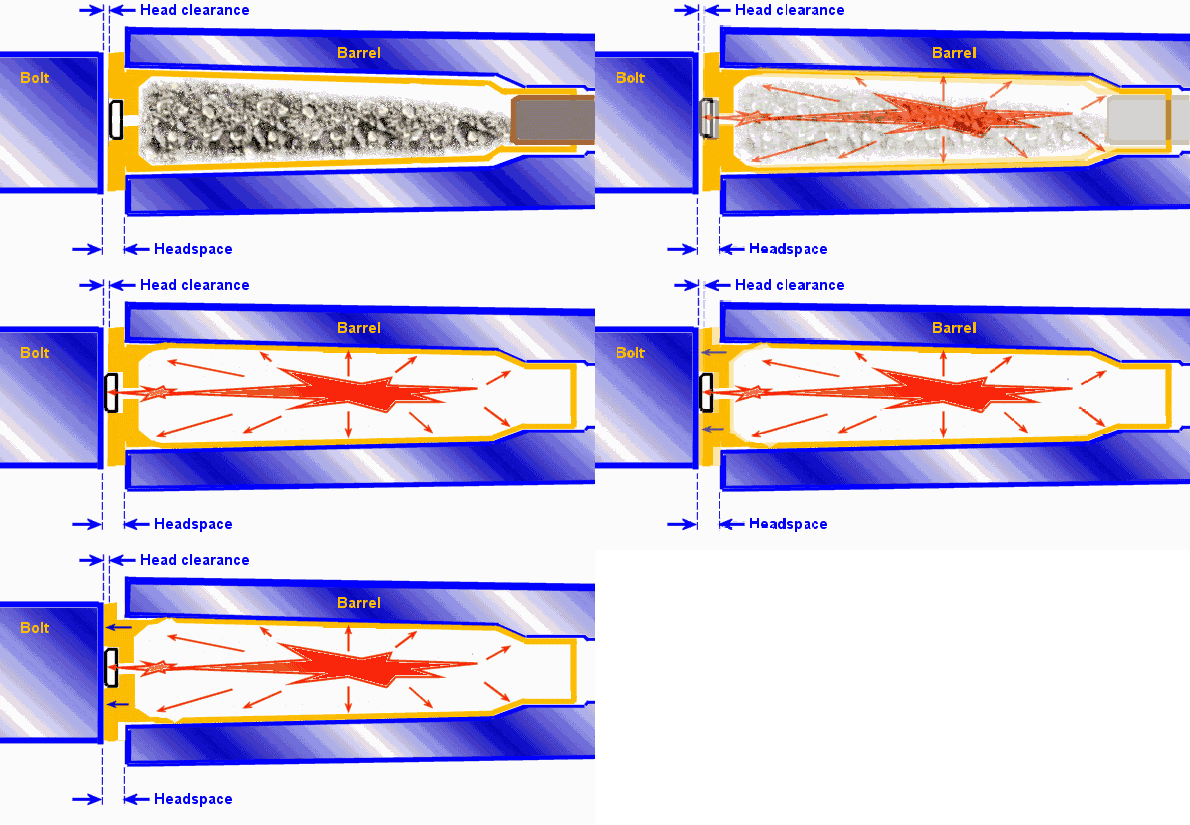
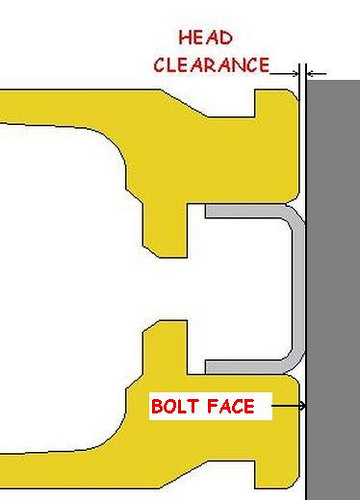
And on a military .303 Enfield rifle at maximum headspace of .074 you can have .017 head clearance. Meaning there can be .017 airspace between the bolt face and the rear of the case and let the case stretch this much.
If you fire form your cases with a small thin rubber o-ring, small ponytail rubber bands, etc it will hold the case against the bolt face and prevent case stretch.
Below pictures are worth a thousand words and a thin commercial case being fired and max headspace.
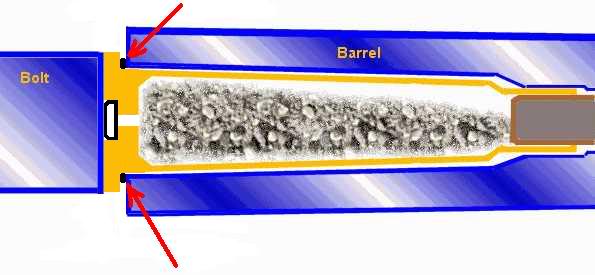
Below a cartridge being fire formed using a rubber o-ring that holds the case against the bolt face. The rubber o-ring when compressed also centers the case in the rear of the chamber. This helps keep the case concentric when fired which aids accuracy when the cases are reloaded.
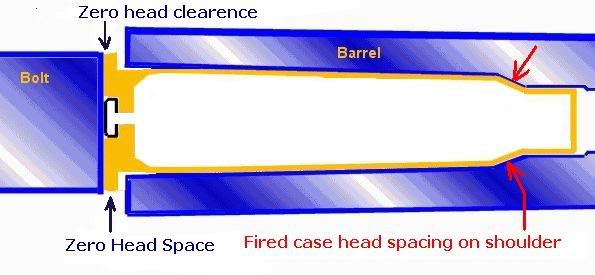
Below the fire formed case will then headspace on its shoulder that will hold the case against the bolt face, when neck sized only.
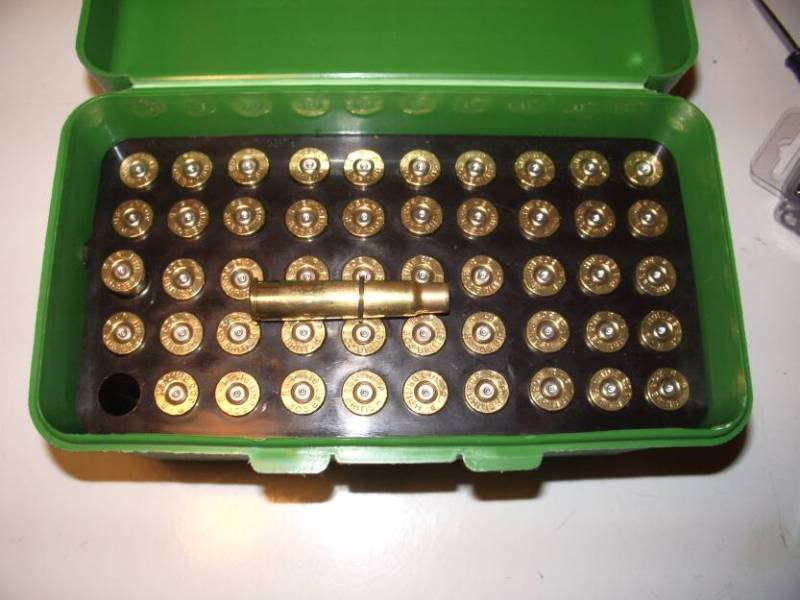
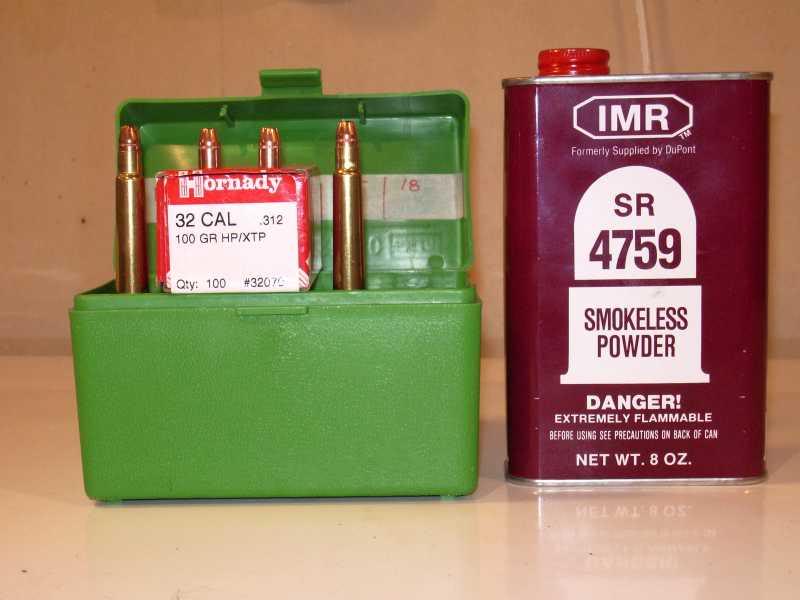
Below fire forming the .303 using a rubber o-ring and Hornady .312 100 grain pistol bullets. This makes the brass butt plate softer when fire forming 100 or more cases.
Bottom line, regardless of your rifles headspace setting if you do not let your cases stretch on the first firing they will last much longer. And Prvi Partizan .303 British cases have a larger base diameter and are .010 thicker in the base.
On a new bolt action rifle you bump the shoulder .001 to .002 from its fired length when sizing. And on these rifles the distance between a GO and NO-GO gauges averages .003 for setting up a new rifle.
And on a military .303 Enfield rifle at maximum headspace of .074 you can have .017 head clearance. Meaning there can be .017 airspace between the bolt face and the rear of the case and let the case stretch this much.
If you fire form your cases with a small thin rubber o-ring, small ponytail rubber bands, etc it will hold the case against the bolt face and prevent case stretch.
Below pictures are worth a thousand words and a thin commercial case being fired and max headspace.
Below a cartridge being fire formed using a rubber o-ring that holds the case against the bolt face. The rubber o-ring when compressed also centers the case in the rear of the chamber. This helps keep the case concentric when fired which aids accuracy when the cases are reloaded.
Below the fire formed case will then headspace on its shoulder that will hold the case against the bolt face, when neck sized only.
Below fire forming the .303 using a rubber o-ring and Hornady .312 100 grain pistol bullets. This makes the brass butt plate softer when fire forming 100 or more cases.
Bottom line, regardless of your rifles headspace setting if you do not let your cases stretch on the first firing they will last much longer. And Prvi Partizan .303 British cases have a larger base diameter and are .010 thicker in the base.

Something is not right. I have been doing a fair amount of shooting with my 308 British (303 brass and chamber, 308 bullets and barrel.)
I am at or over 5 loading. My brass is once fired military IVI brass. I neck size.
My chamber is a SAAMI minimum. Yours is probably a military Large.
But if you are neck sizing, I don't see why your brass should fail so soon, unless you are loading real hot.
I am at or over 5 loading. My brass is once fired military IVI brass. I neck size.
My chamber is a SAAMI minimum. Yours is probably a military Large.
But if you are neck sizing, I don't see why your brass should fail so soon, unless you are loading real hot.
Ganderite
In the oversized military chamber and with "thin" commercial cases brass stretch on the first firing can be considerable.
Below is a once fired factory loaded Winchester .303 British case that stretched .009 on its first firing. The Enfield that this case was fired in had the headspace set below .067 and minimum headspace is .064.
The Prvi Partizan cases are made to military specification like your IVI cases and Winchester cases are the thinest with rims at .058.
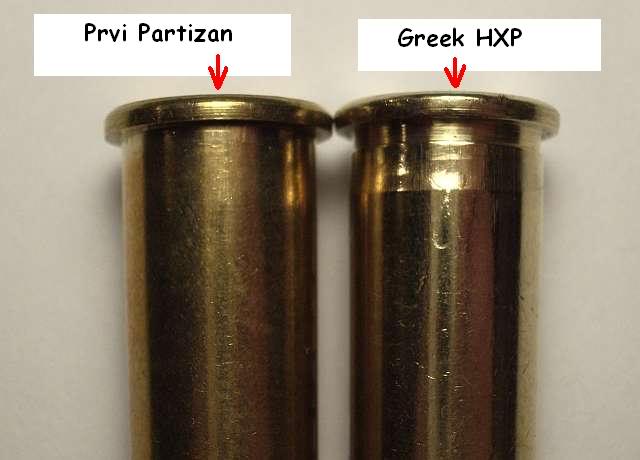
Below both cases were fired in the same No.4 Enfield rifle, the Prvi case on the left has a larger base diameter, it is .010 thicker in the base and has a thicker rim than the case on the right.
The secret to long case life is not letting the case stretch on its first firing and headspacing on its shoulder thereafter. And even if your rifle is at or close to military maximum headspace its simpler to fire form the case using the o-ring method than looking for longer bolt heads.
Your shoulder bump will be your head clearance when the cartridge is fired. And you can have as much as .017 head clearance at max military headspace. And the main problem is commercial .303 British cases are designed for smaller SAAMI chambers. And the majority of us have the larger military chambers that are hard on brass.
Below normally you want .001 to .002 shoulder bump when resizing rifle cases. And a Enfield rifle can have as much as .017 head clearance and needs careful fire forming and only neck sizing to extend case life.
And the Prvi Parizan cases are the closest you will find to military specifications and made heavy duty. And in my opinion Winchester cases are the worst and very short lived. This is like comparing military Lake City 7.62 cases and commercial .308 cases, and the military Lake City cases are made heavy duty for larger chambers.
In the oversized military chamber and with "thin" commercial cases brass stretch on the first firing can be considerable.
Below is a once fired factory loaded Winchester .303 British case that stretched .009 on its first firing. The Enfield that this case was fired in had the headspace set below .067 and minimum headspace is .064.
The Prvi Partizan cases are made to military specification like your IVI cases and Winchester cases are the thinest with rims at .058.
Below both cases were fired in the same No.4 Enfield rifle, the Prvi case on the left has a larger base diameter, it is .010 thicker in the base and has a thicker rim than the case on the right.
The secret to long case life is not letting the case stretch on its first firing and headspacing on its shoulder thereafter. And even if your rifle is at or close to military maximum headspace its simpler to fire form the case using the o-ring method than looking for longer bolt heads.
Your shoulder bump will be your head clearance when the cartridge is fired. And you can have as much as .017 head clearance at max military headspace. And the main problem is commercial .303 British cases are designed for smaller SAAMI chambers. And the majority of us have the larger military chambers that are hard on brass.
Below normally you want .001 to .002 shoulder bump when resizing rifle cases. And a Enfield rifle can have as much as .017 head clearance and needs careful fire forming and only neck sizing to extend case life.
And the Prvi Parizan cases are the closest you will find to military specifications and made heavy duty. And in my opinion Winchester cases are the worst and very short lived. This is like comparing military Lake City 7.62 cases and commercial .308 cases, and the military Lake City cases are made heavy duty for larger chambers.
Last edited:
I understand the issue. But 2-3 reloading seems extreme. But he says he is loading max in a military chamber. That will do it.
I load medium power (the accuracy load for my particular rifle) and have not lost a case yet.
I load medium power (the accuracy load for my particular rifle) and have not lost a case yet.
Yep down load and cases last a lot longer. I have had cast make it to 29 loads. I noticed some separation marks and tossed them all. I figured why push it when I had cases to replace them. I believe I was using older federal cases, 17.8 grs 2400 with Lyman 314299 bullet.
My theory is how dead can you kill a piece of paper.
My theory is how dead can you kill a piece of paper.
I'm at max loads but they don't seem real hot, going by the chrony . I'll try find a o ring thanks everyone.
O rings are expensive. Go to your local Staples or some other stationary supply store or even grocery stores, Dollar Stores etc and pick up a bag of 100 for a penny each.
TURF THE LIBERALS IN 2019
Liberals really like POOR people, they're making more of them every day
OP have you actually had case failures???? I find that once they stretch, even with hot loads they don't stretch much further.
Your P14 action is supposedly stronger and has less "flex" than a No1 or No4 action.
I have a P14 with a sloppy chamber that will only shoot accurately with cases that have been fire formed in its chamber. The headspace on it is near maximum at .083. The chamber on this rife is so large that the cases will not fit in any of my other 303 Brit shooters.
No set back on the lugs or receiver lug recesses. The rifle is about 95% overall condition at a conservative estimate. Whoever cut that chamber must have had a brand new reamer that was manufactured to maximum specs. The barrel has a 1918 date.
The fired cases look like those in Big Ed's excellent pictures. Once they've expanded, the brass doesn't stretch any more than brass in any other rifle unless the shoulder gets set back to far. I have some old Dominion brass which is at least 50 years old and has been fired more times than I can count. I re anneal the cases after 5 firings only because it starts to work harden and that's when case head separation will often occur.
TURF THE LIBERALS IN 2019
Liberals really like POOR people, they're making more of them every day
If you can't vote CPC, stay at home in protest
Last edited:

O rings are expensive. Go to your local Staples or some other stationary supply store or even grocery stores, Dollar Stores etc and pick up a bag of 100 for a penny each.
TURF THE LIBERALS IN 2019
Liberals really like POOR people, they're making more of them every day
If you can't vote CPC, stay at home in protest
Tiny elastics for hair work too, double loop if too large.

- Location
- The Conservative part of Ontario
The above info is great, but I still wonder at your current failure rate. Maybe you are chucking the cases a bit early, or that loader is actually not neck sizing. Another thing that can happen, is shoulder set back when you hard crimp. Stop crimping if you do it, you should not need to.
Why do I picture a screaming 5 year old and pliers.For those of you that know someone with dental braces, the small elastics they use work really well for fire forming 303 brass.
Take them out of their mouth first
CT
In 1914 the Enfield chambers were reamed larger due to poorly made ammunition and the dirty conditions of trench warfare. Meaning a WWI dated Enfield rifle will have larger chambers and very hard on brass.
On a new bolt action rifle you bump the shoulder .001 to .002 from its fired length when sizing. And on these rifles the distance between a GO and NO-GO gauges averages .003 for setting up a new rifle.
And on a military .303 Enfield rifle at maximum headspace of .074 you can have .017 head clearance. Meaning there can be .017 airspace between the bolt face and the rear of the case and let the case stretch this much.
If you fire form your cases with a small thin rubber o-ring, small ponytail rubber bands, etc it will hold the case against the bolt face
Bottom line, regardless of your rifles headspace setting if you do not let your cases stretch on the first firing they will last much longer. And Prvi Partizan .303 British cases have a larger base diameter and are .010 thicker in the base.
I have read about the O ring trick. I also seem to recall reading about a method where the case neck is expanded to 8mm and then run partially through a 303 size die to create a second shoulder ahead of the first one which holds the case tight in the chamber and doesn't allow the expansion which leads to head separation. After fire forming the cases are then just neck sized down to the base of the new (shorter) neck.
Sorry I don't have more info, working from memory.

I have read about the O ring trick. I also seem to recall reading about a method where the case neck is expanded to 8mm and then run partially through a 303 size die to create a second shoulder ahead of the first one which holds the case tight in the chamber and doesn't allow the expansion which leads to head separation. After fire forming the cases are then just neck sized down to the base of the new (shorter) neck.
Sorry I don't have more info, working from memory.
I first read about the o-ring fire forming in another forum posted by a Canadian with the screen name terryinvictoria. Meaning as far as this American is concerned it is a Canadian idea that works.
The method you describe above is called a false shoulder and the enlarged case neck stops forward movement and holds the case against the bolt face. The downside of this method is it stretches the case neck and in larger diameter chambers the false shoulder does not hold the case tightly. Meaning the false shoulder does not work and the firing pin will drive the case forward.
Another method is seating the bullet long and jamming the bullet into the rifling. And again this holds the case against the bolt face, "BUT" this method doesn't work with older Enfields with cordite throat erosion.
One thing to understand is the "round" rubber o-ring when compressed on bolt closing "centers" the rear of the case in the chamber. And a small square rubber band may not center the rear of the case, so its size and fit is important.
The Enfield does not have a recessed bolt face that will hold and center the rear of the case in the rear of the chamber. And the case will just lay in the bottom of the chamber and is made worse by the large diameter chambers and small diameter cases.
Below look at the Greek HXP case and how the case expanded at the base and how the left side of the case expanded outward more than the right side. And when these type cases are reloaded they will hold the bullet off center with the axis of the bore and effect accuracy and group size. So if you use rubber bands check your fired cases and make sure you have uniform base expansion and your cases were centered.
Last edited:





















