A New Predator Wanders In...

Ontario is full of them. We've hunted them for decades calling them Brush Wolves. They're nothing new around these parts. They can be found in urban and suburban neighborhoods in our largest cities and are quite adept at urban survival. In some areas,they've been known to brazenly attack pets in back yards and even when out for a walk with their owners. They can be readily seen running in packs of up to 6,especially,while hunting at night. People have complained of being awakened at night by howling and yipping after the pack has captured and killed food,usually,somebody's cat.
 
Last edited:
Ontario is full of them. We've hunted them for decades calling them Brush Wolves. They're nothing new around these parts. They can be found in urban and suburban neighborhoods in our largest cities and are quite adept at urban survival. In some areas,they've been known to brazenly attack pets in back yards and even when out for a walk with their owners. They can be readily seen running in packs of up to 6,especially,while hunting at night. People have complained of being awakened at night by howling and yipping after the pack has captured and killed food,usually,somebody's cat.

With all this "Living With Wildlife" , things will be just like they were on the Russian Steppe ages ago, before you know it. :)

Grizz
 
The author was prolly still in diapers back then and after going to Uni decided to write a paper that got published.
Now he/she is famous in some circles.
When do the Hybrid Dog/Wolf/Coyote threads begin and how does one score them ??
Rob

Cannot answer your questions Rob sorry
Just know I seen my first pair ever here in the fall of 1985 and honestly didnot really know what they were and assumed they were wolves
This a pic a member posted some years ago here of two he got in NL and as you can see we have some serious sized coyotes down east
Cheers
Vo08RB6.jpg
 
This a pic a member posted some years ago here of two he got in NL and as you can see we have some serious sized coyotes down east

That photo suffers from the perspective error typical of that of hunters/fishermen that want to make their trophy look as big as possible. The average weight of an eastern coyote in Newfoundland is about 38 lbs.
 
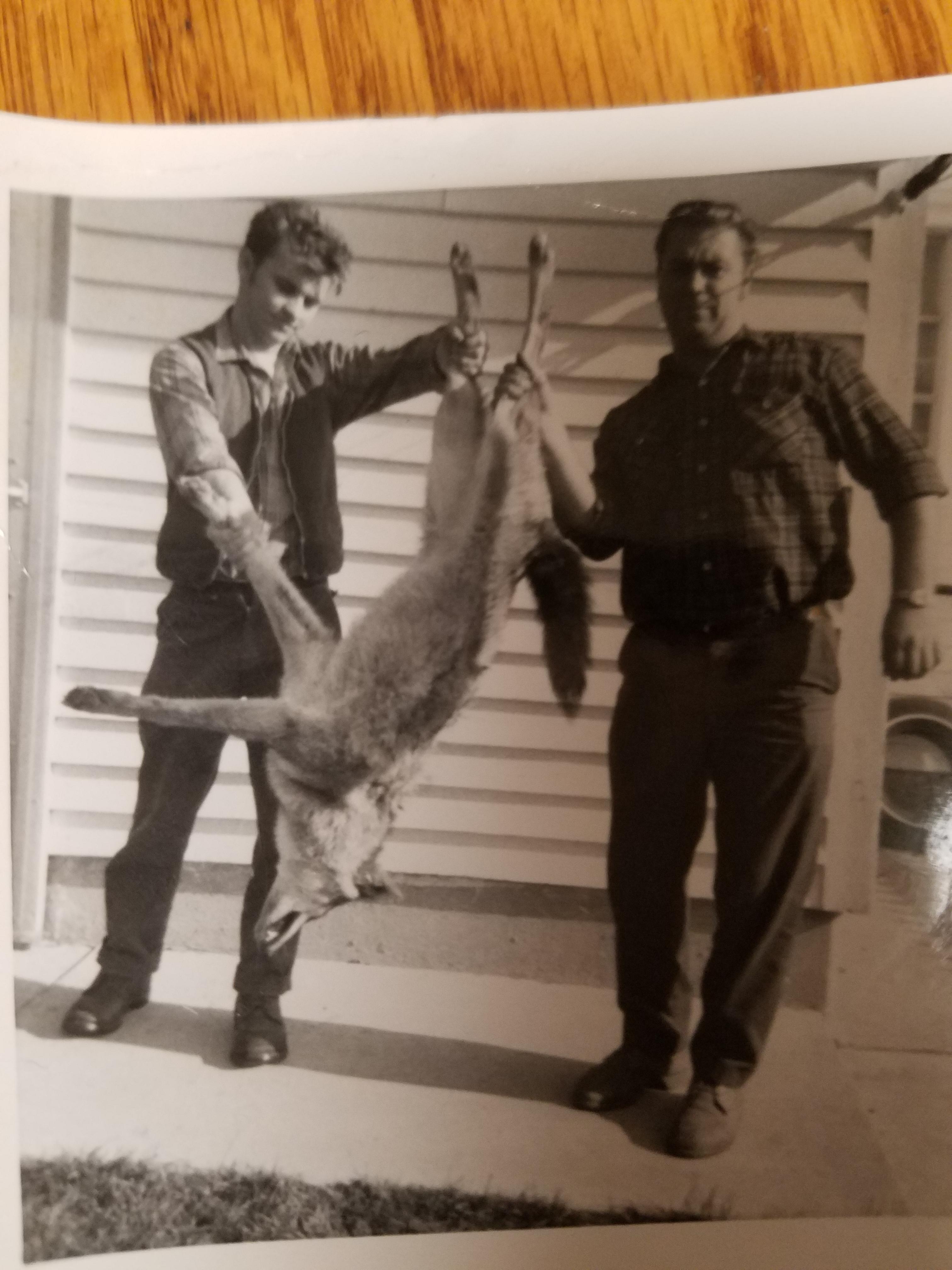
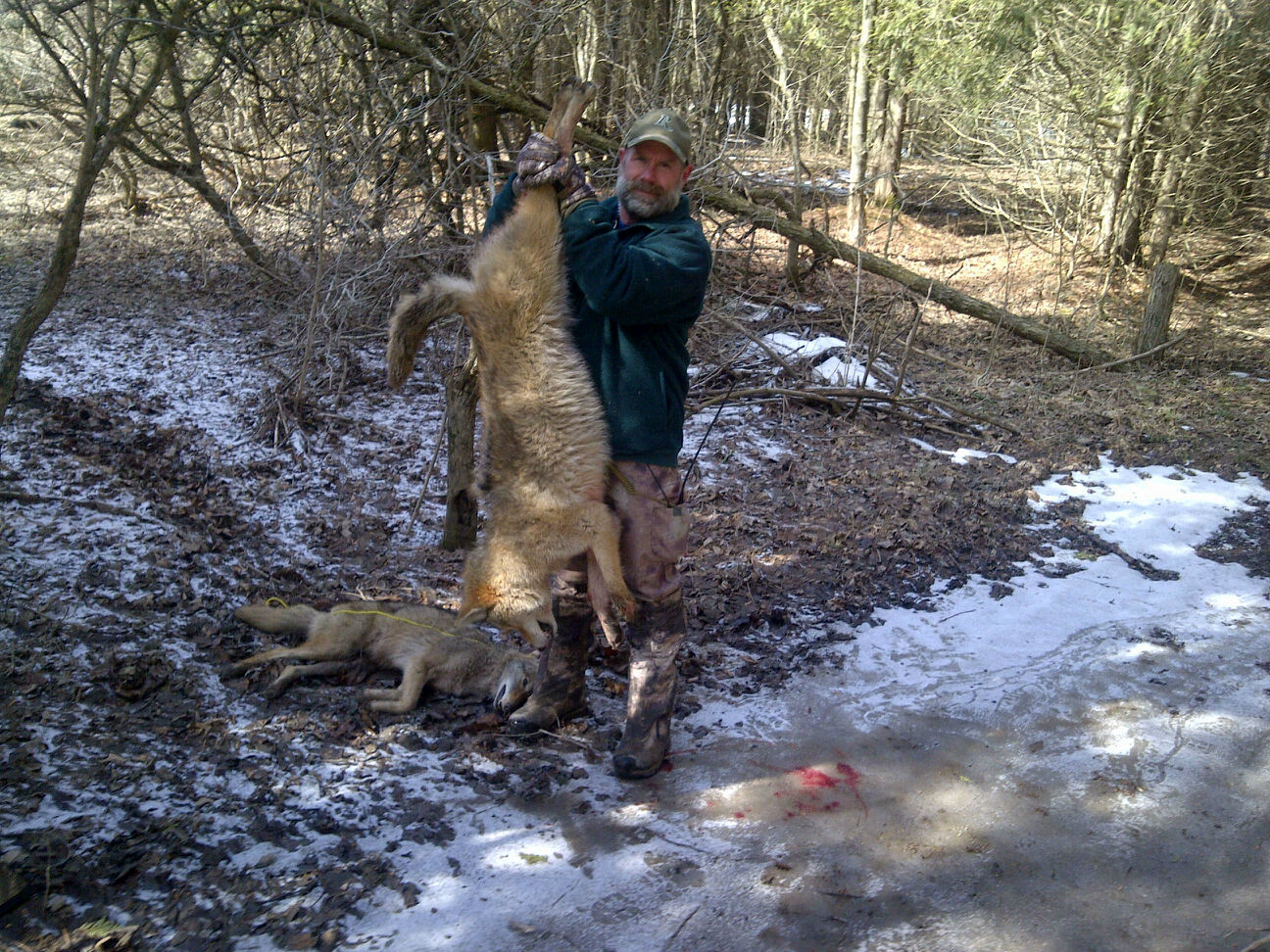
Here's two from Ontario about 4 decades apart. The first one was taken in the late 60's or early 70's, the second one was last season. Not sure on the size of the first, but the second was just over 51 lbs., our biggest of the year. When the first one was taken they were called brush wolves and we're very rare in Ontario, now it seems the more common name is plain old coyote, and they seem to be everywhere.


K8xvzZ9.jpg


PnhQGfS.jpg
 
We used to be taught that there were two types of wolves, the grey and the red and that the red was had been hunted to extinction. There was always a bit of dispute about that. DNA testing has long put that to rest, those museum specimens were eastern coyotes and nothing else.

There is a similar strain around Fort St John, so that's worth a look if you want to see a coyote the size of a pony.
 
Timely article of relevant interest:

Wild dogs found in Texas appear to carry DNA of extinct wolf

Wild dogs found in Texas appear to carry DNA of extinct wolf
Tuesday, January 15, 2019 08:05AM
DALLAS, Texas --

Researchers say a pack of wild canines found frolicking near the beaches of the Texas Gulf Coast carries a substantial amount of red wolf genes, a surprising discovery because the animal was declared extinct in the wild nearly 40 years ago.
The finding has led wildlife biologists and others to develop a new understanding that the red wolf DNA is remarkably resilient after decades of human hunting, loss of habitat and other factors had led the animal to near decimation.
"Overall, it's incredibly rare to rediscover animals in a region where they were thought to be extinct and it's even more exciting to show that a piece of an endangered genome has been preserved in the wild," said Elizabeth Heppenheimer, a Princeton University biologist involved in the research on the pack found on Galveston Island in Texas. The work of the Princeton team was published in the scientific journal Genes.
The genetic analysis found that the Galveston canines appear to be a hybrid of red wolf and coyote, but Heppenheimer cautions that without additional testing, it's difficult to label the animal.
Ron Sutherland, a North Carolina-based conservation scientist with the Wildlands Network, said it's exciting to have found "this unique and fascinating medium-sized wolf."
The survival of the red wolf genes "without much help from us for the last 40 years is wonderful news," said Sutherland, who was not involved in the Princeton study.
The discovery coincides with similar DNA findings in wild canines in southwestern Louisiana and bolsters the hopes of conservationists dismayed by the dwindling number of red wolves in North Carolina that comprised the only known pack in the wild.
The red wolf, which tops out at about 80 pounds, was once common across a vast region extending from Texas to the south, into the Southeast and up into the Northeast. It was federally classified as endangered in 1967 and declared extinct in the wild in 1980. The U.S. Fish and Wildlife Service in the 1970s captured a remnant population in Texas and Louisiana that eventually led to a successful captive breeding program. Those canines in 1986 became part of the experimental wild population in North Carolina. That group has been declining since peaking at an estimated 120 to 130 wolves in 2006. A federal report in April said only about 40 remained.
An additional 200 red wolves live in zoos and wildlife facilities as part of captive breeding programs.
A federal judge in November sided with environmental groups that argued in a lawsuit that efforts by federal authorities to shrink the territory of the wild group in North Carolina were a violation of law. The judge ruled U.S. Fish and Wildlife also violated the Endangered Species Act by authorizing private landowners to kill the canine predators even if they weren't threatening humans, livestock or pets.
The debate over red wolf protections could take on new dimensions with the discovery in Galveston.
Sutherland said the Galveston canines have effectively quashed a decades-old impression that red wolves were a feckless predator overwhelmed by the numerical superiority of coyotes. He adds that the Galveston group has DNA that can't be found in the animal's captive population.
"From a practical conservation biology standpoint, these animals have special DNA and they deserve to be protected," he said, explaining that conservation easements that restrict development along parts of the Gulf Coast are an essential first step.
A spokesman for U.S. Fish and Wildlife said the agency is unable to comment during the partial government shutdown. The Texas Parks and Wildlife Department said in a statement that the Galveston discovery is "interesting," but "we do not anticipate any regulatory changes or implications in Texas at this time."
Kim Wheeler, executive director of the North Carolina-based Red Wolf Coalition, cautioned that further study of the Galveston pack is needed.
"We can get excited, but in my mind, we really need to let science do its due diligence to determine what this animal is," she said, noting that red wolves can evoke strong feelings in people with livestock or who have other concerns with their predatory nature.
Conservationists, meanwhile, say policymakers need to have a greater appreciation for hybrid animals. When the Endangered Species Act was implemented in the 1970s, conventional wisdom was that hybridization between species - such as the wolf and coyote - was rare and to be avoided. But experts say the thinking on that has changed.
"Now we know hybridization is relatively common in natural systems and does not always have negative consequences, but the policy hasn't quite caught up with this notion," Heppenheimer said.

 
With all this "Living With Wildlife" , things will be just like they were on the Russian Steppe ages ago, before you know it. :)

Grizz

You probably won't believe this because not even the most drug-addled,Liberal-leftist Toronto snowflake TV producer could make this up,but,in Ontario,some university types discovered that Brush Wolves (our name,not theirs-actually they're big Coyotes) have been interbreeding with Eastern Gray Wolves to form a hybrid the academics have pressured OMNRF biologists into calling the Algonquin Wolf as a separate "new" species resulting in vast areas of Ontario townships around Algonquin Provincial Park to be closed to wolf/coyote hunting and trapping in an effort to promote this "new" species. f:P: See? I told you that you couldn't make this shyte up. Don't believe that? Just Google Algonquin Wolf and read it for yourself.
 
I have a pack of yotes that live behind my house, I quite enjoy their company, but in the spring when new pups are born they howl a lot. I like to sleep with my windows open, but if they hear a siren they really get going and this gets my dog barking, some nights ,no such thing as a good nights sleep.
I have often wondered if coyotes can have multiple litters a year, or mainly in the spring.
 
I have a pack of yotes that live behind my house, I quite enjoy their company, but in the spring when new pups are born they howl a lot. I like to sleep with my windows open, but if they hear a siren they really get going and this gets my dog barking, some nights ,no such thing as a good nights sleep.
I have often wondered if coyotes can have multiple litters a year, or mainly in the spring.

Coyote breeding season is from the end od December to late March. The gestation period is around 60 days with litters of between 4 and 9 being quite common.
 
That photo suffers from the perspective error typical of that of hunters/fishermen that want to make their trophy look as big as possible. The average weight of an eastern coyote in Newfoundland is about 38 lbs.

And you say they are 38 pounds?? Must be a NL scale is it :) 50 pound males are not uncommon
Another 38 pounder??
zRSsodj.jpg

A man from the Bonavista Peninsula community of Spillars Cove shot and killed a 37-kilogram coyote — nearly twice the weight of a normal coyote and yes they later said it was more wolf but lots of 50 pounders plus being taken.
The Outdoor Supply Store in Lewisporte runs a number of coyote contests, including giving a new rifle to whomever kills the largest coyote this season. Fleming is now the frontrunner for the rifle.
The store has received about 50 coyotes since the season opened. Fleming's outweighs the others by about 12 kilograms.


FzOuqet.jpg
 
Last edited:
Back
Top Bottom