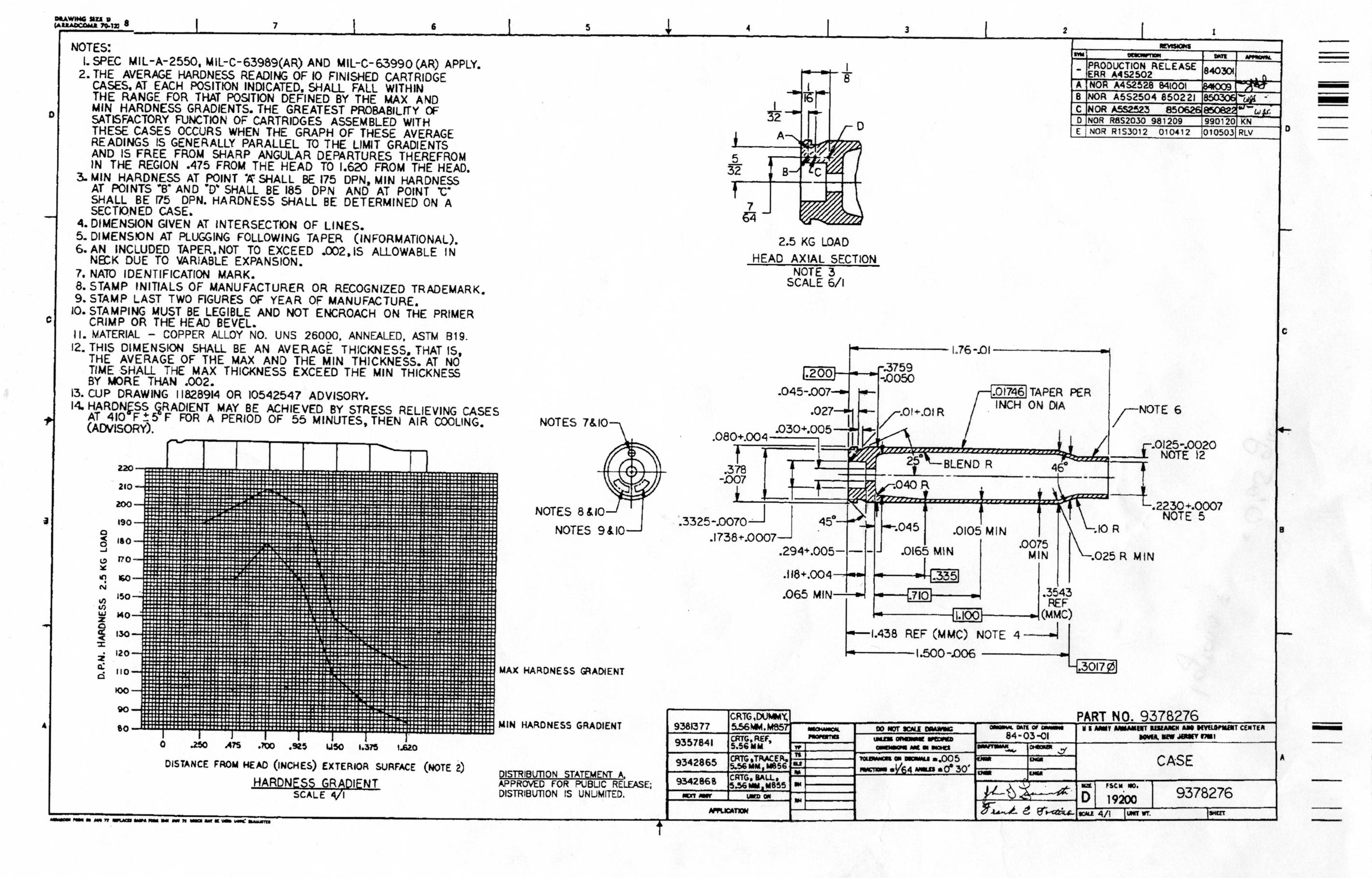
Well, I finally decided to retire my old stash of Norma .222Rem cases. After many reloads, the primer pockets were getting a little loose. Being a cheap bast..rd, and having a large supply of Lake City 5.56 cases, I decided to try converting some of them to .222Rem. I tried an inital batch of 10 cases just to see how difficult it would be. As it turned out, not difficult at all. It's a little bit more time consuming than full length resizing but being retired, I had plenty of time. After some experimenting, I found the following procedure worked just fine.
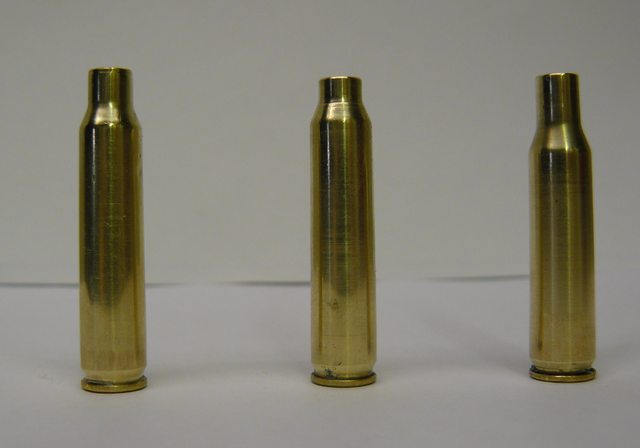
Start with a full length sized 5.56 or .223 case. Next, trim the case to .222 length and deburr the case mouth inside and out. Lubricate the case lightly and resize in the .222 full length sizing die. Do this in 2 or 3 stages while wiping the lube off the case neck between stages. This process prevents wrinkling of the case shoulder. Clean off the lubricant and you're done. Optionally, you can deburr the inside of the flash hole and anneal the case neck (recommended for developing accurate loads). The above image shows the original 5.56 case on the left, the middle case is the shortened 5.56 case to .222 length and the right image shows the final .222 case ready for reloading.
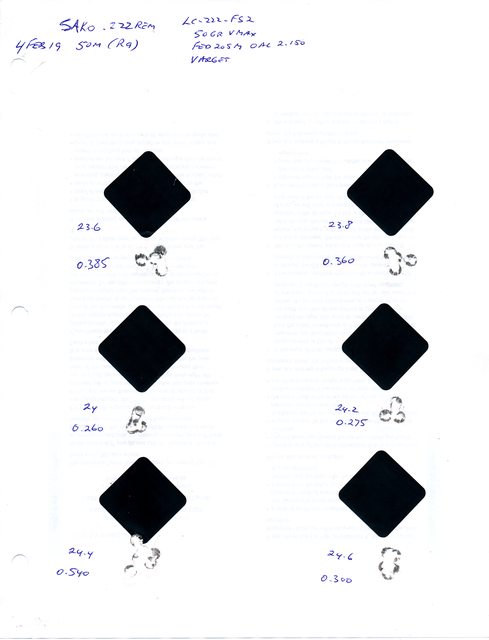
I worked up one of my pet loads with the newly converted Lake City cases and they're just as good as my original Norma cases as seen below. In my Sako, 24gr of Varget, 50gr VMAX bullet and Federal 205M primers is just the ticket. BTW, these are all 5-shot groups.
Thanks for watching, I hope this helps somebody that is contemplating this conversion but is still wondering if it's worth it.
Start with a full length sized 5.56 or .223 case. Next, trim the case to .222 length and deburr the case mouth inside and out. Lubricate the case lightly and resize in the .222 full length sizing die. Do this in 2 or 3 stages while wiping the lube off the case neck between stages. This process prevents wrinkling of the case shoulder. Clean off the lubricant and you're done. Optionally, you can deburr the inside of the flash hole and anneal the case neck (recommended for developing accurate loads). The above image shows the original 5.56 case on the left, the middle case is the shortened 5.56 case to .222 length and the right image shows the final .222 case ready for reloading.
I worked up one of my pet loads with the newly converted Lake City cases and they're just as good as my original Norma cases as seen below. In my Sako, 24gr of Varget, 50gr VMAX bullet and Federal 205M primers is just the ticket. BTW, these are all 5-shot groups.
Thanks for watching, I hope this helps somebody that is contemplating this conversion but is still wondering if it's worth it.