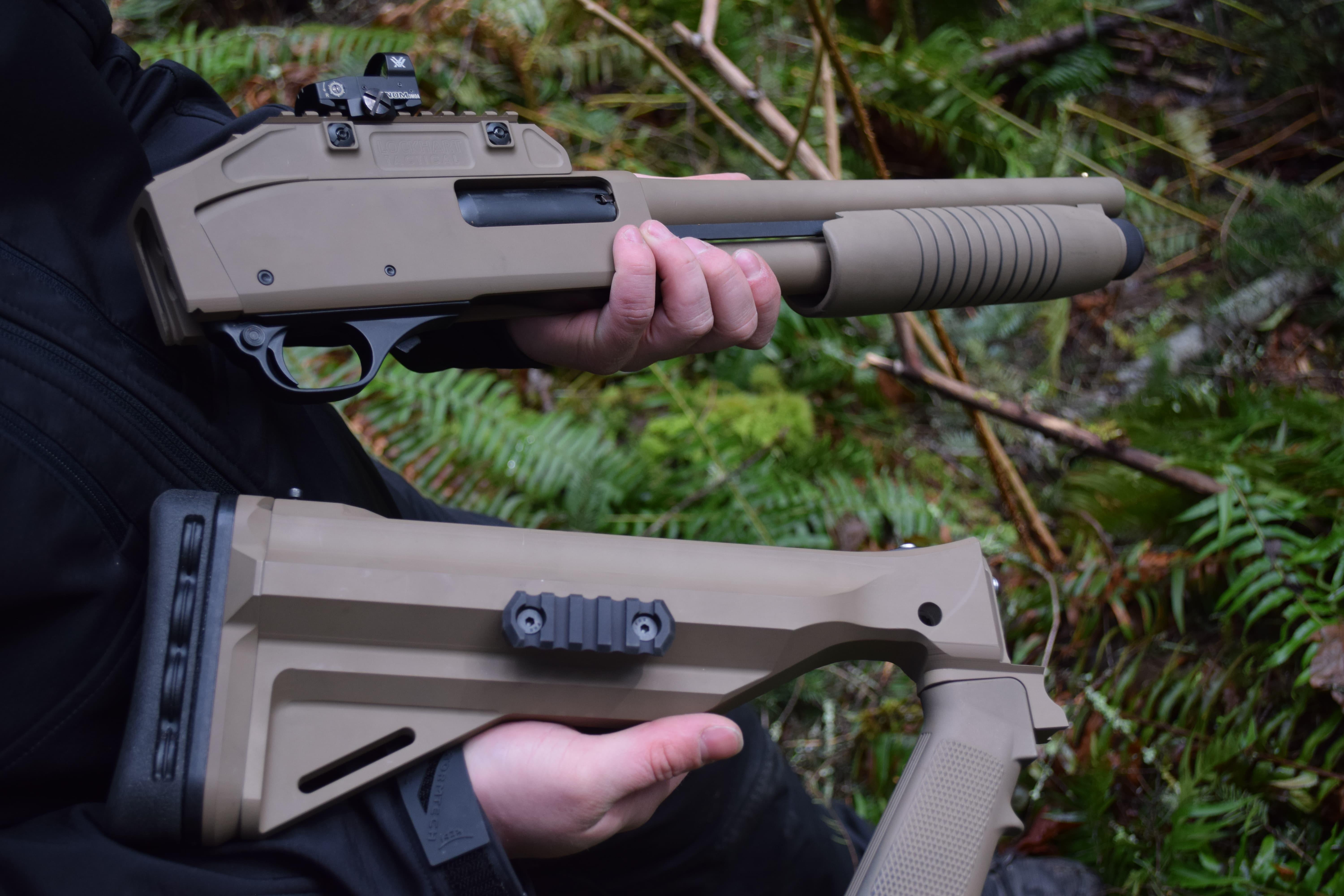
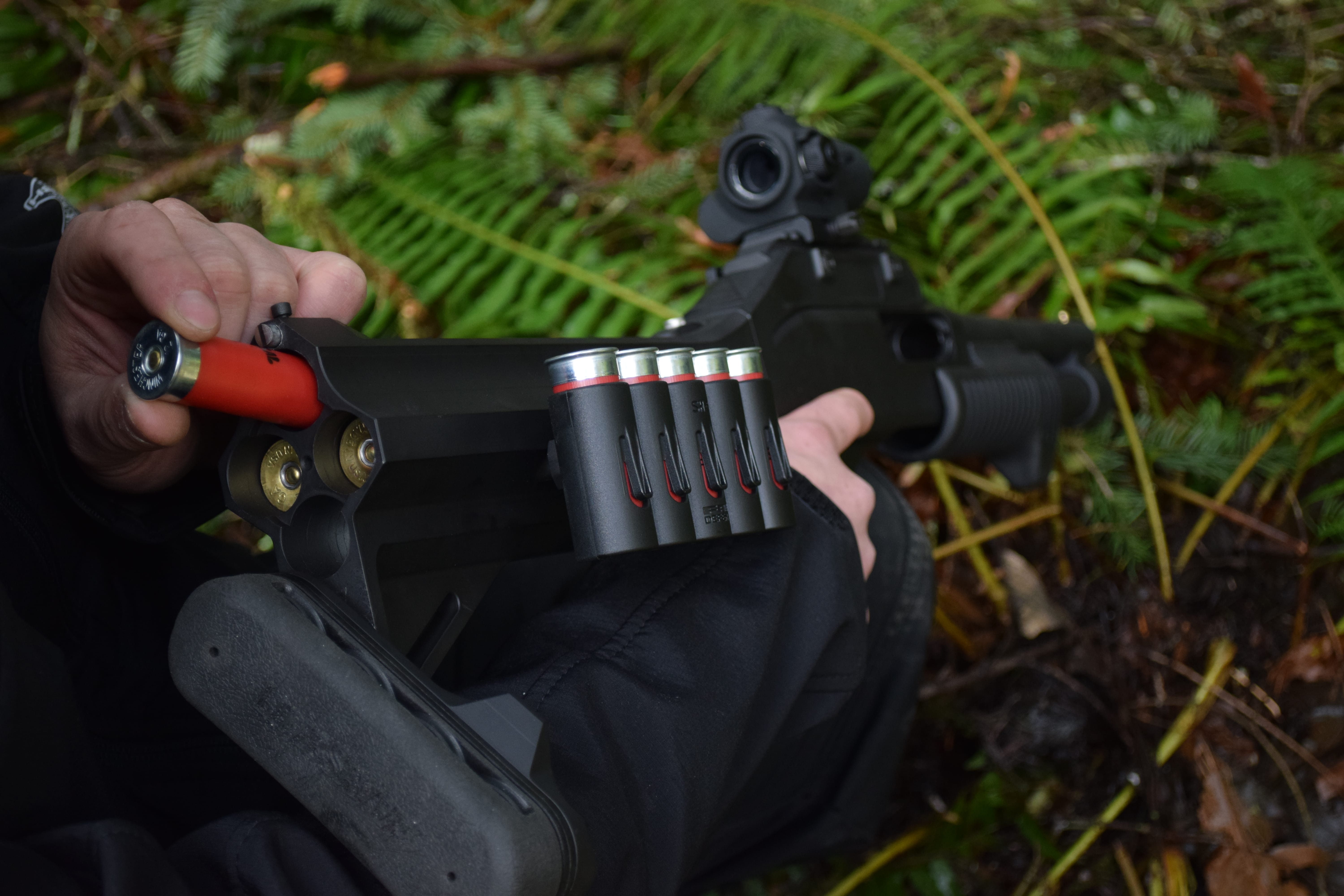
OK, I'll bite. I used to carry an 870 Marine Magnum around on canoe and sea kayak trips, with the gun kept in a sheath between drying sessions. IMO having big bulky sights would have seriously hindered my speed of withdrawal from said case, or otherwise gotten tangled in clothing or whatever in the tent at night when it was needed. Ghost rings or whatever would also have significantly increased the storage bulk of the thing in what was limited space. A shotgun at bear defensive ranges does not need sights beyond a front bead sight, it is a shotgun and not a rifle.
I always throw this in when I'm talking about carry around water, esp salt water: I read an account of a guy who packed his 870 on a weeks long coastal kayak trip without having to fire it (as is to be expected) and at the end of the trip he thought he'd shoot off some shells just as recreation only to find out that the 'brass' on the shells in the gun had corroded so badly that they gun wouldn't cycle them. It actually doesn't take much brass damage to screw up a modern 870, so it's something to watch out for.
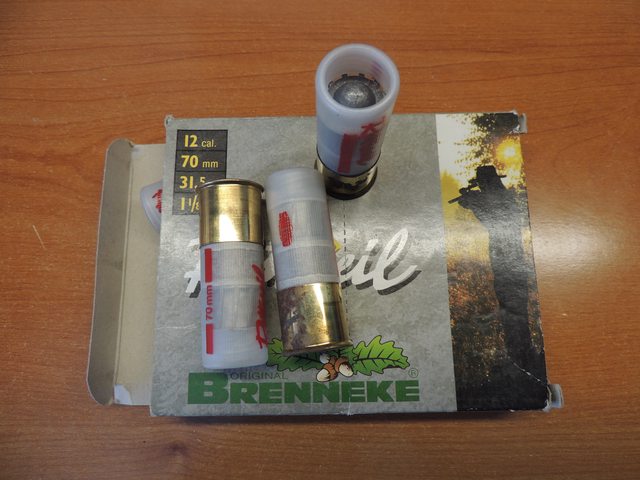
When I carried a gun on a more frequent basis, it became my habit to wipe down my ammo at the end of each day, and swap out the ammo loaded in and on my gun every 30 days. This provided me with the ammo I used for practice, and allowed me to practice with the same ammo that I carried in the field. Left without attention, shotgun ammo corrodes badly in a surprisingly short period of time in this environment, and I can only imagine that in warmer climates, where the salinity of the water is higher, like the BC coast, the situation would be exacerbated.
When I carry a gun in a boat, I keep it in a zippered drag bag style soft cordura padded case, the idea being that the gun is protected from pounding in rough conditions, which can occur with a change in tide and is not necessarily weather related. If the day is miserable, wet, and windy, I prefer to stay on the couch, but when this is not possible, I'll wrap the drag bag in plastic. This case has a full length zipper, so the gun is not pulled out from one end, where a front sight post can snag, tear, and pull out the lining. I really wanted to like plastic gun boots, but I gave up on them after the linings were repeatedly damaged when snagged by the front sights on my rifles and shotguns. Note, I changed the style of case I used to protect my gun, I did not change from a good sighting system to an inferior one in an attempt to protect the case. The speed of getting the gun out of the case can be important, but the gun is not necessary for defensive purposes while you are on the water. You don't need to uncase the gun until you make the decision to come ashore; at which time the gun can be uncased and slung as you make your approach to the landing, and therefore is done at a leisurely pace.
Provided you have chosen a gun that's appropriate for use in the defensive role, the two most important elements of that gun are the quality of the trigger and the quality and style of sights which are used to index the muzzle to the part of the target you intend to hit. Often defensive guns are chosen based on price alone, and these low cost guns, like the Winchester Defender and the Maverick 88, frequently have a small bead sight mounted directly on the barrel. The 870 Marine Magnum does not qualify as a cheap defense gun; the bead is properly mounted on a pedestal, which places it at the correct height above the receiver so the gun shoots to point of aim whereas if the bead is mounted directly on the barrel, the gun will shoot high. This requires you put the bead on the target, then depress the muzzle until the bead (or a portion of it) drops just below your line of sight, before you break the shot. While it can be done, its certainly not an intuitive way to shoot, and if it has not become part of your muscle memory, under stress you will inevitably shoot high. If this means you spine the bear rather than hit the head, you're still in good shape, and a subsequent shot will resolve the problem, but if you shoot so high that you miss, or worse hit the bear, but not solidly, you could be in serious trouble. I would always opt for a good set of rifle sights, preferring a post front sight and a large aperture rear. Yes the range is short, but if faced with a head on shot, your target can be in motion, and is deceivingly small in that massive wide head, so a degree of precision is indicated, and a flat top post provides an excellent index of elevation, absent with a bead. The width of the brain and the width of the spine are roughly equal to the width of the snout, and the brain is located behind the eyes but ahead of the ears. You may need to consider the offset between the height of front sight above the muzzle to get hits where you intend on the target, and you will have to shoot to figure out how much. Anyone who has attempted to shoot the head off a grouse with a scoped rifle understands the concept, but to provide a mental image of what I'm talking about, lets consider the front sight on an AR-15. The AR-15 front sight is usually housed in a triangular base which holds the post a couple of inches above the center line of the bore. At close range, you might have to hold an AR 2" low to get hits where you intend on the target, whereas the offset of the shotgun's front rifle sight is minimal and can often be ignored. Its unlikely the offset would be more than a half inch, but this should be confirmed at the range, with the ammo you'll carry in the field.