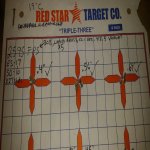
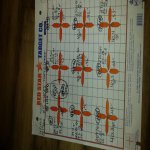
Shot first batch of .308 hand-loads, got results, now how do I make them better?

All of that is total goofy nonsense. All of it.

Feel free to explain this five round group out of a noodle barrelled .270 Win... shot within 30 seconds... after 40 rounds down the pipe.


Or these ones, which were workup loads...


All a fair bit better than 1.5 moa, and all shot from a far from cold barrel.

Awesome groups!! I hope to be able to work up loads like this, even with my “noodle” barrel hahaha
 
20190524_182650.jpg
20190524_172836.jpg

Here are targets from 2 of my factory rifles. My 308 load and a 6.5 Creedmoor load work up. No barrel cooling. I want to know how they will shoot hot, because they get shot hot in competition. I do not sit at the range all day putting the gun in air conditioning between groups lol. Hot barrel on all those groups you see.
 

Attachments

  • 20190524_182650.jpg
    20190524_182650.jpg
    63.7 KB · Views: 110
  • 20190524_172836.jpg
    20190524_172836.jpg
    71.4 KB · Views: 110
A good rifle will shoot crappy ammo better than a crappy rifle will shoot good ammo.

I set up my buddies' Tikka t3 in 308 last fall and he bought three boxes of cheap factory ammo. Corlokt, blue box and power point. All 150gr and all three shot under and inch at 100. I also shot 130gr ttsx reloads I made for a vanguard S2 and those shot under an inch as well. Tikka has 1-11 twist same as your rifle and had a moa guarantee, same as yours.

If it shoots good with factory it's hard to get appropriate reloads to shoot bad as they can't possibly be worse than having 10 thou runout or bullets seated at different depth like cheap factory ammo does.
 
A good rifle will shoot crappy ammo better than a crappy rifle will shoot good ammo.

I set up my buddies' Tikka t3 in 308 last fall and he bought three boxes of cheap factory ammo. Corlokt, blue box and power point. All 150gr and all three shot under and inch at 100. I also shot 130gr ttsx reloads I made for a vanguard S2 and those shot under an inch as well. Tikka has 1-11 twist same as your rifle and had a moa guarantee, same as yours.

If it shoots good with factory it's hard to get appropriate reloads to shoot bad as they can't possibly be worse than having 10 thou runout or bullets seated at different depth like cheap factory ammo does.
Well mine has shot cheap factory loads better than my first batch of reloads, so that why I’m on here scratching my head asking questions lol
 
View attachment 278229
View attachment 278230

Here are targets from 2 of my factory rifles. My 308 load and a 6.5 Creedmoor load work up. No barrel cooling. I want to know how they will shoot hot, because they get shot hot in competition. I do not sit at the range all day putting the gun in air conditioning between groups lol. Hot barrel on all those groups you see.


Nice groups!! And you didn’t even have to use air conditioning!
 
I've sat down and shot 9 consecutive ten shot groups with a couple 223's, with two different loads. 360 rounds total. Accuracy did not deteriorate as the barrel heated up, and it was really hot for the last strings
 
Well mine has shot cheap factory loads better than my first batch of reloads, so that why I’m on here scratching my head asking questions lol

You're gun may just hate those bullets. My 308 for example shoots about .5 inch with Hornady ELDM 168 grain.

The gun HATES 178 ELDM. Probobly near 2" groups.

Maybe trying some SMK 168 or 175 kind of thing will give you an idea of what your barrel is actually capable of.

I dont reload for hunting, only target. But hunting bullets are generally not going to drive tacks.
 
Last edited:
All of that is total goofy nonsense. All of it.

Feel free to explain this five round group out of a noodle barrelled .270 Win... shot within 30 seconds... after 40 rounds down the pipe.


Or these ones, which were workup loads...


All a fair bit better than 1.5 moa, and all shot from a far from cold barrel.
Which rifle was this shot with and barrel contour? 1.5" high, 1" low with .5" right, 3" right, looks plenty accurate to me...….. Longboat is posting pics of an accurate rifle, however I wonder what his barrel contour is?
 
Last edited:
View attachment 278229
View attachment 278230

Here are targets from 2 of my factory rifles. My 308 load and a 6.5 Creedmoor load work up. No barrel cooling. I want to know how they will shoot hot, because they get shot hot in competition. I do not sit at the range all day putting the gun in air conditioning between groups lol. Hot barrel on all those groups you see.

Very nice shooting. What rifles?

And nice notes on the targets too... I gotta be less lazy and do it like that. I usually just keep the brass from my best group neck down in the box so I remember which charge weight or seating depth it was.
 
Last edited:
You're gun may just hate those bullets. My 308 for example shoots about .5 inch with Hornady ELDM 168 grain.

The gun HATES 178 ELDM. Probobly near 2" groups.

Maybe trying some SMK 168 or 175 kind of thing will give you an idea of what your barrel is actually capable of.

I dont reload for hunting, only target. But hunting bullets are generally not going to drive tacks.

I’m def gonna move on to some different projectiles, I have some Barnes Ttsx150 as well. And I def won’t be driving tacks anytime soon, but I’m def looking to get better results for the fun of it
 
Which rifle was this shot with and barrel contour? 1.5" high, 1" low with .5" right, 3" right, looks plenty accurate to me...….. Long shot is posting pics of an accurate rifle, however I wonder what his barrel contour is?

A $475 Vanguard S2. It's a #2 contour. Bullets were Sierra 140 TGKs and 140 SGKs.

My standard for "too hot" is when I can't comfortably hold the barrel. Not because it turns into a shotgun, but because I don't want to cook my throat prematurely.

To clarify... all three groups are different loads... the top group was shot after settling on one and actually adjusting the scope. I'll usually crank on a few inches of windage when shooting test loads to save the actual POI from getting shot up, plus it lets you confirm your scope tracking at the same time. I would not consider those groups acceptably accurate for hunting if they were intended to have the same POI.
 
Last edited:
I don’t have a gauge to measure off the ogive, might get one. Was also told by some old schoolers is not necessary, haha. I guess I gotta find out what works for me.

A set of gauges to measure base to ogive length is handy, but there's an easy workaround in the meantime where you can use OAL as a substitute.

Take a case fired from your rifle. Make a slit down the neck from mouth to shoulder with a dremel or a hacksaw. Neck size the case. Fit a bullet so it's just barely retained. Chamber and carefully eject the dummy round. Measure OAL. Do it until you get three identical measurements.

This is your true max OAL, or your cartridge base to ogive measurement. A good general seating depth to start is that measurement -.020"

It's critical to use the same exact bullet for all the measurements and for setting up your seating die. It had to be the exact same individual bullet

Make up some dummy rounds and see if they feed from the mag - do a magazine full, not just one or two. If they're too long, then back off you your mag max length.

Why not just load to max mag length and see if they chamber? Because knowing your jump is a valuable piece of information that can help you avoid going down roads that will most likely not work. No point in testing out bullets known to be jump sensitive if you've got .060" between ogive and throat.

Anyway, the real answer to your question of "how do I make my ammo more accurate" is to measure all the variables you can and make them as consistent as possible. That's all there is to it. Accurate ammo is consistent ammo.

The major variables you can control are:

- Powder charge
- Primer selection
- Headspace
- Seating depth
- Neck tension
- Bullet runout
- Case length

Learn how to measure those and manipulate and you will make accurate ammunition.
 
Last edited:
A set of gauges to measure base to ogive length is handy, but there's an easy workaround in the meantime where you can use OAL as a substitute.

Take a case fired from your rifle. Make a slit down the neck from mouth to shoulder with a dremel or a hacksaw. Neck size the case. Fit a bullet so it's just barely retained. Chamber and carefully eject the dummy round. Measure OAL. Do it until you get three identical measurements.

This is your true max OAL, or your cartridge base to ogive measurement. A good general seating depth to start is that measurement -.020"

It's critical to use the same exact bullet for all the measurements and for setting up your seating die. It had to be the exact same individual bullet

Make up some dummy rounds and see if they feed from the mag - do a magazine full, not just one or two. If they're too long, then back off you your mag max length.

Why not just load to max mag length and see if they chamber? Because knowing your jump is a valuable piece of information that can help you avoid going down roads that will most likely not work. No point in testing out bullets known to be jump sensitive if you've got .060" between ogive and throat.

Anyway, the real answer to your question of "how do I make my ammo more accurate" is to measure all the variables you can and make them as consistent as possible. That's all there is to it. Accurate ammo is consistent ammo.

The major variables you can control are:

- Powder charge
- Primer selection
- Headspace
- Seating depth
- Neck tension
- Bullet runout
- Case length

Learn how to measure those and manipulate and you will make accurate ammunition.
Thank you again, you’ve been very helpful sir!
 
How to improve accuracy? you ask.

Is the action bedded. If not, that is where to start. Not only will accuracy improve, bit so will consistency. That is, the groups will be smaller and ALSO they will shoot to the same place - very important in a hunting rifle.

Is the barrel well clear of the channel? If not, wrap a spark plug socket with heavy sandpaper and run it up and down the channel. If it is wood, seal the wood when done.
 
When you take a new or unknown rifle, a new or unknown scope, and throw in some new unknown loads the reason for lack-luster results is a bit of a guessing game. That's not even brushing on an unknown shooter and the closely related unknown bench technique.

It's nice to know something, instead of guess something or hope something.

For instance; if a rifle shoots something else very well, its a good bet the gun isn't broken.If it hasn't proven out on something already, there is always the chance that it won't shoot anything.

If the scope just got pulled off your favorite, best shooting target rifle its logical to conclude that whatever the problem is it isn't that. Without that confirmation there isn't any real reason to trust it. Broken scopes are common.

Without a way of verifying the rifle and or scope, its a little hard to automatically assume the problem is the loads.

By the sheerest of coincidences I recently worked up a 165 Ballistic Tip/Varget load for my little Anschutz 1574. Results were initially pathetic, but at least I had a history with the rifle that would suggest that it probably shouldn't shoot anything that bad. Since I had a load of known accuracy to fall back on, I was able try that long enough to prove that it would no longer shoot those either. That lead naturally to viewing the Zeiss scope with suspicion. Sure enough, it had picked that inoportune time to pile up. Swapping to a proven VX3 proved it. For what little its worth the load ended up being 46 grains of Varget loaded to fit the mag (max load from the Nosler manual)

 
How to improve accuracy? you ask.

Is the action bedded. If not, that is where to start. Not only will accuracy improve, bit so will consistency. That is, the groups will be smaller and ALSO they will shoot to the same place - very important in a hunting rifle.

Is the barrel well clear of the channel? If not, wrap a spark plug socket with heavy sandpaper and run it up and down the channel. If it is wood, seal the wood when done.
I’m using a Sauer 101 classic, it uses an “ever rest” bedding system. I have not taken the receiver off to inspect it, but the reviews on it before purchase have been positive. Thanks
 
When you take a new or unknown rifle, a new or unknown scope, and throw in some new unknown loads the reason for lack-luster results is a bit of a guessing game. That's not even brushing on an unknown shooter and the closely related unknown bench technique.

It's nice to know something, instead of guess something or hope something.

For instance; if a rifle shoots something else very well, its a good bet the gun isn't broken.If it hasn't proven out on something already, there is always the chance that it won't shoot anything.

If the scope just got pulled off your favorite, best shooting target rifle its logical to conclude that whatever the problem is it isn't that. Without that confirmation there isn't any real reason to trust it. Broken scopes are common.

Without a way of verifying the rifle and or scope, its a little hard to automatically assume the problem is the loads.

By the sheerest of coincidences I recently worked up a 165 Ballistic Tip/Varget load for my little Anschutz 1574. Results were initially pathetic, but at least I had a history with the rifle that would suggest that it probably shouldn't shoot anything that bad. Since I had a load of known accuracy to fall back on, I was able try that long enough to prove that it would no longer shoot those either. That lead naturally to viewing the Zeiss scope with suspicion. Sure enough, it had picked that inoportune time to pile up. Swapping to a proven VX3 proved it. For what little its worth the load ended up being 46 grains of Varget loaded to fit the mag (max load from the Nosler manual)


These are good points, I’m still leaning towards the fact that I’m a beginner and this was the first work load. It has shot factory rounds slightly better using the same scope. Good points to consider, a better scope would be ideal in the future, I’m sure. I always work off a Caldwell bench rest to eliminate myself as much as possible until I find what I’m looking for. I’m predominantly using the Nosler manual as well, my plan it’s to try .5 variations above mid load now until max before moving on to a different projectile. I had suspect low pressure signs. And am now learning about new brass prep, which I did not do. Some people advised they do not either, so I didn’t bother. I’m still having fun with the process.
 
What I do with all the rifles that I load is first create a dummy round with the chosen bullet, first get a cleaning rod and mark it with a section of masking tape. Put the type of bullet you intend to load into the chamber as far as it will go. Next insert your cleaning rod until it stops, put a small wrap of masking tape at that point and mark a fine line with a very sharp pencil r similar, and scribe a line as close to the muzzle as you can. Trial and error with an impact bullet puller and caliper until you are confident maximum seating depth has been achieved. Next back the bullet off 1/64th and there you have it, keep the blank to set your seating die from there on. I suggest with a 168 gr. bullet, 44 gr. of Varget with a Federal lr match primer, all is good.
 
Well - Someone had to bring it up - perhaps you are only capable of shooting ~ 2 inch groups. BTW - you mentioned that factory ammo shot slightly better. What bullet weight(s) did you try?

 
Back
Top Bottom