













































The most important part of any manual is reading the front part of the manual on reloading basics when you are starting out. Every winter I pick up one of my manuals and re-read it to replace any forgotten information that may have leaked out of my ears.
The second most important thing is attention to detail and inspecting each part of the reloading process for quality. Meaning go slow and look at everything, speed means nothing, you are reloading to make ammo better than factory.
I have just about every manual made, but I would give the Lyman manual top marks for the first manual to read cover to cover.
The Lyman manual will list pressure test barrels and universal receivers using the copper crusher or transducer method. These pressure test barrels have minimum chamber and bore dimensions to register the highest possible chamber pressures. And any time a specific firearm is listed in a reloading manuals then a strain gauge is glued to the barrel and ammunition of a known pressure is used to check the calibration. This is why the reloading data varies so much due to the different firearms tested and how the pressure was measured.
You will also learn a good deal about "YOUR" firearm by making workup loads starting at the suggested start loads and working up. Look at each fired primer and case, are the primers protruding or flush with the base of the case. How much soot or carbon is on the case body and neck, is there any unburnt powder in the bore.
Bottom line, your first reloads are where you learn the most about reloading and if you are careful and pay attention to detail hopefully you will not make any mistakes.
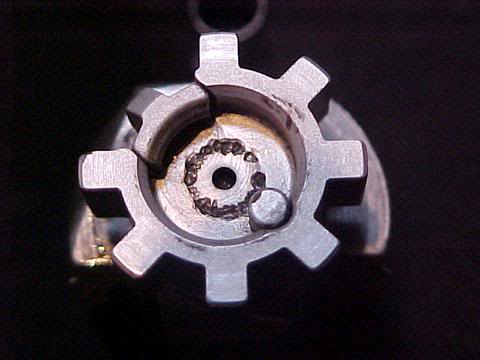
Example below, the reloader below who posted this photo said he didn't worry about loose primer pockets. And he said he would just replace the bolt when it got bad enough.
The second most important thing is attention to detail and inspecting each part of the reloading process for quality. Meaning go slow and look at everything, speed means nothing, you are reloading to make ammo better than factory.
I have just about every manual made, but I would give the Lyman manual top marks for the first manual to read cover to cover.
The Lyman manual will list pressure test barrels and universal receivers using the copper crusher or transducer method. These pressure test barrels have minimum chamber and bore dimensions to register the highest possible chamber pressures. And any time a specific firearm is listed in a reloading manuals then a strain gauge is glued to the barrel and ammunition of a known pressure is used to check the calibration. This is why the reloading data varies so much due to the different firearms tested and how the pressure was measured.
You will also learn a good deal about "YOUR" firearm by making workup loads starting at the suggested start loads and working up. Look at each fired primer and case, are the primers protruding or flush with the base of the case. How much soot or carbon is on the case body and neck, is there any unburnt powder in the bore.
Bottom line, your first reloads are where you learn the most about reloading and if you are careful and pay attention to detail hopefully you will not make any mistakes.
Example below, the reloader below who posted this photo said he didn't worry about loose primer pockets. And he said he would just replace the bolt when it got bad enough.























