EC Green 12 g info, value

Kermodie

Member
Rating - 100%
8   0   0
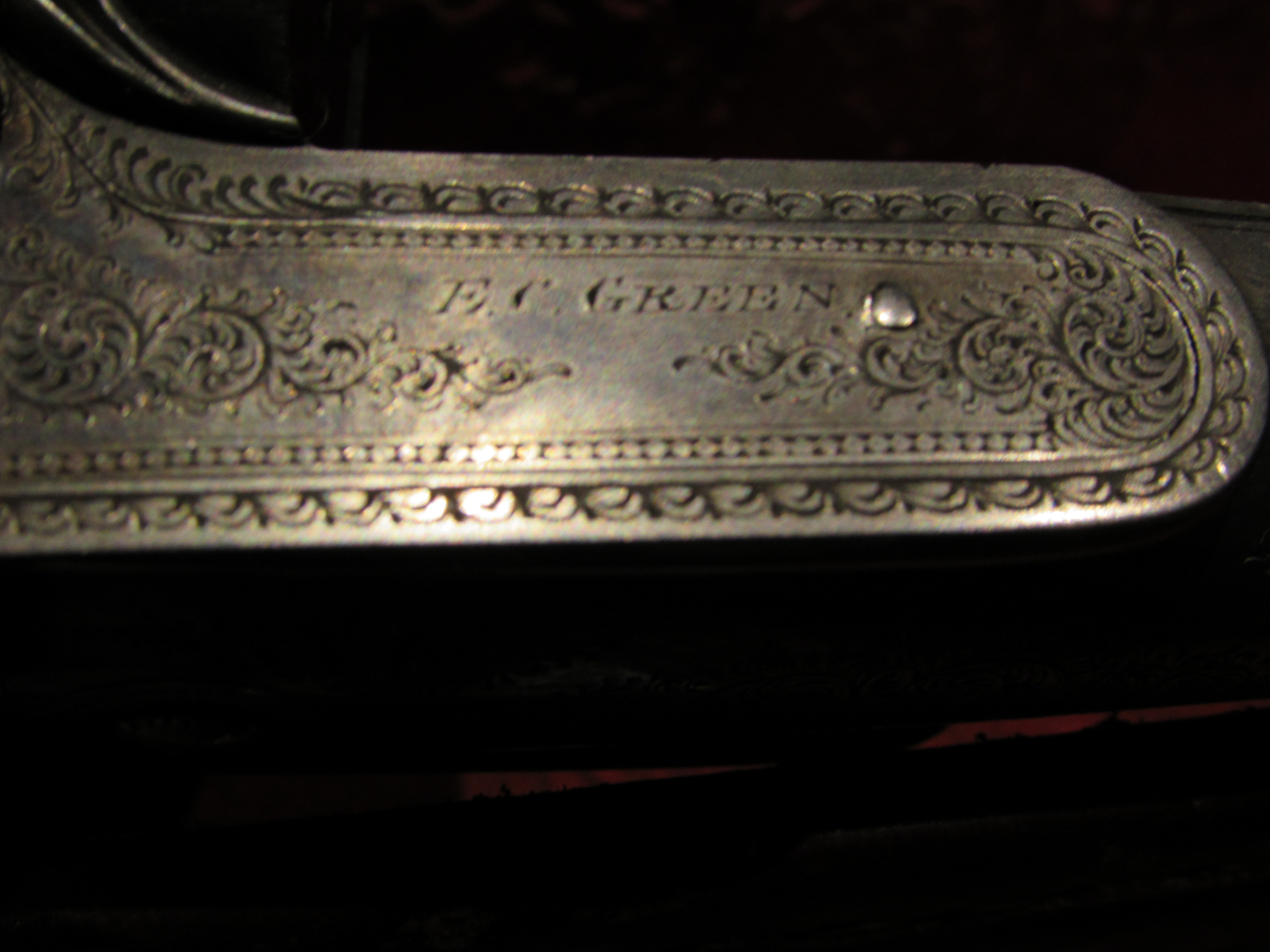
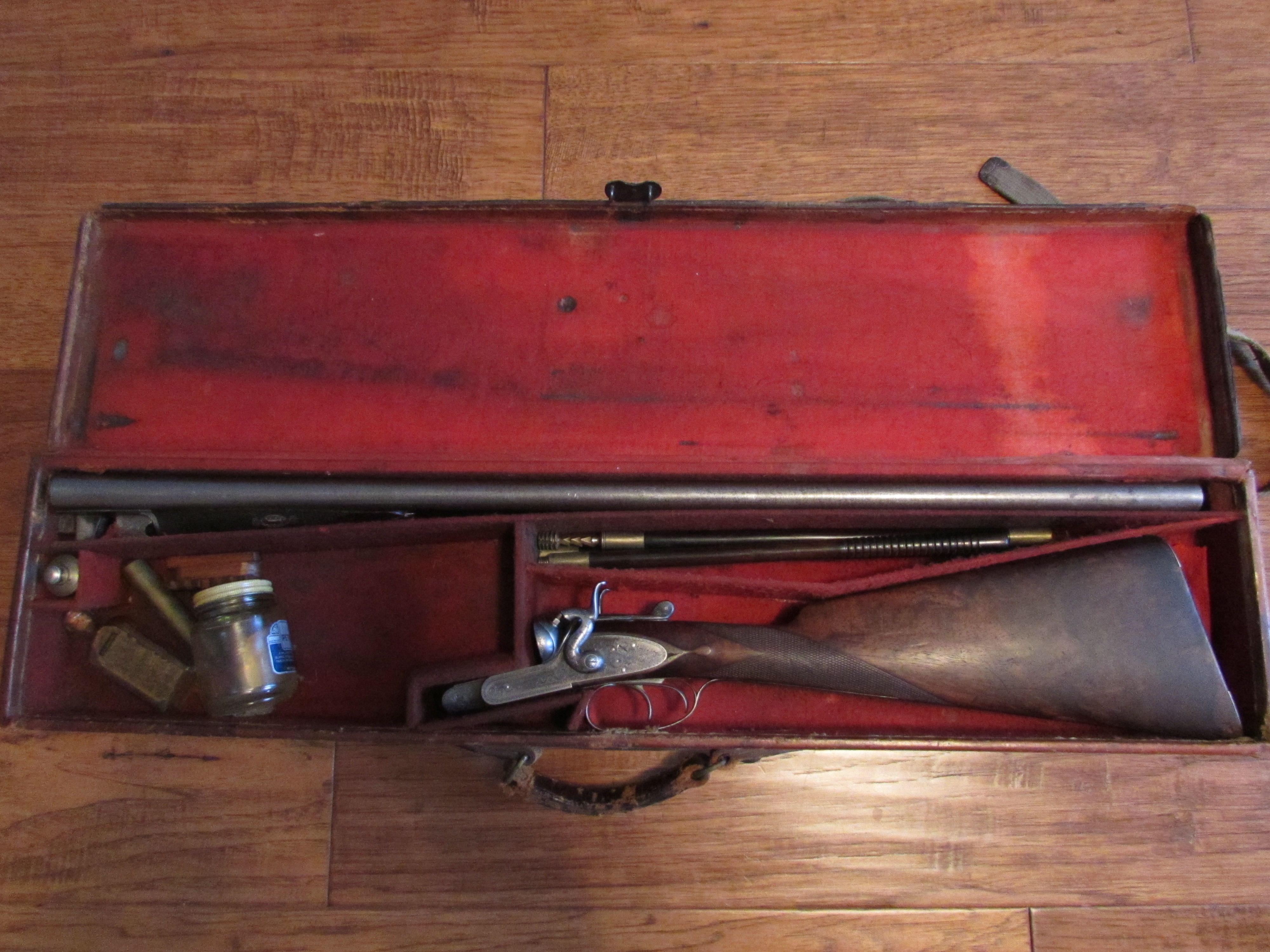
I have an EC Green sxs 12g circa 1870 handed down from my grandfather. I’ve found some info on line eg his two shops in England, dates of manufacture, etc but can’t really find any current info especially value in Canada.

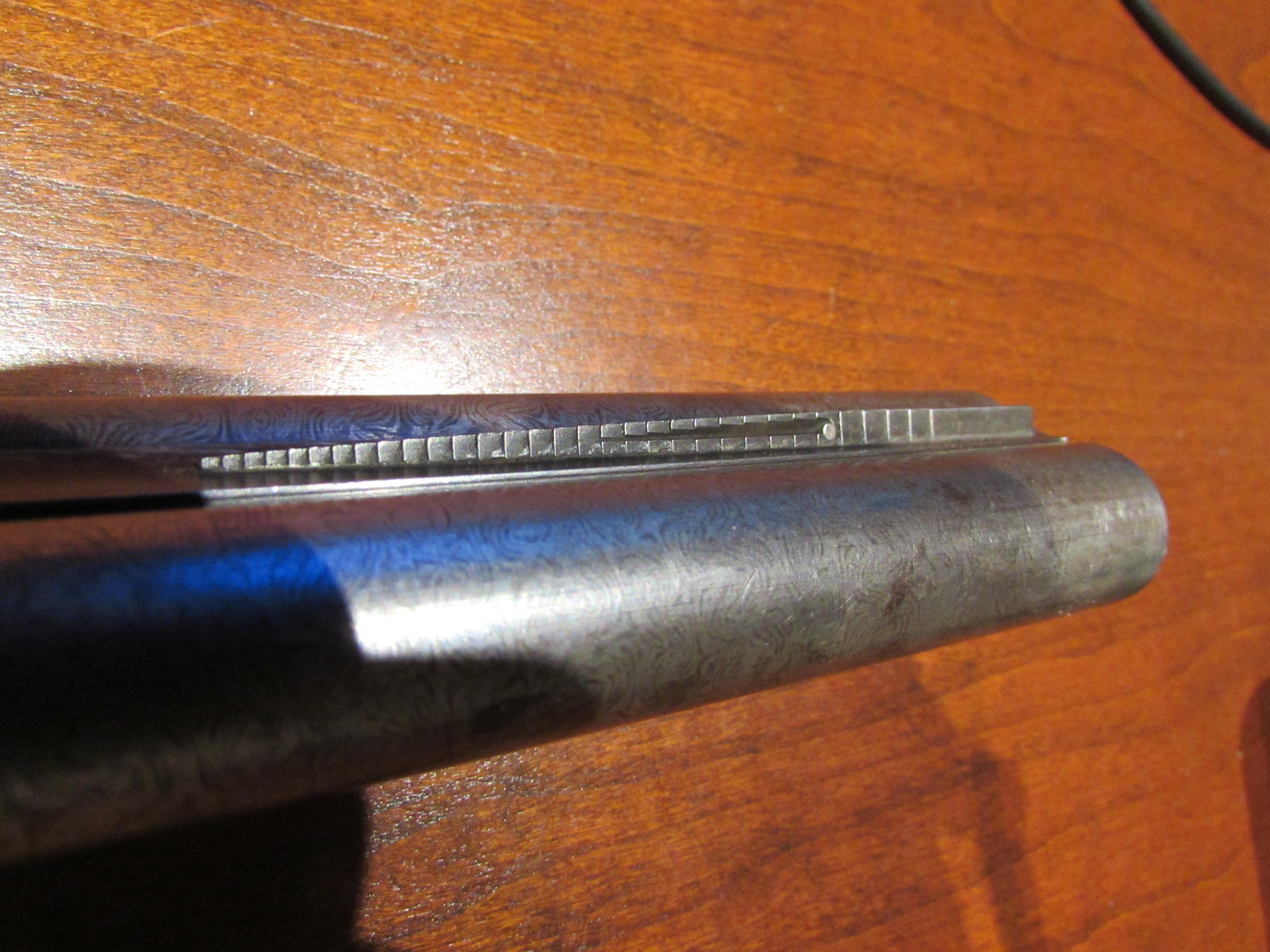
Damascus barrels, with acid etched pattern
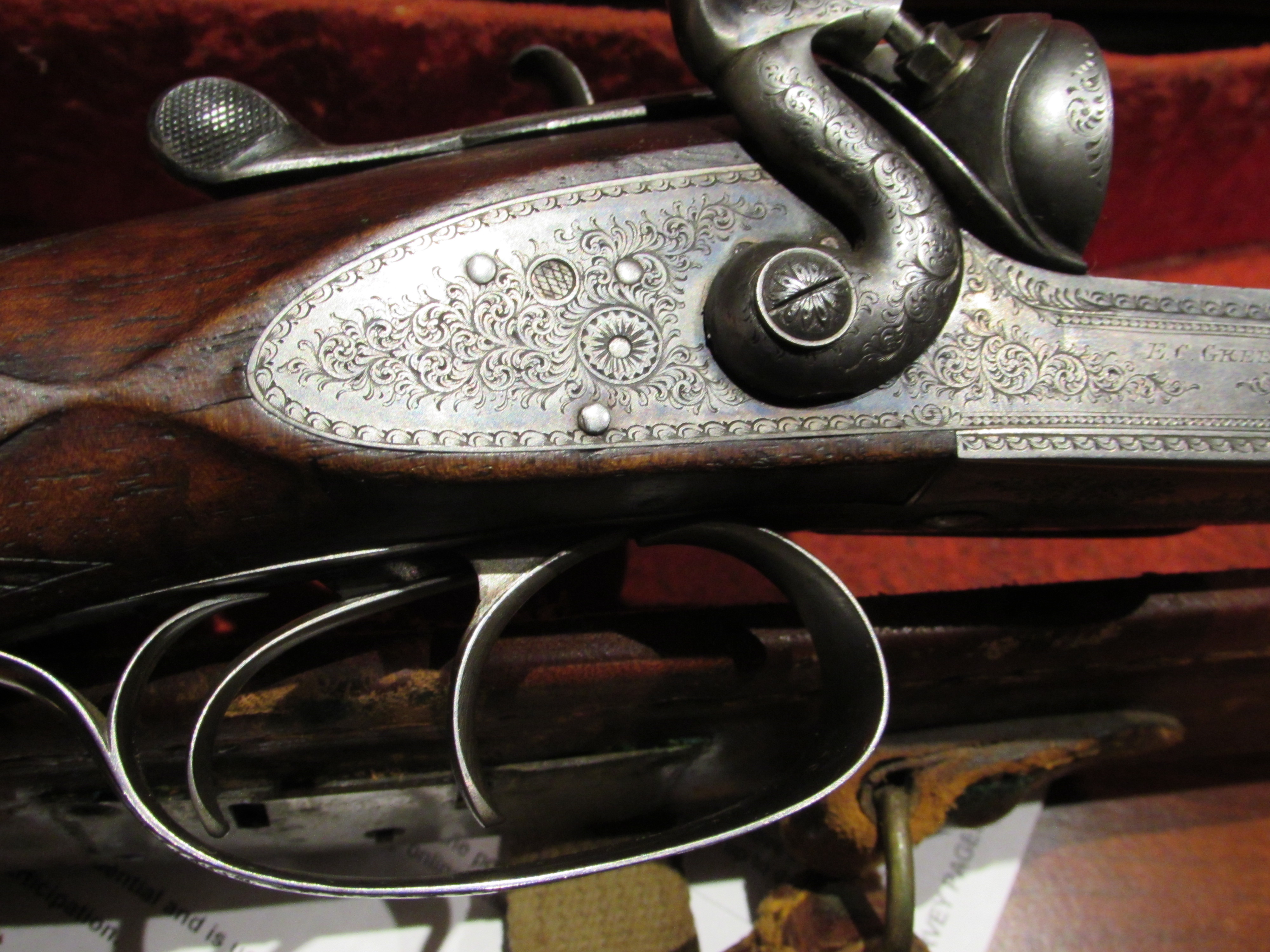
Exposed hammers
Double triggers
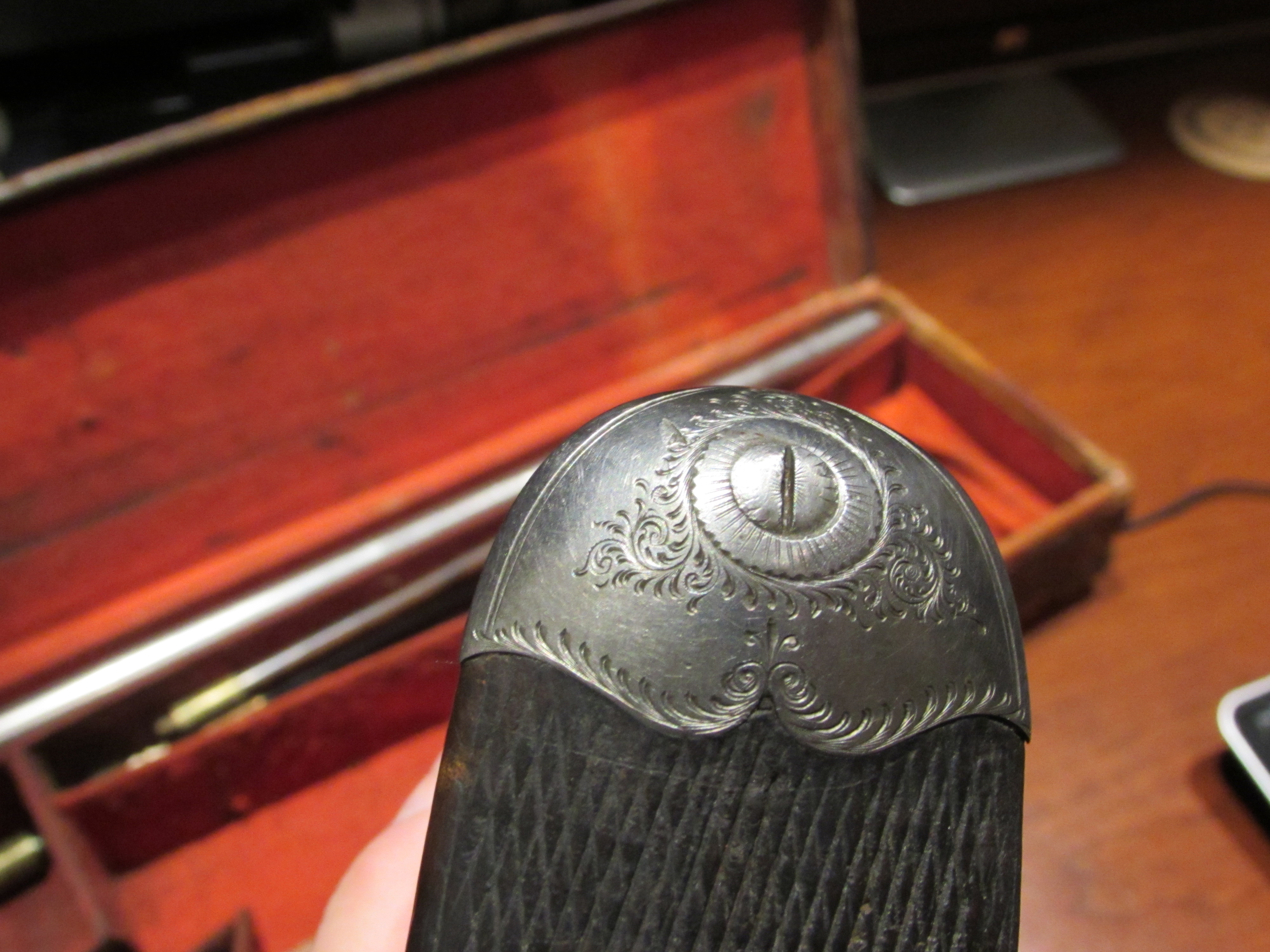
Silver initial plug in the bottom of the rear stock
Inlaid heal and toe (looks to be silver???)
All exposed metal is heavily engraved
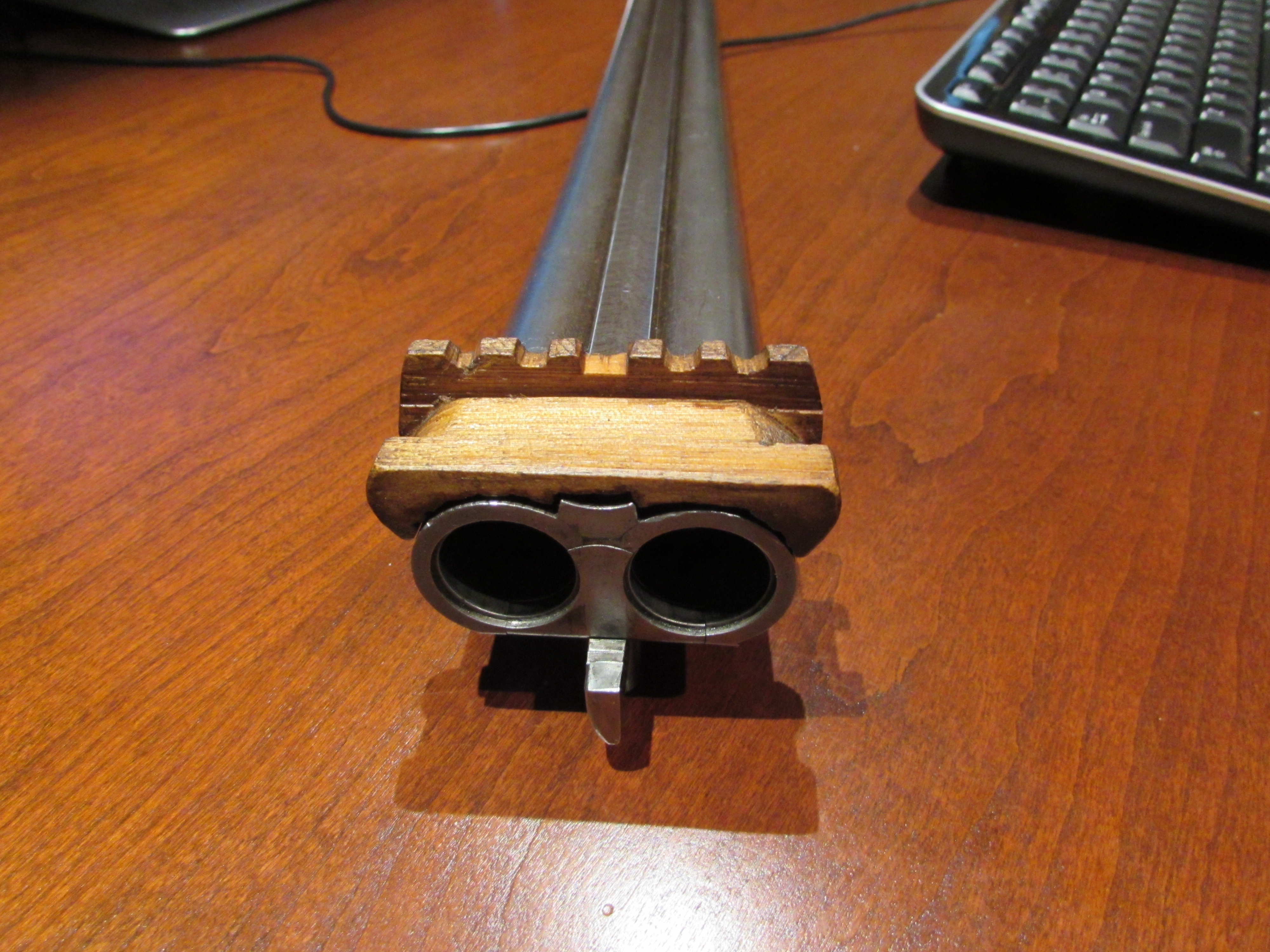
Unusual front site. It’s a couple inches long with a Triangle profile. Smooth polished on the left side and fine “steps” on the right. I have been told it is a trap design from days gone by. The steps are for blacking out the right side. Makes sense but would only be effective always shooting the same direction.

Original leather bound hard case with brass corners and a thick gold name plate on the centre of the lid.
Original oil can and English rosewood cleaning rod. The stocks look to be rosewood too but I can’t find any reference of them using it back then.

I had it appraised at over $1000 about 40 years ago when I received it but don’t have a clue about current values.

I’m hoping one of you fine gentleman knows a thing or two about these exquisite pieces

Brian
 
Last edited:
Is the rib marked EDWINSON C. GREEN MAKERS CHELTENHAM WINNER OF TWO FIRST PRIZES AT THE LAST FIELD GUN TRIALS and EDWINSON C. GREEN on the locks?

Are you sure they are British proof marks and not Belgian?

Sounds like a live pigeon gun, the precursor to what we call trap & the Brits call DTL (Down The Line).

Nigel Brown's Volume 2 of British Gunmakers contains information on Green, his guns and his business.
 
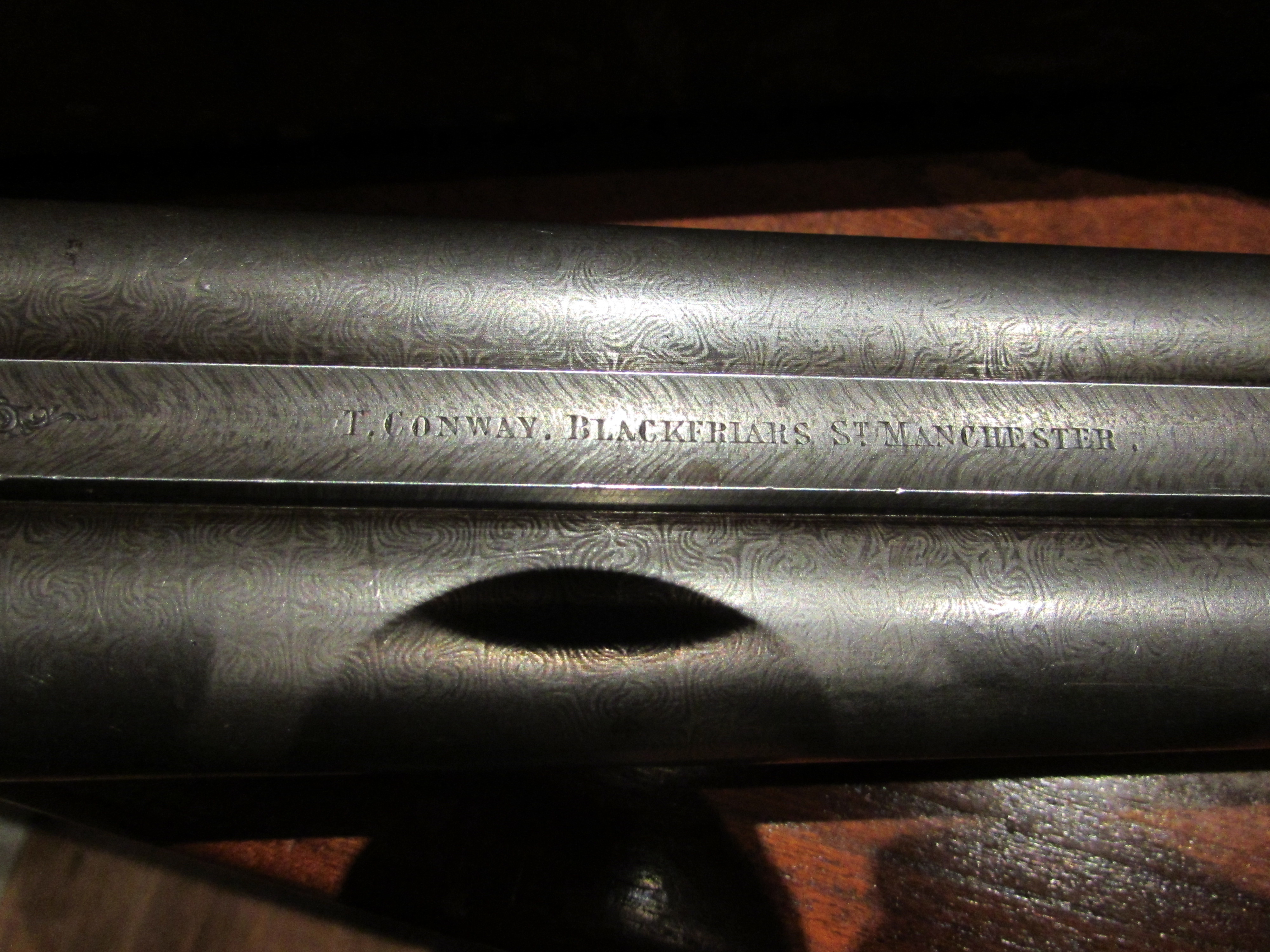
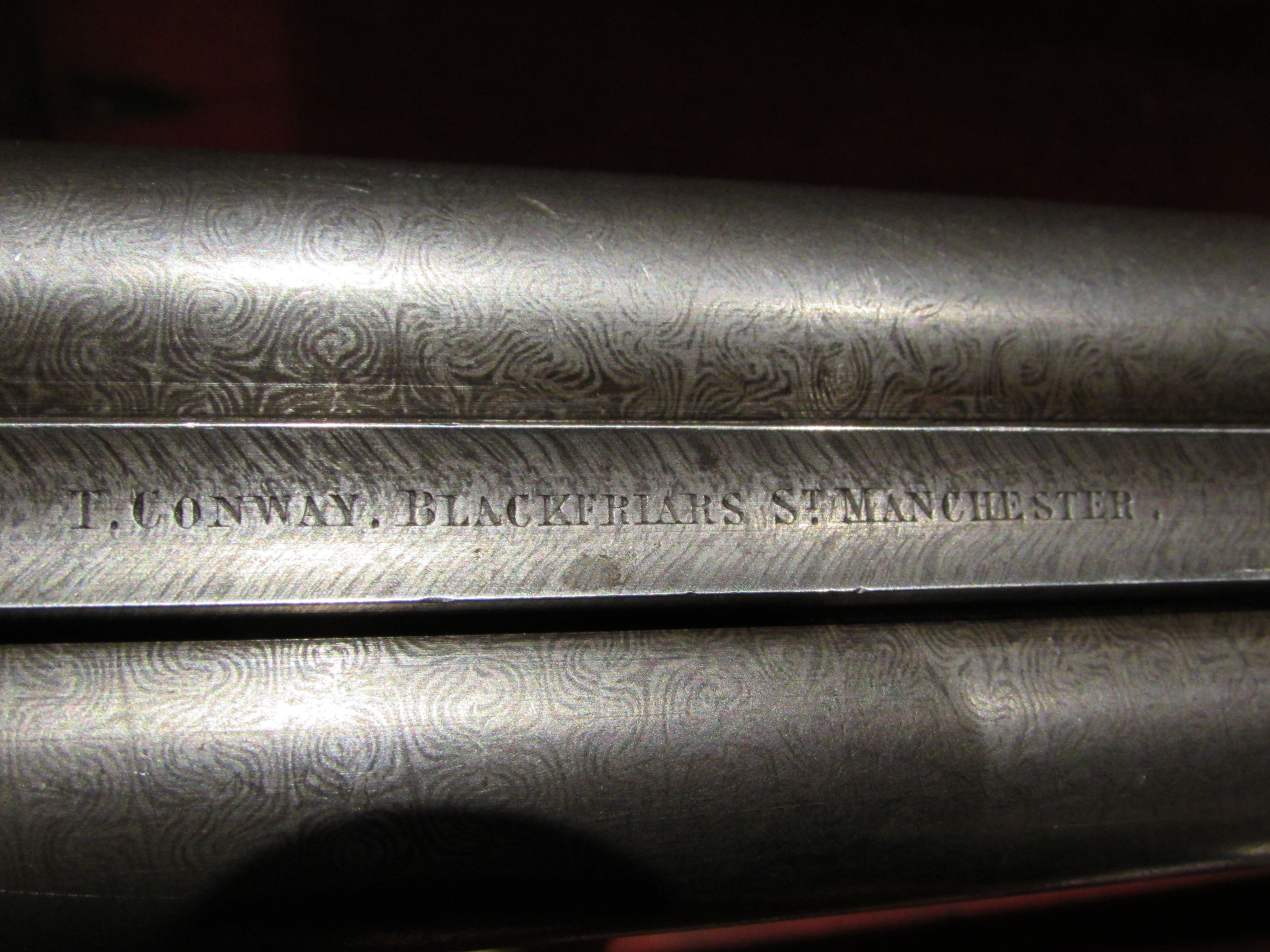
On the rib is - T Conway Blackfriars St Manchester
On both sides below the hammers - EC Green
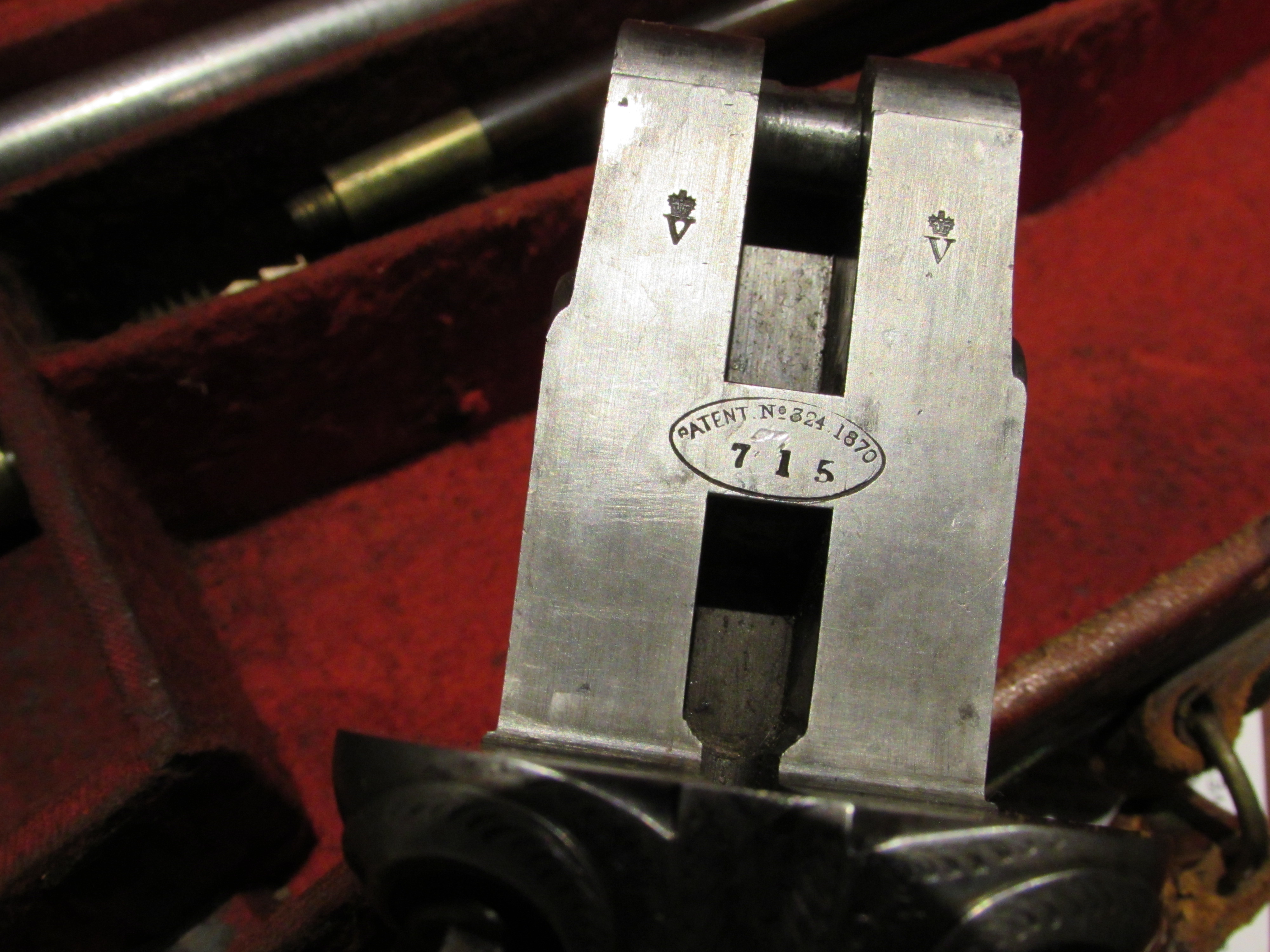
The proof marks are a crown over a Roman V

So was this made by Conway for Green?
 
Last edited:

Or the other way around... made by Green and retailed by Conway. Unusual that it would have a different name on the barrels and locks.

The thought just occurred to me that it may have been rebarreled by Conway.
 
The thought just occurred to me that it may have been rebarreled by Conway.[/QUOTE]

Interesting. Could it be a presentation from one to the other? The plot thickens
 
This was a common way to mark a rebarrelled gun. The gun was made by EC Green and no other maker could use their name so when it was rebarrelled by T Conway they proudly put their own name on the rib. EC Green was a very well regarded provincial maker and made many guns on many different actions and in many different grades. If you had one of his own patent three barrel guns or over under guns it would potentially be very valuable but as a side by side the value today centers more on current condition rather than original quality and the name Green adds little or no value. It sounds like your gun is a higher grade which is desirable but there are dozens and dozens of things that can negatively affect the value, some obvious and some that can only be determined by a thorough inspection by a person with experience on English guns and the correct measuring tools. Nobody can give you a reasonable range of possible values from your verbal description, but some good detailed pictures including the proof marks would be a start. On the positive side the original case with accessories will add some (not a lot) value but the non original barrels will detract from the value. Overall the market for this type of gun is very depressed in Canada right now unless the gun is something truly special and few are. Let us know what part of the country you are in, there are many very knowledgeable double gun buffs on here who would be glad to either appraise your gun if nearby or direct you to a specialty gunsmith within your reach to do this ( takes an hour or more, a busy gunsmith might charge for his time). Bear in mind, an overly optimistic value by an inexperienced person isn't helpful, be prepared to ask " what will you give me for this gun should I decide to sell?". Frequently the value either goes down drastically or the appraiser ducks the question. Show us the goods.
 
Oh, the crown over V on the action is the British View proof mark. The ones we want to see are stamped on the bottoms of the barrels at the breech end. From these it may be possible to rough date when these replacement barrels were fitted. The fact that they are "damascus" would suggest pre WWI, maybe pre 1900.
 
The proof marks under the barrels are:

Crown V
Crown CP (the P is overlaid on the C)
13
And what looks like a lion standing over some scroll letters. I’ll need a magnifying glass to see it clearer)

If I’m not mistaken they refer to the Birmingham proof house, the gun maker proof and the 13 refers to the choke. I think the bottom one indicates black powder.
 
Last edited:

These are London black powder proofs used from 1868 to 1887 so your barrels were made and installed during that time period. There are other marks that were sometimes used additionally during 1875-1887 to denote choke but the lack of these marks only means that your barrels were made pre 1875 OR that they were made after 1875 but without choke, likely the latter. Original bore size was 13 gauge (.719), fairly common on a 12 gauge. If your locks are non rebounding ( the hammers stay firmly pressed against the firing pins after discharge) this would be an indicator of an earlier gun, say pre 1875, however many earlier guns were later modified to rebounding locks so this can't be determined for sure without examining the lock internally.
 
ix806uO.jpg

uuG9q9v.jpg

i9FDuvt.jpg

iICr2Fi.jpg

vlYaJrp.jpg

yu7ybvP.jpg

IerxI29.jpg
 
Now we're getting somewhere, thanks Londonshooter. And great photos Kermodie, we can now add to the picture. This gun was made (by EC Green) utilizing the 1870 patent of John Thomas of Birmingham. The number 715 is the patent use number signifying that this was the 715th gun made to this patent. There was over 1300 made total, so this design was maderately successful over a relatively short span. It is a single bite snap action, meaning that it snaps and latches closed in one motion, as all modern guns do, but it only has one locking bite making it not as strong as the double and triple bite actions that succeeded it. In actual fact, it was semi obsolescent when it was invented. These guns have turned up with many different maker's names but none by J Thomas, he may not have had the resources to make these guns himself. Tipping & Lawden actually made some, perhaps all of these actions for the trade. EC Green probably would have purchased this action, finished it and built the gun around it in their own style. It may be engraved on the top lever "Solid Self Locking Vertical Grip" if made by Tipping & Lawden. So now the date of production narrows to mid 1870's, probably as close as we can come. I believe EC Green may still be in business, if so they may (for a fee) research their records on this gun and provide you with a copy.
This is a high grade gun, perhaps the best that EC Green could produce at this time. However it's a black powder only gun, with an action of only moderate strength, probably with 2 1/2" chambers and should NOT be used with modern ammunition. This fact will negatively affect the value because it isn't a practical shooter for most people, somebody must custom make ammo for it. I also see what looks like a nasty dent in the barrel adjacent to the word Manchester, this and any others needs close inspection by a good gunsmith, it may not be safe to shoot. Anyhow it's a start, if you are going to be at the Chilliwack or Kamloops gun show this spring bring the gun to me and I can measure your barrel diameters and wall thicknesses and check it out in person. I trust all this information was of interest to you. J.
 
On valuation, you must realize that this gun is well worn externally, all those silver coloured pieces like the action body, lockplates, hammers and heel and toe plates were originally strongly case coloured. The top lever and trigger guard were blacked (blued) and the barrels were browned to a rich brown colour. Your barrels do however retain very good pattern contrast. The wood is cracked behind the right lockplate and a chip is missing behind the left. The stock where it is visible in the pictures is very dirty with numerous small handling marks, the checkering is quite worn but largely undamaged. The good points center around the fact that from what I can see the gun looks very original, no amateur seems to have tried to clean it up or "restore" it. This means that all of these cosmetic issues can be resolved by the right talented people and it could be made into a real show pony. All it takes is time and lots of money. However,if the barrels are severely pitted or damaged or have been honed too thin the gun would not be worth spending much money on. Without measuring the barrel interior bore sizes and wall thicknesses nobody can give you reasonable valuation, there are just too many variables and the value spread is too wide. A valuation based on appearance alone would be as sound as evaluating a used car on appearance alone. At the worst, if it is unsafe to shoot and only good as a decoration someone might pay $300-500 for it, max. I wouldn't. If the barrels check out good including the ribs and it locks up tight with the forend removed it might bring $1000 as is on a good day. If I was still in the market for a gun like this that would be about as high as I would go. For you, it's your grandfather's gun and probably has sentimental value that doesn't transfer to other people, if you intend to keep it forever it's priceless. In this case a careful and sympathetic restoration by an expert may be worthwhile to you. J.
 
I knew someone out there would have the answers.
Thanks Ashcroft, I appreciate all you've said. Also, many thanks to Londonshooter for helping out. Note: What appears to be a dent in the right barrel under Manchester must be oil or something in the picture. I had a close look and the surface is smooth and level. There is however, a small dent in the left barrel about 8" from the muzzle. This one can also be seen in the bore.
As you said, it’s priceless to me, as are most items passed down to people over several generations.

If only it could talk!
 
Last edited:

ok, here's where it gets weird.
Ch42R63.jpg

v5QvygO.jpg


My guess?
Can only speculate that the wooden device was an experimental sight designed to predetermine the lead require to hit birds diverging to the left or right of the line of sight
The elevated front sight would cause the gun to shoot high, perhaps of value when shooting live birds rising from a trap. Or perhaps to overcome a shooters vision problem(?)
 
Well I've never seen or heard of something like that. Maybe an attempt to assist a shooter with defective vision? Perhaps for a vet with one eye missing? The Brits were very experimental and inventive during this period and tried many weird and wondrous things, they didn't all catch on but usually then they also didn't survive. My guess is that this actually works for the intended purpose which is why it's still on the gun. I can't manipulate pictures on here, Londonshooter, please e mail me these pictures, I'll forward them to my English gunsmith for his comments. Tnx, J.
 
My guess?
Can only speculate that the wooden device was an experimental sight designed to predetermine the lead require to hit birds diverging to the left or right of the line of sight
The elevated front sight would cause the gun to shoot high, perhaps of value when shooting live birds rising from a trap. Or perhaps to overcome a shooters vision problem(?)

an elevated front sight would cause the gun to shoot low not high. A raised rear sight shoots higher while a raised front sight is just the opposite and shoots lower. I have a vague memory of about 60 years ago, seeing a lead calculating attachment for a shotgun being advertised in Field and Stream or a similar magazine. Basically a circle on either side of a single barrel and you put the bird in the circle

cheers mooncoon
 
My best source was of no help, although he has seen a number of one off sighting aids, this one ( or two) may be unique. I would sure like to be able to experiment with this gun on a trap range!
 
Back
Top Bottom