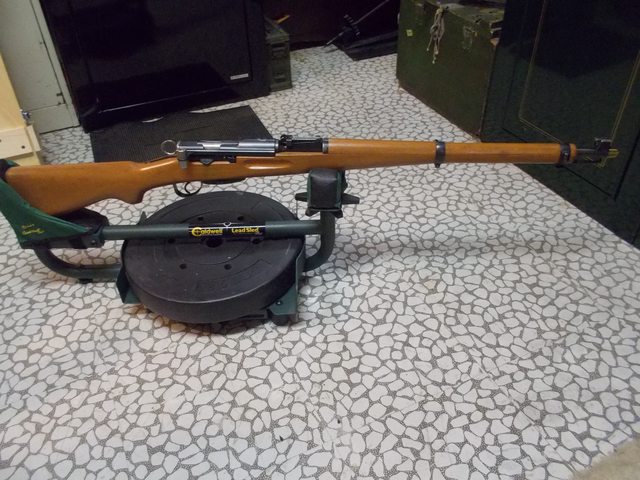
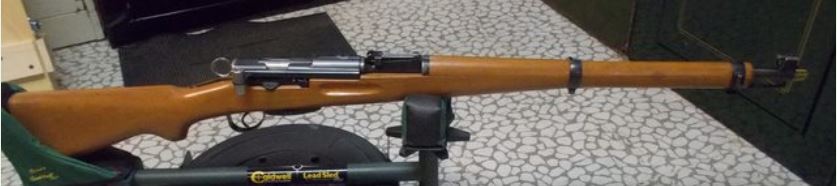
Cleaning milsurp wood - how far is too far?

How about refinishing the wood of k31,k11 ? There is no wartime history in them. We are restoring old cars to look new.

I have seen many different finishes on the K31 & K11's. The K31 can be shiny or not. It depends on the wood too. Walnut takes a finish better than Beechwood.

Try tung and linseed oil with a bit of lemon oil (thins the mix).
 
Ever see a vapour phase degreaser? Used in plating shops and for industrial strength cleaning and degreasing?
I have seen battered, blackened, oil soaked stocks processed through one. After cleaning, they were still battered, but the wood was remarkably clean and fresh looking, ready for application of linseed.
 
How about refinishing the wood of k31,k11 ? There is no war time history in them. We are restoring old cars to look new.

Strip rifle down to wood
Soap & water & steam out the dents & heel marks at butt of stock
No sand paper used just a scotch pad while washing
Couple coats of Saman golden wheat #111 , then a few coats of Tru-oil
i0t3LKzl.jpg

t69TdOQl.jpg
 
Boiled Linseed Oil will remove some dirt from the wood as it is applied. For a gentle cleaning, Mineral Spirits (or White Spirits as the Brits call it) is a good choice. Wipe it on, and then with a clean cloth wipe dry. Once completely dried, apply a light coat of BLO as needed.

Applying BLO is easy to do, apply with a clean rag to the stock and associated woodwork (avoid metal as required). Wait thirty minutes, and remove excess oil with a clean rag. Leave to fully cure. If desired, additional coats can be added - just insure the previous coat(s) are fully cured.
 
How about refinishing the wood of k31,k11 ? There is no war time history in them. We are restoring old cars to look new.

I have seen many different finishes on the K31 & K11's. The K31 can be shiny or not. It depends on the wood too. Walnut takes a finish better than Beechwood.

Try tung and linseed oil with a bit of lemon oil (thins the mix).
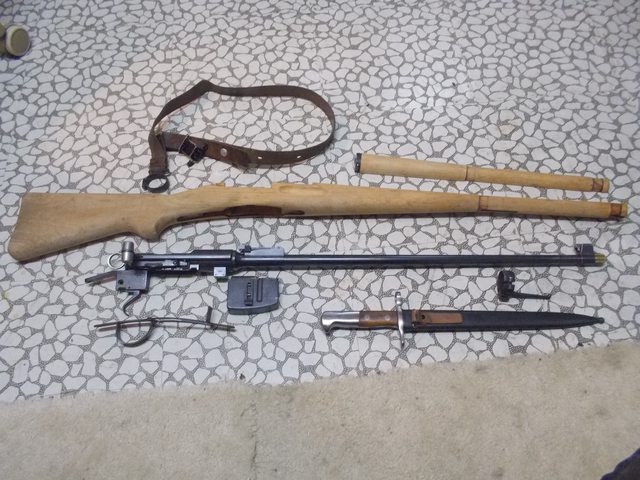
Strip rifle down to wood
Soap & water & steam out the dents & heel marks at butt of stock
No sand paper used just a scotch pad while washing
Couple coats of Saman golden wheat #111 , then a few coats of Tru-oil
i0t3LKzl.jpg

t69TdOQl.jpg

The "correct" formula for Swiss rifles is commonly available. You did a nice job however it is not "correct" and has lost collector value.

"From the Landesmuseum in Zürich.

For walnut, clean the stock first;
30% Turpentine 30% Linseed oil 30% Fruit (wine) vinegar 10% Bees wax
Fill the mix in a plastic bottle and put that one in hot water (60 degrees Celsius) for 15 minutes till the bees wax has dissolved in the mix, apply with a piece of cloth.

And for beech;
45% Denatured alcohol (high percentage 95%) 45% Shellac flakes 10 % Paraffin-oil.
Get the old shellac layer off with help of fine steelwool and alcohol (95%). Apply with a piece of cloth starting at the top.

-Guisan"
 
Raw Tung oil can be had with zero additives, just as pure BLO can be purchased, and is a correct oil to be used with a lot of military rifles.

Most milsurp collectors would loose their sh!t if they saw how second and third line armourers treated their precious prior to it becoming surplused in the first place.
I would also argue that the 'beautiful' dark reds and browns that surplus rifle stocks develop are due mostly to the dirt and sh!t from service and then eventual neglect from being first ,war stocked and then surplused. If they were still in service, their stocks are typically cleaned and rejuvenated through their service life. A prime example of this are No.4s that are held for ceremonial duty like those that service on with colour parties. Their stocks are most typically pristine.
 
The "correct" formula for Swiss rifles is commonly available. You did a nice job however it is not "correct" and has lost collector value.

"From the Landesmuseum in Zürich.

For walnut, clean the stock first;
30% Turpentine 30% Linseed oil 30% Fruit (wine) vinegar 10% Bees wax
Fill the mix in a plastic bottle and put that one in hot water (60 degrees Celsius) for 15 minutes till the bees wax has dissolved in the mix, apply with a piece of cloth.

And for beech;
45% Denatured alcohol (high percentage 95%) 45% Shellac flakes 10 % Paraffin-oil.
Get the old shellac layer off with help of fine steelwool and alcohol (95%). Apply with a piece of cloth starting at the top.

-Guisan"

It was a $350 military surplus rifle not a museum quality collector rifle .
 
On gritty looking stocks , I'll use (pure ) boiled linseed oil with a scotch brite pad. The pads work out the grit without leaving mark's in the wood and is great for working around stamps. As mentioned in Cantoms post , the original finish is BLO . The dirty BLO will thin out as the fresh oil is rubbed in. Patina can also be easily left on which is what I prefer .
To " finish " , I'll wipe down the stock with whatever is handy and clean . Then , another coating by rubbing it in with my bare hands , rubbing briskly where I can feel abit of heat ...let sit for a week and another hand rubbing ( just a little bit in the palm , feel the heat )...repeat whenever you like .
 
Strip rifle down to wood
Soap & water & steam out the dents & heel marks at butt of stock
No sand paper used just a scotch pad while washing
Couple coats of Saman golden wheat #111 , then a few coats of Tru-oil
er5IgcR.jpg

Awesome!!!
Thx for sharing
(even if it didn't have the Zürich magic oil on it)
 
It's now worth nothing more than what you paid for it, because it was refinished incorrectly.

Notice how the price of Swiss rifles has been going up steadily? K31s are pushing $1000.

to your untrained eye maybe...

Most Swiss rifles were re finished at one point anyway.
A well re finished rifle like "1bcshooter" 's example is worth at least as much, if not more than those hobnail "tortured" rifles from Switzerland
 
I'm not looking to get into a pissing contest over the internet, but let's be reasonable. Maintaining or increasing value on collectible items, such as militaria requires the items to be kept in the highest possible condition of originality.

I'm not arguing that rifles in military service would not have been refinished in their service life, but they would have been refinished to an applicable standard - not what ever some armourer felt like at the time.
 
I'm not looking to get into a pissing contest over the internet, but let's be reasonable. Maintaining or increasing value on collectible items, such as militaria requires the items to be kept in the highest possible condition of originality.

I'm not arguing that rifles in military service would not have been refinished in their service life, but they would have been refinished to an applicable standard - not what ever some armourer felt like at the time.

What do you mean by that?
Originality as it came out of the factory, or originality as it came out of the trenches, including bloodstains an brain splatters?
 
Back
Top Bottom