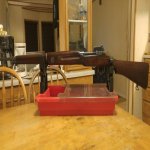
I recently added one to the family and I think it's a lovely rifle....too bad I couldn't take a picture of the bore.....it's about as close to perfect as it gets!!!
I by no means am a P14 expert fellows, so correct me, chime in with your thoughts, tell me I'm crazy etc,.
I've been referring to Statton's booklet on the P14/US Model 17 as my basis for research as soon as I unpacked this rifle.
I initially thought this rifle was a MK1 and not a MK1*.
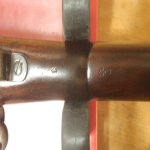
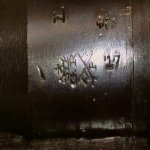
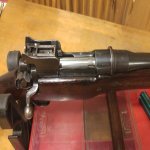
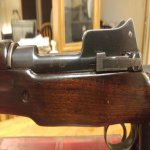
I was sent a number of pictures before I purchased the rifle and noticed the "absence" of the * stamp on the receiver ring and bolt that would normally indicate a MK1, not a MK1*. Stratton's book say's the MK1* will have the star or asterisk on the receiver ring, bolt handle, barrel and buttstock roundel. Stratton also says serial number on the MK1* will be stamped on the rear sight, barrel, receiver ring and bolt handle.
When I un-packed the rifle. I noticed the * stamped on the extractor (which seems to have a phosphate finish unlike the rest of the blued metal parts), I was curious to see the barrel date etc., so I removed the handguard and noticed the * stamped on the barrel, this is when the confusion started.
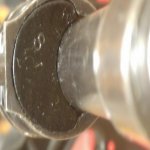
I then removed the bolt to look at the rear barrel face and did see the relief machined in it to accommodate the longer bolt locking lug.......well that confirmed to me I was the owner of a MK1* not a MK1, unless, unless.....this is not the original barrel?
Can a MK1* barrel work fine in a MK1 action and MK1 bolt, I don't see why not ? The barrel is a '17 dated barrel but no serial number stamped that I could see...another anomaly or is Stratton not always "bang on" he says a MK1* barrel will be serialized! Do you believe this to be the original barrel? If this is not the original barrel maybe the the rest of the rifle is a MK1 with a MK1* barrel!
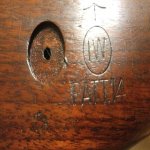
This gun I must admit has me a bit puzzled, not in a bad way though. On close examination I'm sure this is a "period correct rifle", I have no doubt. I don't believe it was cobbled together from a bunch of parts. The first thing that attracted me besides the fact it was a Winchester was the shape of the stock and especially the clarity of the manufacturer's roundel. Most P14's I have seen do not have the roundel anymore....they are not deeply struck and a lot of P14 stocks have had the living daylight sanded out of them, to the point where the stock is absent of any markings. This also has a nice deep Weedon stamp under the butt...I looked up the code letter "0" and it indicates Skimin & Wood was the contract firm that did the work.
Upon further "close" inspection I saw that below where the marking disk should be, there undoubtedly is the "Maltese Cross" stamp which Stratton says, " is found on the buttstocks of a small number of very early rifles that the war office found doubtful". Now I'm asking the question, why was this rifle considered "doubtful" especially when it has a as new bore, tight action, nice clean bolt face (have not checked headspace yet) etc., This rifle does not look like it fought even part of the "100 Year War".
Now really getting confused.......the stock looks to me like the rifle had a relatively easy life but maybe the rifle had a tremendous amount of rangetime and bore was compromised and therefore received the Maltese stamp....this all prior to the Weedon Repair Standard. When WRS came on board this rifle could have been re-barreled with a MK1* barrel, explaining the lack of the * on the various places Stratton indicates it should be for a MK1*rifle.
Are my thought's sort of on the right track trying to put together the journey this rifle had or am I completely out to lunch?? One thing I will check in the next few days is, I'll get the gauges out and check headspace.
Help me out here guys!! if you want additional pics I can do that too. I've got ample amounts of time now as a badly sprained ankle has me more less confined to the couch and bed, that's whats enabled me to be so long winded. LOL.
Whatever the case, I think (at least in my own mind) this rifle is a bit of a gem and I'm a happy camper to be the owner of it. I guess the only period correct thing that is absent is the wooden plug in place of the marking disk.....just maybe I'll fine a nice brass disk to temporarily put in it's place.
It's going to be a tack driver and I'll be eager to try it out soon.
Thanks!!
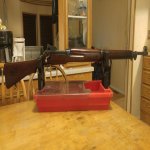
I by no means am a P14 expert fellows, so correct me, chime in with your thoughts, tell me I'm crazy etc,.
I've been referring to Statton's booklet on the P14/US Model 17 as my basis for research as soon as I unpacked this rifle.
I initially thought this rifle was a MK1 and not a MK1*.
I was sent a number of pictures before I purchased the rifle and noticed the "absence" of the * stamp on the receiver ring and bolt that would normally indicate a MK1, not a MK1*. Stratton's book say's the MK1* will have the star or asterisk on the receiver ring, bolt handle, barrel and buttstock roundel. Stratton also says serial number on the MK1* will be stamped on the rear sight, barrel, receiver ring and bolt handle.
When I un-packed the rifle. I noticed the * stamped on the extractor (which seems to have a phosphate finish unlike the rest of the blued metal parts), I was curious to see the barrel date etc., so I removed the handguard and noticed the * stamped on the barrel, this is when the confusion started.
I then removed the bolt to look at the rear barrel face and did see the relief machined in it to accommodate the longer bolt locking lug.......well that confirmed to me I was the owner of a MK1* not a MK1, unless, unless.....this is not the original barrel?
Can a MK1* barrel work fine in a MK1 action and MK1 bolt, I don't see why not ? The barrel is a '17 dated barrel but no serial number stamped that I could see...another anomaly or is Stratton not always "bang on" he says a MK1* barrel will be serialized! Do you believe this to be the original barrel? If this is not the original barrel maybe the the rest of the rifle is a MK1 with a MK1* barrel!
This gun I must admit has me a bit puzzled, not in a bad way though. On close examination I'm sure this is a "period correct rifle", I have no doubt. I don't believe it was cobbled together from a bunch of parts. The first thing that attracted me besides the fact it was a Winchester was the shape of the stock and especially the clarity of the manufacturer's roundel. Most P14's I have seen do not have the roundel anymore....they are not deeply struck and a lot of P14 stocks have had the living daylight sanded out of them, to the point where the stock is absent of any markings. This also has a nice deep Weedon stamp under the butt...I looked up the code letter "0" and it indicates Skimin & Wood was the contract firm that did the work.
Upon further "close" inspection I saw that below where the marking disk should be, there undoubtedly is the "Maltese Cross" stamp which Stratton says, " is found on the buttstocks of a small number of very early rifles that the war office found doubtful". Now I'm asking the question, why was this rifle considered "doubtful" especially when it has a as new bore, tight action, nice clean bolt face (have not checked headspace yet) etc., This rifle does not look like it fought even part of the "100 Year War".
Now really getting confused.......the stock looks to me like the rifle had a relatively easy life but maybe the rifle had a tremendous amount of rangetime and bore was compromised and therefore received the Maltese stamp....this all prior to the Weedon Repair Standard. When WRS came on board this rifle could have been re-barreled with a MK1* barrel, explaining the lack of the * on the various places Stratton indicates it should be for a MK1*rifle.
Are my thought's sort of on the right track trying to put together the journey this rifle had or am I completely out to lunch?? One thing I will check in the next few days is, I'll get the gauges out and check headspace.
Help me out here guys!! if you want additional pics I can do that too. I've got ample amounts of time now as a badly sprained ankle has me more less confined to the couch and bed, that's whats enabled me to be so long winded. LOL.
Whatever the case, I think (at least in my own mind) this rifle is a bit of a gem and I'm a happy camper to be the owner of it. I guess the only period correct thing that is absent is the wooden plug in place of the marking disk.....just maybe I'll fine a nice brass disk to temporarily put in it's place.
It's going to be a tack driver and I'll be eager to try it out soon.
Thanks!!